
Göbekli Tepe
Rated 4.7(4,378 reviews)Age: Neolithic, ~11,500 - 11,000 years old
About Göbekli Tepe
In short
Göbekli Tepe is an early Neolithic site about 15 km northeast of Şanlıurfa in southeastern Turkey. Hunter-gatherer communities built its round enclosures of carved T-shaped limestone pillars between about 9600 and 8200 BCE. It has been excavated since 1995 and became a UNESCO World Heritage Site in 2018.
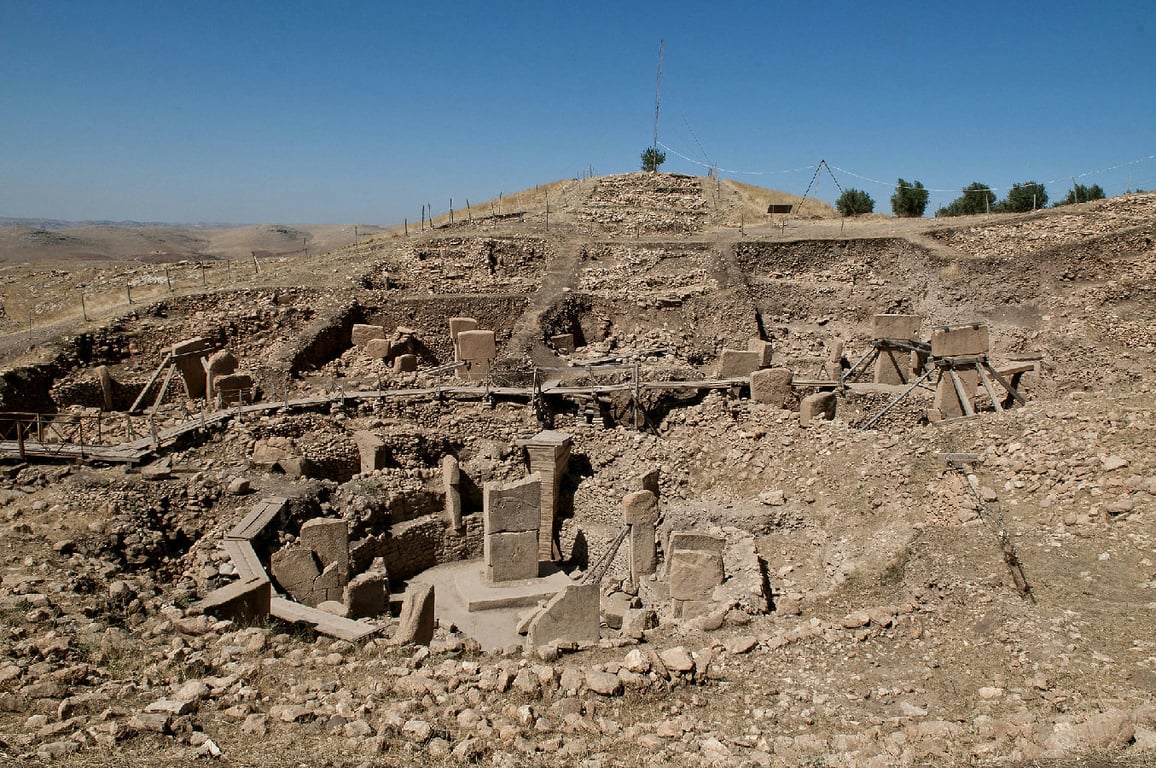
On a limestone ridge about 15 kilometers northeast of Şanlıurfa, in southeastern Turkey, people who lived by hunting and gathering raised rings of T-shaped stone pillars between about 9600 and 8200 BCE. The tallest, about 5.5 meters (18 feet) high, carry carved arms, hands and belts, and the pillars around them show foxes, snakes, boars and vultures. Göbekli Tepe, “Potbelly Hill” in Turkish, is among the oldest monumental buildings known, and it has been a UNESCO World Heritage Site since 2018.
Who built Göbekli Tepe, and when?
The builders lived in the Pre-Pottery Neolithic, the time when people in Upper Mesopotamia began to settle in one place, before they made pottery. UNESCO dates the monuments to about 9600–8200 BCE, and the current research team traces life on the hill to around 7750 BCE: some 1,750 years and at least eight building phases.
No domesticated plants or animals have been identified at the site. Yet more than 7,000 grinding stones have been found, and microscopic plant traces show that cereals were processed here, though whether the grain was wild or cultivated is not yet known. The builders also cut channels into the bedrock to feed cisterns that held at least 150 cubic meters of water.
The pillars and their carvings
The pillars were quarried from the limestone plateau beside the site and shaped with stone and bone tools. They stand in round to oval enclosures 10–30 meters across, set into the surrounding walls, with a larger pair at the center. In Enclosure D the two central pillars rise to about 5.5 meters and weigh roughly 10 tonnes each.
On those central pillars, arms carved in low relief, carving that stands slightly out from the stone, run down the sides to hands that meet above a belt and a loincloth. The archaeologist Necmi Karul, who has directed the excavation since 2019, reads this as a sign that the pillars stand for people, with the crossbar as the head. Whether they were ancestors, spirits or something else is still open.
Animals cover many pillars, and each enclosure seems to favor its own. Life-size foxes appear on the central pillars of Enclosure B, wild boar lead in Enclosure C, and foxes and snakes are the most common in Enclosure D. Aurochs, gazelle, wild ass, cranes, ducks and a probable big cat also appear. The best known is Pillar 43 in Enclosure D, the “Vulture Stone”, where a large vulture presides over a crowd of creatures, among them a scorpion, with a headless man near the bottom.
Free-standing sculpture is rarer. Finds include a kneeling limestone figure about 26 centimeters tall holding a human head, and carved predators that appear to grip heads.
Temple, village or both?
Klaus Schmidt, the German archaeologist who led the excavation from 1995 until his death in 2014, read the site as a ritual center where mobile hunter-gatherers came together, and called it the world's first temple. He also thought the enclosures had been buried on purpose once they went out of use.
Work led since 2014 by Lee Clare, the German Archaeological Institute's field and research director at the site, reads the hill differently. The buildings without T-pillars, the most numerous kind, are now interpreted as houses, and the grinding stones and cisterns point to people living here, not only visiting. A study of the layers published in 2020 found that the enclosures were filled largely by repeated slope slides, after which people sometimes repaired them. The team now describes an early Neolithic settlement with large communal buildings, where ritual and daily life went on side by side.
Both readings agree that the pillared enclosures were special places, and that only a small part of the hill has been dug.
How Göbekli Tepe was found
A survey team from Istanbul University and the University of Chicago recorded the hill in 1963. A lone mulberry on the hilltop, which local people called the wish tree, drew their attention, as a 2014 article in Hürriyet Daily News recalls. They noticed flint across the surface but took the broken tops of the pillars for gravestones from a much later, probably Byzantine, cemetery.
In October 1994 Schmidt, who had excavated at the nearby Neolithic site of Nevalı Çori, visited the hill and recognized the stones as the tops of prehistoric megaliths. Excavations began in 1995 under the German Archaeological Institute (DAI) and the Şanlıurfa Museum. Since 2019 Karul, of Istanbul University, has directed the project, with Clare leading the DAI's research.
Geophysical surveys suggest more than a dozen further enclosures still underground. Recent work has focused on recording and conservation rather than large new trenches.
Other readings of the hill
Because Göbekli Tepe was built at the end of the last Ice Age, it has also drawn independent researchers who read it as more than an early village. The author Graham Hancock sees in it a legacy of an older, lost civilization. The author Andrew Collins reads its enclosures as turned toward the stars of Cygnus. The University of Edinburgh chemical engineer Martin Sweatman, with Dimitrios Tsikritsis, reads the Vulture Stone as a record of a comet strike. Their readings, and the excavators' responses, are set out in Beyond.
Visiting Göbekli Tepe
The main excavated enclosures sit under two permanent protective roofs completed in 2017. A visitor center at the entrance connects to the excavation area by shuttle, and walking paths have been extended as visitor numbers have grown.
Göbekli Tepe is one of several sites studied by the Taş Tepeler (“Stone Hills”) project, launched in the early 2020s to investigate around a dozen Neolithic mounds in Şanlıurfa province. They include Karahan Tepe, where T-shaped pillars have also been found.
Beyond: more about Göbekli Tepe
Checking…
Contributors
No contributions yet
Be the first to add photos or videos!
Play and learn
Test Your Knowledge!
Think you know everything about Göbekli Tepe? Take our interactive quiz and become an Ancient Sites Expert!
Frequently asked questions
How old is Göbekli Tepe?
Its monuments were built between about 9600 and 8200 BCE, according to UNESCO, and the research team dates the end of occupation to around 7750 BCE. That makes the oldest parts more than 11,000 years old.
Who built Göbekli Tepe?
Communities of hunter-gatherers of the Pre-Pottery Neolithic built it, and no domesticated plants or animals have been found there. The author Graham Hancock agrees they were hunter-foragers but proposes that they inherited knowledge from an older, lost civilization of the Ice Age.
Was Göbekli Tepe a temple?
Its first excavator, Klaus Schmidt, called it the world's first temple. Since the mid-2010s the team has interpreted the most common buildings as houses and recorded cisterns and thousands of grinding stones, and now describes a settlement with monumental communal buildings where ritual and daily life went on side by side.
Was Göbekli Tepe deliberately buried?
Klaus Schmidt thought so, and Graham Hancock also describes a deliberate burial. A 2020 study of the layers by the current team found that the enclosures were filled mainly by repeated slope slides, which people sometimes repaired afterward.
What is the Vulture Stone?
It is Pillar 43 in Enclosure D, carved with a large vulture, a scorpion, other animals and a headless man. Martin Sweatman and Dimitrios Tsikritsis read it as a star map recording a comet impact around 10,950 BCE; the excavators responded that this leaves out other carvings on the pillar and gives a date older than the site's earliest dates. Sweatman has replied, and the reading is still debated.
Can you visit Göbekli Tepe?
Yes. The site lies about 15 km northeast of Şanlıurfa; the main enclosures are under protective roofs completed in 2017, and a visitor center at the entrance runs a shuttle to the excavation area.
Related Tags
Sources
- whc.unesco.org/en/list/1572
- tastepeler.org/en/settlements/gobeklitepe
- publications.dainst.org/journals/efb/article/view/2596
- pmc.ncbi.nlm.nih.gov/articles/PMC5489262
- dainst.blog/the-tepe-telegrams/2017/07/03/more-than-a-vulture-a-response-to-sweatman-and-tsikritsis
- vice.com/en/article/gobekli-tepe-turkey-ancient-carvings-comet-apocalypse-pictograms-archaeology
- pure.royalholloway.ac.uk/en/publications/comprehensive-refutation-of-the-younger-dryas-impact-hypothesis-y
- documents.saa.org/container/docs/default-source/doc-governmentaffairs/saa-letter-ancient-apocalypse.pdf
- world-archaeology.com/features/turkey-gobekli-tepe
- artsandculture.google.com/story/3wXxoXJ7tDcpLA
- en.wikipedia.org/wiki/G%C3%B6bekli_Tepe
- hurriyetdailynews.com/gobeklitepe-expands-access-as-visitor-numbers-grow-225223
- lexfridman.com/graham-hancock-transcript
- grahamhancock.com/karahan-tepe-gobekli-tepes-sister-site
- en.wikipedia.org/wiki/Graham_Hancock
- en.wikipedia.org/wiki/Ancient_Apocalypse
- grahamhancock.com/collinsa4
- books.apple.com/us/book/id1249510598
- core.ac.uk/works/9003344
- research.ed.ac.uk/en/publications/comment-on-more-than-a-vulture-a-response-to-sweatman-and-tsikrit
- sci.news/archaeology/gobekli-tepes-carvings-solar-calendar-13156.html
- hurriyetdailynews.com/under-that-tree-at-gobeklitepe--69680
Other Sites You Might Like
 Portugal
Alcalar Megaliths
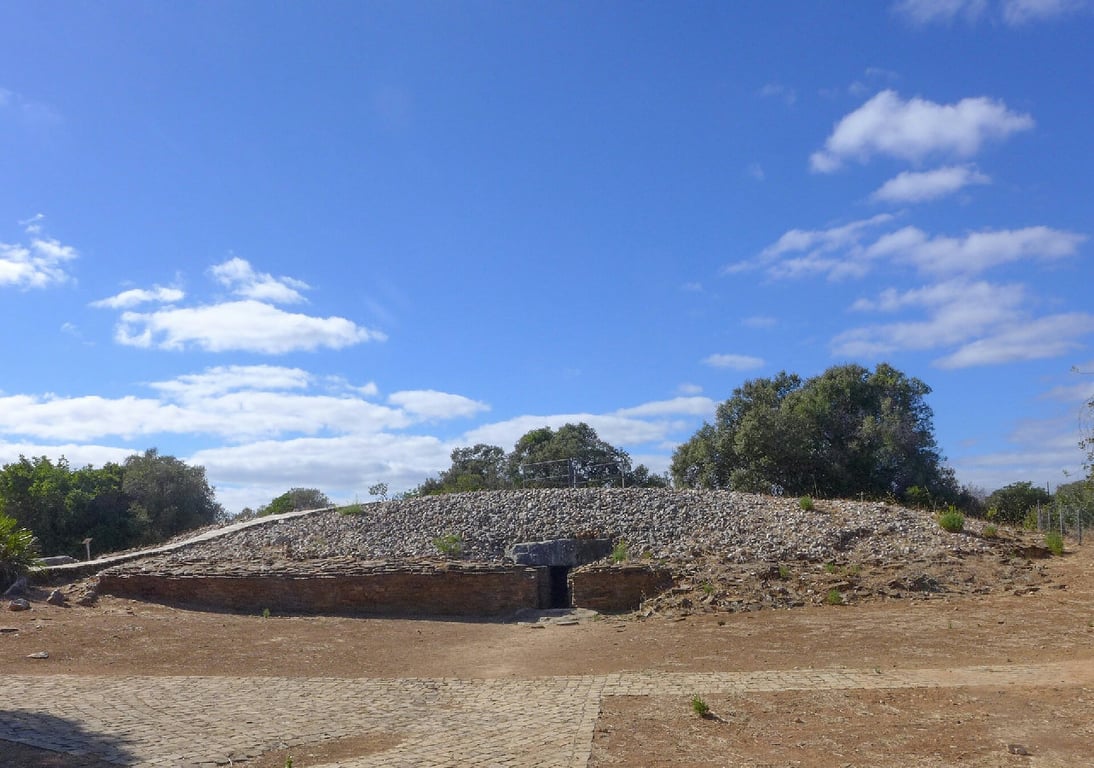
Copper Age tombs of stone and earth above the Alvor estuary, where an Algarve community buried its dead for over a thousand years.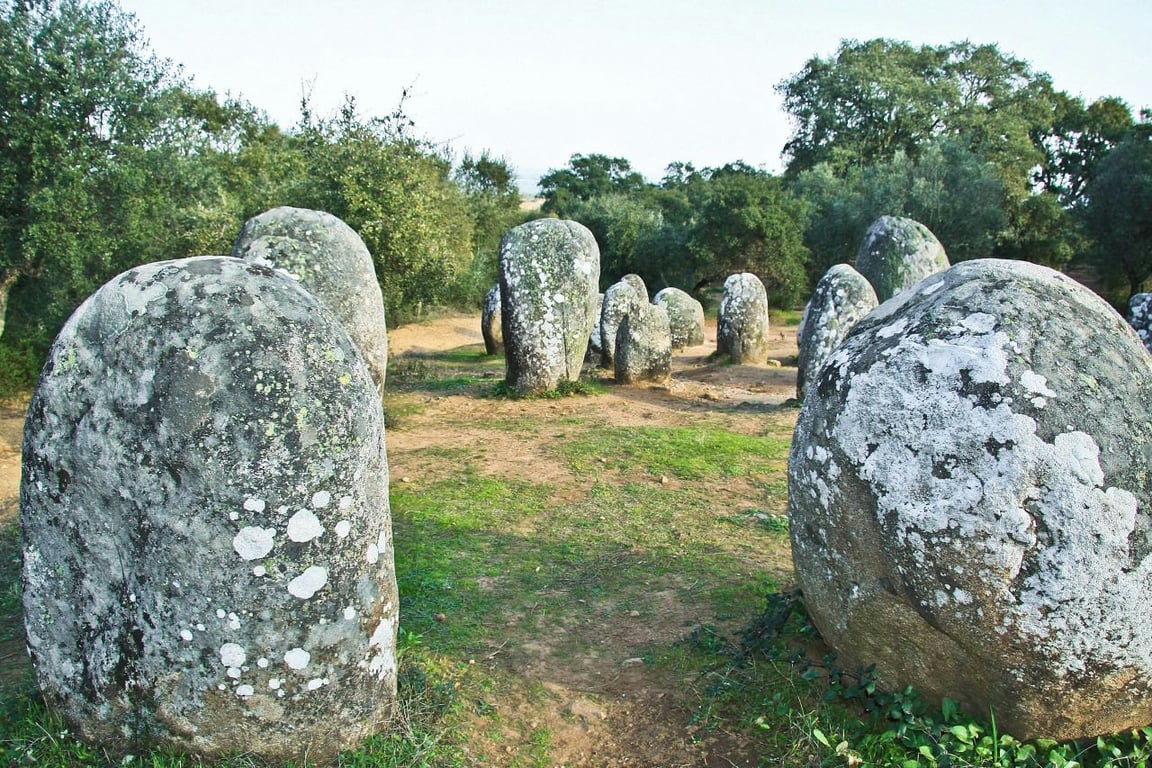 Portugal
Almendres Cromlech
About 95 granite menhirs on an Alentejo hillside, raised and reshaped by Neolithic communities from roughly 7,000 years ago.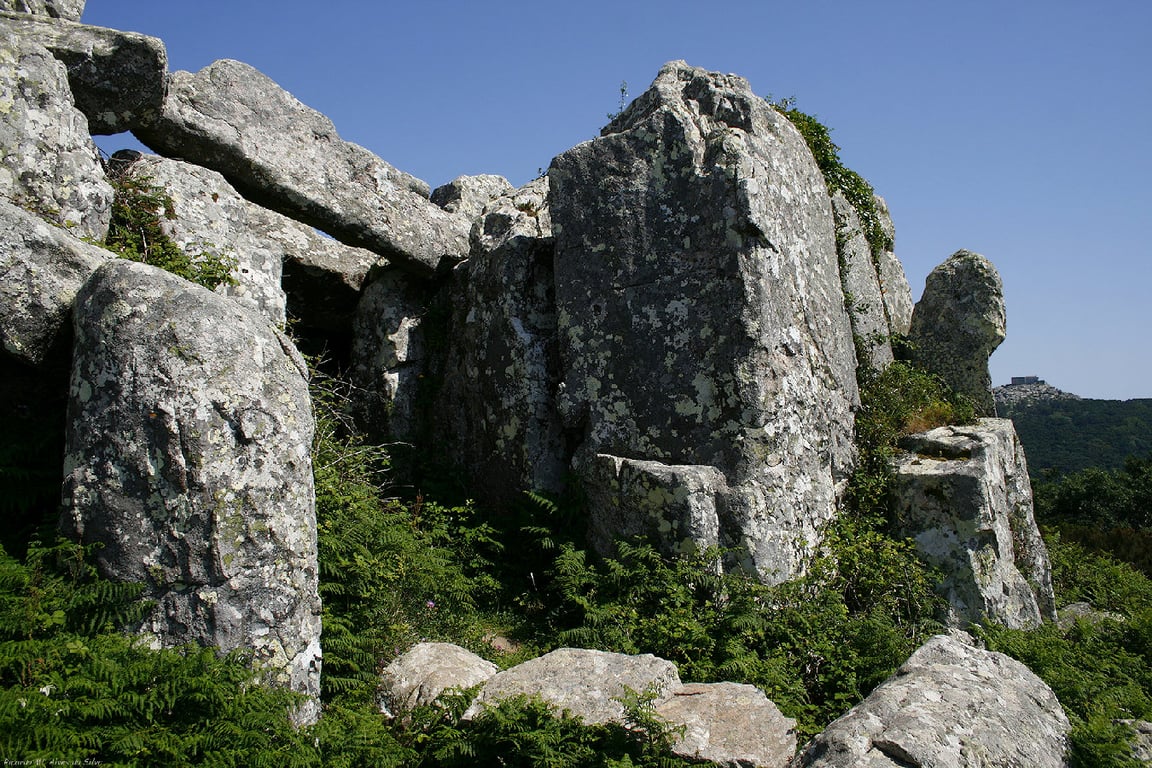 Portugal
Anta de Adrenunes
Granite boulders on a Sintra hilltop, listed as a dolmen in 1910, where no burial has yet been found and every reading is still open.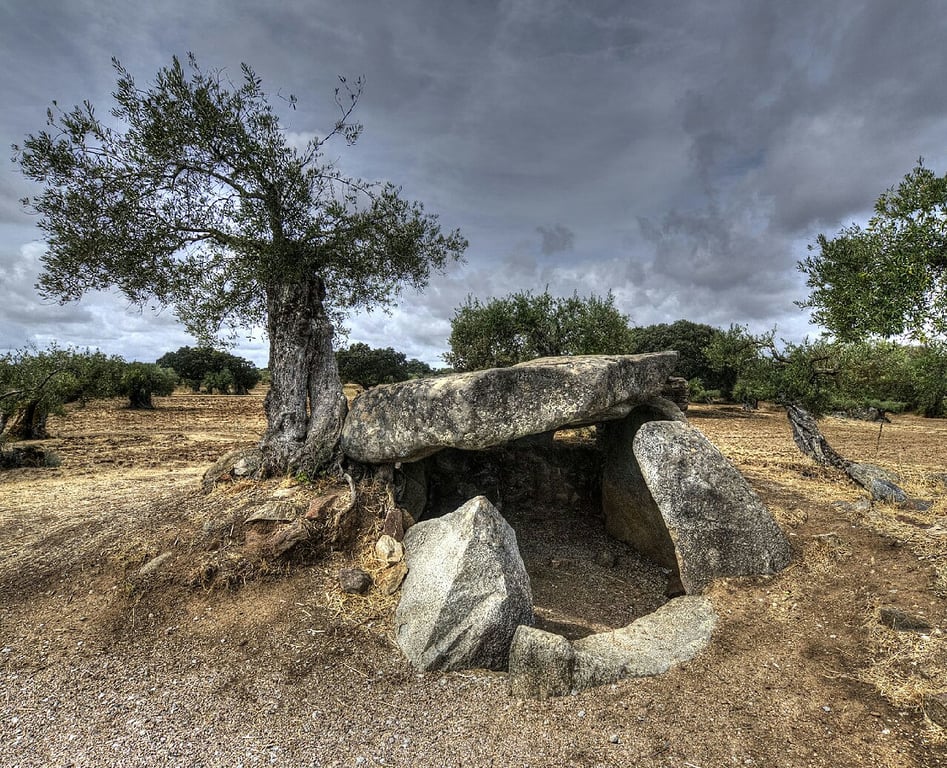 Portugal
Anta do Olival da Pega
Two great Alentejo dolmens: one once thought Portugal's largest, the other later ringed by Copper Age beehive tombs.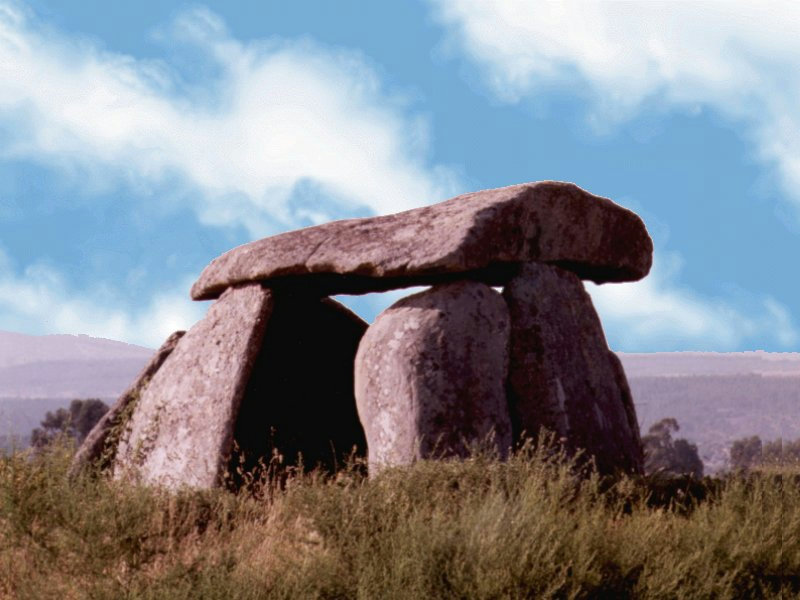 Portugal
Anta do Tapadão
Seven granite slabs, some leaning inward, still hold up a single capstone about 4 meters across on a plateau in the Alto Alentejo.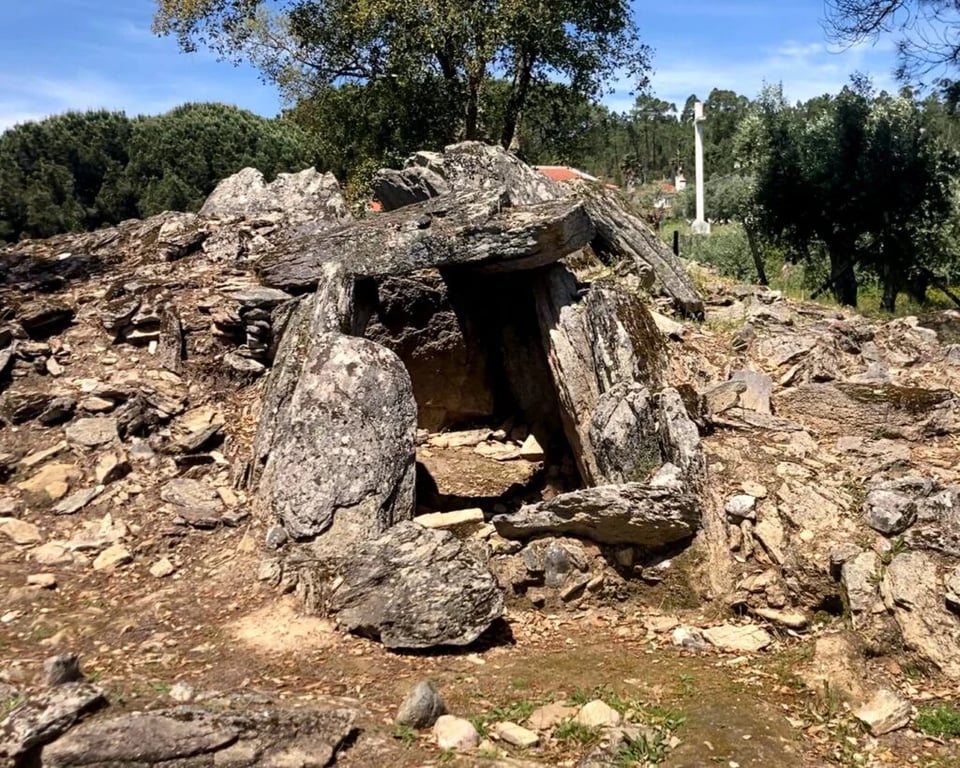 Portugal
Anta do Vale da Laje
A five-sided stone chamber near Tomar, where Neolithic pots held the first direct traces of milk and dairy found in Iberia.