Alatri Cyclopean Walls
Alatri's monumental walls rise, a puzzle of colossal, dry-stacked stones defying millennia. Witness engineering from a forgotten age.
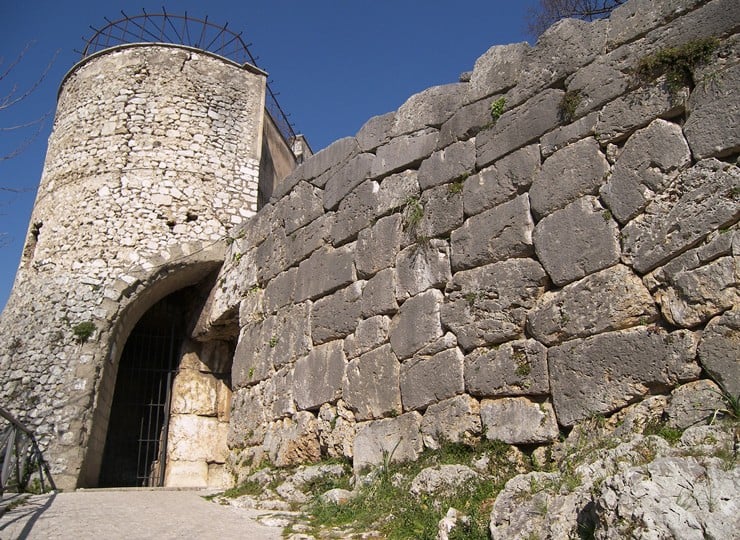
In the heart of the Lazio region, within Italy's Frosinone province, stands the magnificent Alatri Cyclopean Wall – a monumental testament to pre-Roman engineering and an enduring mystery that has captivated historians and archaeologists for centuries.
These colossal fortifications, often referred to as megalithic structures, encircle the ancient acropolis of Alatri, showcasing an architectural prowess that defies their age.
Walking alongside these ancient stones is to step back into a forgotten era, where giants were believed to have hewn and placed these immense blocks, forming an impregnable defense for a burgeoning civilization.
Whispers of the Hernici
The origins of the Alatri Cyclopean Wall are deeply rooted in the history of the Hernici, an Italic tribe who inhabited this strategically vital area long before the rise of Rome. Flourishing between the 6th and 4th centuries BCE, the Hernici were renowned for their formidable defensive structures, and Alatri, or "Aletrium" as it was known, served as one of their most important strongholds.These monumental walls were not merely a barrier but a declaration of power and resilience, built to protect the community from rival tribes and later, the encroaching Roman Republic. The construction speaks volumes about their advanced understanding of defense and their ability to mobilize vast resources, creating a legacy that would outlast empires.
A Citadel for the Ages
The strategic placement of Alatri on a hilltop made it an ideal location for a fortified settlement. The Cyclopean Walls were meticulously designed to follow the natural contours of the terrain, enhancing its defensive capabilities. This ancient Alatri, with its towering ramparts, was a beacon of civilization in a rugged landscape, a testament to the ingenuity and determination of its early inhabitants to carve out a secure existence.
Stones Without Mortar: The Art of Polygonal Precision
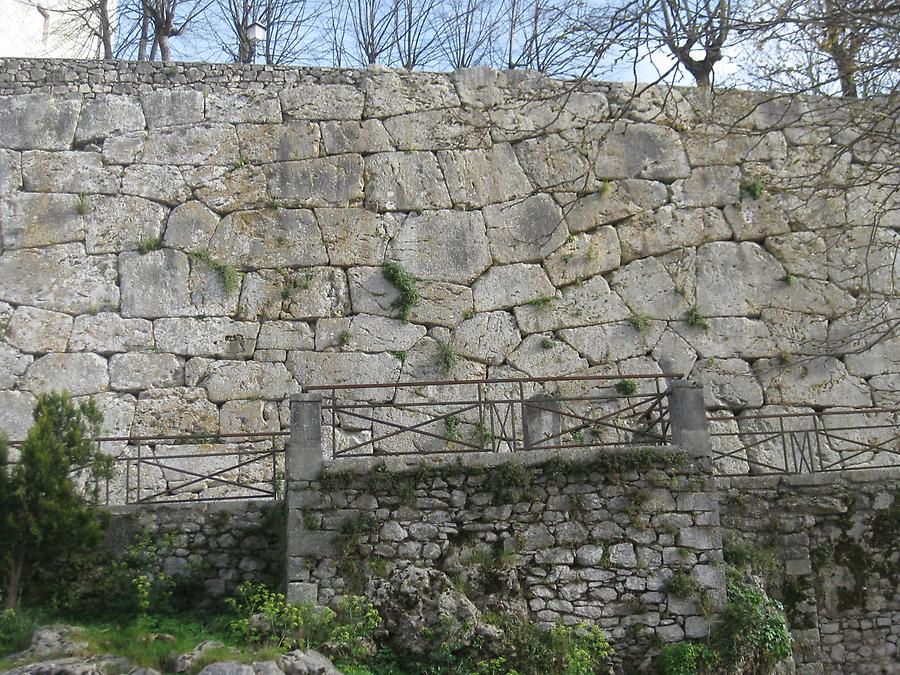
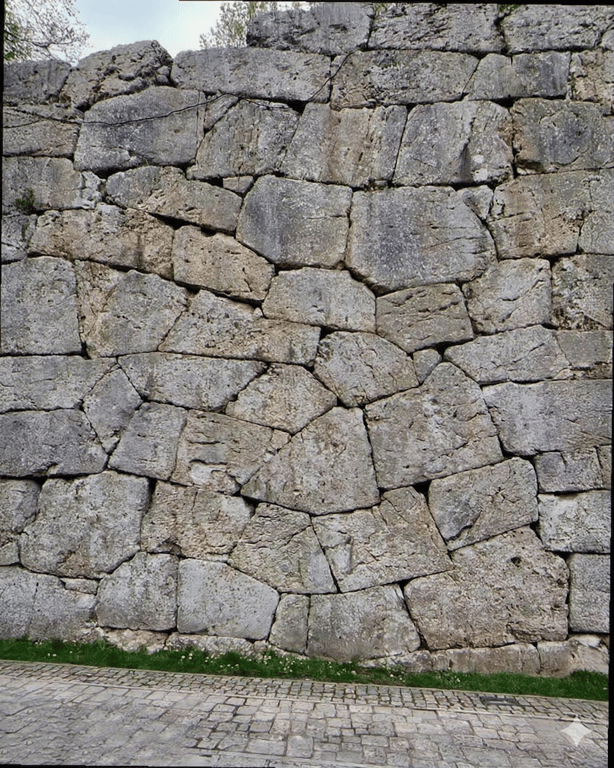
What truly distinguishes the Alatri Cyclopean Wall is its extraordinary construction technique: polygonal masonry. This method involves fitting together massive, irregularly shaped limestone blocks with such incredible precision that no mortar was needed. The sheer weight and interlocking nature of these stones create a structure of immense stability and strength, allowing it to withstand the ravages of time, earthquakes, and countless sieges.The Imposing Acropolis
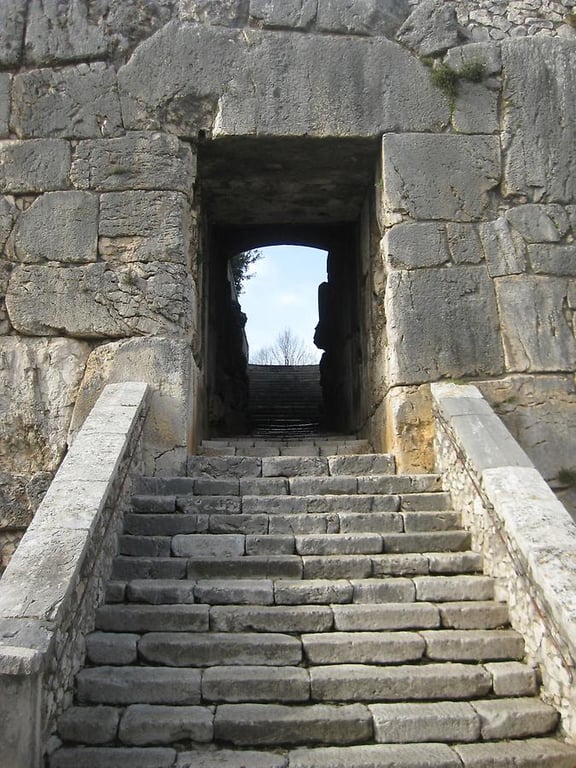
At the heart of the fortifications lies the acropolis, a raised plateau entirely encircled by the Cyclopean Walls. This inner sanctum reveals further examples of the polygonal technique, including monumental gates that once controlled access to the city. The most famous of these is the Porta Maggiore, or "Major Gate," distinguished by its unique monolithic architrave, a single massive stone spanning the gateway.
Another notable entrance is the Porta Minore, or "Minor Gate," which offers different architectural insights. These gateways are not just entry points but architectural wonders, demonstrating a sophisticated understanding of load-bearing structures.
Where History and Legend Converge
The walls have not only protected the town but have also shaped its identity, becoming a powerful symbol of Alatri's deep historical roots. They serve as an open-air museum, narrating tales of ancient struggles, engineering marvels, and the continuous thread of human habitation in this fascinating corner of the Lazio region. For archaeologists, the Alatri Cyclopean Wall continues to be a rich source of study, revealing layers of human activity from the Iron Age through to the Roman period and beyond.
Beyond the well-trodden paths of historical record and conventional archaeology lies a profound enigma etched in stone: the Alatri Cyclopean Wall. While guides may speak of its immense size and ancient origins, they often bypass the deeper currents of mystery that flow around this monolithic marvel.
For those willing to look beyond the surface, Alatri offers not just a wall, but a portal to questions that challenge our understanding of prehistoric ingenuity and the very fabric of forgotten eras.
The Pelasgian Enigma: Builders from the Mist?
The standard narrative attributes Alatri's colossal fortifications to the Pelasgians, a shadowy, pre-Greek people whose very existence hovers on the edge of myth. Yet, the implications of this attribution are rarely explored. Who were these master builders, capable of crafting such precise polygonal masonry without mortar, fitting stones weighing many tons with uncanny accuracy?
Mainstream archaeology often dismisses the "how" as mere brute force, but the sheer scale and sophistication suggest a knowledge of stonework far beyond what we typically assign to early Iron Age cultures. Could the Pelasgians represent a lost branch of humanity, possessing techniques we can no longer comprehend, or perhaps even a heritage from an earlier, forgotten civilization?
Echoes of Giants and Ethereal Guardians
The "Cyclopean" moniker itself hints at the supernatural, a nod to the one-eyed giants of Greek myth, the only beings ancient minds could fathom capable of such construction. But local folklore around Alatri whispers of more specific, less generalized mysteries. Tales persist of strange lights seen flickering around the ancient stones at twilight, or unexplained sounds echoing from within the acropolis.
Some oral traditions speak of the wall not merely as a defense, but as a magical barrier, perhaps built to contain or channel unseen energies, guarded by ancient spirits or even elementals tied to the very earth from which the stones were hewn. Could these be mere superstitions, or echoes of a deeper, pre-Christian understanding of the land's inherent power?
A Chronological Conundrum
While dated broadly to the pre-Roman era, the precise chronology of Alatri’s construction remains a battleground for archaeologists. Some controversial theories push its origins back far earlier than conventionally accepted, into periods where such monumental engineering is deemed impossible with known technologies.
The lack of definitive stratigraphy directly linked to the initial construction, or the occasional discovery of anachronistic artifacts in the vicinity, fuels speculation. Was Alatri built by a civilization far more ancient and capable than our textbooks suggest? The debate isn't just about *when* it was built, but *how* – challenging our understanding of technological progression and suggesting the possibility of forgotten sciences or ingenious methods lost to the ages.
A Shared Ancient Blueprint?
Alatri's polygonal masonry is not unique; similar "cyclopean" structures appear across the globe – from Mycenae in Greece to Sacsayhuaman in Peru, and even enigmatic walls in Japan. Is this merely a remarkable convergence of building techniques, or does it point to a shared, global architectural blueprint from a lost era?
Proponents of this theory suggest a common, advanced knowledge possessed by a widespread, ancient culture, or even a pre-cataclysmic civilization whose remnants influenced disparate peoples. Could these sites, including Alatri, be part of a vast, interconnected network, perhaps serving astronomical, energetic, or even geopolitical purposes we are only beginning to re-imagine? The Alatri Cyclopean Wall stands not just as a local wonder, but as a silent, monolithic question mark in the grand tapestry of human prehistory.
Alatri Cyclopean Walls — photo gallery
Alatri Cyclopean Walls — collectible cards
Collectible cards for this site — AI-generated illustrations from our memory game, not photographs of the site.