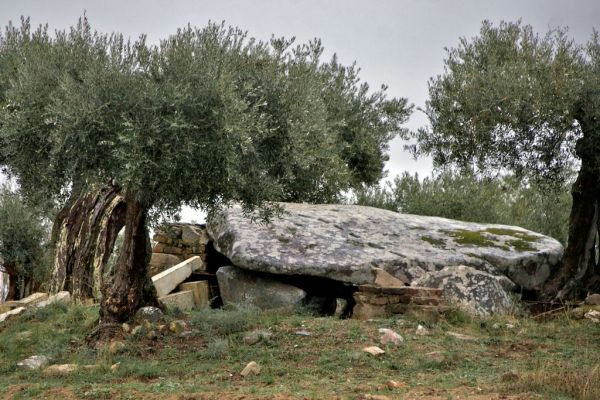
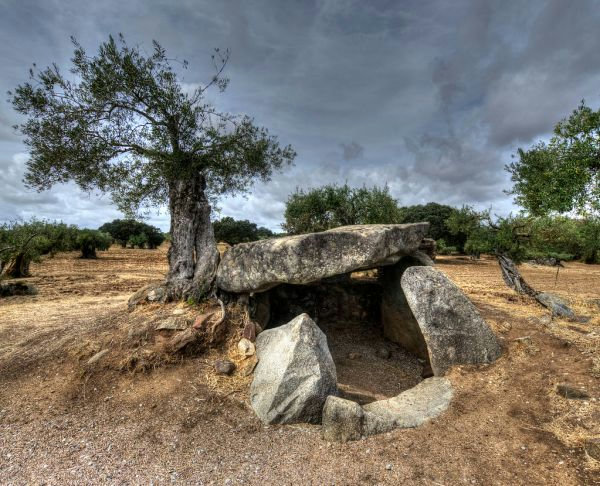
Anta do Olival da Pega
Known as a cathedral of Alentejo megaliths, this colossal passage tomb once housed hundreds of individuals. Its sheer scale reveals the Neolithic era's sophisticated engineering.
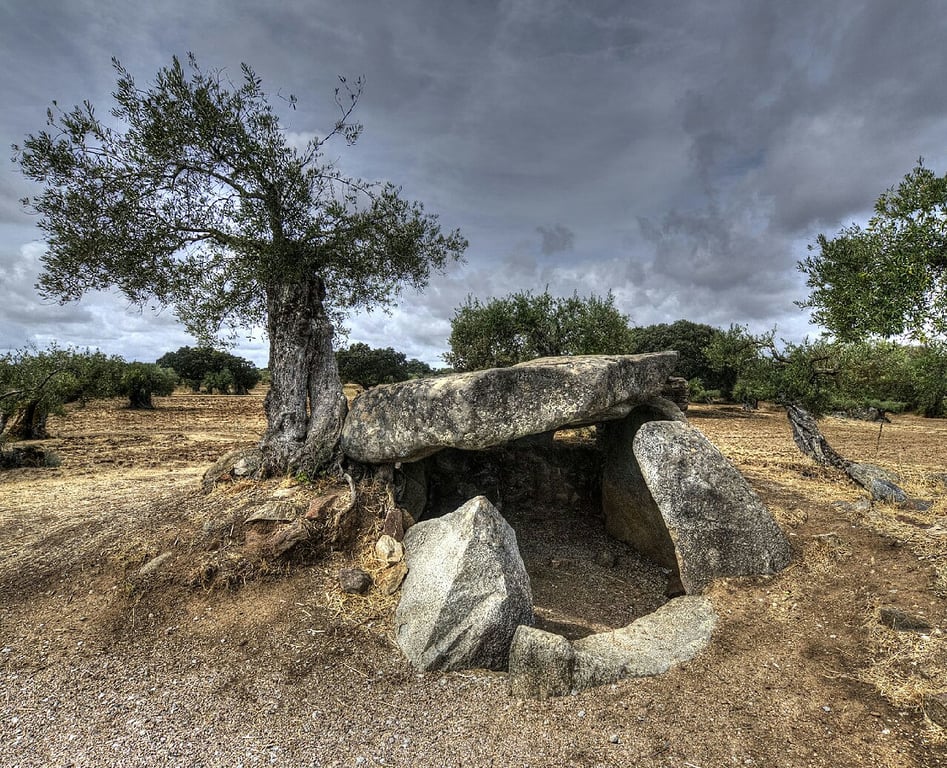
Anta do Olival da Pega
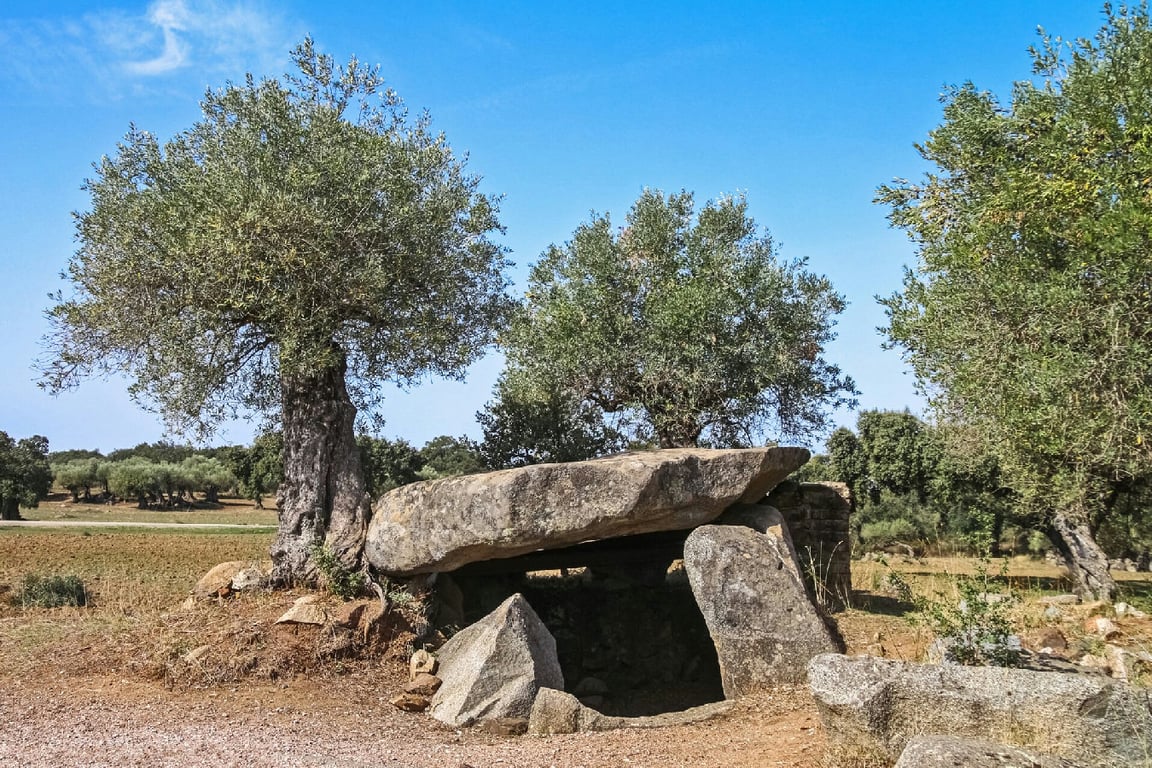
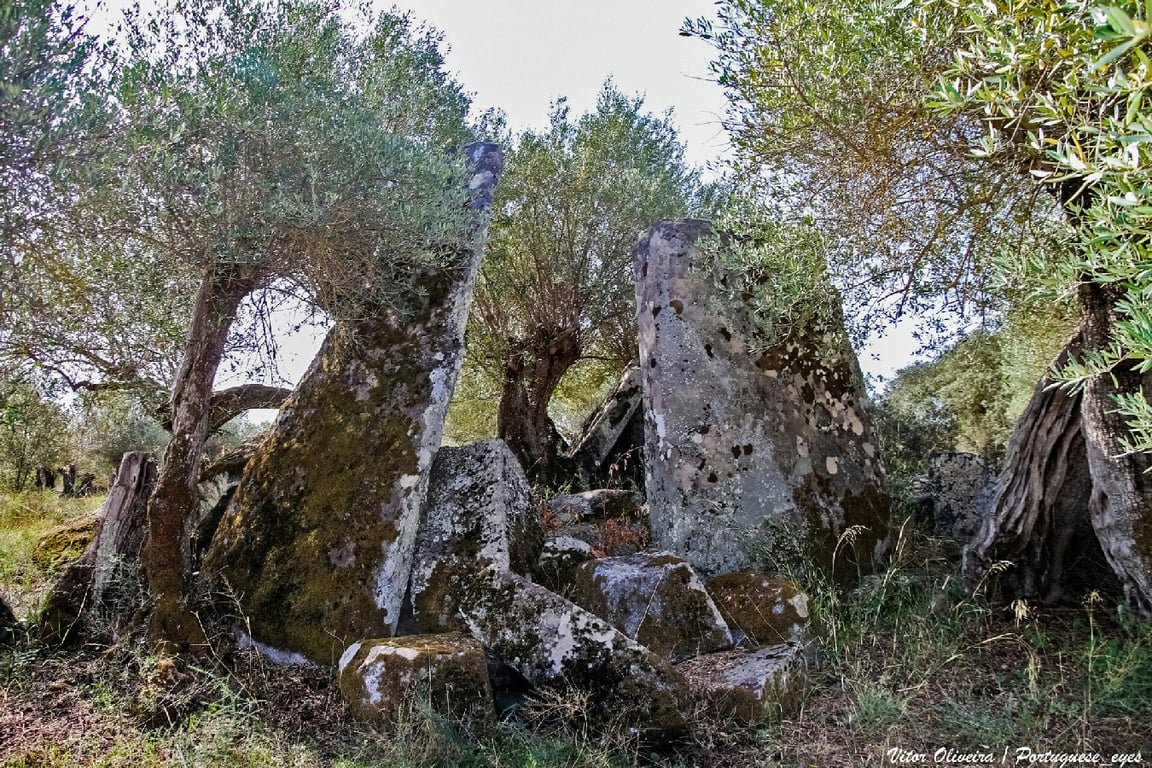
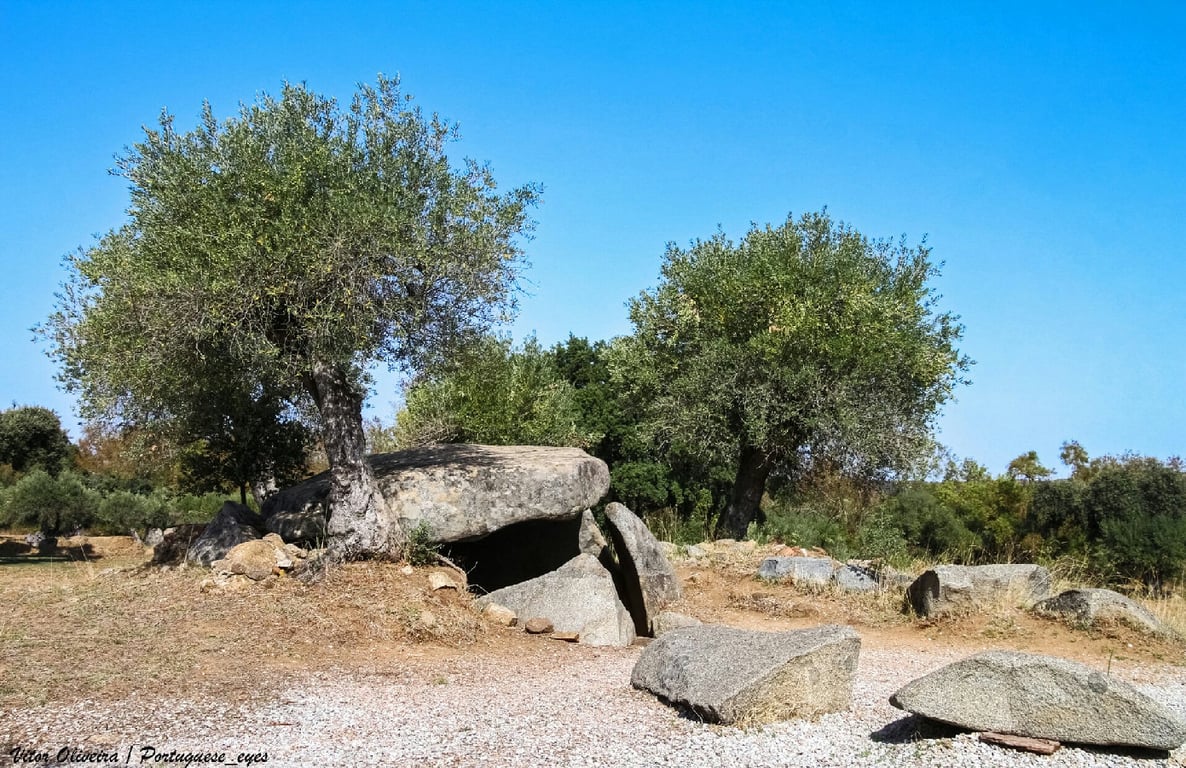
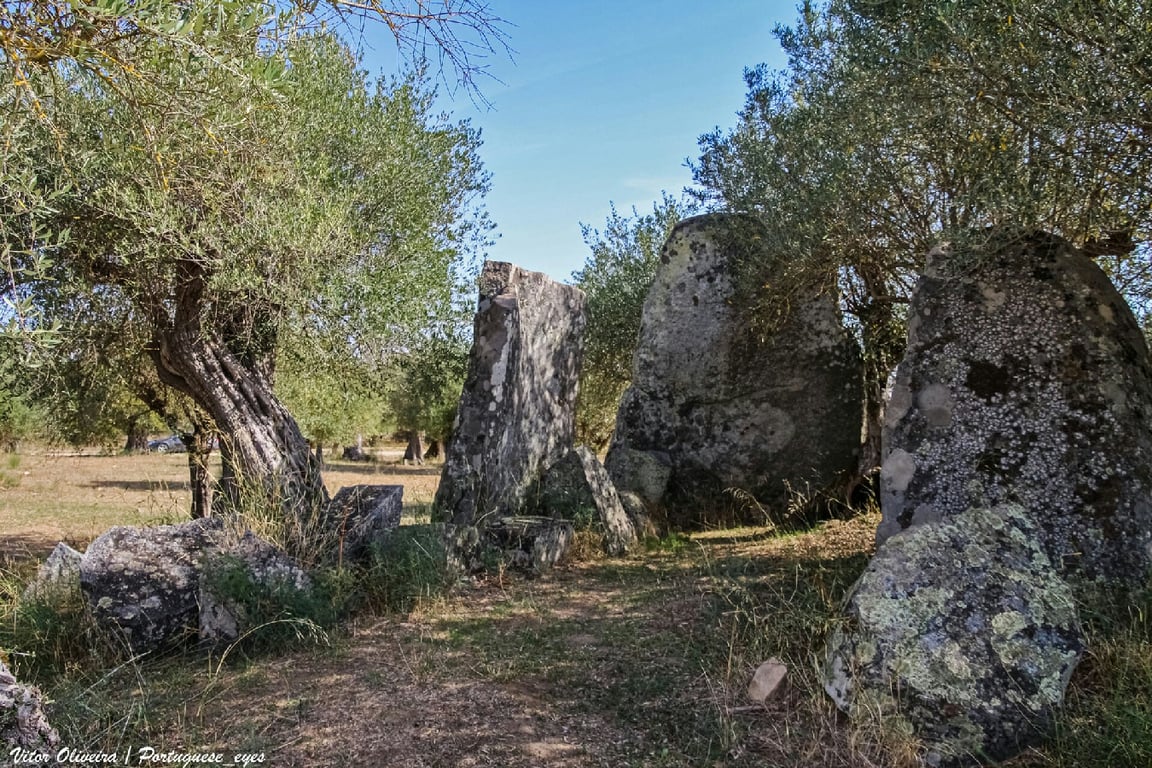
Deep in the megalithic heartland of the Alentejo, the Anta do Olival da Pega is a monument of breathtaking scale and solemn purpose. Often called the 'Cathedral of Megalithic Art' of the region, this colossal passage tomb is one of the largest and most complex ever discovered in Portugal. Constructed around 3,500 BCE, it served as a collective burial chamber, a house for the dead that was used and reused by a community over many centuries. The sheer size of the stones and the complexity of the structure reveal the sophisticated social organization and engineering skills of its Neolithic builders. Today, though its roof has long since collapsed, its remaining stones stand as a powerful monument to prehistoric beliefs about life, death, and the afterlife. It is a key site within the Monsaraz megalithic circuit, offering a profound insight into the funerary practices of our ancestors.
A House for Generations of Dead
The Anta do Olival da Pega is what archaeologists classify as a 'passage grave'. Originally, it consisted of a long, narrow corridor built from large upright stones (orthostats) leading to a spacious, polygonal main chamber. This entire structure was once covered by a massive mound of earth and smaller stones, called a tumulus or 'mamoa', creating an artificial hill in the landscape. The main chamber, formed by seven towering granite monoliths, is where the deceased were laid to rest. Archaeological excavations at the site have been incredibly rich, uncovering the remains of over a hundred individuals. Alongside them were found numerous grave goods, items intended to accompany the dead into the afterlife. These included hundreds of flint arrowheads, polished stone axes, ceramic vessels, and personal adornments like slate beads and pendants. These artifacts provide invaluable clues about the technology, culture, and social hierarchy of the community that built and used this extraordinary tomb.
Engineering the Afterlife
The construction of Olival da Pega was a monumental undertaking that would have required the coordinated labour of a large and well-organized group. The granite slabs used in its construction weigh many tonnes each and were likely quarried several kilometres away. Transporting and erecting these massive stones using only ropes, logs, and sheer human force was an incredible feat of Neolithic engineering. The purpose of such a monumental effort was to create an eternal and imposing home for the ancestors. These tombs were not just places of burial; they were sacred sites, powerful symbols of the community's lineage, identity, and claim to the surrounding land. The use of the tomb over many generations reinforced social cohesion and the connection between the living and the dead. The entrance was likely sealed after ceremonies, only to be reopened for subsequent burials, making it a dynamic centre of ritual life for centuries.
The Pega Necropolis
The great dolmen does not stand in isolation. It is the centrepiece of a wider necropolis, a prehistoric cemetery that includes several other, smaller tombs in its immediate vicinity. This concentration of funerary monuments indicates that the area held a deep and lasting significance for the local population. Together, they form a landscape dedicated to the ancestors, a city of the dead that mirrored the settlements of the living. Visiting the Anta do Olival da Pega today is a humbling experience. Standing within the ruins of its grand chamber, one can feel the immense weight of the stones and the even greater weight of the thousands of years of history they have witnessed.
The Untold Secrets of Anta do Olival da Pega
Beyond the grandeur acknowledged in guidebooks, Anta do Olival da Pega conceals layers of enigma that beckon the open-minded explorer. This monumental passage tomb, often celebrated for its sheer scale, holds whispers of purposes far more profound and mysterious than mere interment. It stands as a silent sentinel, guarding not just the bones of the ancient dead, but also an untold history etched into its colossal stones, a narrative that challenges our conventional understanding of its builders and their world.Echoes in Stone: The Uncoded Language of the Walls
While often termed a "Cathedral of Megalithic Art," the true meaning behind Anta do Olival da Pega's intricate engravings remains largely a mystery, rarely delved into beyond surface descriptions. Scholars note the presence of zigzags, wavy lines, and anthropomorphic figures, but what if these are more than decorative motifs? Some unconventional theories propose they represent an ancient cosmology, a star map, or even the visual record of shamanic journeys. Imagine the chamber not merely as a tomb, but as a canvas for a lost esoteric language, communicating concepts of fertility, death, rebirth, or even the pathways to other realms, understood only by the initiated. The specific placement and recurrence of certain symbols suggest a deliberate, symbolic narrative awaiting decipherment.
Guardians of the Stone Heart: Whispers of the Mouras Encantadas
Deep within the Alentejo's folklore, ancient sites like Anta do Olival da Pega are often linked to the enchanting, yet elusive, *Mouras Encantadas*. These mythical beings, often depicted as beautiful princesses of Moorish descent, are said to guard immense treasures or hidden knowledge within megalithic structures, only revealing themselves to those pure of heart or on specific enchanted nights. Legend has it that the very stones of Anta do Olival da Pega pulse with their ancient magic, and that on certain solstices, their ethereal voices can be heard, guiding seekers to revelations, or warning away the avaricious. Could the monument's colossal scale and enduring presence be attributed to the protective magic of these unseen guardians, ensuring its secrets remain largely undisturbed?
Beyond the Grave: A Temple to the Cosmos?
While its function as a collective burial chamber is undeniable, some provocative theories suggest Anta do Olival da Pega served a dual, perhaps even primary, role as a sophisticated celestial observatory or a ritualistic sound chamber. While precise alignments are challenging to prove definitively, the orientation of many passage tombs often hints at solstitial or equinoctial sunrises. What if this anta was meticulously aligned to capture specific celestial events, marking agricultural cycles or spiritual calendars? Further, the unique acoustics within such large stone structures have led to theories that these spaces were designed to amplify specific sounds or chants, perhaps to induce altered states of consciousness for ritualistic purposes, transforming the tomb into a resonant temple for communion with the cosmos or the ancestors.
The Alentejo's Global Echo: Threads Across Ancient Seas
The sheer architectural ambition and specific artistic elements found at Anta do Olival da Pega prompt intriguing, albeit speculative, questions about its potential connections to broader megalithic cultures across ancient Europe. Are the shared structural complexities and symbolic language with passage tombs in Brittany, Ireland, or even further afield mere coincidence, or do they hint at a vast, interconnected network of knowledge, trade, and shared spiritual beliefs? Could there have been ancient seafaring routes that facilitated the exchange of advanced architectural blueprints or esoteric wisdom? The possibility suggests a level of communication and cultural diffusion among prehistoric peoples far more sophisticated than traditionally assumed, challenging the notion of isolated development and painting a picture of a truly globalized ancient world.
Anta do Olival da Pega continues to stand, a monumental question mark etched into the landscape. Its true story may forever elude us, but by daring to explore these unconventional theories and ancient whispers, we glimpse a world far richer, more mysterious, and perhaps infinitely more complex than conventional archaeology allows.
Anta do Olival da Pega — photo gallery