Almendres Cromlech
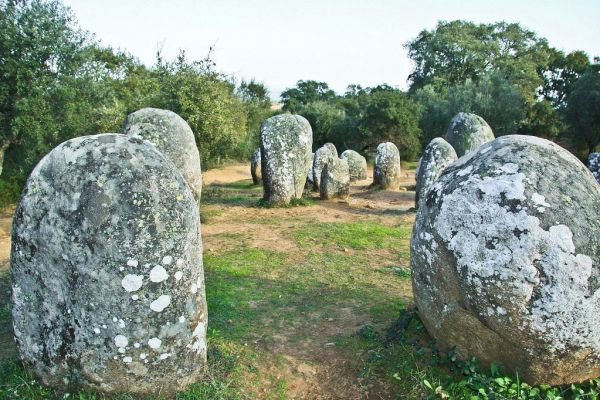
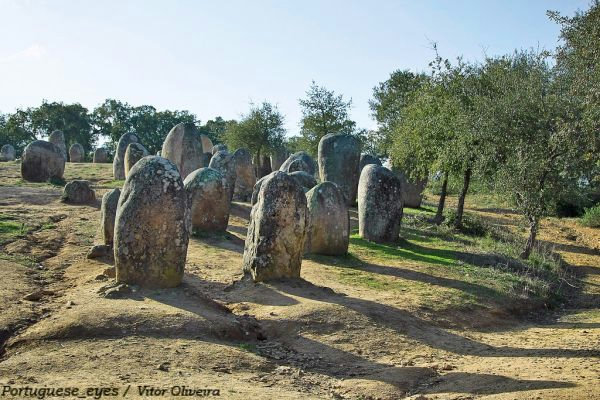
The largest megalithic complex on the Iberian Peninsula. This impressive oval of 95 standing stones is a sophisticated astronomical calendar aligned with the cosmos.
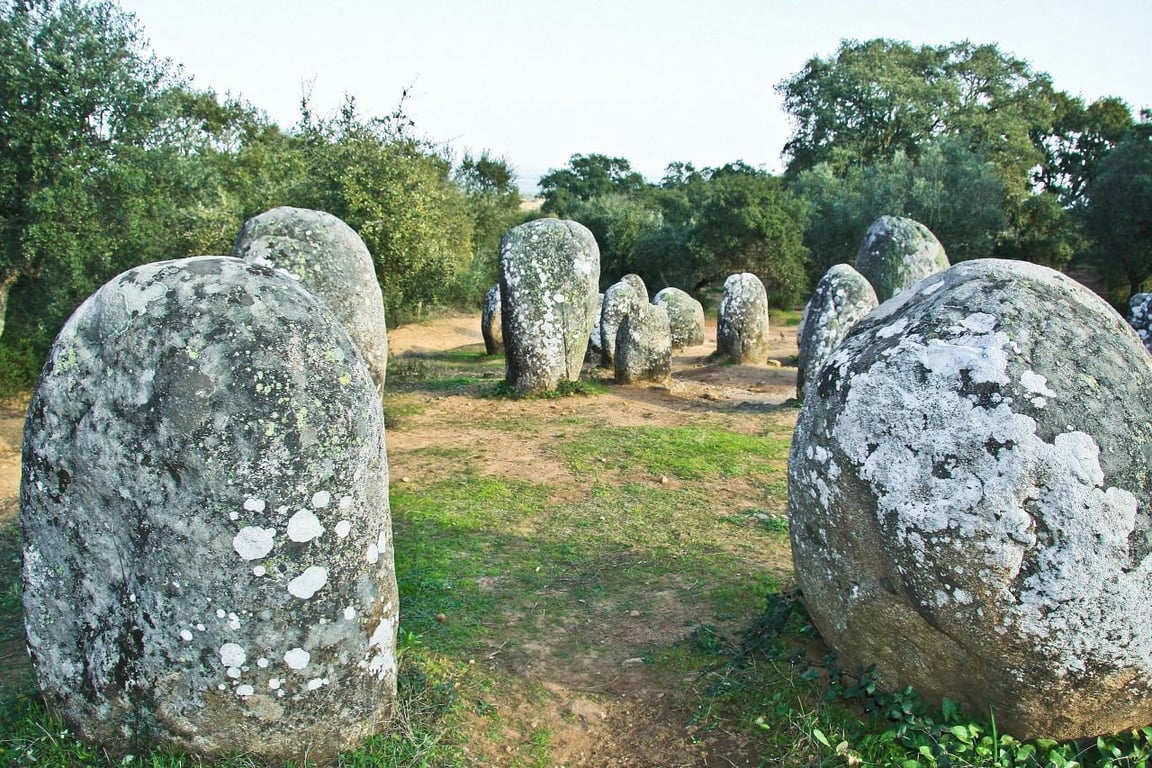
Almendres Cromlech
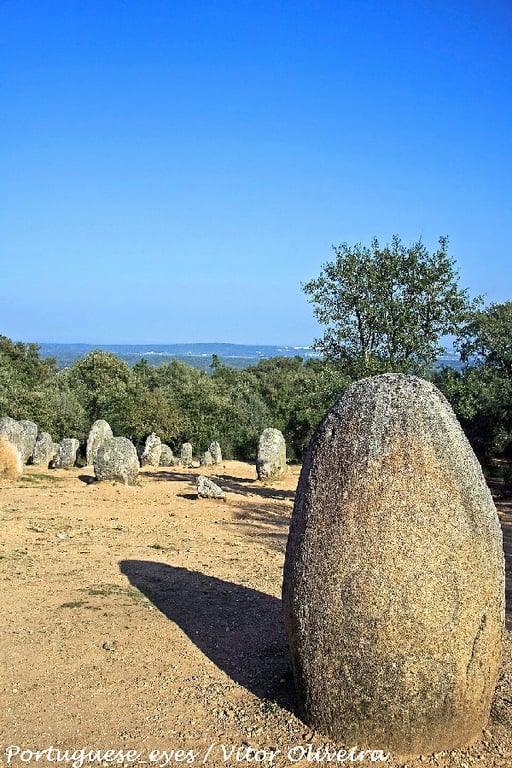
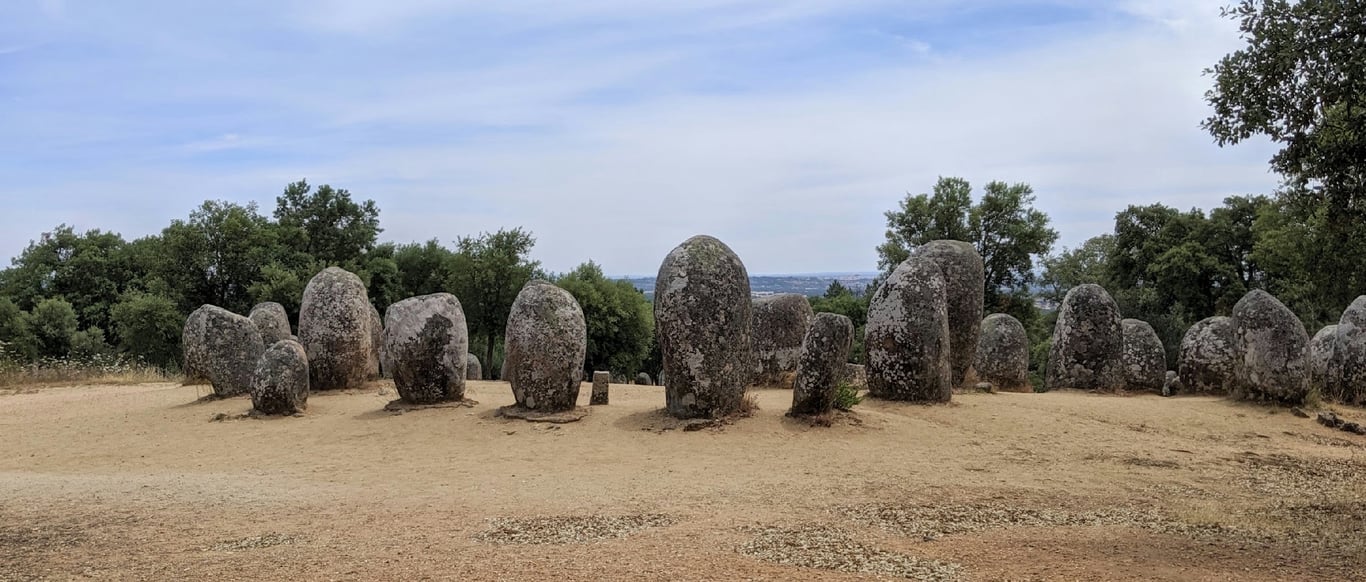
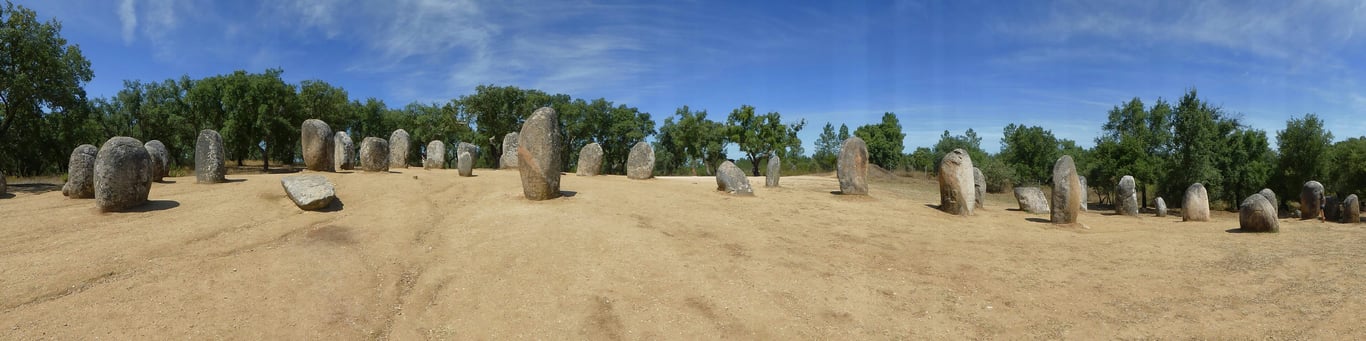
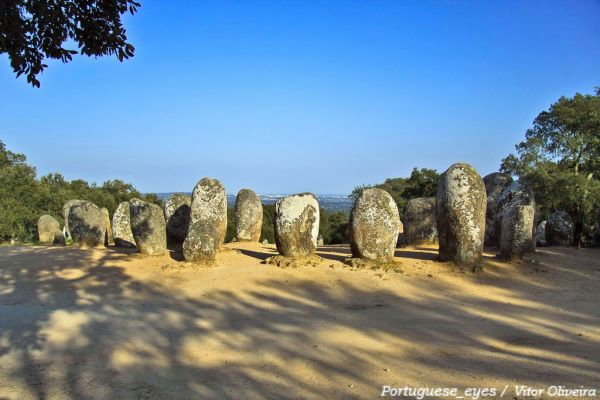
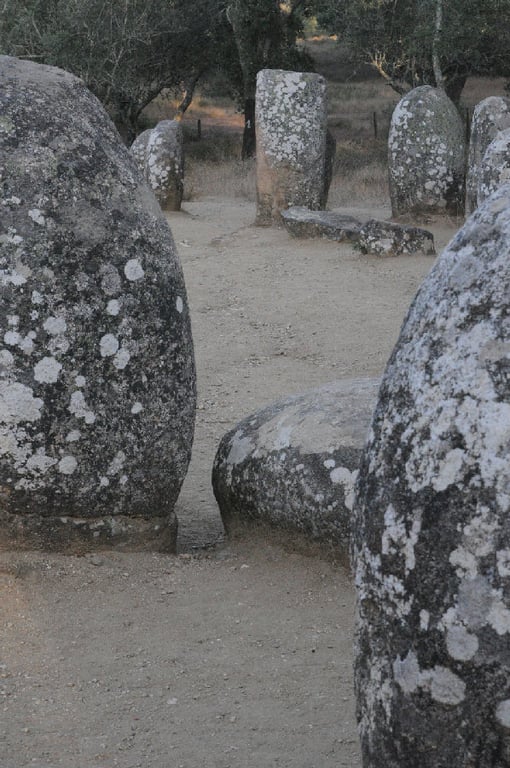
In the heart of Portugal's Alentejo region, surrounded by rolling hills dotted with cork and olive trees, lies the most important megalithic complex on the Iberian Peninsula: the Almendres Cromlech (Cromeleque dos Almendres). Often called the "Portuguese Stonehenge," this magnificent site is both older and, in some ways, more complex than its famous British counterpart. It consists of an incredible 95 standing stones, or menhirs, arranged in two large, concentric circles, forming a grand oval oriented on an east-west axis. The sheer scale of the monument, coupled with its sophisticated astronomical alignments and the enigmatic engravings found on several of its stones, makes it a site of profound archaeological importance and captivating mystical allure.
A Monument Built in Phases
The Almendres Cromlech was not built in a single effort but is the result of at least three distinct construction phases spanning an incredible period from the Early Neolithic to the Late Neolithic, roughly between 6,000 and 3,000 BCE. The earliest part of the monument is a small, circular arrangement of monoliths at the eastern end, dating to around 6,000 BCE. During the Middle Neolithic, this was expanded into the larger, grander oval we see today. This long history of use and reconstruction indicates that Almendres was a central and enduring sacred place for the region's prehistoric communities. The stones themselves are of varying shapes and sizes, some towering over 3 meters tall, sourced from the surrounding granitic landscape. Their careful placement suggests a monumental community effort, driven by a shared and powerful belief system.
A Celestial Calendar in Stone
One of the most fascinating aspects of the Almendres Cromlech is its clear connection to the cosmos. The monument's main axis is aligned with the equinox, the point in the spring and autumn when day and night are of equal length. From a specific vantage point within the cromlech, known as the "Menhir of the Equinox," one can watch the sunrise directly over a nearby, solitary monolith (the Menhir of Almendres) on the morning of the winter solstice. These alignments are too precise to be coincidental. They reveal that the Neolithic builders possessed a sophisticated knowledge of celestial mechanics and that the cromlech functioned as a massive astronomical calendar, crucial for tracking the seasons and organizing their agricultural and ceremonial lives. It was a place where the earthly and heavenly realms converged.
Whispers from the Monoliths
Adding to the site's mystery, a number of the stones bear faint but discernible engravings. These markings are largely abstract, including circles, wavy lines, and dimples, but some are more figurative, with one famous example (Menhir 57) displaying what appears to be a stylized human figure with radiating lines, often interpreted as a "god-goddess" symbol or a representation of a chieftain's staff. These carvings are among the earliest forms of schematic art in Iberia and provide a tantalizing, if cryptic, glimpse into the symbolic world of the monument's creators. Today, walking among the silent, weathered stones of Almendres is a deeply evocative experience, a direct connection to a landscape that has been held sacred for over 7,000 years.
Almendres' Unsung Riddles: Echoes in Stone
While the Almendres Cromlech is widely celebrated as Iberia's grandest megalithic monument, its true depths remain largely unplumbed by mainstream narratives. Beyond the well-trodden paths of astronomical alignment and impressive scale, lies a labyrinth of whispers, enigmatic carvings, and theories that challenge our understanding of its ancient creators. For those willing to peer past the obvious, Almendres offers a profound journey into the very heart of the unknown, inviting speculation on its true purpose, its forgotten lore, and its place in a global tapestry of ancient mysteries.
The Architects of Shadow: Unmasking the Forgotten Builders
Who were the hands that meticulously shaped and erected Almendres' 95 colossal stones? Official accounts often paint a broad picture of Neolithic communities, but the intricacies of their society, belief systems, and the sheer organizational feat involved are rarely explored. This wasn't merely a construction project; it was a generations-long endeavor, evolving over millennia, reflecting a continuity of culture that defies simple categorization. The subtle shifts in arrangement and stone types hint at a living, breathing monument, constantly reinterpreted and reshaped by successive generations, each adding their silent chapter to its stony saga.
The Silent Language of the Stones
Beyond their impressive stature, many menhirs at Almendres bear faint, often overlooked engravings – a silent language etched into their ancient surfaces. Spirals, crescents, crooks, and human-like figures are barely visible to the untrained eye, weathered by millennia of sun and rain. These aren't mere decorations; they are believed to be symbolic representations, perhaps maps of the cosmos, tribal identifiers, or even narratives of creation and death. Some theories propose they mark specific celestial events, while others suggest they are 'spirit traps' or gateways, imbued with the essence of the ancestors or deities, their true meaning lost to the mists of time.
Whispers on the Wind: Tales from the Alentejo Hearth
Long before archaeologists arrived with their measuring tapes, the local people of the Alentejo region held their own truths about Almendres. Passed down through generations, these folk tales and legends offer a glimpse into a world where the sacred and the mundane intertwined, where the stones themselves were active participants in the landscape, not just inert monuments. These stories speak of a time when the world was younger, and the boundaries between reality and myth were far more permeable.
The Giants' Fallen Teeth
One of the most enduring local legends posits that the Almendres Cromlech is nothing less than the fossilized teeth of ancient giants who once roamed the Alentejo plains. These colossal beings, either benevolent creators or formidable adversaries, are said to have lost their teeth in epic battles or simply through the ravages of time, their immense molars petrifying into the iconic menhirs we see today. This tale not only explains the stones' prodigious size but also imbues them with a primal, almost monstrous, energy, rooted deeply in the land's mythical past.
Cosmic Blueprints or Earthly Power?
While astronomical alignment is a widely accepted theory for many megalithic sites, Almendres presents a complex puzzle. Its evolution over time suggests multiple alignments, perhaps reflecting changing celestial observations or shifting cultural priorities. Some researchers argue that the site's primary function wasn't merely celestial observation but rather the harnessing or channeling of telluric energies, making it a sacred nexus point on the Earth's surface.
A Symphony of Stone: Acoustic Echoes
A more avant-garde theory posits that Almendres was designed with an acoustic purpose in mind. Could the arrangement of the menhirs, perhaps combined with specific rituals or the use of certain instruments, have created unique soundscapes or resonant frequencies? Researchers have explored the potential for acoustic amplification or specific echoes within megalithic structures, suggesting these sites weren't just visual spectacles but immersive, multi-sensory experiences, designed to transport participants to altered states of consciousness.
Footprints of a Shared Dawn: Global Echoes
The striking similarities between Almendres and other megalithic sites across Europe and beyond often spark fervent debate. Is it merely a case of parallel cultural development, or does it hint at a deeper, more profound connection – perhaps a shared knowledge base, a common ancestral origin, or even a forgotten global network of ancient builders?
Megalithic Migrations: A Shared Knowledge?
The precision, the choice of materials, and the sheer scale of Almendres resonate with monument-building traditions found from Brittany to the British Isles, and even further afield. Could there have been a "megalithic migration" – not of entire peoples, but of ideas, technologies, and spiritual beliefs, carried across ancient trade routes or maritime pathways? This theory suggests a level of interconnectedness in the Neolithic world far greater than traditionally imagined, painting a picture of a vast, ancient cultural exchange network that left its indelible mark in stone across continents.
Almendres Cromlech — photo gallery