Karahan Tepe
A sister site to Göbekli Tepe, Karahan Tepe reveals a vast and complex ritual landscape that challenges our understanding of prehistoric Anatolia.
Karahan Tepe
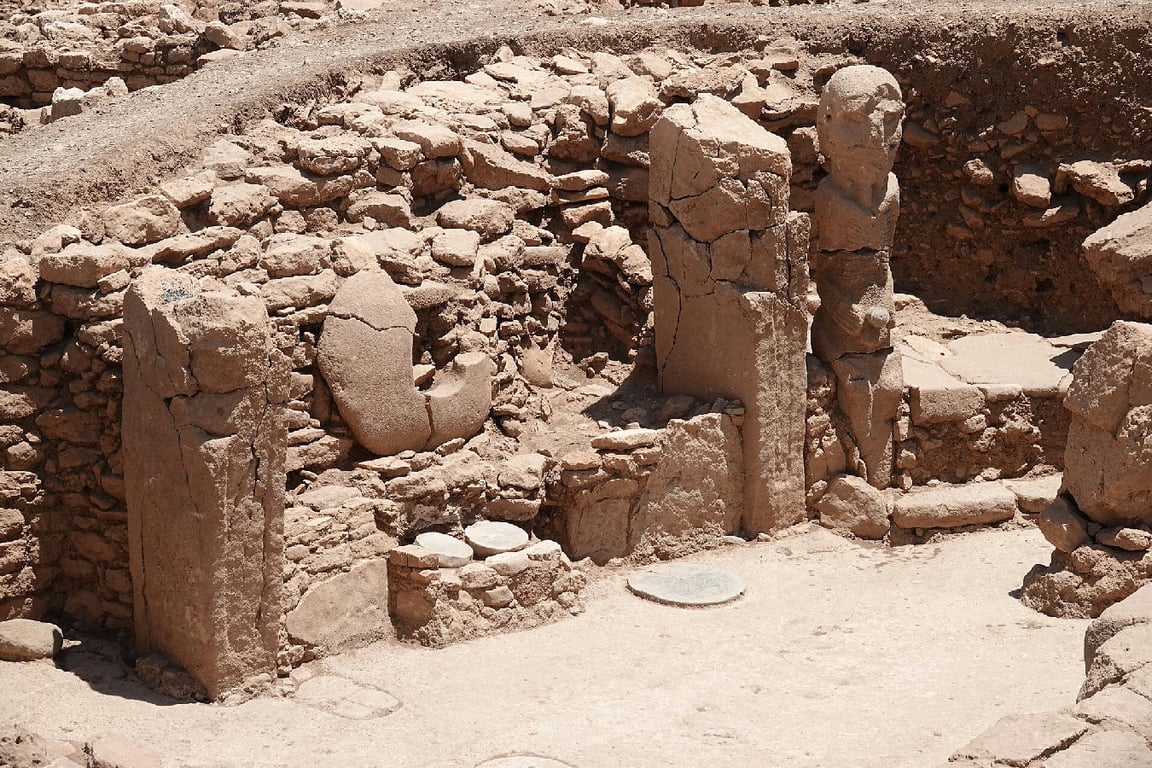
Emerging from the dusty plains of southeastern Turkey, Karahan Tepe is reshaping our understanding of the Stone Age. A contemporary and "sister site" to the world-famous Göbekli Tepe, Karahan Tepe is part of a vast, interconnected ritual landscape now being uncovered by the Taş Tepeler project. While sharing key architectural DNA with its more famous sibling, such as rings of T-shaped pillars, Karahan Tepe displays unique and provocative features that suggest it was a site with a distinct purpose. It offers compelling evidence that the Neolithic revolution in Anatolia was not an isolated phenomenon but a widespread cultural movement, with different communities expressing a shared cosmology in uniquely creative ways. The site covers a large area, with only a fraction excavated, promising even more revelations to come.
Where Humans and Animals Converge
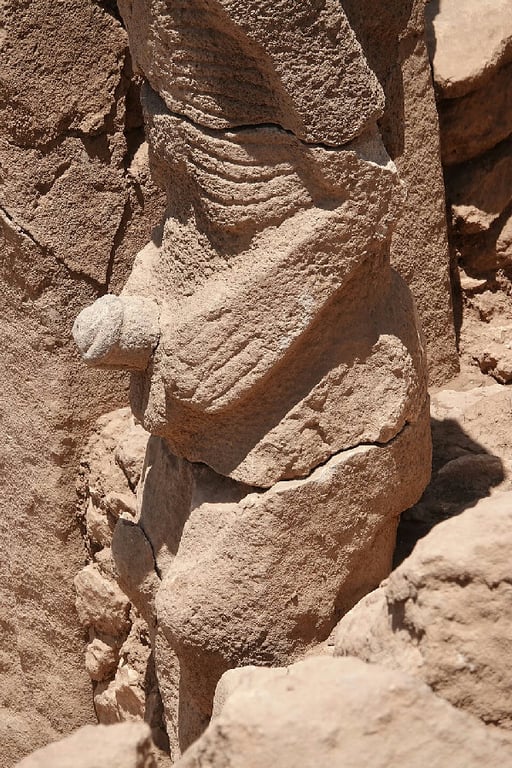
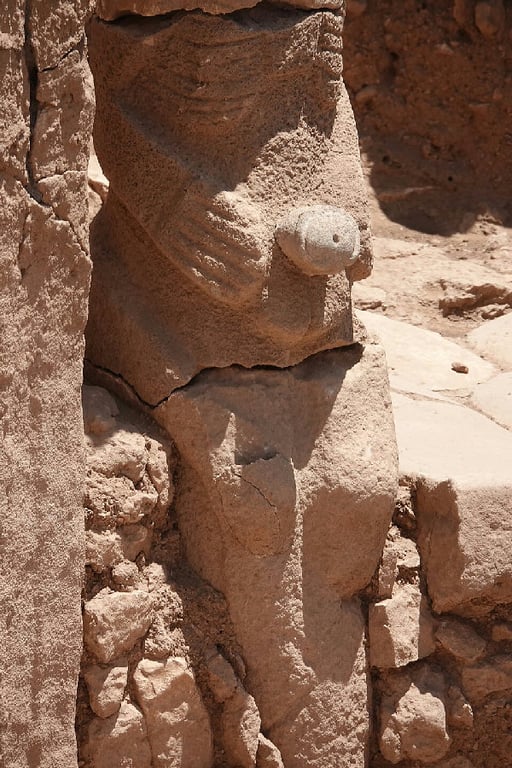
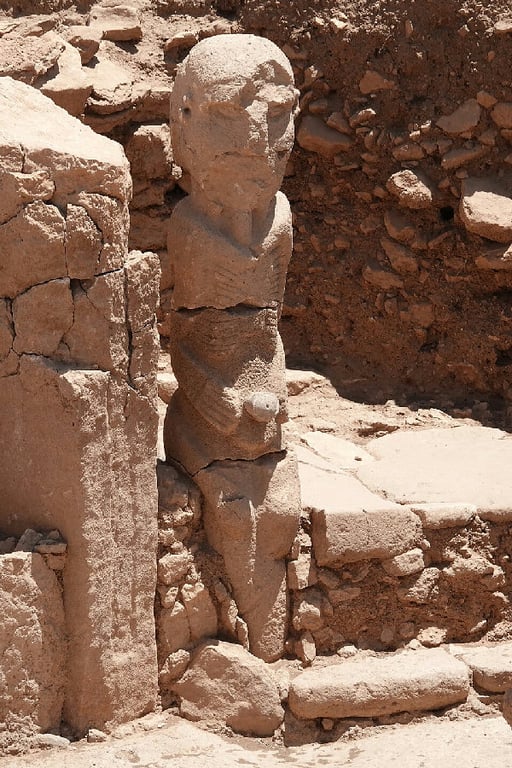
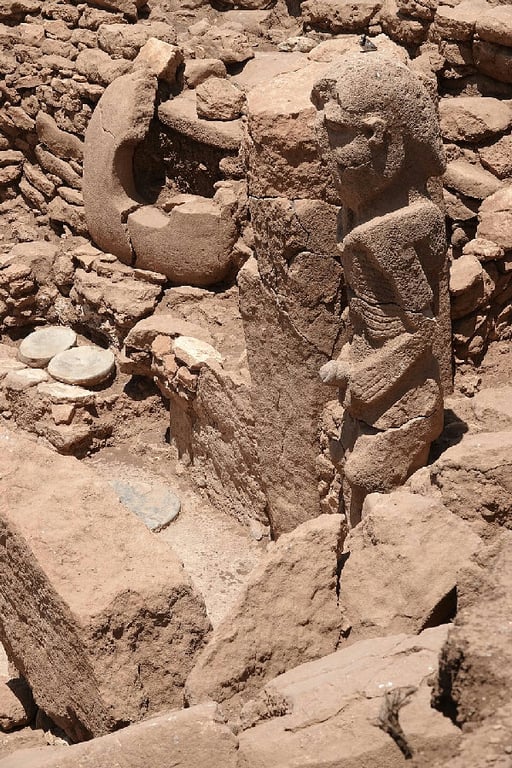
Unlike Göbekli Tepe, where animal reliefs dominate the pillars, Karahan Tepe places a much stronger emphasis on the human form. The art and architecture here are intensely focused on the human figure, often depicted in dynamic and dramatic scenes alongside dangerous animals. Carvings show men carrying leopards, and three-dimensional sculptures emerge directly from the bedrock, creating a powerful, immersive experience. This focus suggests a different kind of ritual practice, perhaps one centered on shamanistic journeys, rites of passage, or myths about the primordial relationship between humanity and the natural world. The art of Karahan Tepe is not merely decorative; it is a narrative carved in stone, telling the stories of a people grappling with their place in the cosmos.
The Chamber of Pillars
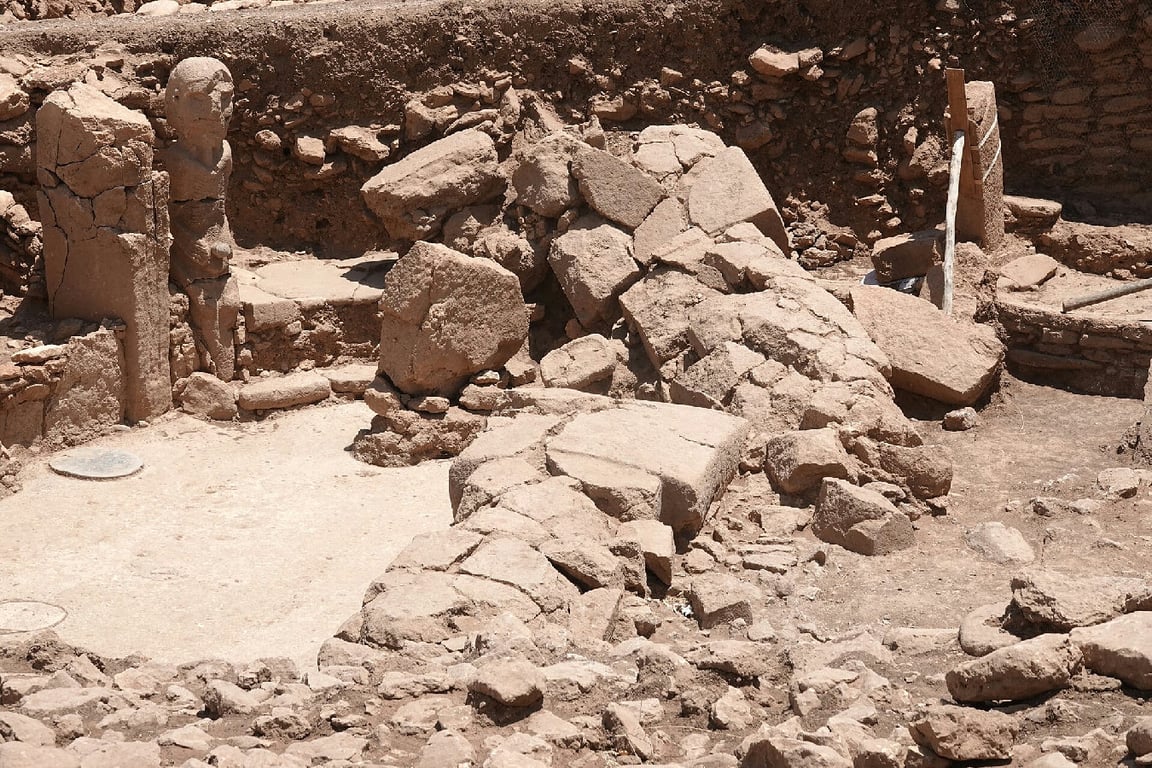
One of the most astonishing discoveries at the site is a large, rock-cut chamber featuring 11 towering phallic-shaped pillars, overseen by a sculpted human head with a sharp jaw and expressive features. This space, unique in the prehistoric world, appears to have been a focal point for complex rituals. A channel for liquids runs through the chamber, hinting at ceremonies involving water, blood, or other offerings. This overtly masculine symbolism is a significant departure from other known sites and points to a complex set of beliefs surrounding fertility, power, and creation. It is a striking example of the architectural and symbolic sophistication achieved by these pre-pottery Neolithic people, who were creating elaborate subterranean spaces long before the rise of settled kingdoms.
A Landscape of Ritual
Karahan Tepe was not an isolated temple but part of a constellation of at least 12 similar sites in the Taş Tepeler region. This indicates a highly organized and widespread society bound by a common set of beliefs and practices. It appears these were not settlements in the traditional sense but were used primarily for ceremonial and social gatherings. The people who built them were likely semi-nomadic hunter-gatherers who would converge on these sacred locations at specific times. The ongoing excavation of Karahan Tepe and its neighboring sites is piecing together a picture of a rich and complex spiritual world that flourished for over a millennium before mysteriously vanishing, leaving behind only these enigmatic stone circles as its legacy.
Beyond Karahan Tepe
While Göbekli Tepe gazes towards the heavens with its abstract animal carvings, Karahan Tepe turns its stone eyes inward, focusing on a far more unsettling subject: humanity itself. This is not just another megalithic circle; it is a haunting tableau of the human form, a place where processions of stone figures and disembodied heads whisper of forgotten rituals. To walk these hills is to step beyond established history and enter a psychological landscape of our deepest Stone Age ancestors, one obsessed with life, death, and transformation.
A Chamber of Disembodied Heads
Deep within the site lies a structure that defies simple explanation. In a purpose-built chamber, a haunting human head with a stark jawline and heavy brow emerges directly from the bedrock, as if surfacing from the underworld. This enigmatic figure is not alone. It is watched over by a silent phalanx of 11 pillars, each unmistakably carved into a phallic shape. A serpentine channel snakes across the floor, connecting the elements in a symbolic flow. Archaeologists are divided on its meaning. Is this a revered ancestor, a primordial creator god, or a depiction of a shaman mid-transformation? The chamber feels less like a public temple and more like a private, terrifying stage for a profound ritual whose script is lost to time.
The Threshold of Consciousness
The sheer strangeness of Karahan Tepe’s human-centric art has given rise to theories that move beyond simple worship. The layout of the site, with its processional paths and hidden chambers, suggests it may have been a place for intense, life-altering rites of passage, where individuals were systematically broken down and reborn with new identities.
Initiation in the Serpent's Maw?
One compelling theory posits that Karahan Tepe was a center for shamanic initiation. The journey through the site could have mirrored a symbolic descent into the spirit world. Neophytes may have navigated dark, narrow corridors before arriving at the chamber of the stone head, representing the final ordeal or the gaining of secret knowledge. The prominent serpent and phallic symbols evoke themes of fertility, rebirth, and underworld travel common in later mythologies. Some researchers speculate that such rituals may have been enhanced by psychoactive plants or extreme sensory deprivation, pushing the human mind to its very limits to commune with a different reality.
A Constellation Carved on Earth
Perhaps the greatest mystery of Karahan Tepe is that it is not a singular phenomenon. It is one of more than a dozen related hilltop sites in the Taş Tepeler region, forming a vast, interconnected ritual landscape. This discovery shatters the image of scattered hunter-gatherer tribes, suggesting instead a highly organized society sharing a complex cosmology. Were these sites a terrestrial map of the stars? Did they form a great pilgrimage route, where different clans would gather for specific seasonal ceremonies at designated locations? Karahan Tepe's role in this network remains unknown, but it was clearly a critical node in a sacred plan of immense scale, a coordinated effort of belief and construction that we are only just beginning to comprehend.
Karahan Tepe — photo gallery