Alcalar Megaliths
Explore a sprawling 5,000-year-old necropolis in the Algarve. Its monumental passage tombs rival the complexity of Egypt's earliest dynastic structures.
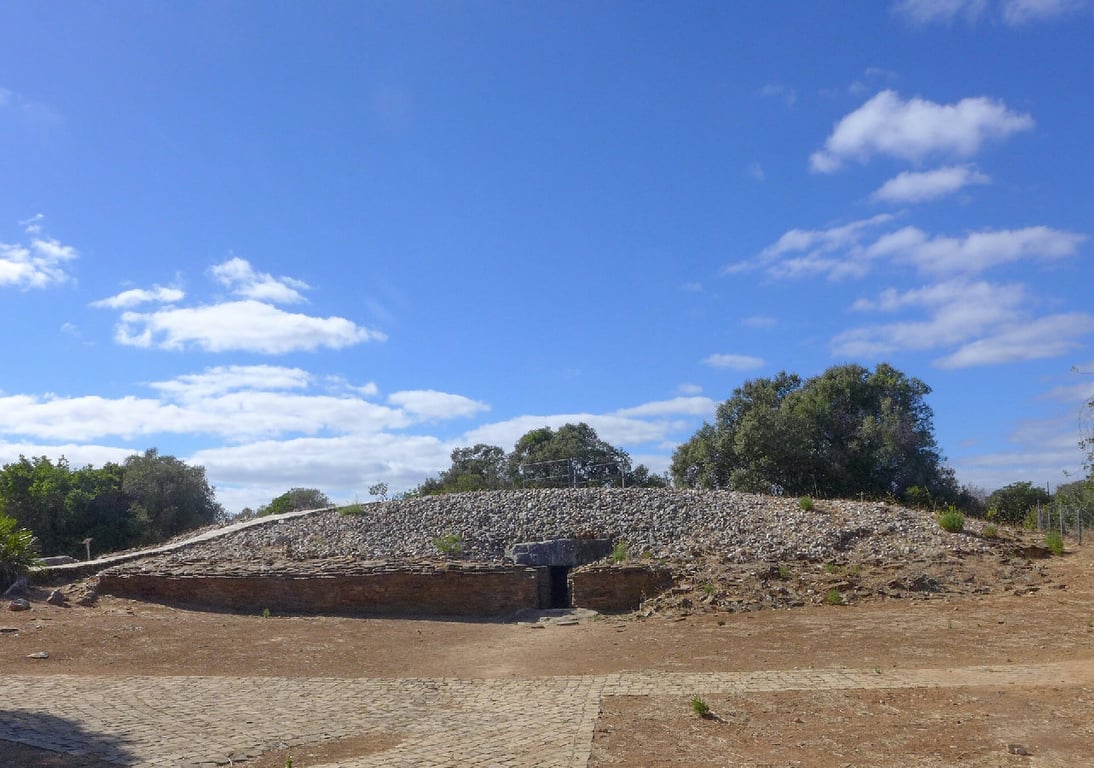
Megalithic Monuments of Alcalar
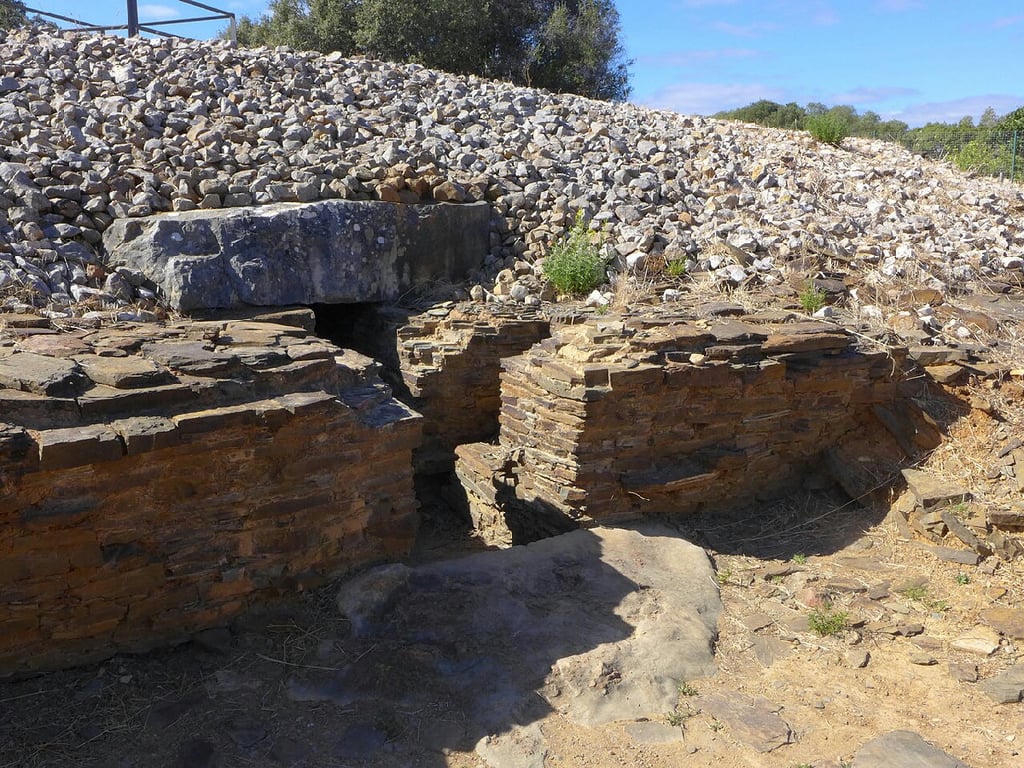
In the rolling hills of the Algarve, a region best known for its golden beaches, lies a prehistoric necropolis of extraordinary significance. The Megalithic Monuments of Alcalar, a designated National Monument, is a sprawling complex of 18 distinct megalithic tombs dating back to the Chalcolithic (Copper Age), around the 3rd millennium BCE. This was not merely a burial ground, but a veritable city of the dead that served a large, sophisticated, and socially stratified community. Its most impressive structures, particularly the grand passage tombs with their false-dome "tholos" chambers, showcase architectural and engineering skills that parallel some of the great funerary monuments of the ancient world, including those of the early Egyptian dynasties.
A City for the Afterlife
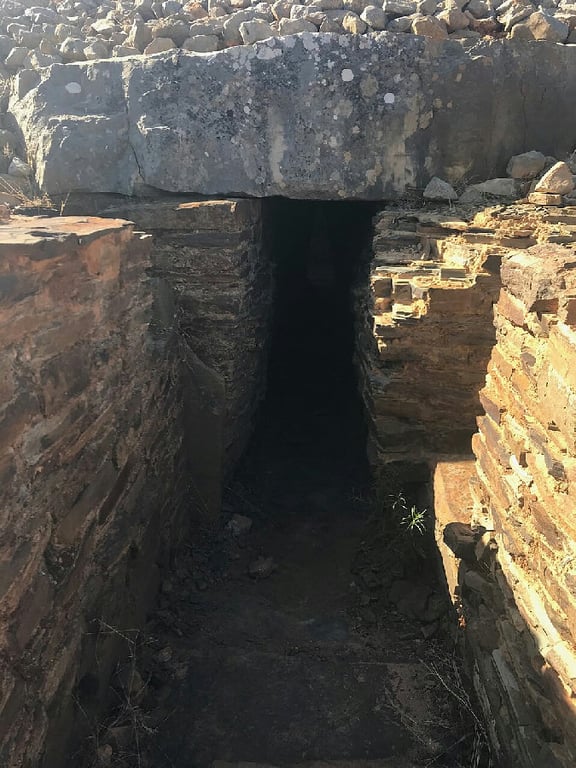
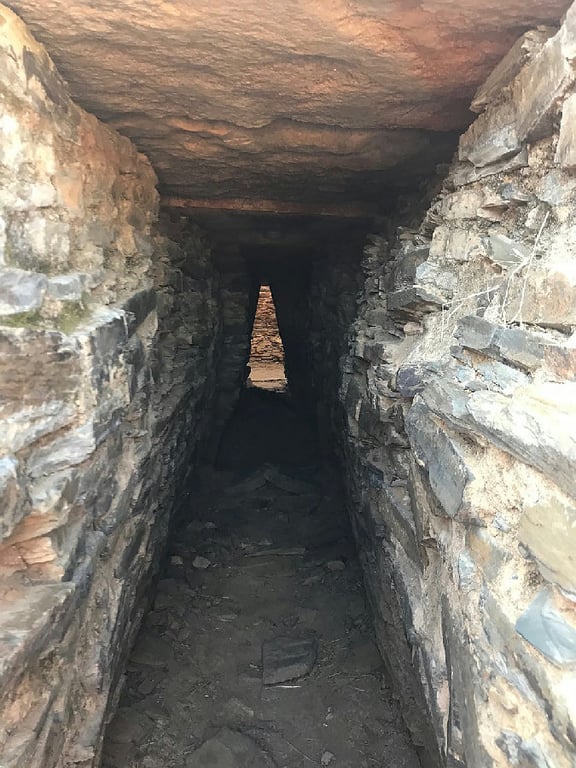
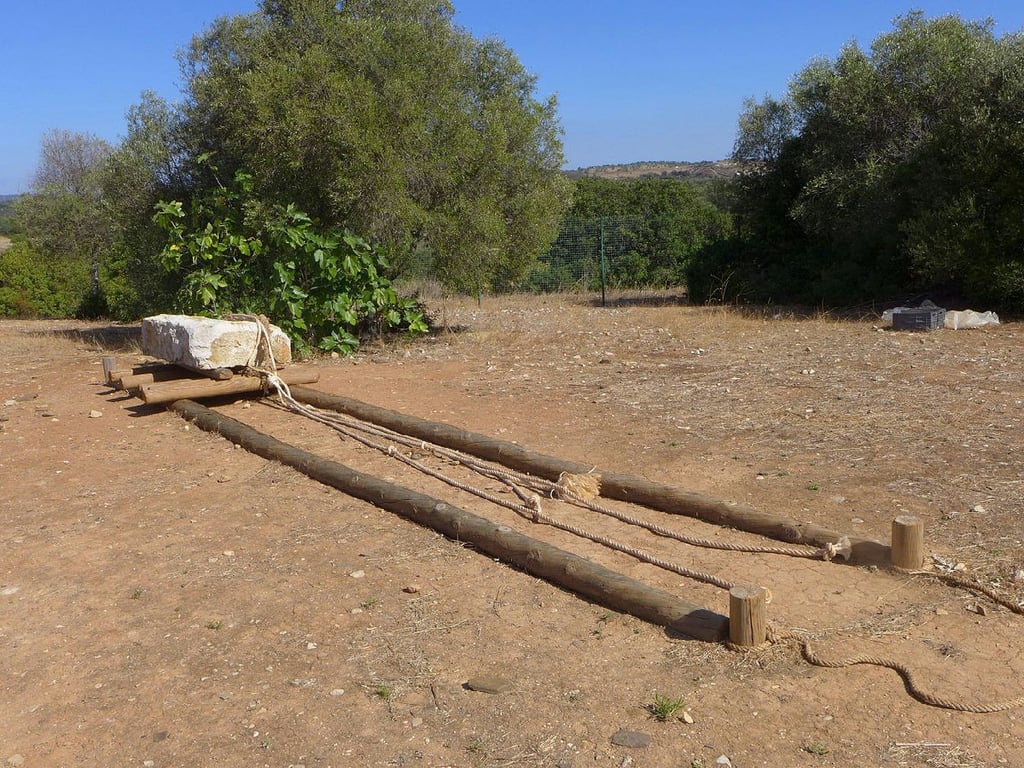
The Alcalar complex is a testament to a powerful and organized prehistoric society. The tombs are not randomly scattered but strategically placed across the landscape, suggesting a planned and evolving sacred geography. The most monumental of these, known as Tomb 7, is a masterpiece of Neolithic engineering. It features a long, stone-lined corridor leading to a circular main chamber nearly 5 meters in diameter. This chamber is roofed by a corbelled or "false" dome, constructed by progressively overlapping rings of stones until they meet at the top. Within the main chamber, smaller side-niches served as private burial spaces, likely for elite individuals. The precision required to build such a stable, enduring structure without mortar is astounding, reflecting a deep understanding of physics and materials. The scale of the construction implies a community capable of mobilizing significant labor for a shared, sacred purpose.
Echoes of Distant Civilizations
The architectural sophistication of Alcalar, especially its tholos tombs, has drawn comparisons to similar structures across the ancient world, from the Treasury of Atreus in Mycenaean Greece to mastaba tombs in Old Kingdom Egypt. While direct influence is unlikely, the parallel development highlights a universal human impulse to create monumental and lasting resting places for the important dead. The niches and side-chambers suggest complex funerary rituals and a belief in an afterlife where the deceased, perhaps family leaders or chieftains, would need their own space. Excavations at Alcalar have unearthed a wealth of artifacts, including flint arrowheads, decorated pottery, tools, and personal adornments made of stone and bone, many of which are now displayed at the nearby Portimão Museum. These finds provide invaluable clues about the daily life, technology, and beliefs of the people who built this remarkable necropolis.
Visiting Alcalar Today
A visit to Alcalar is made accessible and engaging through its excellent on-site interpretation center. The center provides context and reconstructs the lives of the Chalcolithic people who thrived here over 5,000 years ago. Visitors can walk among the various tombs, enter the restored corridor of Tomb 7, and marvel at the ingenuity of its builders. The site serves as a powerful reminder of the deep history embedded in the Algarve landscape, a history that predates the Romans, the Moors, and the seafaring explorers by millennia. It offers a profound connection to the very first settled communities who shaped the land and honored their ancestors with monuments of eternal stone.
The Alcalar Enigma: Beyond Stone and Bone
Beyond the official timelines and archaeological certainties of the Megalithic Monuments of Alcalar lies a landscape shimmering with unanswered questions. While guidebooks speak of a Copper Age necropolis, they fall silent on the strange artifacts, celestial alignments, and lingering whispers that suggest this "city of the dead" was once a place of profound and mysterious power. To truly understand Alcalar, one must look past the stones and listen to the echoes of a world far more complex and connected than we imagine.
The Ivory Trail and the Ostrich Egg Riddle
Within the hallowed chambers of Alcalar's tombs, archaeologists uncovered items that defy simple explanation for a supposedly isolated prehistoric community. Fragments of intricately carved ivory combs and beads, alongside shards of decorated ostrich eggshells, point not to local artisans but to a vast, forgotten network of trade. These materials originated in North Africa, hundreds of miles across the open sea. How did these Chalcolithic people establish and maintain such sophisticated trade routes 5,000 years ago? The artifacts suggest a seafaring capability and a cultural connection to distant African civilizations that mainstream history has yet to fully acknowledge, leaving a trail of breadcrumbs to a far more cosmopolitan past.
Whispers of the Mouras Encantadas
The ancient stones of Alcalar are deeply woven into the fabric of local Portuguese folklore. For centuries, tales have been told of the Mouras Encantadas—supernatural female spirits, often described as beautiful but dangerous guardians of hidden passages and buried treasure. These legends are not generic ghost stories; they are specifically tied to prehistoric sites like this one. Locals have long believed that these enchanted beings inhabit the dark corridors of the tombs, protecting the spirits of the ancestral chiefs and priestesses buried within.
The Serpent-Haired Guardians of the Tholos
One persistent legend speaks of a Moura with hair of living serpents who guards the entrance to the largest tomb, Tholos 7, on nights of the full moon. She is said to test the courage of those who approach, offering either forgotten wisdom or eternal madness. Could these folk tales be a distorted cultural memory of powerful female shamans or oracles who once presided over Alcalar's most sacred rituals? The myth may preserve a truth about the site's original purpose that archaeology alone cannot uncover.
A Celestial Map Carved in Stone
The precise construction of Alcalar's passage tombs hints at a purpose far beyond mere burial. A growing body of research from archaeoastronomers suggests the monuments are sophisticated astronomical observatories. The main corridors are not randomly placed; many align with uncanny precision to the solstices and equinoxes, marking the turning of the seasons. More controversially, some researchers theorize that smaller openings and specific stones align with the rising and setting of key stars, such as Sirius or the Pleiades. The enigmatic slate plaque idols found within the tombs, covered in geometric patterns, are even debated to be not deities, but primitive star charts used to track these celestial cycles.
The Tholos Enigma: A Blueprint Across the Ancient World?
The most striking feature of Alcalar is its collection of tholos, or beehive-shaped, corbel-domed tombs. This highly advanced architectural style is not unique to the Algarve. In fact, it appears, almost identically, thousands of miles away in the Mycenaean civilizations of Greece and on the island of Crete. How could two disparate cultures, separated by the entire Mediterranean and centuries of time, develop the same complex and distinctive burial architecture? While scholars suggest independent invention, a more tantalizing theory proposes a shared ancestral knowledge, passed down by a forgotten maritime culture that influenced coastal communities from the Atlantic to the Aegean, leaving behind an architectural blueprint that confounds us to this day.
Alcalar Megaliths — photo gallery