
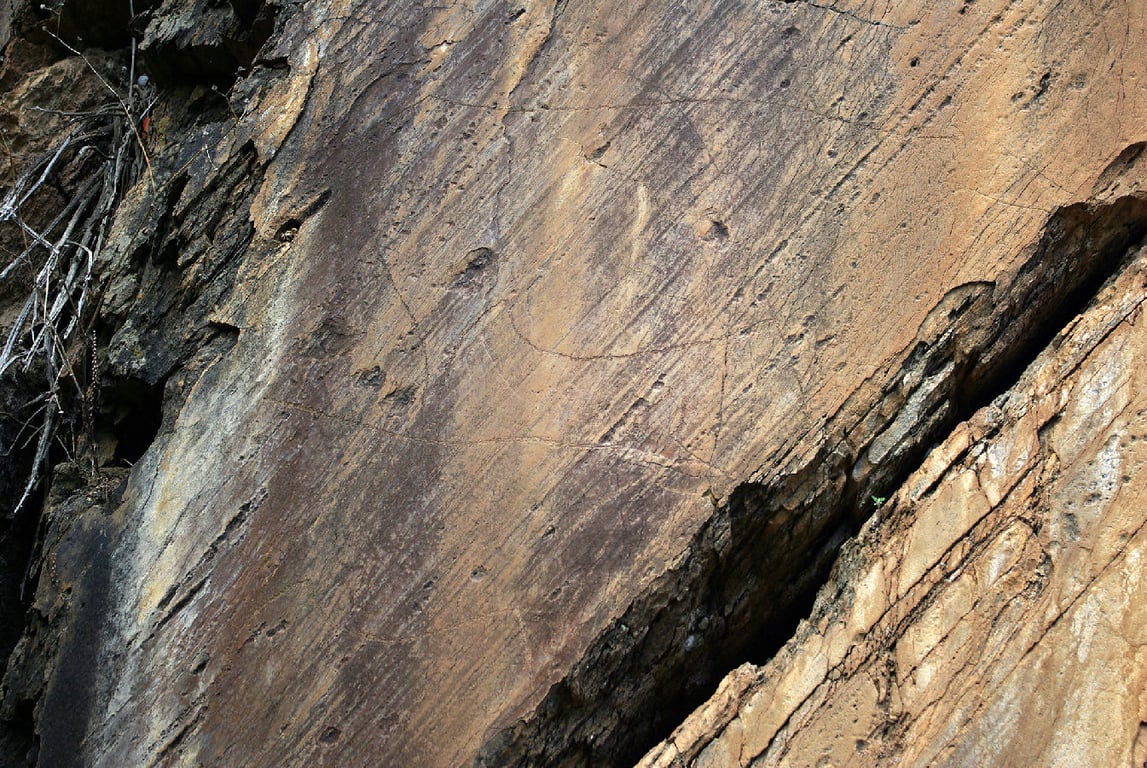
Côa Valley Prehistoric Rock Art
Rated 4.7(1,387 reviews)Age: Paleolithic, ~25,000 to ~10,000 years ago
About Côa Valley Prehistoric Rock Art
In short
The Côa Valley in northeastern Portugal holds around 1,200 engraved rocks at more than 80 sites, the largest known group of open-air rock art dated by archaeologists to the Ice Age, about 22,000 to 8,000 BCE. A UNESCO World Heritage Site since 1998, it was extended in 2010 to Siega Verde in Spain.
On the last stretch of the Côa river in northeastern Portugal, before it flows into the Douro, people pecked and scratched horses, wild cattle, ibex and deer into smooth faces of schist. The Côa Valley prehistoric rock art is the largest known group of open-air engravings that archaeologists date to the Ice Age: around 1,200 engraved rocks at more than 80 sites, the oldest placed by the park's team at more than 23,000 years ago. In the 1990s a dam nearly drowned them. Instead, the valley became an archaeological park and, in 1998, a UNESCO World Heritage Site.
How old is the Côa Valley rock art?
The archaeologists who study the valley place most of the engravings in the Upper Paleolithic, the last stage of the Old Stone Age. Comparing their style with dated art elsewhere, they assign them to the period from the Gravettian to the end of the Magdalenian; UNESCO gives a range of about 22,000 to 8,000 BCE.
Dating engravings is hard, because a line cut into stone holds nothing for radiocarbon dating, which measures the decay of carbon in once-living material. The excavators' firmest evidence comes from Fariseu, where engraved panels were partly buried by layers holding traces of people. A panel must be older than the earth that covers it, and luminescence dates on those layers, which measure how long ago buried grains were last exposed to light or heat, led the team to conclude that the first panel found there was engraved at least 15,000 years ago, and probably earlier.
Not everyone reads the evidence this way. In 1995 the first radiocarbon tests on the rock surfaces suggested far younger ages. Robert Bednarik, an Australian rock art researcher who took part, still reads the figures that way; Beyond sets out both readings. On one point every side agrees: engraving went on long after the oldest figures, through the Neolithic and the Iron Age to recent centuries. At Canada do Inferno it ended only in the mid-20th century, with pictures pecked by the last millers who worked along the river.
What the engravings show
The subjects are large grazing animals. Aurochs (the wild ancestors of cattle), horses, ibex and red deer dominate, with a few fish; UNESCO's evaluators found no animals that are unmistakably domestic among the figures they assigned to the Paleolithic. People are rare. The best known is a lone figure at Ribeira de Piscos, described by the evaluators as a caricature and now known as the Man of Piscos.
The artists combined four techniques: fine incised lines, pecking, abrasion and scraping. Most horses and aurochs are pecked, while deer are almost always incised. Many panels are crowded, with figures laid over one another. The largest figure yet found, uncovered at Fariseu in 2020, is an aurochs more than 3.5 meters long with smaller animals engraved inside its outline.
One habit sets Côa apart. Artists sometimes gave a single body two or even three heads, so that the animal seems to toss its head as you look. UNESCO's evaluators called this convention unique to the valley, and the park presents a two-headed horse on rock 1 at Canada do Inferno as an early attempt at animation.
Almost all the art is on schist, split by river erosion and earth movements into smooth vertical panels. The exception is Faia, in the south of the park, where granite shelters have protected painted figures, some possibly Paleolithic, from the weather.
The dam that was never finished
Shepherds and millers had long known the figures. In late 1991 Nelson Rebanda, the archaeologist monitoring construction of a dam on the lower Côa, recognized the first panel that archaeologists took to be Paleolithic: rock 1 at Canada do Inferno. The discovery was made public in November 1994, by which time building work had begun. The reservoir would have covered the engravings under as much as 90 meters (300 feet) of water.
The news turned into a national debate. Archaeologists in Portugal and abroad, the International Federation of Rock Art Organizations (IFRAO) and a citizens' movement campaigned against the dam under the slogan As gravuras não sabem nadar, “The engravings can't swim.”
On 7 November 1995, the newly elected prime minister, António Guterres, pledged to halt the works at once and to abandon the dam if studies confirmed the art's importance, and a government resolution followed in January 1996. The Côa Valley Archaeological Park was created on 10 August 1996, the sites became a National Monument in 1997, and UNESCO added them to the World Heritage List on 2 December 1998. In 2010 UNESCO extended the listing to Siega Verde, on the Águeda river in Spain, with around 440 animal figures in the same style.
Visiting the Côa Valley
The Côa Museum, opened in 2010 outside Vila Nova de Foz Côa, is the place to begin. Designed by Camilo Rebelo and Tiago Pimentel, it stands above the mouth of the Côa, where the rock art meets the Alto Douro wine landscape, a second World Heritage Site.
The engravings can be seen only on guided tours in all-terrain vehicles, with a daily limit on visitors at each site. Three sites are open. Canada do Inferno and Ribeira de Piscos are reached from the museum and visited in the morning, when the sun lights their panels; Penascosa, reached from the village of Castelo Melhor, is visited in the afternoon. Penascosa is the easiest walk, while Ribeira de Piscos, with about 2.2 km on foot, is the hardest and is not offered in the summer heat.
Penascosa also has night visits, when a guide's lamp held low against the rock makes the lines stand out, and in season a solar-powered boat runs down the river from Canada do Inferno to Fariseu. Booking ahead is recommended, and summers on the valley floor are very hot, with little shade. Survey work goes on: in 2025 alone, the park's teams recorded more than twenty rock surfaces with art that had never been documented.
Beyond: more about Côa Valley Prehistoric Rock Art
Checking…
Contributors
No contributions yet
Be the first to add photos or videos!
Play and learn
Test Your Knowledge!
Think you know everything about Côa Valley Prehistoric Rock Art? Take our interactive quiz and become an Ancient Sites Expert!
Frequently asked questions
How old is the Côa Valley rock art?
The park's archaeologists and UNESCO place most engravings in the Upper Paleolithic, about 22,000–8,000 BCE, with the oldest phase at more than 23,000 years ago. The rock art researcher Robert Bednarik reads them as much younger, under 3,000 years. Later engravings run to the mid-20th century.
How many engravings are there in the Côa Valley?
The park has recorded around 1,200 engraved rocks at more than 80 sites along the lower Côa and the Douro. UNESCO estimates about 5,000 animal figures, and new panels are still being found.
Can you visit the Côa Valley rock art?
Yes, on guided all-terrain vehicle tours to three sites: Canada do Inferno, Penascosa and Ribeira de Piscos. Tours start from the Côa Museum or the village of Castelo Melhor, and booking ahead is recommended.
Why was the Côa dam never built?
The engravings were found during dam construction and made public in 1994. After a national and international campaign, the government halted the works in November 1995 and confirmed the decision in 1996, creating the archaeological park instead.
What animals are engraved in the Côa Valley?
Mainly aurochs, horses, ibex and red deer, with some fish. Human figures are rare. A few figures that may show bison, reindeer or woolly rhinoceros are disputed, and Robert Bednarik reads some horses as wearing bridles.
What is Siega Verde?
A rock art site on the Águeda river in Spain, about 60 km from Côa, with around 440 animal figures. UNESCO added it to the Côa Valley World Heritage Site in 2010, dating it from the Gravettian to the Magdalenian; Robert Bednarik dates its animals to the last two centuries.
Related Tags
Sources
- whc.unesco.org/en/list/866
- whc.unesco.org/archive/advisory_body_evaluation/866.pdf
- whc.unesco.org/archive/advisory_body_evaluation/866bis.pdf
- arte-coa.pt/en/parque
- arte-coa.pt/en/history
- arte-coa.pt/en/visit/canada-do-inferno
- arte-coa.pt/en/visit/penascosa
- arte-coa.pt/en/visit/ribeira-de-piscos
- arte-coa.pt/en/visit/guided-visit-to-the-park
- arte-coa.pt/en/visit/night-visit
- arte-coa.pt/en/visit/boat-tour
- arte-coa.pt/en/museum
- arte-coa.pt/en/important-discoveries-in-the-coa-valley-during-the-pandemics
- arte-coa.pt/en/new-rock-art-discoveries-in-the-coa-valley
- cambridge.org/core/product/139EAA1AF0540F273B9E1A46EFE6A69D/core-reader
- cambridge.org/core/journals/antiquity/article/age-of-the-coa-valley-portugal-rockart-validation-of-archaeological-dating-to-the-palaeolithic-and-refutation-of-scientific-dating-to-historic-or-protohistoric-times/AAD81B9796E7FBCCD4E220300D2FDDF8
- cambridge.org/core/journals/antiquity/article/absolute-age-of-the-coa-valley-rockengravings-two-physicalscience-studies/1AF2ED4F2BF1A282F7FDBE331D3824B7
- experts.azregents.edu/en/publications/constraining-the-age-of-the-c%C3%B4a-valley-portugal-engravings-with-r
- cambridge.org/core/journals/antiquity/article/maximum-ages-of-the-coa-valley-portugal-engravings-measured-with-chlorine36/1426A9A1C19E1E3DC9D2555081C5C6E1
- rockartresearch.com/index.php/rock/article/view/532
- rockartresearch.com/index.php/rock/article/view/453
- e-a-a.org/EAA/Awards/Heritage_Prize_Recipients/Heritage_Prize_1999.aspx
- archive.archaeology.org/9603/newsbriefs/coa.html
- en.wikipedia.org/wiki/Prehistoric_Rock_Art_Sites_in_the_C%C3%B4a_Valley_and_Siega_Verde
Other Sites You Might Like
 Portugal
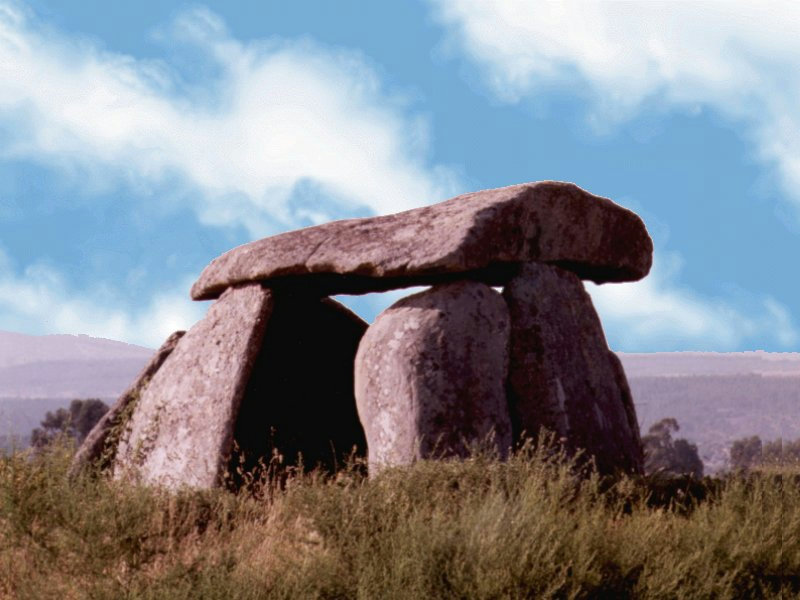
Anta do Tapadão
Seven granite slabs, some leaning inward, still hold up a single capstone about 4 meters across on a plateau in the Alto Alentejo.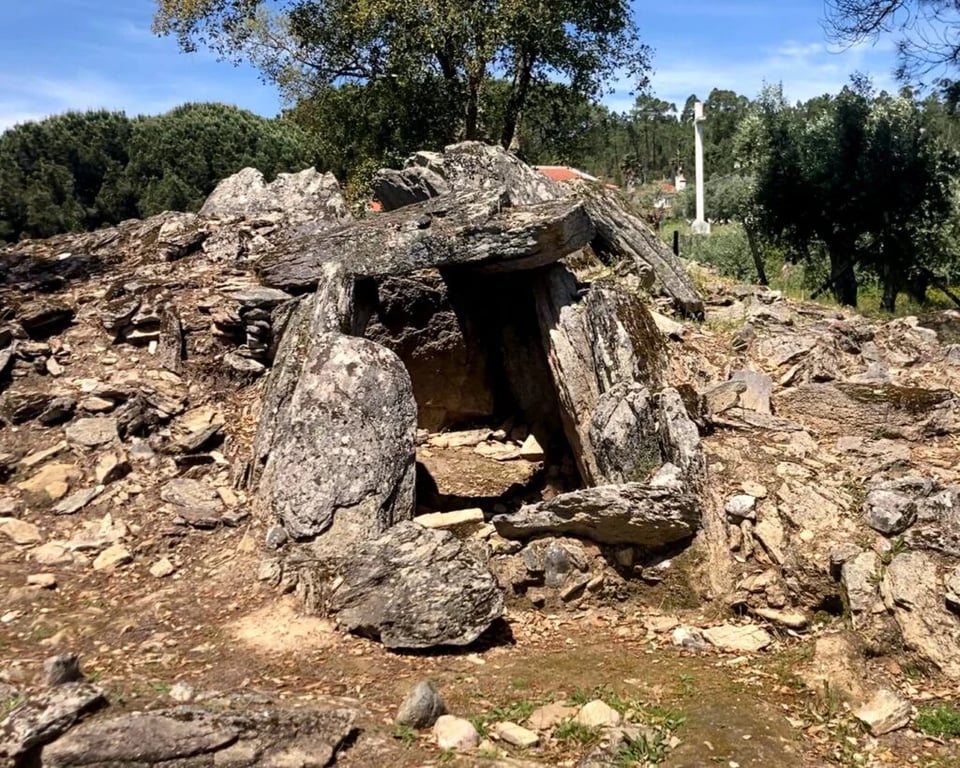 Portugal
Anta do Vale da Laje
A five-sided stone chamber near Tomar, where Neolithic pots held the first direct traces of milk and dairy found in Iberia.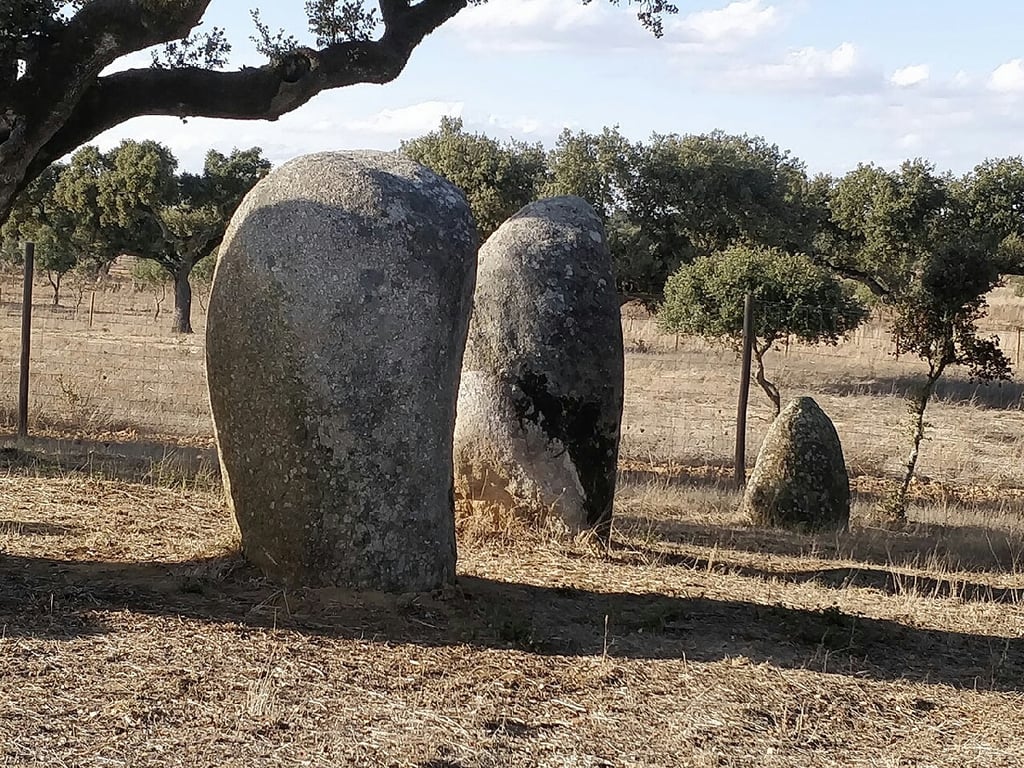 Portugal
Cromeleque de Vale Maria do Meio
Thirty-four granite menhirs in a horseshoe open to the east, on a low rise northwest of Évora, set upright again by volunteers in 1995.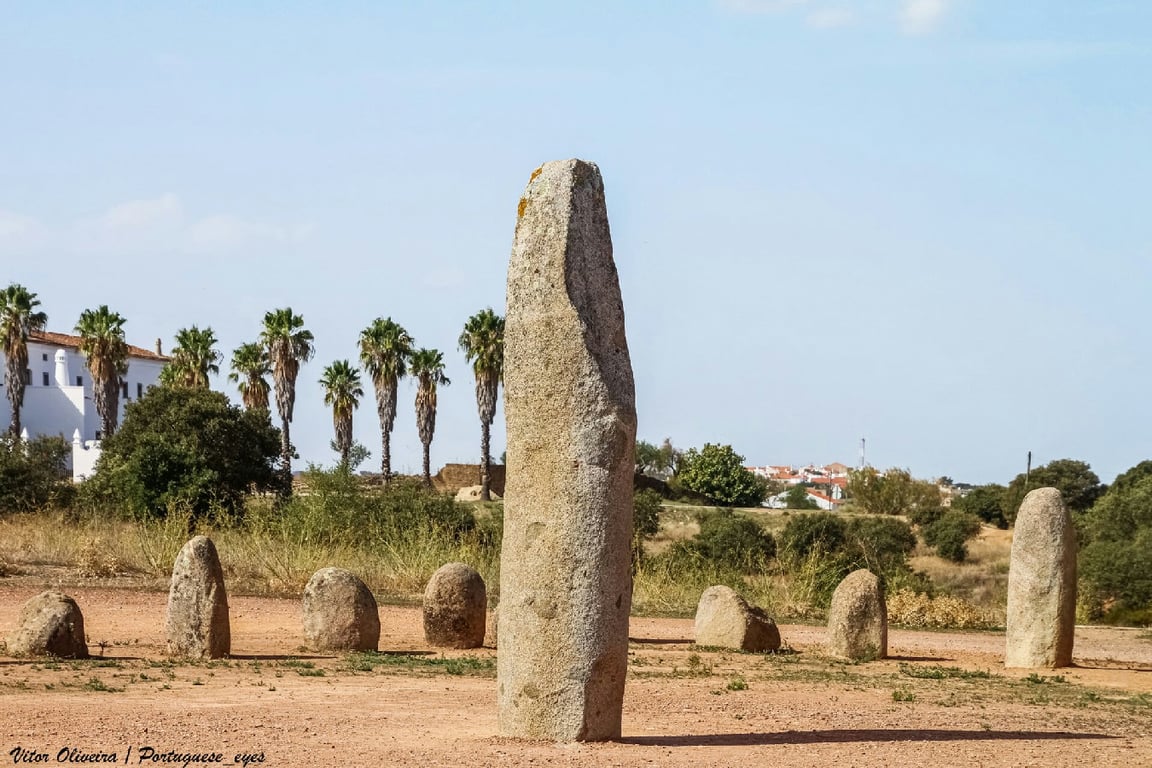 Portugal
Cromeleque do Xarez
Granite stones set in a square around a phallic menhir, moved from the Alqueva reservoir and rebuilt below Monsaraz in 2004.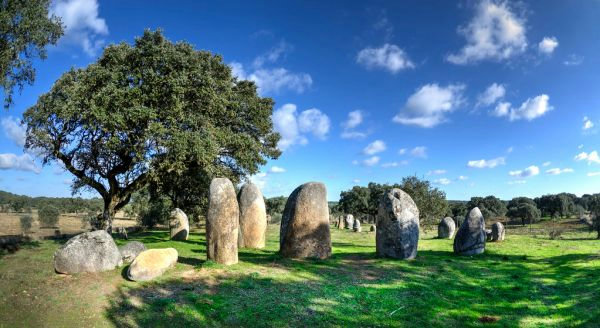 Portugal
Cromeleque Portela dos Mogos
Some forty granite stones in a double oval on an east-facing hill near Évora, a few carved with round-eyed faces.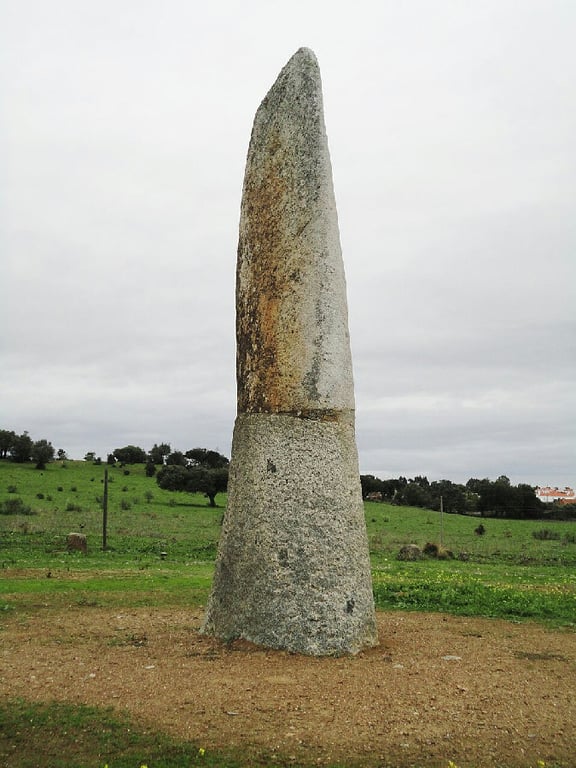 Portugal
Menir da Bulhoa
A broken menhir near Monsaraz carved with a rayed sun, a crook and wavy lines, its lost base once reused in a press.