Cromeleque de Vale Maria do Meio
An unusual megalithic rectangle north of Évora. This enigmatic enclosure of 30 granite monoliths defies the typical circular form of Iberian cromlechs.
Cromeleque de Vale Maria do Meio
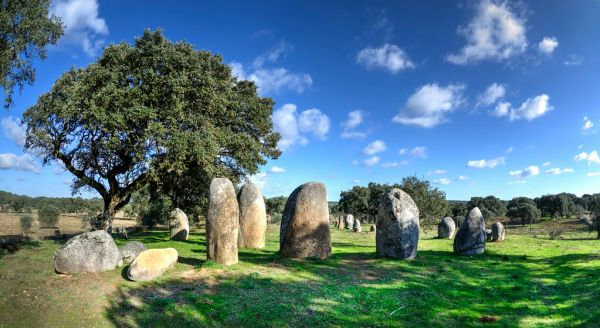
Deep within the megalithic heartland of Portugal's Alentejo region, the Cromeleque de Vale Maria do Meio presents a fascinating architectural anomaly. Located a short distance north of Évora, this monument breaks decisively from the circular and horseshoe-shaped enclosures typical of Iberian cromlechs. Instead, its creators arranged approximately thirty granite monoliths into a large, open-ended rectangle. Discovered by archaeologists in the 1990s, this unique layout challenges conventional understanding of Neolithic sacred spaces. Its stark, geometric form, set within a grove of cork and olive trees, creates an atmosphere of profound mystery, inviting speculation about the ceremonies and beliefs that animated this unusual space thousands of years ago.
An Unorthodox Blueprint
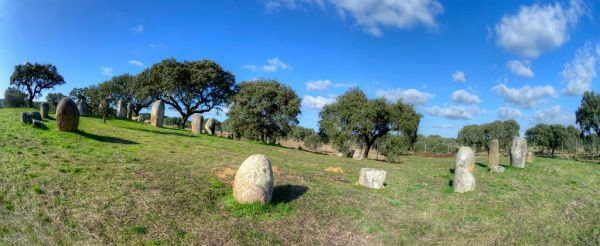
The defining feature of Vale Maria do Meio is its quadrilateral shape. The stones, varying in height and girth, form two long, roughly parallel lines, creating a processional avenue that remains open at both ends. This design contrasts sharply with the enclosed, circular nature of its more famous neighbour, the Almendres Cromlech. The purpose of this rectangular arrangement is a subject of intense academic debate. It may have served as a ceremonial pathway, a space designed to guide participants through a specific ritual sequence. Alternatively, it could have functioned as a celestial observatory, with the parallel lines aligned to specific astronomical events on the horizon, though its exact alignments are still being studied.
The Assembled Stones
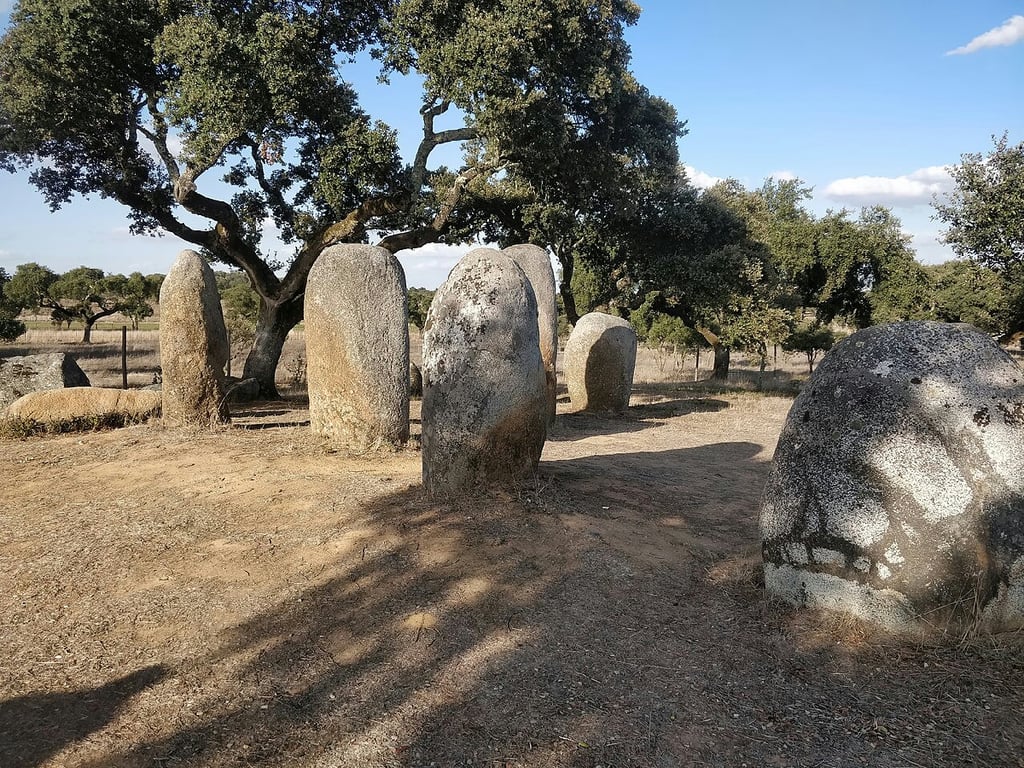
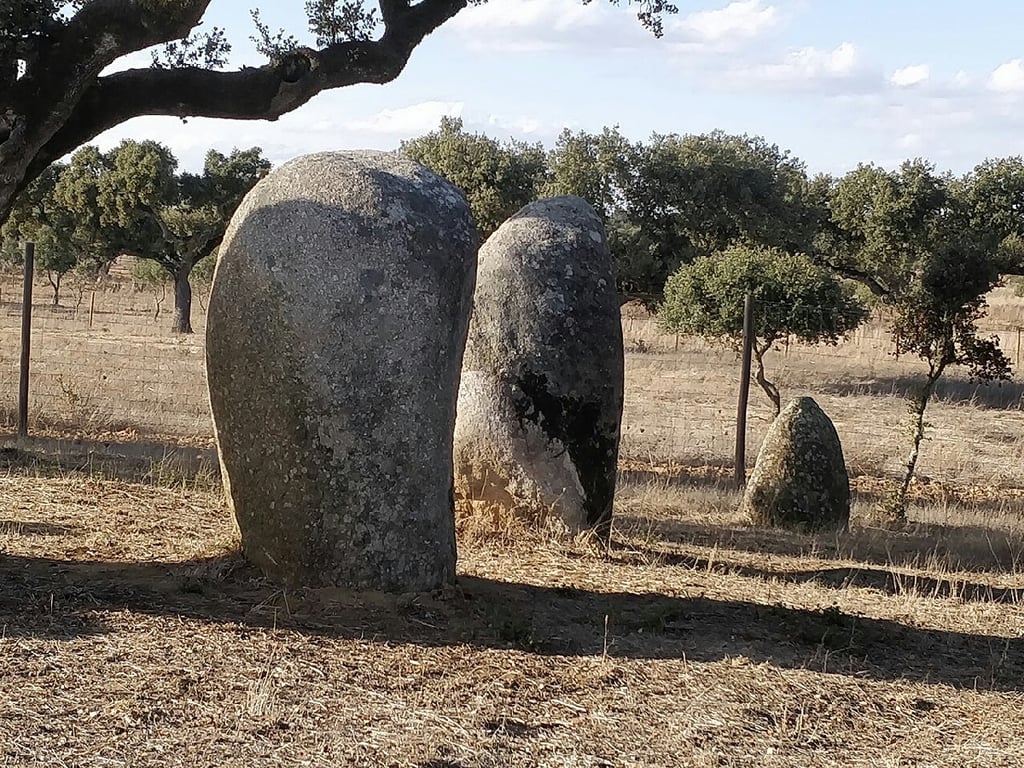
The monoliths themselves are characteristic of the region: rough-hewn granite, weathered by millennia of exposure to the elements. They were not extensively shaped, retaining much of their natural form. Their power comes from their collective arrangement rather than individual ornamentation. Walking among them, one can appreciate the immense effort required to quarry and transport these stones from nearby outcrops. The enclosure is not perfectly uniform; the spacing and alignment of the stones have a certain organic quality, suggesting a construction process that may have occurred over an extended period. This irregularity adds to the site's enigmatic character, hinting at a complex history that archaeologists are still working to uncover.
A Part of a Sacred Neighbourhood
The Cromeleque de Vale Maria do Meio does not exist in a vacuum. It is situated in close proximity to another monument, the Cromeleque Portela dos Mogos, creating a distinct megalithic complex. The presence of two different types of enclosures—one rectangular and one circular—so close together is highly significant. This pairing suggests the sites may have had complementary functions. Perhaps one was used for public ceremonies while the other was reserved for a select group, or they were used at different times of the year for different rituals. Their combined presence points to a sophisticated and organized society that invested enormous resources into building a varied and complex sacred landscape.
The Rectangular Enigma of Évora
Beyond the well-trodden paths of Portugal’s megalithic circuits lies a monument that defies convention and whispers of a different cosmological understanding. The Cromeleque de Vale Maria do Meio is not merely an architectural outlier; it is a question etched into the ancient landscape. While most Neolithic builders of the region sought the eternal symbolism of the circle, the creators of this site chose the linear and the finite. This deliberate break from tradition suggests a unique purpose, a forgotten ritual, or a cultural belief system whose secrets have been guarded by granite sentinels for over 6,000 years.
A Cipher Carved in Granite
Close examination of the monoliths reveals a detail often overlooked by casual observers: many of the stones were not simply erected as found. Archaeological analysis notes that they possess a "tendentially parallelepipedal morphology," suggesting they were intentionally shaped or selected for their near-rectangular form. This act of shaping transforms them from raw elements of nature into deliberate architectural components. It implies a sophisticated understanding of form and a desire for precision that goes beyond simple enclosure. Why invest such effort? Some theorists argue this shaping was meant to enhance astronomical alignments, with the flat faces designed to catch the light of the rising or setting sun and moon at specific, crucial moments of the year.
The Unanswered Question of the Open Rectangle
The monument's most profound mystery is its shape—a large, open-ended rectangle oriented roughly east-west. This design has fractured archaeological opinion, giving rise to compelling and competing theories that challenge our understanding of Neolithic ritual.
A Gateway for the Dead?
One prominent theory posits that Vale Maria do Meio was not a cromlech for the living but a precinct for the dead. In this interpretation, the rectangular form represents a symbolic house or tomb, a liminal space separating the terrestrial world from the underworld. The open eastern end could have served as a ceremonial entrance or exit, a spirit door through which souls would embark on their final journey, guided by the rising sun. This would make it a unique type of mortuary enclosure, fundamentally different in purpose from the communal, celestial observatories of its circular counterparts.
An Unfinished Circle or a Rebel Design?
A more pragmatic, yet still debated, theory suggests the monument is simply incomplete. Perhaps the builders intended to construct a vast oval or circle but abandoned the project due to unknown social or environmental pressures. A more radical idea, however, is that the rectangular design was a deliberate act of cultural distinction. It may have been built by a community with a different belief system, one that rejected the circular cosmology of their neighbors in favor of a worldview based on linearity, territory, and procession.
Whispers of the Mouras Encantadas
While specific legends about this site are scarce, it exists within a landscape rich with folklore. The Alentejo plains are said to be haunted by the Mouras Encantadas—supernatural female spirits who guard ancient treasures and gateways to other worlds. Local oral traditions often associate megalithic monuments with these beings. Could the open rectangle of Vale Maria do Meio be one such gateway, a place where the veil between worlds was considered thin? Some esoteric researchers speculate that the structure was not a tomb for humans, but a ceremonial enclosure built to honor or appease these powerful entities of the land.
Cromeleque de Vale Maria do Meio — photo gallery