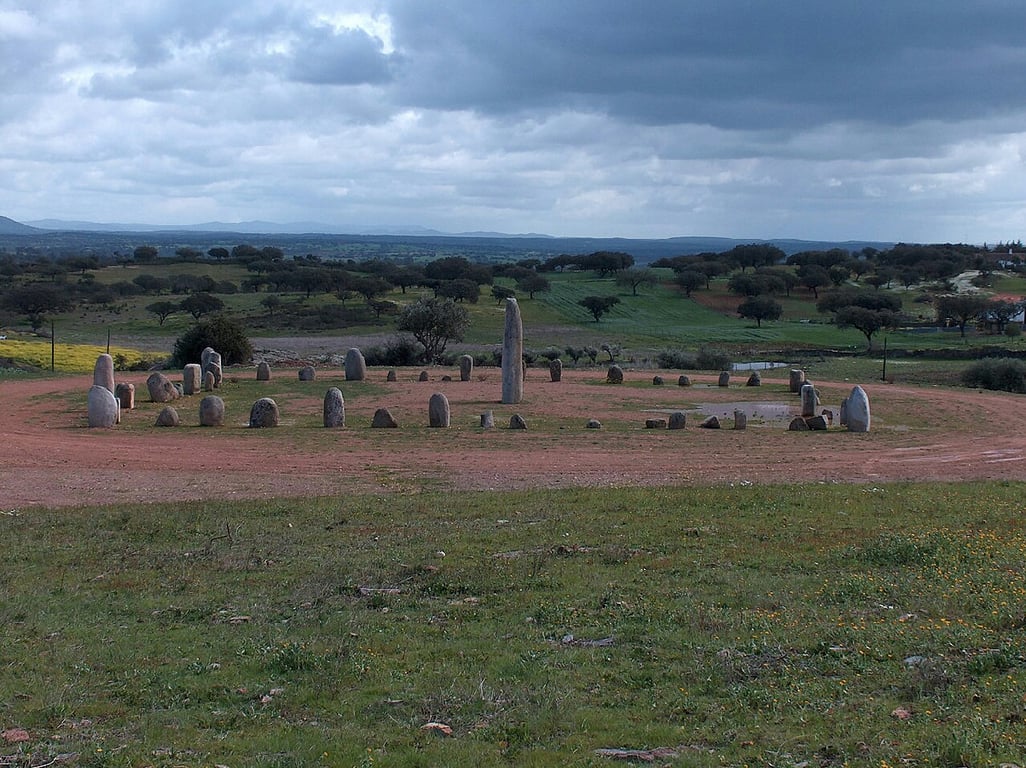
Cromeleque do Xarez
A rare rectangular stone circle of 55 shaped menhirs, relocated to survive the Alqueva dam flood. Its unusual geometry remains a compelling Neolithic mystery.
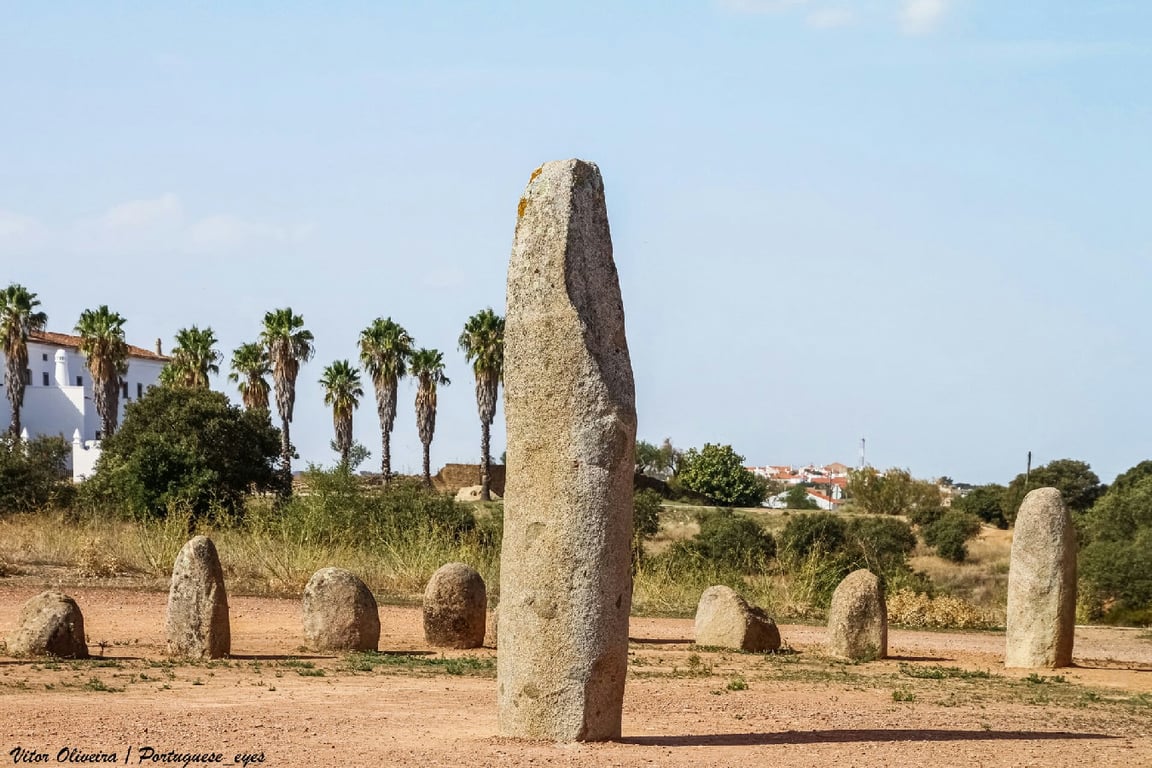
Cromeleque do Xarez
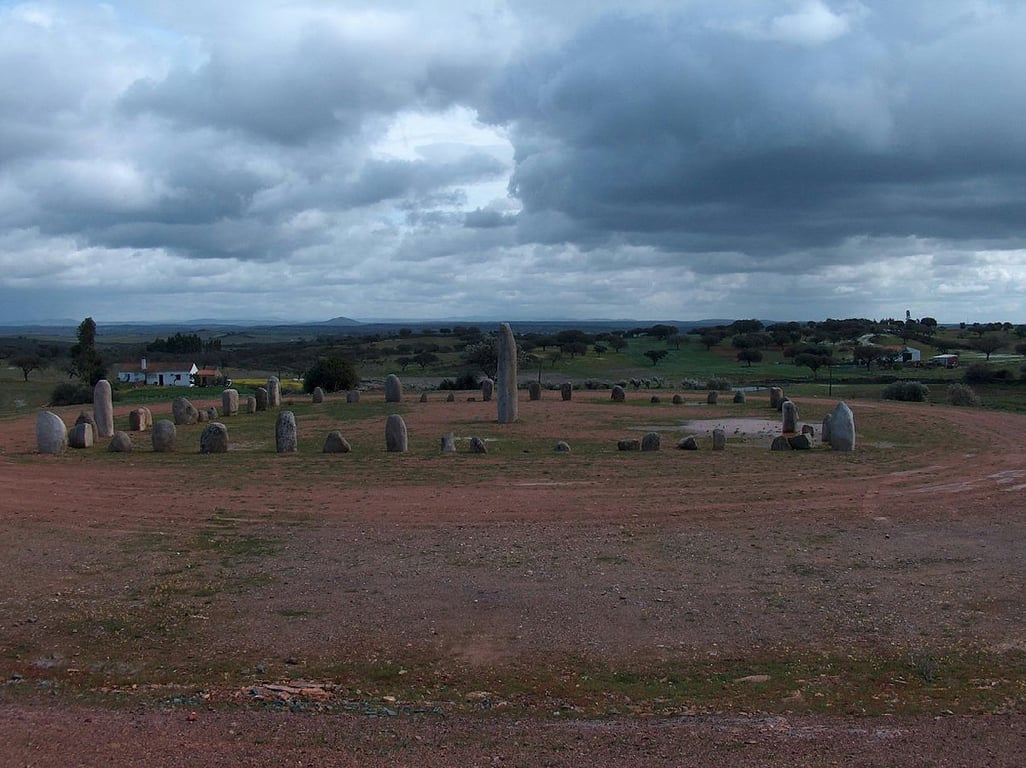
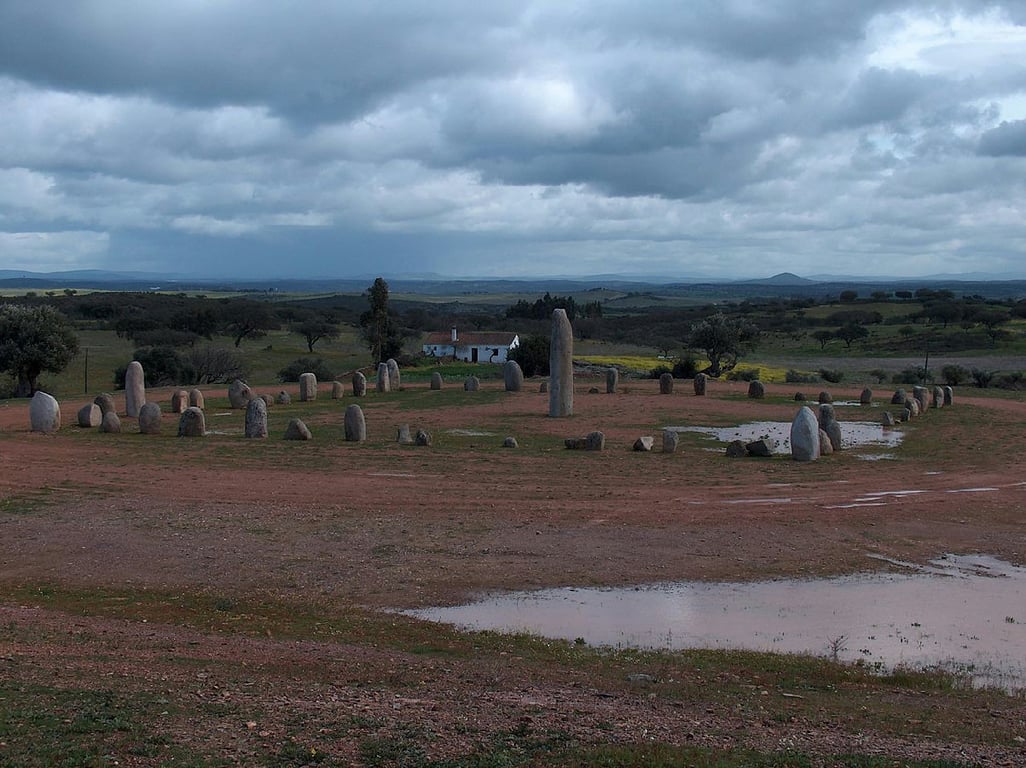
In the sun-drenched plains of the Alentejo, beside the vast, serene expanse of the Alqueva Lake, stands a megalithic monument that defies convention. The Cromeleque do Xarez is not the familiar stone circle of prehistoric lore; it is a rare, compelling rectangular enclosure. Comprising 55 granite menhirs, many sculpted with remarkable precision, its unique quadrangular shape and carefully planned structure make it an outlier in European megalithic architecture, offering a fascinating window into the Neolithic mindset. The site's story is as dramatic as its form, having been meticulously relocated from its original location to save it from the rising waters of the Alqueva Dam, a modern feat of engineering to preserve an ancient one.
A Geometry of the Gods
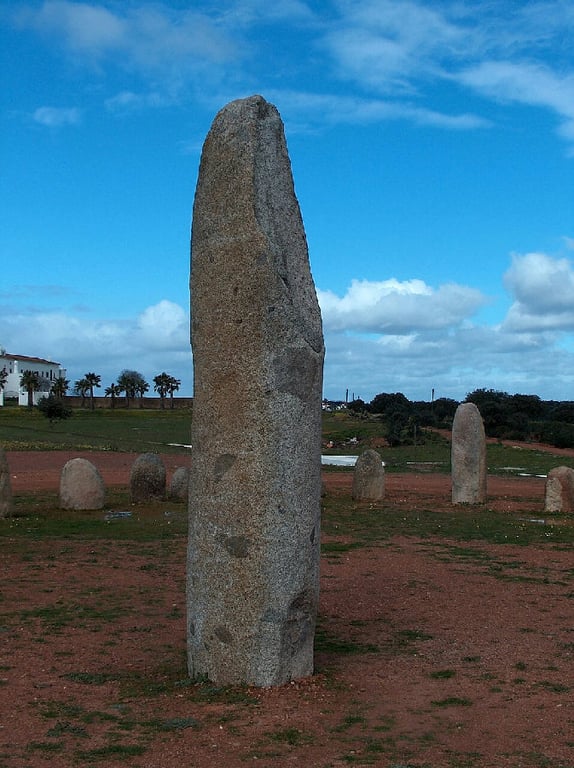
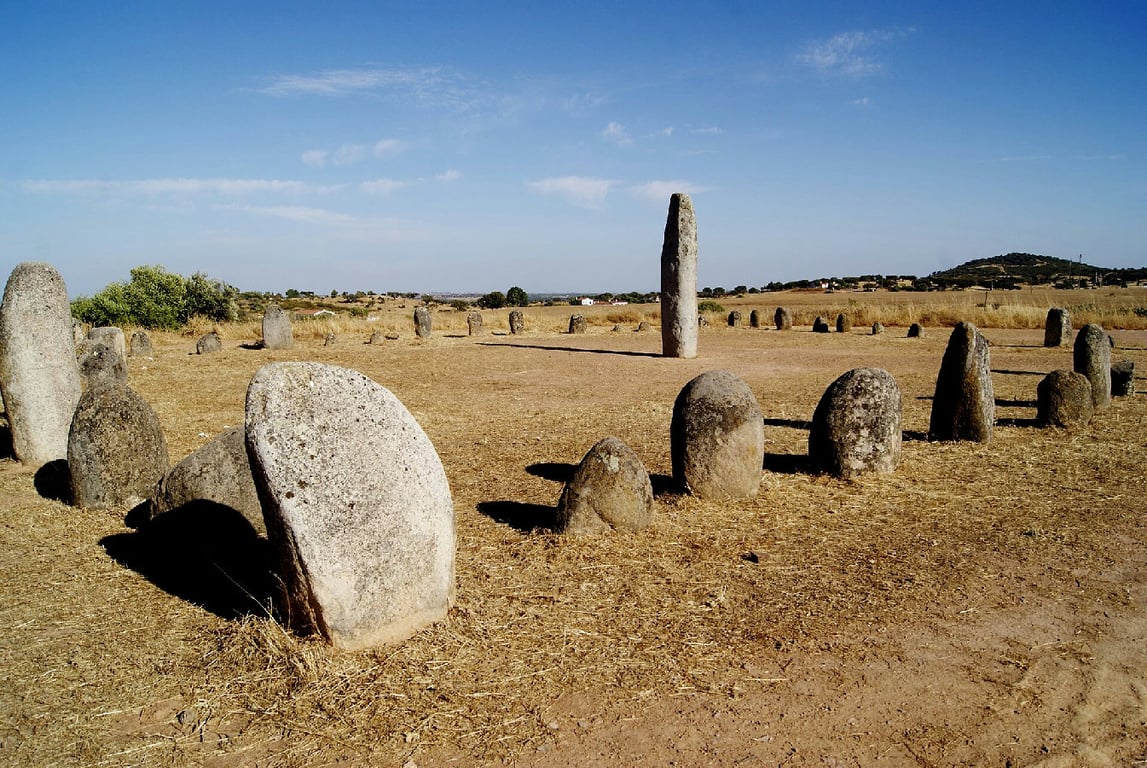
The most striking feature of the Cromeleque do Xarez is its layout. While most cromlechs or henges are circular or oval, this monument forms a large, open-ended rectangle oriented on a north-south axis. At the center stands a towering, phallic menhir, approximately 4.5 meters high, which appears to be the focal point of the entire complex. The surrounding stones, though smaller, are impressively shaped, with many showing clear signs of being worked into flattened, stela-like forms. This deliberate geometry suggests a sophisticated understanding of space and symbolism. Archaeologists believe the rectangular plan may have been aligned with celestial events, potentially serving as a solar or lunar calendar to mark solstices or other significant astronomical moments. The central menhir could have acted as a gnomon, its shadow tracing the passage of time and seasons across the sacred ground.
A Monument on the Move
The cromlech's modern history is a compelling saga of preservation. Its original location lay in the path of the Alqueva Dam, the largest strategic water reserve in Western Europe. As the valley was set to be flooded, a monumental rescue operation was launched in the early 2000s. Each of the 55 menhirs was carefully numbered, documented, and lifted from its millennia-old foundation. The entire complex was then painstakingly reassembled on higher ground near the historic medieval village of Monsaraz, preserving its original orientation and layout. This act not only saved the monument from oblivion but also added a new layer to its story, transforming it into a symbol of cultural heritage triumphing over modern necessity. The relocation itself was a marvel of archaeological and engineering collaboration, ensuring that the stones continue to watch over the landscape, albeit a vastly changed one.
A Portal to the Past
Visiting Cromeleque do Xarez today is an experience of dual temporalities. The stones themselves, weathered and ancient, speak of a deep, Neolithic past between the 4th and 3rd millennia BCE. Yet, their backdrop is the modern, man-made Great Lake of Alqueva. This juxtaposition creates a powerful atmosphere, connecting the builders' world with our own. The site invites contemplation on the nature of sacred landscapes, the importance of community effort in both its original construction and its modern rescue, and the enduring human need to create places of meaning and power. Paired with a visit to the walled town of Monsaraz, it offers one of the most unique historical journeys in Portugal.
The Unspoken Geometry of Xarez
In the heart of Portugal's sun-drenched Alentejo, where ancient whispers ride the thermals over the vast Alqueva, lies a megalithic enigma that challenges our very understanding of prehistoric ambition. The Cromeleque do Xarez, unlike its more famous circular cousins, presents a precise, almost defiant rectangular geometry. But beyond its striking form, what untold secrets does this granite assembly guard? For those who peer beyond the conventional, Xarez offers a tapestry woven with obscure history, forgotten lore, and theories that stretch the fabric of time.
Whispers from the Sunken Lands
Before the vast Alqueva reservoir began to swallow ancient landscapes, Cromeleque do Xarez stood in a different light, its full context perhaps forever lost beneath the waves. While rescue archaeology preserved the visible monument, the surrounding terrain, rich with potential clues about the community that built it, was irrevocably altered. What subtle alignments, what smaller, unrecorded stone features, or what buried ceremonial objects might have been submerged? This "rescue" operation, while vital, also created an archaeological lacuna, leaving scholars to speculate about the full scope and original purpose of Xarez, now an island of granite in a sea of memory.
Furthermore, the remarkable precision of the menhirs' dressing – not merely rough-hewn but often meticulously shaped and fitted – suggests a level of engineering sophistication rarely attributed to early Neolithic peoples. Some stones bear faint, almost imperceptible markings that defy easy classification, hinting at a symbolic language or calendrical system that remains undeciphered, a silent testament to a knowledge base more advanced than commonly assumed.
When the Stones Speak
The Alentejo is a land steeped in folklore, and Xarez, with its profound ancient presence, is no exception. Local oral traditions, passed down through generations, imbue the stones with a life beyond mere granite.
The Serpent's Slumber
One enduring legend speaks of a colossal serpent, a primordial guardian spirit, that slumbers beneath the cromlech. It is said that the rectangular enclosure acts as a binding spell, holding the creature's immense power in check. Disturbing the stones, particularly on certain moonless nights, is believed to risk awakening the serpent, unleashing either immense fertility upon the land or, conversely, catastrophic drought and misfortune. This tale hints at a deep understanding of telluric energies and the sacred power attributed to the site.
The Mouras' Hidden Labyrinth
Another captivating folk tale connects Xarez to the "Mouras Encantadas" – enchanted Moorish princesses, magical beings believed to inhabit ancient sites, guarding hidden treasures or passages to other realms. At Cromeleque do Xarez, it is whispered that the precise arrangement of stones forms a subtle, invisible labyrinth known only to the Mouras. On the longest day of the year, if one walks the perimeter in a specific, forgotten sequence, a hidden portal might briefly shimmer into existence, offering a glimpse into their enchanted world or revealing a long-lost secret.
Blueprint for a Lost Science
The rectangularity of Xarez is its most striking anomaly, sparking intense archaeological debate. While most European megaliths favor circles, Xarez stands apart, leading some to propose radical theories about its function.
The Celestial Compass
Beyond simple solstice alignments, some researchers posit that Xarez might have functioned as a sophisticated "celestial compass," its four cardinal sides precisely oriented to track not just the sun's extreme points, but also specific stellar constellations or even the complex cycles of the moon. The rectangular layout could have provided multiple sightlines and precise angular measurements, suggesting a more advanced understanding of archaeoastronomy than previously credited to its builders. Was it a giant, fixed instrument for mapping the heavens, a precursor to later observatories?
Rituals of the Four Directions
The unusual shape could also signify a unique cosmological belief system. Instead of the all-encompassing unity of a circle, the rectangle might represent a structured cosmos, divided into four distinct realms or elemental directions. Rituals performed within Xarez, therefore, might have been highly formalized, perhaps invoking specific deities or energies associated with each cardinal point, creating a sacred space for complex, directional ceremonies unlike those performed in circular enclosures.
Threads Across the Ancient World
The rarity of rectangular megalithic enclosures in Europe raises profound questions about potential cultural diffusion or shared knowledge networks across vast distances. While geographically isolated, the architectural precision and unique form of Xarez beg comparison.
Are there echoes of its quadrangular design in the monumental enclosures of North Africa, or even further afield in the ancient Near East, where rectangular sacred spaces are more common? Could Xarez represent an outlier, a forgotten link in a chain of megalithic traditions that spanned continents, hinting at seafaring communication or cultural exchange far more extensive than conventional archaeology currently acknowledges? The Cromeleque do Xarez stands as a testament to a prehistoric ingenuity that continues to challenge, intrigue, and invite us to look beyond the obvious.
Cromeleque do Xarez — photo gallery