
Piatra Roșie Fortress
Rated 4.7(359 reviews)Age: 2nd century BC, ~2,200 years old
About Piatra Roșie Fortress
In short
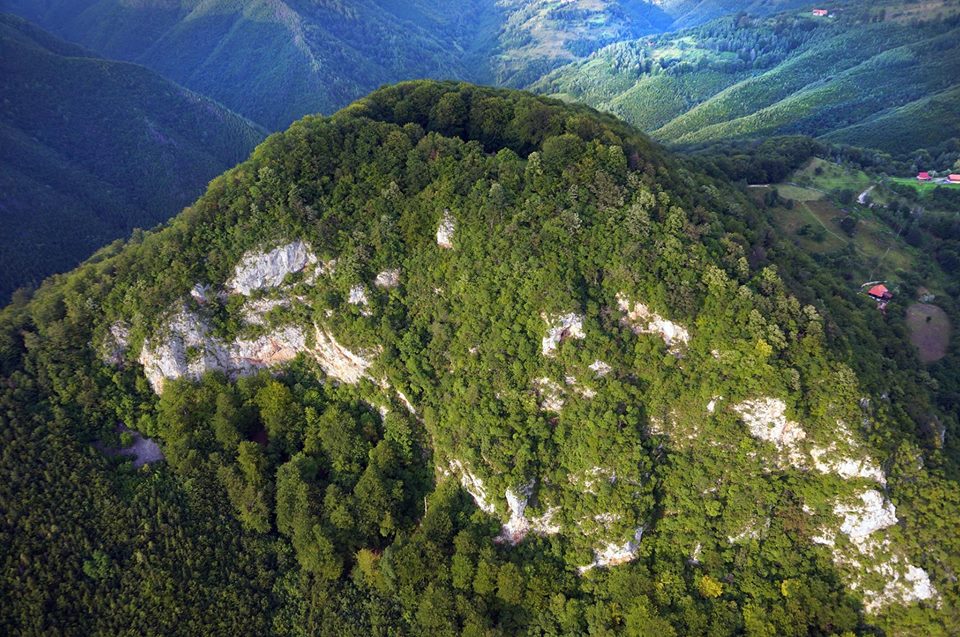
Piatra Roșie (“Red Rock”) is a Dacian fortress on a rocky peak above Luncani, Hunedoara County, Romania. Dated to the late 1st century BCE and the 1st century CE, it was one of the strongholds around Sarmizegetusa Regia until the Roman conquest of 106 CE, and is part of a UNESCO World Heritage site.
Piatra Roșie, Romanian for “Red Rock”, is a Dacian fortress on an isolated rocky peak above the village of Luncani in Hunedoara County, Romania, more than 800 meters above sea level and ringed by cliffs on three sides. Dated to the late 1st century BCE and the 1st century CE, it was one of the strongholds around Sarmizegetusa Regia, the Dacian capital, and is part of a UNESCO World Heritage site. Within its walls and on the terraces below, excavators found a temple, large timber buildings and an iron disc decorated with an aurochs, the first of a group of objects whose purpose is still debated.
Who built Piatra Roșie, and when?
The archaeologist Ioan Glodariu described two phases. In the first, builders leveled the top of the rock and raised, all at once, the enclosure wall, two large buildings, a temple and three free-standing towers outside the walls. The enclosure is a rectangle about 102 by 45 meters, with a tower at each corner and a fifth on the east, where the approach is least steep. Its plan, its entrance through a tower and its monumental stone stairway follow Hellenistic Greek models. Some historians credit the fortress to King Burebista, who ruled from about 82 to 44 BCE, a link no find has yet confirmed.
In the second phase, which UNESCO's advisers place in the late 1st century CE, walls of rough stone bound with earth joined two of the outlying towers at the foot of the plateau. The new line, with two large half-round bastions at its corners, enclosed a much larger area; together the two enclosures cover about 1.2 hectares. Glodariu counted Piatra Roșie, like Blidaru, among the fortresses built only for war, without the civilian settlement that grew up below Costești-Cetățuie. Newer survey work reads the hill differently, as Beyond sets out.
What you see at Piatra Roșie today
The last stretch of the path from the hamlet of Alun becomes an ancient road paved with stone slabs. It leads to a limestone stairway about 2.5 meters wide, with balustrades, that climbed to the entrance. The walls of the first enclosure follow the Dacian method: two faces of squared limestone with earth and rubble between. A pit about 2 meters across, cut into the rock near one of the towers, collected rainwater.
On the northern part of the plateau, the excavators of 1949 found six limestone column drums from a temple and the foundations of two large rectangular buildings. The one in the northwest had five rooms covering more than 300 square meters. Dug again in 2022, it gave fragments of storage jars, footed fruit bowls, mixing bowls, whetstones and iron studs.
On the first terrace below the plateau, reached by a branch of the paved road, stood a building with one square and one apse-shaped room. Work in 2021 and 2022 showed that these rooms were the center of a round building. Its outer ring of timber posts stood on limestone blocks from the quarry at Măgura Călanului, and a clay hearth lay just west of the apse.
The iron discs of Piatra Roșie
The site's best-known finds belong to that round building. In 1949 the excavators recovered a broken, badly corroded iron disc, the first of its kind found in Dacia. At its center stands an aurochs, the wild ox of ancient Europe, its coat drawn with short parallel cuts. Plant and geometric patterns and a feline run around the rim. Twelve holes allowed it to be fixed to a backing with decorative studs. Such discs are known as the “shields” of Piatra Roșie, and whether they were carried in battle, shown in temples or carried in processions is read in several ways, set out in Beyond.
In 2022 the excavators found five decorated iron studs there, at least one identical to a stud still fixed to the rim of a disc, and a piece of iron sheet that probably comes from another disc. The finds tie the discs more closely to the round building.
How Piatra Roșie came to light
Villagers knew the rock long before archaeologists did. In the 19th century, as Antena 3 recounted in 2024, few people knew the paths to it, and those who did sold the antiquities they found at the fairs of Orăștie. The priest Ioan Popovici, guided through the Luncani valley by a church sexton named Tănase, heard of coins, tools and even an iron helmet, and wrote about them in 1887 in Telegraful Român.
Constantin Daicoviciu led the first large excavation, about two and a half months in 1949, and published a book on the fortress in 1954. No restoration followed, and in 1999 UNESCO's advisers reported damage from slipping earth. A team from Babeș-Bolyai University, the Museum of Dacian and Roman Civilization in Deva and other institutions dug here in 2021 and 2022 and found that the 1949 plans had been simplified in places.
The site has also been plundered. Three Dacian curved daggers, of the type called sica, that the judicial authorities link to thefts from Luncani–Piatra Roșie have been resold several times through international auction houses, and they remain on the Romanian Police list of wanted objects.
Visiting Piatra Roșie
The fortress lies in the commune of Boșorod. The nearest starting point is a rest area with an information panel in the scattered hamlet of Alun; from there a clear path of about 300 meters leads to the ruins. A long marked trail (red triangle) from Grădiștea de Munte, near Sarmizegetusa Regia, passes the fortress by way of Alun on its way to Cioclovina: about 15 kilometers and six to seven hours for the whole route. In August 2019 the Dacica Foundation held the fifth Day of the Dacian Fortress at Alun, with a walk to the ruins, the sound of the tulnic, a long wooden horn, and a workshop on Dacian plants named by ancient writers.
Beyond: more about Piatra Roșie Fortress
Checking…
Contributors
No contributions yet
Be the first to add photos or videos!
Play and learn
Test Your Knowledge!
Think you know everything about Piatra Roșie Fortress? Take our interactive quiz and become an Ancient Sites Expert!
Frequently asked questions
What does Piatra Roșie mean?
Piatra Roșie is Romanian for “Red Rock”, the name of the rocky hill on which the Dacian fortress stands.
Where is Piatra Roșie fortress?
It stands on Piatra Roșie hill above the village of Luncani, in the commune of Boșorod, Hunedoara County, Romania, in the Orăștie Mountains, more than 800 meters above sea level.
How old is Piatra Roșie?
The fortress is dated to the late 1st century BCE and the 1st century CE. Its outer enclosure was added in the late 1st century CE, and it was abandoned after the Roman conquest of 106 CE.
What are the Piatra Roșie shields?
They are iron discs decorated with animals, such as an aurochs and a feline, with twelve holes for mounting. Some read them as shields; Florea and Suciu found a cult image tempting, and later specialists lean toward icons or emblems shown in sanctuaries or carried in processions.
Was Piatra Roșie only a military fortress?
Ioan Glodariu counted it among the fortresses built only for war. The researcher Aurora Pețan, from lidar survey, reads the plateau and at least 13 terraces as one complex of about 26,000 square meters with homes, temples and workshops. Excavation of the terraces would test both readings.
Can you visit Piatra Roșie?
Yes. A clear path of about 300 meters leads from a rest area in the hamlet of Alun to the ruins, the last part on an ancient paved road. A long marked trail from Grădiștea de Munte also passes the fortress.
Related Tags
Sources
- whc.unesco.org/archive/advisory_body_evaluation/906.pdf
- cronica.cimec.ro/sandboxpdf/rapoarte/raport_6906.pdf
- dacit.utcluj.ro/upload/rezultate/spread_html/files/basic-html/page223.html
- dacit.utcluj.ro/upload/rezultate/spread_html/files/basic-html/page185.html
- adevarul.ro/stiri-locale/hunedoara/enigmele-scuturilor-dacice-din-piatra-rosie-ce-1680764.html
- adevarul.ro/stiri-locale/hunedoara/cetatea-antica-interzisa-turistilor-cu-masina-1725687.html
- jaha.org.ro/index.php/JAHA/article/view/1441
- ro.wikipedia.org/wiki/Fort%C4%83re%C8%9Be_dacice_din_Mun%C8%9Bii_Or%C4%83%C8%99tiei
- en.wikipedia.org/wiki/Piatra_Ro%C8%99ie_Dacian_fortress
- muntii-nostri.ro/trails/download-atlas/gradistea-de-munte-cetatea-piatra-rosie-intersecti
- zenon.dainst.org/Record/000177463
- playtech.ro/2024/istoria-dacilor-este-rescrisa-de-tehnologia-moderna-noi-descoperiri-despre-civilizatia-stramosilor-nostri
- playtech.ro/2024/noi-structuri-dacice-pe-teritoriul-romaniei-descoperite-dupa-2000-de-ani-cum-a-fost-posibil-si-unde-se-gasesc-exact
- jaha.org.ro/index.php/JAHA/article/view/1225
- antena3.ro/actualitate/inedit/loc-romania-comoara-impresionanta-hunedoara-piatra-rosie-709982.html
- adevarul.ro/stiri-locale/hunedoara/ziua-cetatii-dacice-piatra-rosie-oaspetii-1965889.html
- dacit.utcluj.ro/baza-de-date/&scan_id=245
Other Sites You Might Like
 Romania
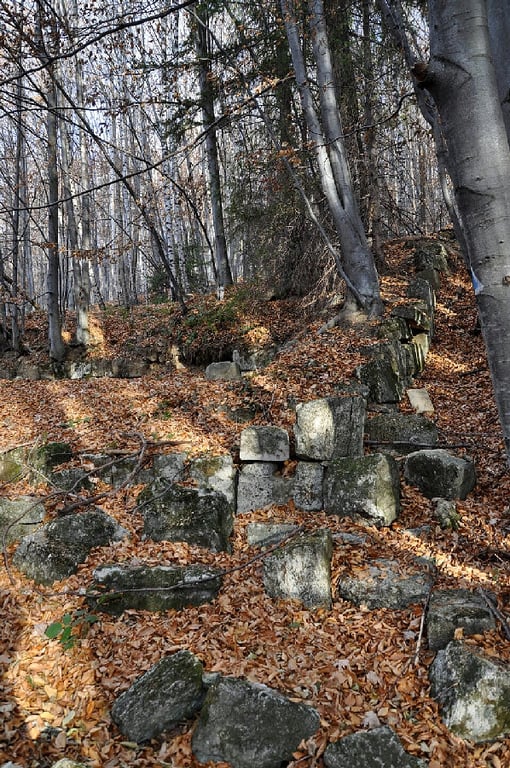
Dacian Citadel 'The White Faces'
Terraces, water pipes and a ring of limestone pillars on a sunny Dacian hillside across the valley from Sarmizegetusa Regia.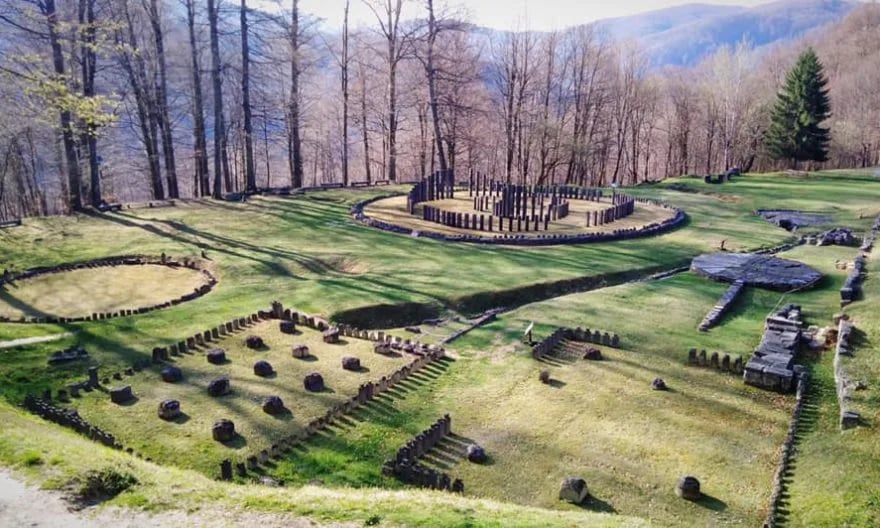 Romania
Sarmizegetusa Regia
The last capital of free Dacia, high in the Orăștie Mountains, where rings of andesite pillars still invite many readings.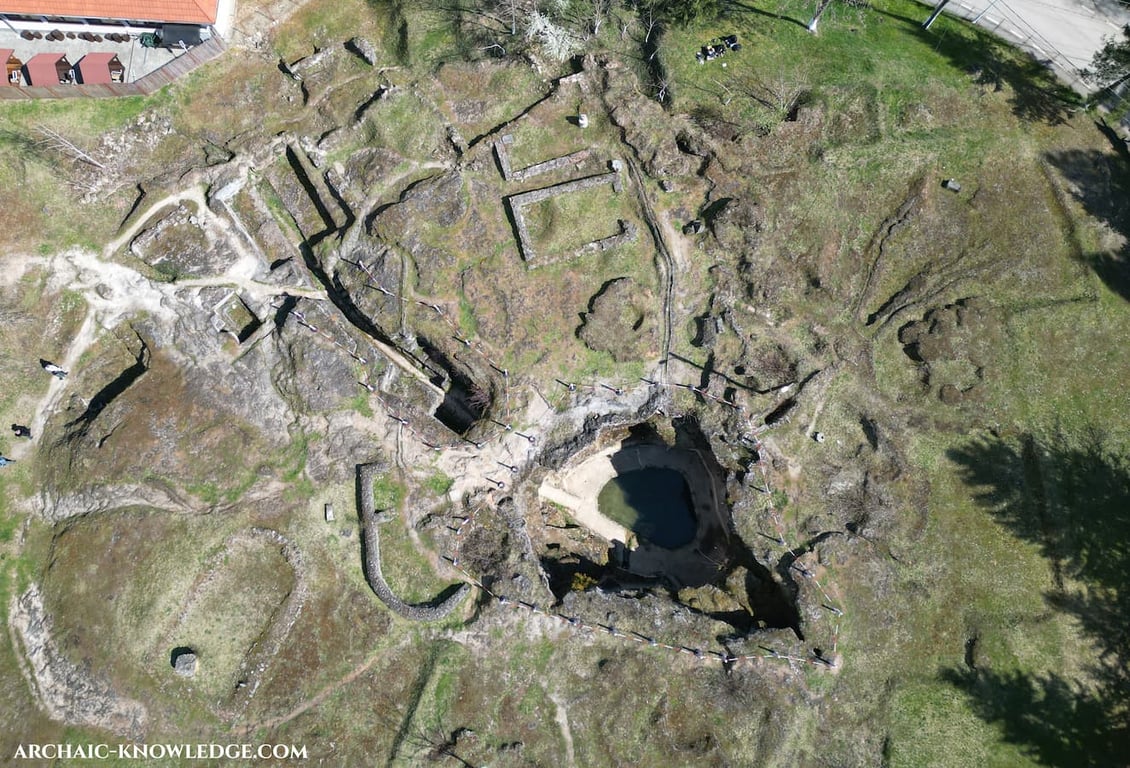 Romania
Thermae Germisara
A hot spring in a Transylvanian hill where Roman governors bathed and left gold for the Nymphs. Romania
Tilisca Dacian Settlement
A Dacian hilltop stronghold above a Transylvanian village, where fifteen bronze coin dies point to a mint.- Syria
Ain Dara Temple
An Iron Age temple in northwest Syria where meter-long carved footprints stride from the porch toward the god's inner hall.  Italy
Alatri Cyclopean Walls
Many-sided limestone blocks, fitted so closely no paper slips between them, wrap the hilltop citadel of Alatri.