
Ad Aquas (Călan)
Age: Roman, ~1,900 years old
About Ad Aquas (Călan)
In short
Ad Aquas (Aquae) was a Roman spa and road station at Călan, Hunedoara County, Romania, in the territory of the colony of Ulpia Traiana Sarmizegetusa. Its rock-cut pool, about 14 by 7 meters, survives beside a modern resort; inscriptions date its heyday to the late 2nd and early 3rd centuries CE.
About 2 kilometers north of the town of Călan, on the left bank of the Strei River in Romania's Hunedoara County, a pool cut into a knob of rock still fills with warm spring water. It is what survives of Ad Aquas, “at the waters”, the Roman spa that the Tabula Peutingeriana, a late Roman road map, marks with a small drawing of a building on the road north from the colony of Ulpia Traiana Sarmizegetusa. Townsmen, veterans and officials of Roman Dacia came here in the late 2nd and early 3rd centuries CE to bathe and to thank the gods.
What was Ad Aquas?
Ancient sources give the place several names. The Tabula Peutingeriana calls it Ad Aquas and sets it between Sarmizegetusa and a station called Petris. The Ravenna Cosmography writes simply Aquas, and Ptolemy's Geography lists it in Greek as Hydata, “waters”. It stood on the main road from Ulpia Traiana Sarmizegetusa to Apulum, today Alba Iulia, where the route followed the Strei valley toward the Mureș.
Locally the settlement was the pagus Aquensis, a rural district in the territory of the colony. The name survives on an altar to Jupiter Best and Greatest, later reused in a church at Călan. Its dedicator, Gaius Iulius Marcianus, sat on the colony's town council and served as prefect of the district. The written sources describe a road station, a rural district and a spa; none of them mentions a fort or a garrison.
What came before the Romans is less clear. Some historians, the newspaper Adevărul reported in 2023 without naming them, say the Dacians used the springs first, at a settlement called Idata. The researcher Adam Jarych, reviewing the finds from the three Roman spas of Dacia in 2019, found no material that confirms use before the conquest. Beyond sets out both readings.
The Roman Spoon: a pool cut from rock
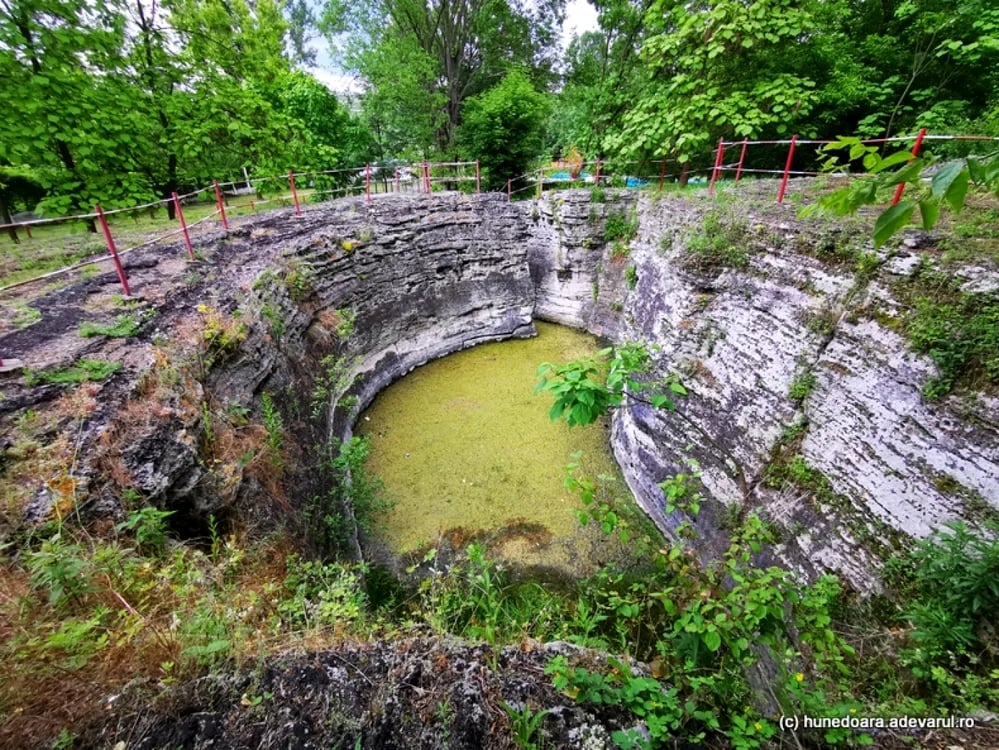
Of the Roman baths, only the pool is left. Builders carved it into a rocky knoll near the river: a basin about 14.2 meters long, 7.1 meters wide and 3.7 meters deep, fed by springs that rise through its floor. Its outline, a rounded bowl drawing out into a slightly winding outlet channel about a meter wide, earned it the local name Lingura romană, “the Roman Spoon”.
When the archaeologists Adriana Rusu-Pescaru and Eugen Pescaru of the museum in Deva studied it in the mid-1990s, modern works had shattered about two-thirds of the rock floor. The intact part was enough to show how the pool worked. In antiquity the water stood about 1.2 meters deep. Slots in the outlet channel held sluice gates that set the level of the pool, and traces of two more sluices survive at the far end of the channel, where the rock knoll meets the platform it rises from.
Who bathed at Ad Aquas?
Only nine votive inscriptions are known from the spa, far fewer than from Thermae Germisara at Geoagiu-Băi. They honor the great gods of the official Roman pantheon rather than water spirits: Jupiter, Jupiter Dolichenus, Hercules, Fortuna and Silvanus. Marcus Iulius Proclianus dedicated an altar to Hercules. Valerius Ingenuus, a veteran of the Thirteenth Legion Gemina, which was based at Apulum, set up one to Jupiter Dolichenus and made another vow for the well-being of Emperor Caracalla.
The researchers Ioan Boda, Călin Timoc and Victor Bunoiu found no clear favorite among the gods here. One explanation they offer is that the spa served mostly the magistrates of Ulpia Traiana Sarmizegetusa, who showed their piety through the official cults that went with their offices. That sets Ad Aquas apart from Germisara, where the Nymphs of the springs received more dedications than any other deity. Finds from the site also include columns from buildings, pieces of sculpture, roof tiles, some stamped by the Thirteenth Legion, and many coins.
What happened to the Roman baths at Călan?
The springs never stopped flowing. In the 19th century the scholar Aron Densușianu described the surroundings of the baths as beautiful and romantic, and the bathing as a cure. Then industry arrived: ironworks grew up beside the Strei, and the later Victoria steel plant came to cover almost 100 hectares of the left bank. Soot from the plant drove the bathers away, and the basin was partly filled with sand, river gravel and stone so that it could serve as a potato store.
The pool is a listed historic monument. In 2018 a heritage commission set up by the Călan town council reported that it had no guarding, no conservation work and not even the standard sign marking a historic monument, and that the only way in was through the private Călan-Băi pool complex, for a fee.
Visiting Ad Aquas
The site lies beside the national road DN66 (E79), which runs between Simeria and Hațeg, inside the grounds of the Călan-Băi thermal resort. Newer pools have been built around the Roman basin in recent decades. The Spoon itself is no longer used for bathing, although the springs still feed it, and from its rim you can trace the outlet channel and its sluice slots. Călan is also on the railway, with daily trains from Bucharest, Timișoara and Cluj-Napoca.
Beyond: more about Ad Aquas (Călan)
Checking…
Contributors
No contributions yet
Be the first to add photos or videos!
Play and learn
Test Your Knowledge!
Think you know everything about Ad Aquas (Călan)? Take our interactive quiz and become an Ancient Sites Expert!
Frequently asked questions
Where is Ad Aquas?
At Călan-Băi, about 2 km north of Călan in Hunedoara County, Romania, on the left bank of the Strei River beside the DN66 (E79) road.
What does Ad Aquas mean?
It is Latin for “at the waters”. Ptolemy gives the same idea in Greek as Hydata, and the local district was called the pagus Aquensis.
Can you still see the Roman baths at Călan?
Yes. The rock-cut Roman pool, known as the Roman Spoon, survives inside the Călan-Băi resort and is still fed by thermal springs, though it is no longer used for bathing.
How big is the Roman pool at Călan?
About 14.2 meters long, 7.1 meters wide and 3.7 meters deep, with a winding outlet channel about a meter wide. In antiquity the water stood about 1.2 meters deep.
Did the Dacians use the springs at Călan?
Some historians, as the newspaper Adevărul reported in 2023, say they did, at a settlement called Idata, and the researcher Alexandru Voinea pictures local people using the springs alongside the Roman baths. Adam Jarych's 2019 review of the finds found no object from before the Roman conquest. The question is still open.
How is Ad Aquas related to Germisara?
Both were Roman thermal spas in Hunedoara County, on the Roman road from Ulpia Traiana Sarmizegetusa to Apulum. Germisara, at Geoagiu-Băi, is better preserved and richer in finds, and the Nymphs of its springs received the most dedications there.
Related Tags
Sources
- journals.ltn.lodz.pl/Acta-Archaeologica-Lodziensia/article/view/831
- dspace.bcucluj.ro/bitstream/123456789/187065/1/2011%20TR%20supplement%202%20-%201%20Andrea%20Cumurciuc.pdf
- tp-online.ku.de/trefferanzeige_en.php?id=809
- edh.ub.uni-heidelberg.de/edh/inschrift/HD044870
- pleiades.stoa.org/places/206928
- adevarul.ro/stiri-locale/hunedoara/baile-unde-se-tratau-bogatii-din-sarmizegetusa-2251774.html
- adevarul.ro/stiri-locale/hunedoara/spa-urile-antice-in-care-se-rasfatau-dacii-si-1864750.html
- aerialarchaeologyromania.exeter.ac.uk/items/show/352
- pensiunea.dacica.ro/en/surroundings/sites-roman-period
- en.wikivoyage.org/wiki/Calan
- en.wiktionary.org/wiki/%E1%BD%95%CE%B4%CF%89%CF%81
- ro.wikipedia.org/wiki/C%C4%83lan
Other Sites You Might Like
 Romania
Piatra Roșie Fortress
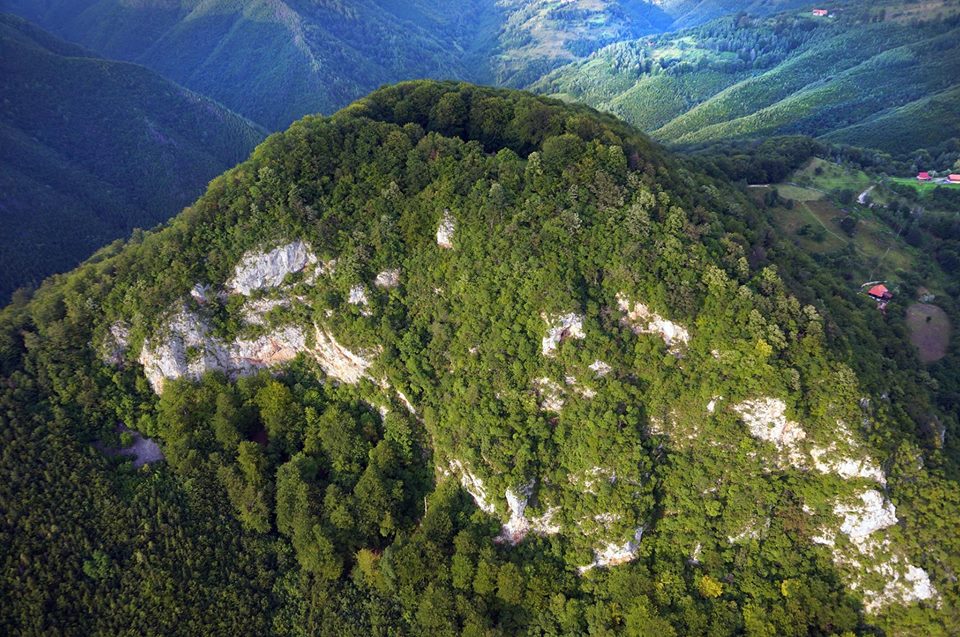
A cliff-ringed Dacian stronghold where an iron disc with an aurochs and a feline was found, read as shield, icon or emblem.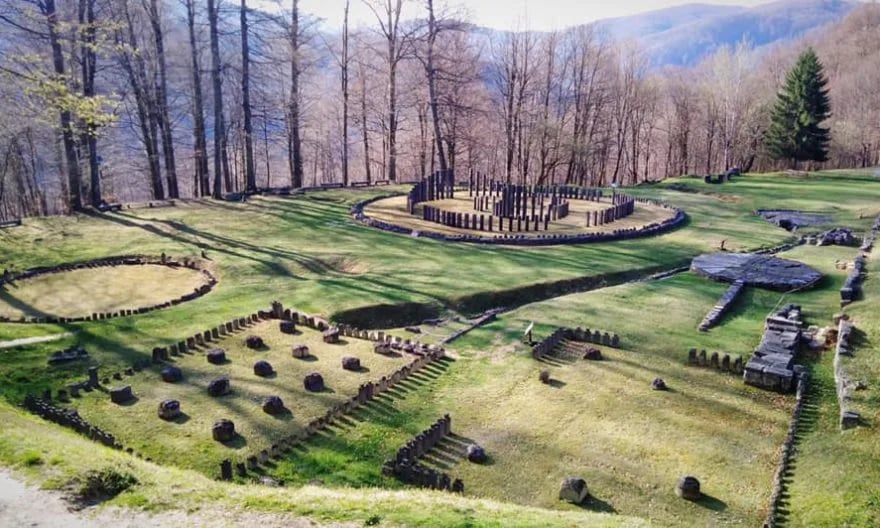 Romania
Sarmizegetusa Regia
The last capital of free Dacia, high in the Orăștie Mountains, where rings of andesite pillars still invite many readings.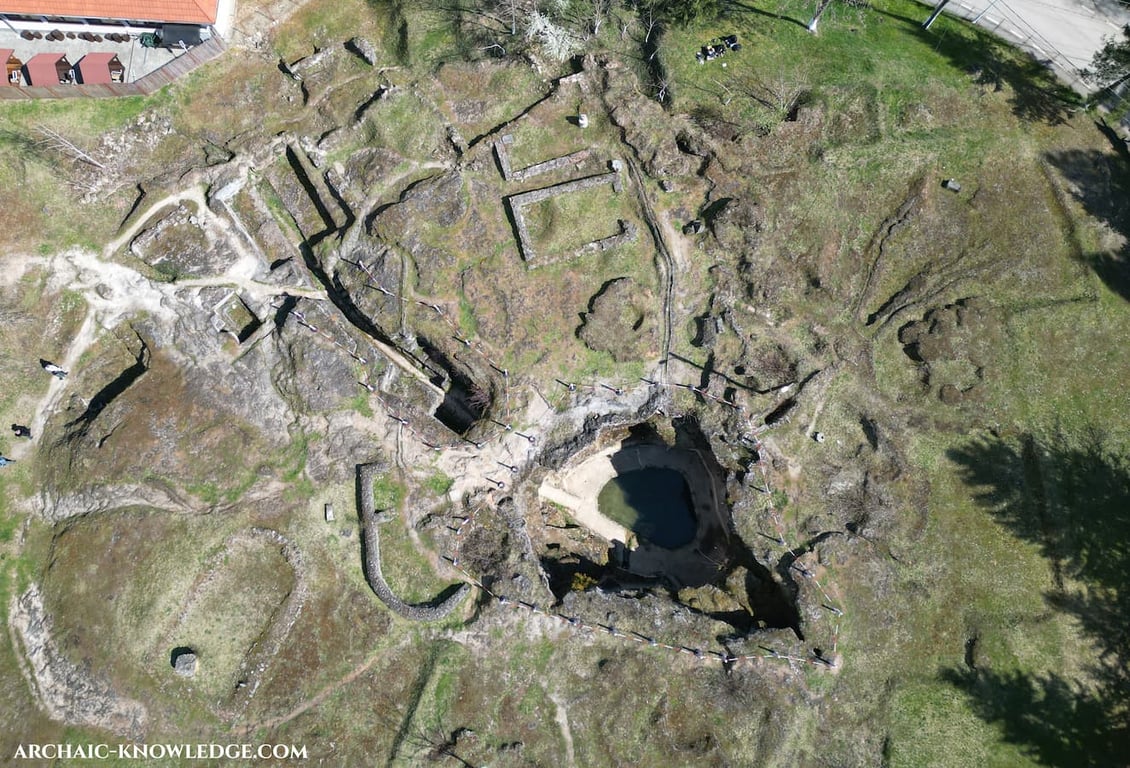 Romania
Thermae Germisara
A hot spring in a Transylvanian hill where Roman governors bathed and left gold for the Nymphs. Romania
Tilisca Dacian Settlement
A Dacian hilltop stronghold above a Transylvanian village, where fifteen bronze coin dies point to a mint.- Syria
Ain Dara Temple
An Iron Age temple in northwest Syria where meter-long carved footprints stride from the porch toward the god's inner hall.  Italy
Alatri Cyclopean Walls
Many-sided limestone blocks, fitted so closely no paper slips between them, wrap the hilltop citadel of Alatri.