
Cetatea Dacică de la Căpâlna
Rated 4.5(236 reviews)Age: ~2,000 years old
About Cetatea Dacică de la Căpâlna
In short
Căpâlna is a Dacian hill fortress on Dealul Cetății above the Sebeș Valley in Alba County, Romania. Its excavators date it to the mid-1st century BCE, late in Burebista's reign, and it burned around 106 CE. It is one of six fortresses in a UNESCO World Heritage site inscribed in 1999.
On Dealul Cetății, a steep wooded hill above the Sebeș River in Romania's Alba County, the overgrown walls of a Dacian stronghold still trace the summit. Romanians call it Cetatea Dacică de la Căpâlna, “the Dacian fortress at Căpâlna”, after the village below. It was built in the mid-1st century BCE and probably burned during Rome's wars of conquest early in the 2nd century CE. Căpâlna is the easternmost of the six strongholds that UNESCO inscribed together in 1999 as the Dacian Fortresses of the Orăștie Mountains.
Where is Căpâlna, and what did it guard?
The hill, whose name means “Fortress Hill”, stands on the left bank of the Sebeș between the Gărgălău valley and the Râpii stream, about 2 kilometers south of Căpâlna village in Săsciori commune. Its summit rises to about 610 meters. Steep slopes guard most sides; the ancient road came up the one narrow saddle that joins it to Dealul Stăunilor.
From the top, the garrison could watch the Sebeș Valley and the route that ran south across the mountains toward Polovragi. The archaeologist Marius-Mihai Ciută links it with the Dacian strongholds at Tilișca to the east and Cugir to the west, on the eastern side of the heartland around Sarmizegetusa Regia, roughly 40 kilometers away.
Who built Căpâlna, and when?
Its excavators date the building to the middle of the 1st century BCE, toward the end of the reign of King Burebista (about 82–44 BCE) or just after. The walls were raised in the same way as those of Costești-Cetățuie, a fortress of the same period in the Orăștie Mountains.
An open settlement probably lay at the foot of the hill, and ICOMOS, UNESCO's advisory body, describes the main building inside the walls as quarters for the garrison.
What you see at Căpâlna today
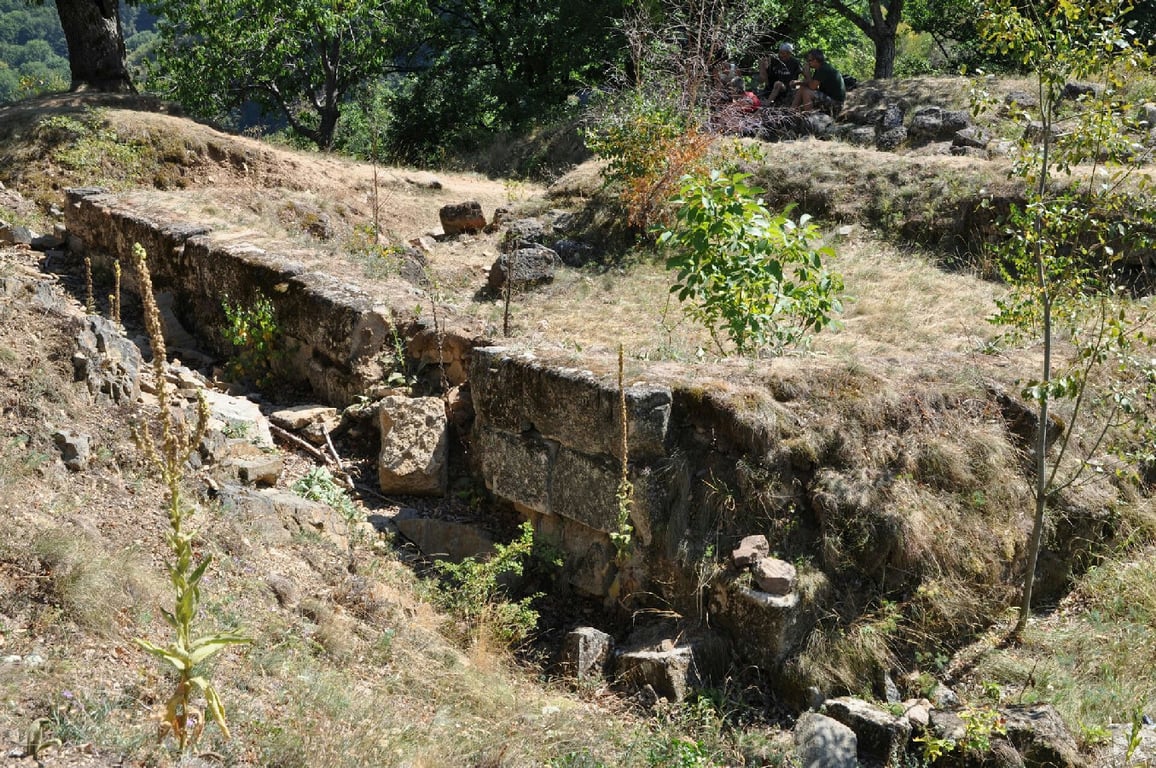
The defenses begin at the saddle, where the builders cut a ditch. Farther up they raised two semicircular earth ramparts, each with a ditch on its inner side and probably a timber palisade on top. Above them, a wall of limestone blocks closes the summit. It follows the lie of the land in an irregular loop of about 280 meters, is 1.5 to 2.5 meters thick and held up the terraces inside.
Only beside the tower-house does the wall show the classic murus dacicus, the Dacian wall, with two faces of squared blocks and a fill between them. Elsewhere it has a single outer face, its blocks probably tied back to the bedrock with timber beams.
Two towers stood on the south side, next to the access road, and the main gate probably passed through the southeastern one. The other was the tower-house, a square building about 9.5 meters on each side, with walls 1.73 meters thick and a doorway 1.26 meters wide on the east. Its ground floor was built of limestone blocks; the upper story had walls of lightly fired brick under a timber roof covered with shingles.
A second entrance on the northeast, probably reached by a wooden stair, was used for a time and then blocked before the Roman conquest. Inside the enclosure, excavators found traces of timber barracks, and a wooden watchtower probably stood on the highest point. Limestone column bases of two sizes, later reused in the wall, suggest that at least two buildings with rows of columns, read as temples, stood on the southeastern terraces at different times.
Finds from the fortress
The excavated objects describe a garrison's daily life: cooking pots and tableware, some painted or imported, spindle whorls for spinning wool, and tokens cut from broken pots, probably for games. Iron finds include smiths' and carpenters' tools, a plowshare and sickles, horse bits, daggers, spearheads and arrowheads, along with brooches and bracelets of bronze and silver. Two samples of charred cereal grain from the fortress were studied in 2006 by Cristinel Plantos and Beatrice Daisa Ciută.
In and around the tower-house lay 29 Roman silver coins, perhaps the savings of whoever lived there. At least half are Dacian copies of Roman Republican denarii, which may have been struck locally, although no coin die has been found at Căpâlna. Finds from the site are held by the National Museum of the Union in Alba Iulia and the Ion Raica Museum in Sebeș.
How the fortress ended
No ancient writer names Căpâlna, so its story has to be read from the ruins. After Trajan's first war against the Dacians (101–102 CE), the peace terms required Dacian walls to be pulled down. In the excavators' reconstruction, Căpâlna's walls were partly taken apart, rebuilt in haste before the second war (105–106 CE), and burned at its end, when the fortress was abandoned. Who took the fortress, when its northeast gate was closed and where a looted gold necklace came from are open questions, set out in Beyond.
How Căpâlna was rediscovered
Gábor Téglás recognized the ruins as Dacian in the late 19th century. Excavations began in 1939 and continued in 1942 and 1954 under Mihail Macrea and Ion Berciu. Campaigns coordinated by Hadrian Daicoviciu in 1965–1967 and 1982–1983 uncovered both ramparts, the gate tower and most of the enclosure wall, and Ioan Glodariu and Vasile Moga published the results in 1989.
Since then the fortress has suffered from treasure hunters. By 2006, according to Ciută, who documented the damage for criminal investigations, people with metal detectors had dug more than 100 pits inside and around it.
Visiting Căpâlna
Căpâlna village lies on the DN67C, the Transalpina road, about 20 kilometers south of Sebeș. About 3 kilometers south of the village, near a bridge over the Sebeș, a signposted path of about 2 kilometers climbs through forest to the ruins. The site is largely unrestored, and trees and brush have spread over its terraces and fallen blocks. Conservation plans exist, but by 2022 repeated tenders for the design work had drawn no bidders. On the summit you can follow the wall and stand at the base of the tower-house, where the coins lay.
Beyond: more about Cetatea Dacică de la Căpâlna
Checking…
Contributors
No contributions yet
Be the first to add photos or videos!
Play and learn
Test Your Knowledge!
Think you know everything about Cetatea Dacică de la Căpâlna? Take our interactive quiz and become an Ancient Sites Expert!
Frequently asked questions
Where is the Dacian fortress of Căpâlna?
On Dealul Cetății, about 2 kilometers south of Căpâlna village in Săsciori commune, Alba County, Romania, above the Sebeș River and about 20 kilometers south of the town of Sebeș.
How old is Căpâlna fortress?
Its excavators date it to the mid-1st century BCE, late in the reign of King Burebista or just after. It was used until it burned and was abandoned around 106 CE, during the Roman conquest of Dacia.
Is Căpâlna a UNESCO World Heritage site?
Yes. It is one of six Dacian strongholds inscribed in 1999 as the Dacian Fortresses of the Orăștie Mountains, with Sarmizegetusa Regia, Costești-Cetățuie, Costești-Blidaru, Luncani-Piatra Roșie and Bănița.
Who captured Căpâlna?
No ancient writer names it. One reading, discussed in the 1989 monograph, has Roman cavalry under Lusius Quietus taking it in the first war; Ioan Glodariu thought that cavalry took another route. The excavators' reconstruction has the walls partly taken down after 102 CE, rebuilt, and burned around 106 CE.
What can you see at Căpâlna today?
The overgrown limestone enclosure wall, the earth ramparts on the approach, and the base of the square tower-house, about 9.5 meters on each side. The site is largely unrestored.
How do you get to Căpâlna fortress?
From the DN67C (Transalpina) road, a signposted path of about 2 kilometers leaves the road near a bridge over the Sebeș, about 3 kilometers south of the village, and climbs through forest to the ruins.
Related Tags
Sources
- whc.unesco.org/archive/advisory_body_evaluation/906.pdf
- cetati-dacice.ro/ro/situri/capalna/istoricul-cercetarilor
- cetati-dacice.ro/ro/situri/capalna/obiective-arheologice
- cetati-dacice.ro/ro/situri/capalna/organizarea-teritoriului
- cetati-dacice.ro/ro/situri/capalna/artefacte
- cetati-dacice.ro/ro/situri/capalna/acces
- plural.upsc.md/wp-content/uploads/2019/02/Revista-Plural_nr_2-2018_Ciuta.pdf
- ro.wikipedia.org/wiki/Cetatea_dacic%C4%83_de_la_C%C4%83p%C3%A2lna
- en.wikipedia.org/wiki/Dacian_fortress_of_C%C4%83p%C3%A2lna
- alba24.ro/cetatea-dacica-de-la-capalna-preluata-in-administrarea-consiliului-judetean-alba-pentru-restaurare-proiectul-intra-la-vot-919976.html
- alba24.ro/restaurarea-ceta%C8%9Bii-dacice-de-la-capalna-ar-putea-incepe-din-toamna-vezi-istoricul-monumentului-unesco-96805.html
- ceeol.com/search/article-detail?id=1038973
Other Sites You Might Like
 Romania
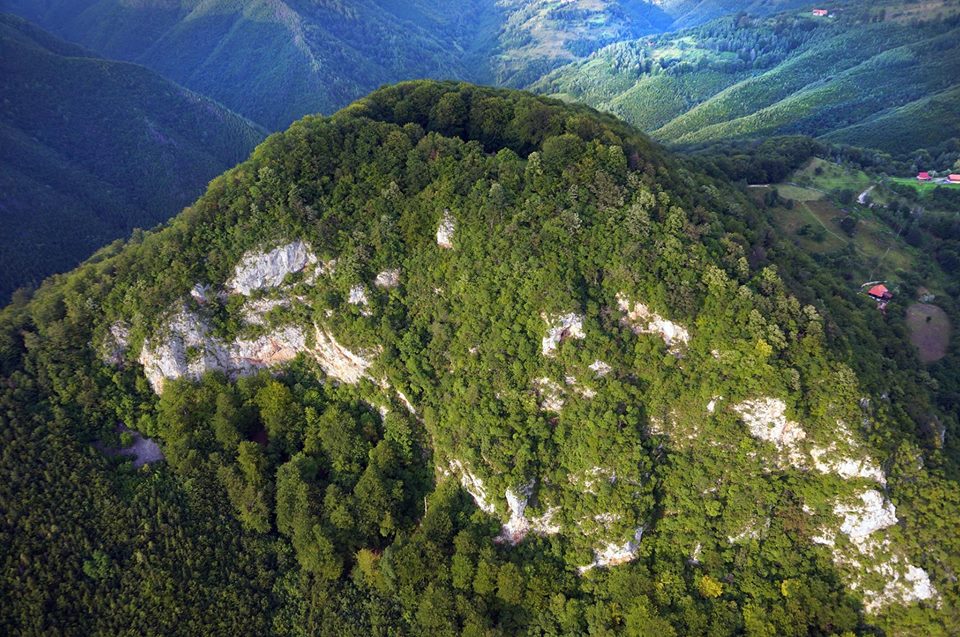
Piatra Roșie Fortress
A cliff-ringed Dacian stronghold where an iron disc with an aurochs and a feline was found, read as shield, icon or emblem.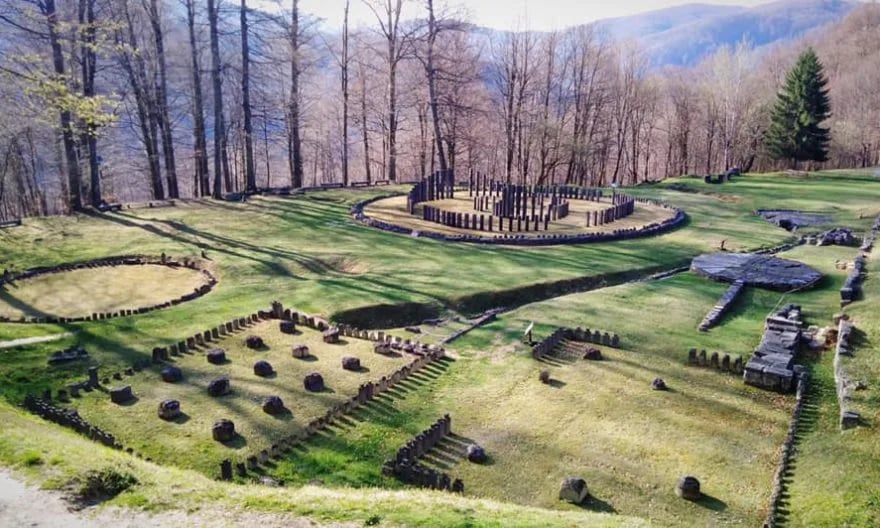 Romania
Sarmizegetusa Regia
The last capital of free Dacia, high in the Orăștie Mountains, where rings of andesite pillars still invite many readings.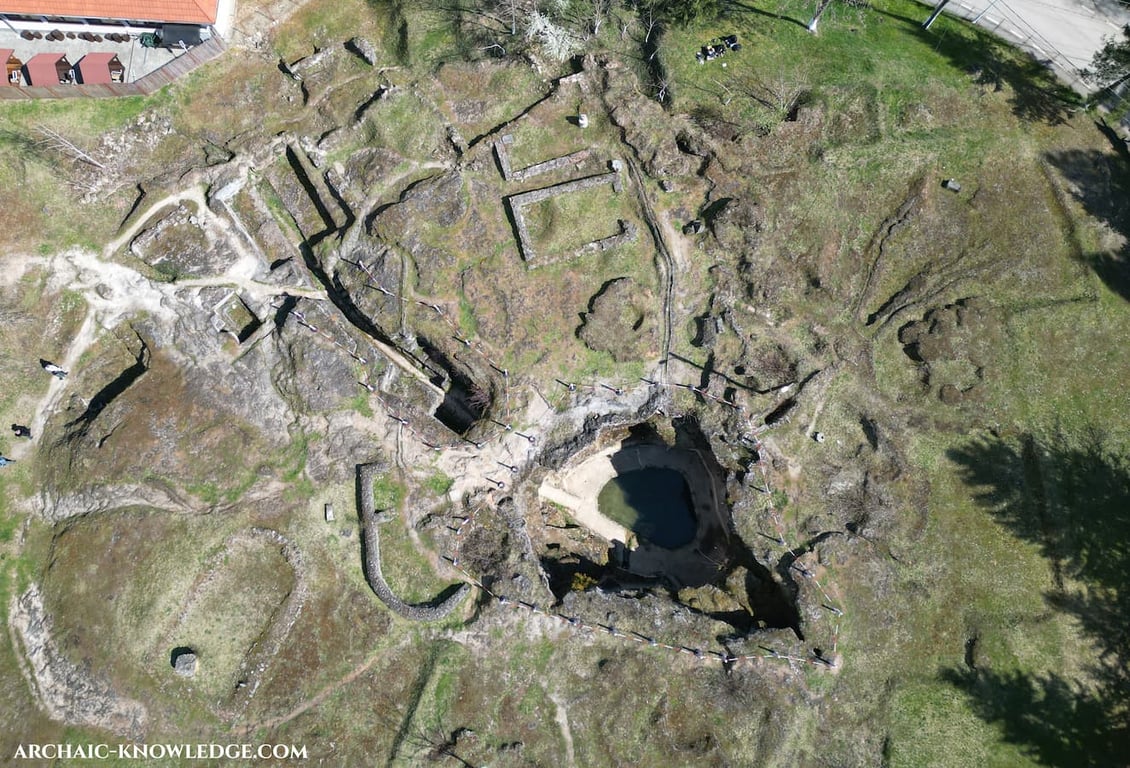 Romania
Thermae Germisara
A hot spring in a Transylvanian hill where Roman governors bathed and left gold for the Nymphs.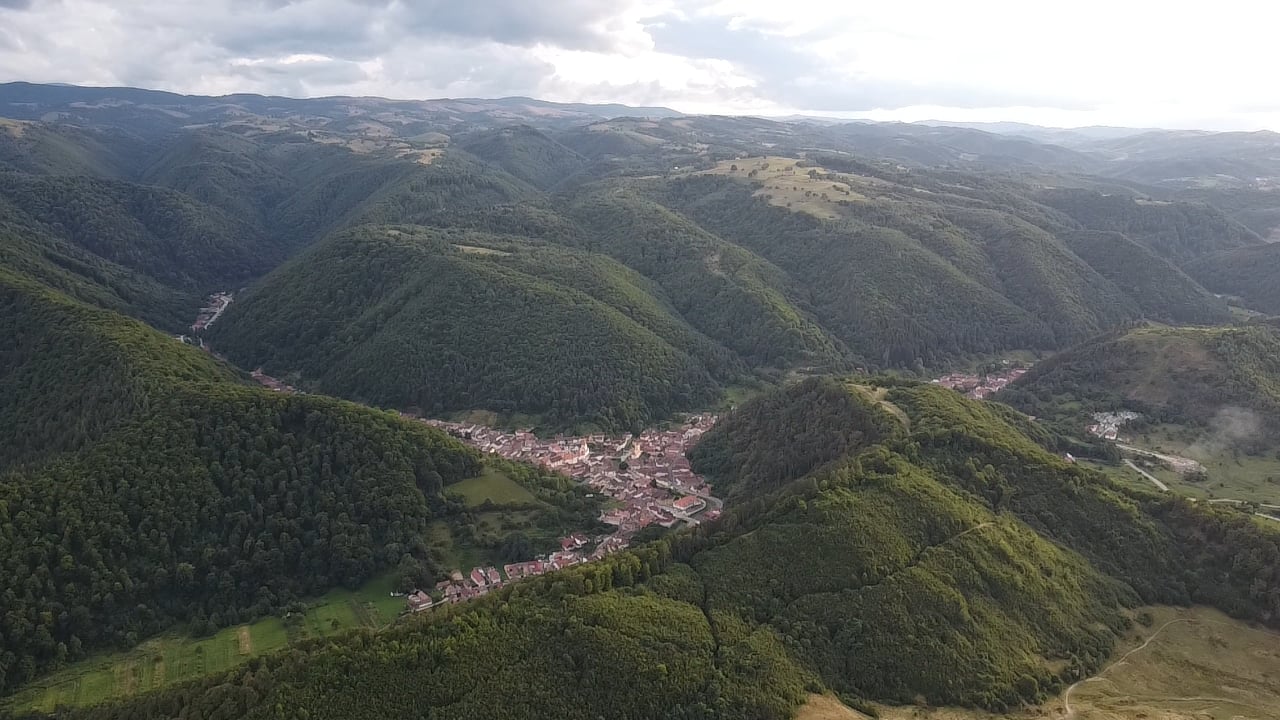 Romania
Tilisca Dacian Settlement
A Dacian hilltop stronghold above a Transylvanian village, where fifteen bronze coin dies point to a mint.- Syria
Ain Dara Temple
An Iron Age temple in northwest Syria where meter-long carved footprints stride from the porch toward the god's inner hall.  Italy
Alatri Cyclopean Walls
Many-sided limestone blocks, fitted so closely no paper slips between them, wrap the hilltop citadel of Alatri.