
Costești-Cetățuie Fortress
Rated 4.7(236 reviews)Age: Iron Age, ~2,100 years old
About Costești-Cetățuie Fortress
In short
Costești-Cetățuie is a Dacian hill fortress above the village of Costești in Hunedoara County, Romania, and the oldest in the Orăștie Mountains. Fortified from the end of the 2nd century BCE, it guarded the road to Sarmizegetusa Regia until the Roman conquest of 106 CE. It is part of a UNESCO World Heritage site.
On a wooded hill above the village of Costești, where the Grădiștea valley opens out of Romania's Orăștie Mountains, lie the earth banks, stone towers and temple terraces of Costești-Cetățuie. It is the oldest Dacian fortress in these mountains: first fortified at the end of the 2nd century BCE, rebuilt several times, and held until the Roman conquest of 106 CE. It guarded the road up the valley to Sarmizegetusa Regia, the royal capital, and the larger tower-house on its summit is the biggest building of its kind known in Dacia.
Who built Costești-Cetățuie, and when?
The name is Romanian: cetățuie means “little fortress”. What the Dacians called the place is not known. Archaeologists describe three main building phases, from the end of the 2nd century BCE to the start of the 2nd century CE.
The first defenses were of earth and timber. Two banks ran around the hill, an outer one shaped like a huge horseshoe and an inner one roughly oval, with a fence of several rows of posts along the top. The main bank is still 6 to 8 meters wide at its base and 2 to 2.5 meters high. At the gate its two ends overlapped, so anyone forcing the entrance had to turn and show a flank to the defenders.
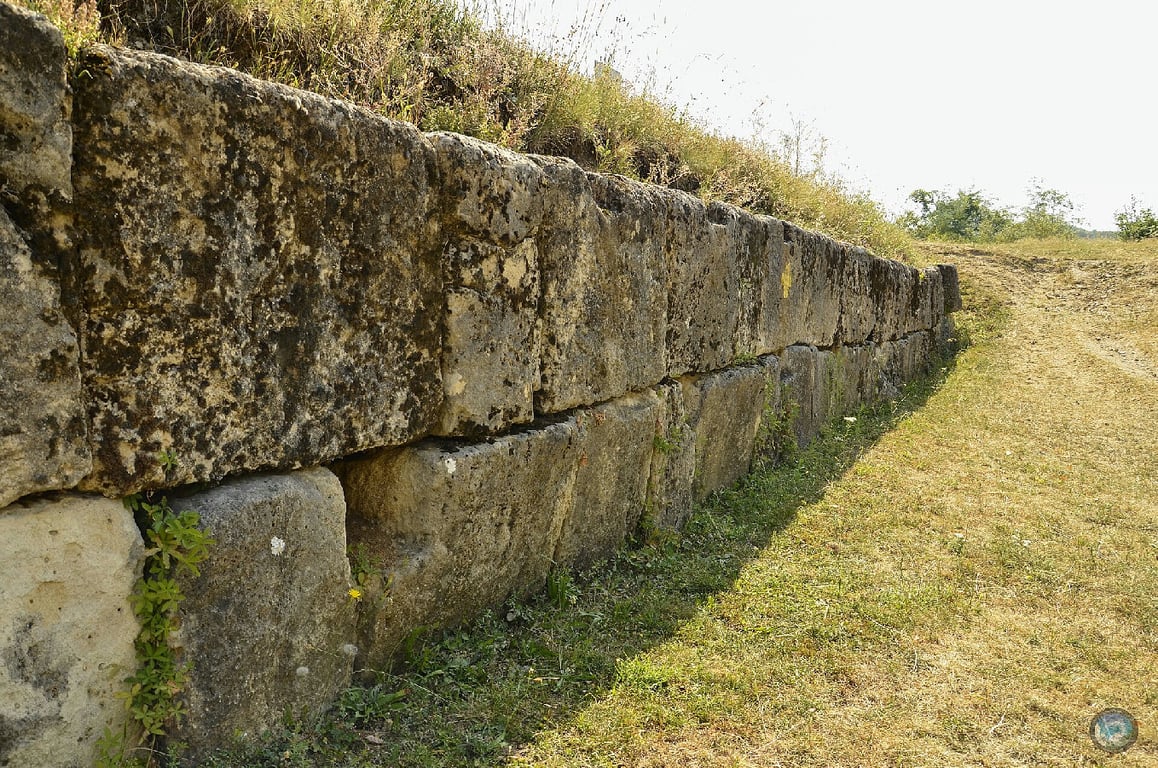
Stone came next. The archaeologist Ioan Glodariu proposed that after King Burebista took the Greek cities on the western Black Sea coast, around 55 BCE, craftsmen from those cities probably helped raise the stone wall. The way it is built fits his reading: two faces of squared limestone, some blocks set crosswise to tie them together, with earth and river stones packed between. Glodariu found the nearest match in the region in the Hellenistic wall of Histria on the Black Sea coast, a comparison Edmond Nogyi recalls in a 2025 study.
The last works, during Trajan's wars against the Dacians in 101–102 and 105–106 CE, were mostly repairs. The Roman historian Cassius Dio writes that the peace of 102 CE obliged King Decebalus to pull down his forts, and that he was soon repairing them. After 106 CE no one lived on the hill again.
What you see at Costești-Cetățuie today
Most ruins belong to the second phase. Four towers stand on the gentler southern slope and two smaller ones on the steep north. A wall of limestone blocks joins three of the southern towers; on its eastern stretch, seven buttresses probably held platforms for the defenders.
The two tower-houses on the summit are the largest buildings. Both began smaller and were later enlarged. The northern one measures 18.9 by 14.8 meters outside. Its ground floor had limestone walls 3.2 meters thick and about 2 meters high, and above them rose walls of lightly fired brick to roughly 5 or 6 meters, under a tiled roof. One door opened at ground level and another upstairs, reached by an outside stair. The southern tower-house, 14.3 by 12.5 meters, was approached by a wide limestone stairway.
Excavators also found traces of a watchtower and timber barracks on the plateau. A third tower-house on the east watched the ancient road climbing from the Grădiștea valley, and more towers outside the walls covered the approach.
Water was the weak point, as at all these mountain fortresses, whose springs lay below the walls. Two hollows cut into the rock collected rain, one by the road in front of the eastern tower-house and one near a bastion on the west, with smaller pits on the plateau.
Temples on the terraces
Costești-Cetățuie was more than a barracks. On its terraces lie rows of shaped limestone bases that once carried wooden columns, a kind of building found across the Orăștie Mountains. Glodariu counted one inside the walls and three outside, and a large settlement spread at the foot of the hill, where the village stands today.
The count is still growing. In 2024 a team from Babeș-Bolyai University in Cluj-Napoca found two limestone bases of a building no one had known, still in place, on a terrace on the southwest side of the hill, at a spot called Mălăiște that an ancient road crosses. It was the fifth such row found at the fortress in a century of research. Most specialists read these buildings as temples; others have read them as granaries, and Beyond sets out both readings.
Excavations and conservation
The archaeologist G. Finály surveyed the hill in 1910. Digging began in 1924 under D. M. Teodorescu, a professor at Cluj, whose team found the first rows of column bases; he published them in 1930. Hadrian Daicoviciu later proposed that Costești-Cetățuie, Blidaru and Piatra Roșie formed one defensive system guarding the roads to the capital. Blidaru, about 1.5 kilometers away in a straight line, was in use at the same time in its last phase, which suggested to him that the two may have shared a command.
Walls were strengthened and drained in 1981–1986, and metal roofs were raised over the two tower-houses in the early 1980s. By 2019 those roofs had decayed and many blocks had shifted or been broken by vandals, and Romania's National Institute of Heritage announced repairs. That September about 50 volunteers joined archaeologists, firefighters and site staff to clear the vegetation from the ruins.
Visiting Costești-Cetățuie
The fortress is one of six Dacian strongholds inscribed together on the UNESCO World Heritage List in 1999, with Sarmizegetusa Regia, Blidaru, Piatra Roșie, Bănița and Căpâlna. It lies in Costești, in the commune of Orăștioara de Sus, Hunedoara County, on the county road from Orăștie to Grădiștea de Munte. A marked trail (yellow cross) starts at the tourist information point at the edge of the village: about 2.5 kilometers and an hour's easy walk, along a lane to a small car park and then 200 meters on a footpath. Who lived in the great tower-houses at the top is one of the questions the hill still holds.
Beyond: more about Costești-Cetățuie Fortress
Checking…
Contributors
No contributions yet
Be the first to add photos or videos!
Play and learn
Test Your Knowledge!
Think you know everything about Costești-Cetățuie Fortress? Take our interactive quiz and become an Ancient Sites Expert!
Frequently asked questions
Where is Costești-Cetățuie?
It stands on Cetățuia hill above the village of Costești, in the commune of Orăștioara de Sus, Hunedoara County, Romania, where the Grădiștea valley leaves the Orăștie Mountains.
How old is Costești-Cetățuie?
Its first earth-and-timber defenses date from the end of the 2nd century BCE. Stone walls and towers followed in the 1st century BCE, and the fortress was used until the Roman conquest of 106 CE.
Was Costești-Cetățuie a royal residence?
Some Romanian writers describe its large tower-houses as a residence of the Dacian kings, and a 2019 news report says some historians call it Burebista's capital. Others stress its role as one fort in a chain guarding the road to Sarmizegetusa Regia. No inscription or find names who lived there.
Were the stone rows at Costești-Cetățuie temples?
Most Romanian specialists read the rows of column bases as temples, and UNESCO's 1999 evaluation counts four. Constantin Daicoviciu first took them for granaries in 1949, and the archaeologist Coriolan Opreanu has since proposed a practical use, such as raised storehouses.
Is Costești-Cetățuie the same as Blidaru?
No. Both stand near Costești and are often called the Costești fortresses, but Blidaru is a separate stone fortress on another hilltop, about 1.5 kilometers away in a straight line.
Can you visit Costești-Cetățuie?
Yes. A marked trail (yellow cross) of about 2.5 kilometers leads from the tourist information point in Costești to the ruins in about an hour, the last 200 meters on a footpath. The site is part of a UNESCO World Heritage property inscribed in 1999.
Related Tags
Sources
- whc.unesco.org/archive/advisory_body_evaluation/906.pdf
- dacit.utcluj.ro/upload/rezultate/spread_html/files/basic-html/page224.html
- dacit.utcluj.ro/upload/rezultate/spread_html/files/basic-html/page225.html
- dacit.utcluj.ro/upload/rezultate/spread_html/files/basic-html/page228.html
- dacit.utcluj.ro/upload/rezultate/spread_html/files/basic-html/page185.html
- jaha.org.ro/index.php/JAHA/article/view/1226
- puterea.ro/?p=407088
- abnase.com/remains-of-never-before-known-temple-unearthed-at-costesti-cetatuie-dacian-hillfort-site
- adevarul.ro/stiri-locale/hunedoara/video-cetatea-costesti-intra-in-reparatii-dupa-1968683.html
- penelope.uchicago.edu/Thayer/E/Roman/Texts/Cassius_Dio/68*.html
- ro.wikipedia.org/wiki/Cetatea_dacic%C4%83_Coste%C8%99ti-Cet%C4%83%C8%9Buie
- en.wikipedia.org/wiki/Coste%C8%99ti-Cet%C4%83%C8%9Buie_Dacian_fortress
- muntii-nostri.ro/trails/download-atlas/costesti-cetatea-costesti-cetatuie
- dexonline.ro/definitie/cet%C4%83%C8%9Buie
- ephemerisnapocensis.arheologie-istoriaartei-cluj.ro/Articles/Articles%202019/05_EN_2019.pdf
- journals.ub.uni-heidelberg.de/index.php/amold/article/view/29357
- observatornews.ro/social/cetatea-dacica-costesti-curatata-de-voluntari-311003.html
Other Sites You Might Like
 Romania
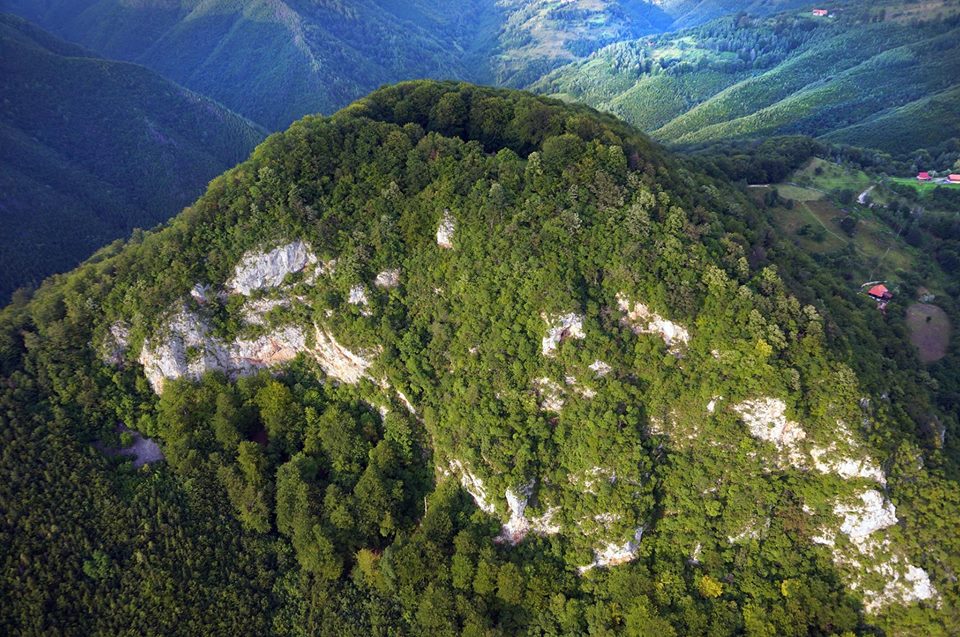
Piatra Roșie Fortress
A cliff-ringed Dacian stronghold where an iron disc with an aurochs and a feline was found, read as shield, icon or emblem.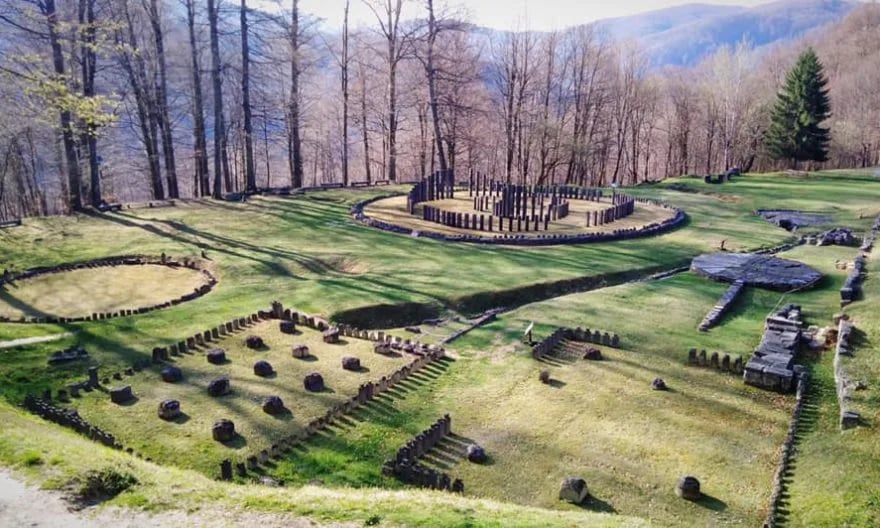 Romania
Sarmizegetusa Regia
The last capital of free Dacia, high in the Orăștie Mountains, where rings of andesite pillars still invite many readings.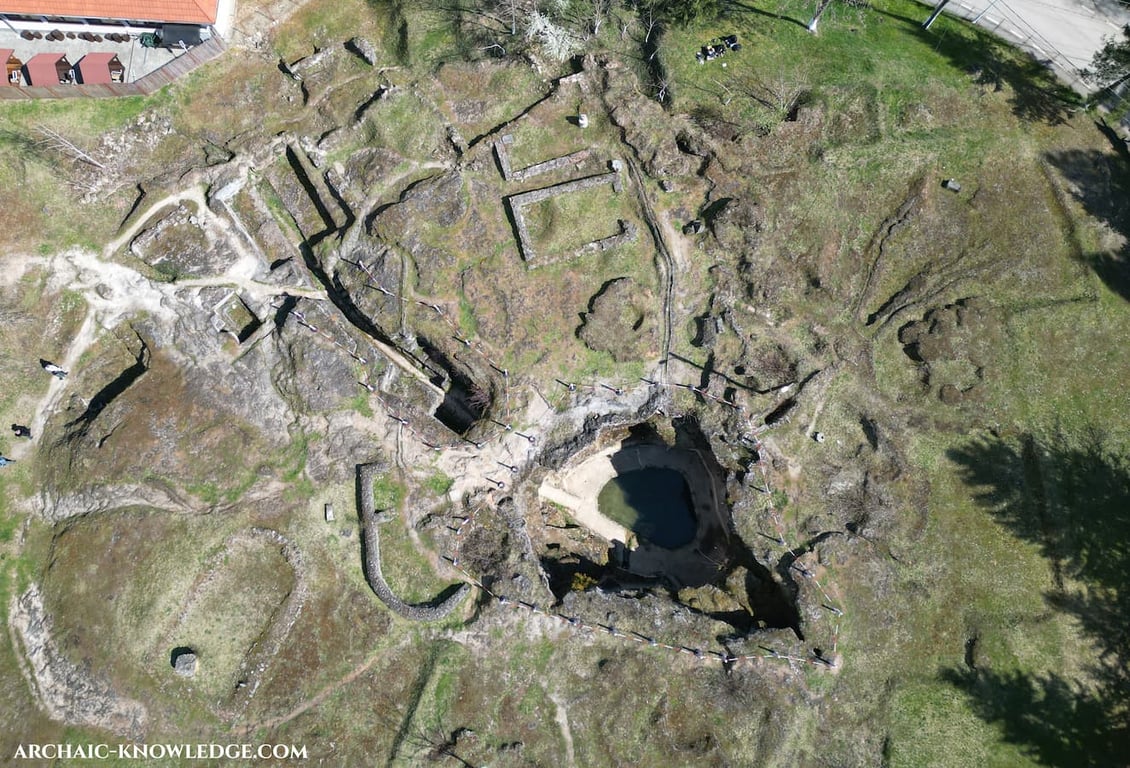 Romania
Thermae Germisara
A hot spring in a Transylvanian hill where Roman governors bathed and left gold for the Nymphs. Romania
Tilisca Dacian Settlement
A Dacian hilltop stronghold above a Transylvanian village, where fifteen bronze coin dies point to a mint.- Syria
Ain Dara Temple
An Iron Age temple in northwest Syria where meter-long carved footprints stride from the porch toward the god's inner hall.  Italy
Alatri Cyclopean Walls
Many-sided limestone blocks, fitted so closely no paper slips between them, wrap the hilltop citadel of Alatri.