Thermae Germisara
Discover where powerful thermal springs shaped Dacian and Roman life, a unique ancient healing hub.
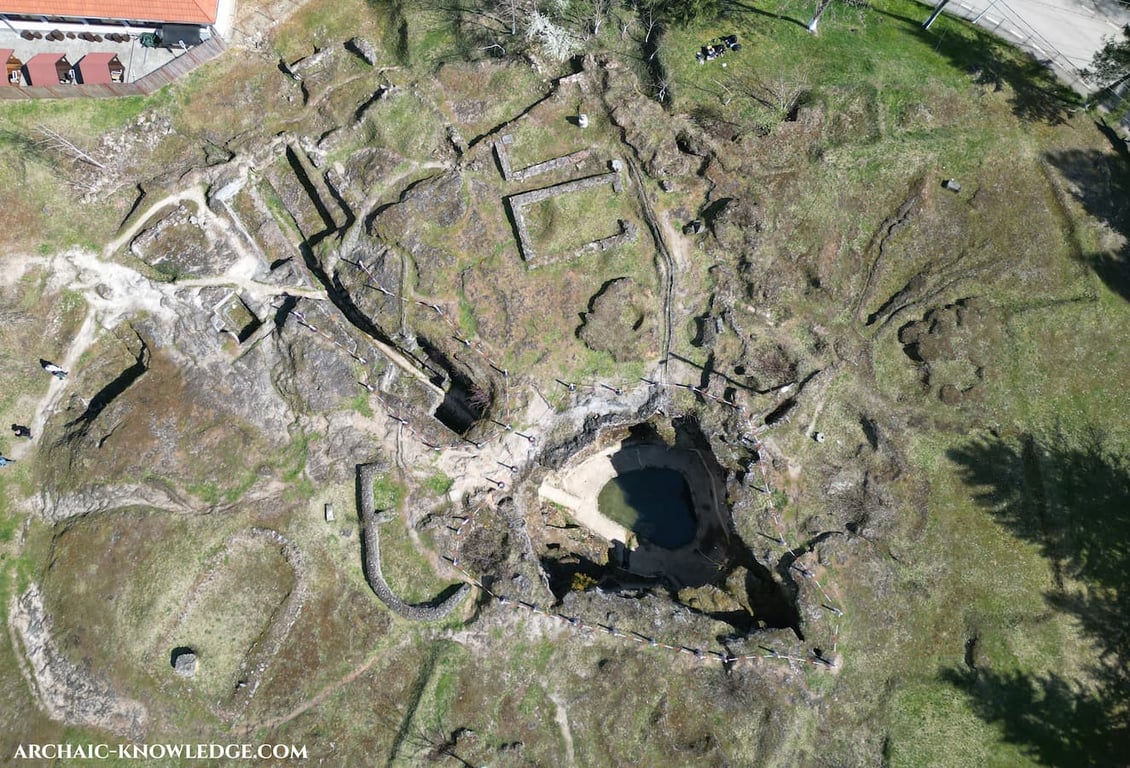
Nestled in the heart of modern-day Geoagiu-Băi, Romania, lies the remarkable archaeological site of Germisara, a testament to the enduring power of healing waters and the cultural fusion of the Roman Empire.
Once a thriving spa complex known as Thermae Germisara, this ancient site was built upon a sacred Dacian settlement, harnessing the geothermal springs that have drawn visitors for over two millennia.
Today, the ruins of Germisara offer a captivating window into the life, rituals, and beliefs of those who sought health and divine favor in Roman Dacia.
Where Dacian Springs Met Roman Gods
Long before the legions of Emperor Trajan conquered the region in 106 AD, the local Dacian tribes revered the hot springs bubbling from the earth. The very name, Germisara, is believed to be Dacian for "hot water" (germi - heat, sara - water/stream), highlighting its ancient importance.
Recognizing the therapeutic and strategic value of the location, the Romans established a sophisticated spa and religious center. This new complex, officially named Aquae, quickly grew into a vital hub for soldiers, officials, and civilians from across the province, serving as a place of healing, relaxation, and worship.
The Architecture of Healing and Worship
The ruins of Germisara reveal a meticulously planned complex designed to serve both body and spirit. The layout was centered around the main thermal spring, which was considered a sacred source and the heart of the entire settlement. The Romans engineered a series of pools and bathhouses that allowed visitors to move through waters of varying temperatures, following the traditional bathing circuit.
The Sacred Pools and Ritual Baths
At the core of the site was a large, circular pool built directly over the main spring, where offerings were made to the resident deities. Surrounding this sacred center were rectangular bathing pools, canals for channeling the mineral-rich water, and chambers for changing and socializing. The advanced Roman engineering, including remnants of the hypocaust underfloor heating system, demonstrates the importance and investment poured into this provincial wellness retreat.
Votive Altars and Golden Offerings
One of Germisara's most fascinating discoveries is the wealth of votive offerings unearthed from the sacred spring. Archaeologists have recovered numerous stone altars dedicated to Roman gods of health like Aesculapius and Hygieia, as well as to the local Nymphs, showcasing a beautiful syncretism of Roman and Dacian beliefs.
Most spectacularly, a collection of seven thin gold plaques, or laminae, were found, inscribed with dedications from grateful visitors giving thanks for their healing. These precious artifacts are whispers of devotion, tangible proof of the hope and faith placed in Germisara's waters.
Visiting Germisara Today
Today, the archaeological park of Germisara stands as an open-air museum, seamlessly integrated with the modern spa town of Geoagiu-Băi. Visitors can walk among the ancient stone foundations, trace the outlines of the Roman baths, and stand at the edge of the same spring that nourished a civilization two thousand years ago.
The legacy of Germisara endures, not just in its preserved ruins, but in the town's continuing identity as a center for health and wellness, proving that the allure of its healing waters is truly timeless.
Beyond the well-documented Roman bathing complex and its undeniable therapeutic allure, Thermae Germisara harbors a trove of secrets that defy conventional archaeological narratives.
For those who peer past the polished mosaics and reconstructed walls, a more enigmatic history unfolds - one steeped in forgotten cults, spectral guardians, and theories that push the boundaries of our understanding of ancient Dacia and Rome.
This is not the Germisara of history books, but a journey into its whispered, unproven, and often unsettling past.
The Obsidian Echoes of a Serpent Cult
While Roman gods like Aesculapius and Hygeia undoubtedly presided over Germisara's healing waters, whispers from deeper strata suggest an older, more primal reverence.
Unconventional interpretations of certain uncatalogued artifacts, particularly polished obsidian fragments and serpentine carvings found away from the main complex, hint at a pre-Roman Dacian serpent cult. This isn't the familiar Dragon-Dacian standard, but a chthonic devotion to an underworld serpent, guardian of the springs and bestower of both healing and prophecy.
Was the Roman adoption of the site merely a veneer over a much darker, more powerful indigenous belief system, whose symbols were subtly integrated or even deliberately hidden?
The Oracle of the Veiled Springs
Local folklore, passed down through generations in the Geoagiu-Băi region, speaks not of a Roman spa, but of a sacred Dacian spring where veiled priestesses would interpret the steam and effervescence of the waters. These were not just healers, but oracles who communed directly with the spirit of the earth.
It is said that certain springs within the Germisara complex, now either capped or lost, once pulsed with a rhythmic energy that could induce visionary states. Could the Romans have intentionally suppressed or repurposed these sites of indigenous prophecy, transforming spiritual communion into mere therapeutic bathing?
The Alchemist's Crucible Beneath the Baths?
One of the most provocative and largely dismissed theories surrounding Germisara concerns its geothermal properties. While the healing minerals are well-known, some researchers propose that the unique mineral composition and temperature fluctuations of.
Germisara's springs suggest a natural, subterranean alchemical process. They point to the unusual presence of trace elements and the rapid mineral deposition observed in certain areas, hinting at more than just simple geology.
Was the site's enduring appeal, even to the Romans, not merely for its healing properties, but for an arcane knowledge of transmutation or the extraction of rare, perhaps even "magical," substances from the earth's depths?
The Magnetic Anomaly of Germisara
Anecdotal accounts from early 20th-century prospectors and more recent, unofficial geological surveys report unusual localized magnetic anomalies around the Germisara site, particularly near the deepest spring sources. While easily dismissed as natural geological variations, proponents of this theory link it to the proposed alchemical processes, suggesting the springs themselves generate a unique electromagnetic field.
Could this field have been harnessed or understood by the Dacians, and later the Romans, to amplify the healing effects or even for purposes we can only speculate about today?
For the truly open-minded, Germisara's placement on the map raises intriguing questions about its connection to other ancient healing sites globally.
Some theorists propose that Germisara lies on a specific 'leyline' or energy grid connecting significant geothermal and mineral springs across Europe and beyond—sites like Bath in England, Hierapolis in Turkey, or even distant hot springs in Asia.
Is it mere coincidence that these sites, often revered as sacred and healing, share not only geological similarities but also an almost identical spiritual significance across vastly different cultures? Could Germisara be a nodal point in a forgotten, ancient network of global healing and spiritual power, its true purpose understood only by a select few in antiquity?
Thermae Germisara — collectible cards
Collectible cards for this site — AI-generated illustrations from our memory game, not photographs of the site.