Dacian Citadel 'The White Faces'
Explore the enigmatic Dacian sanctuary of Fetele Albe, a remote fortress deep within Romania's Șureanu Mountains. Uncover the remnants of a mysterious cult site, part of a UNESCO World Heritage landscape.
Cetatea Dacică Fetele Albe
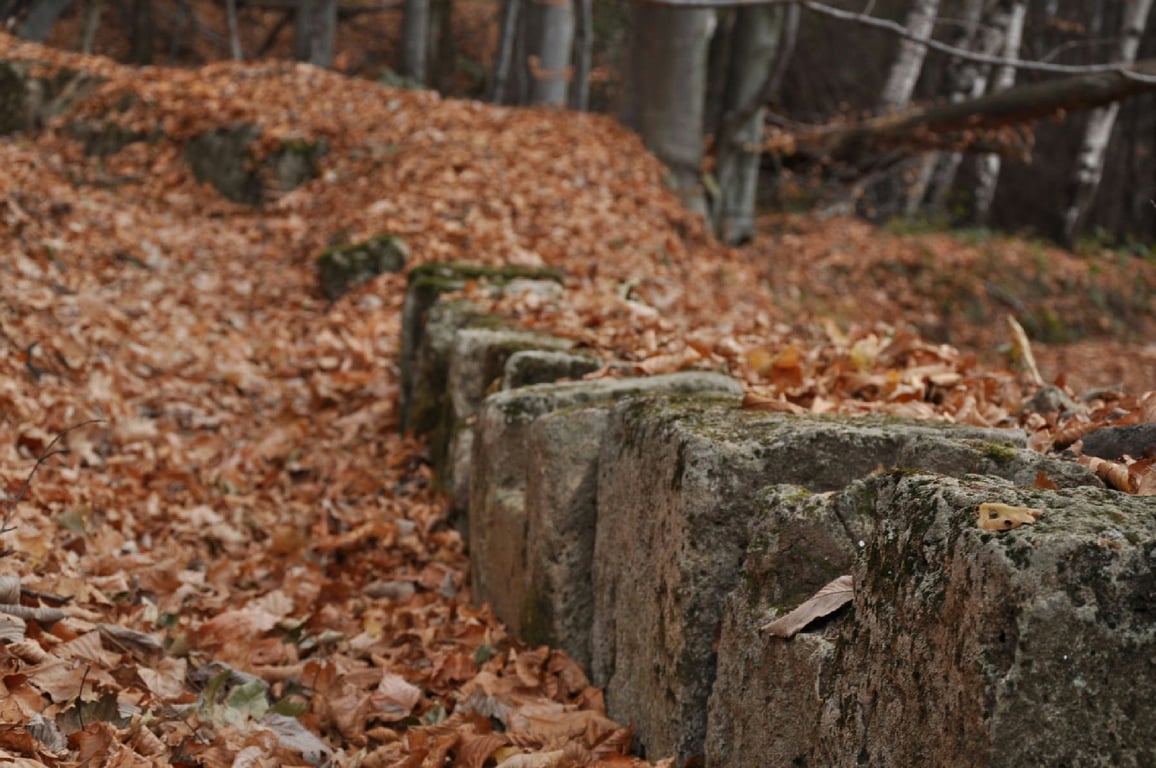
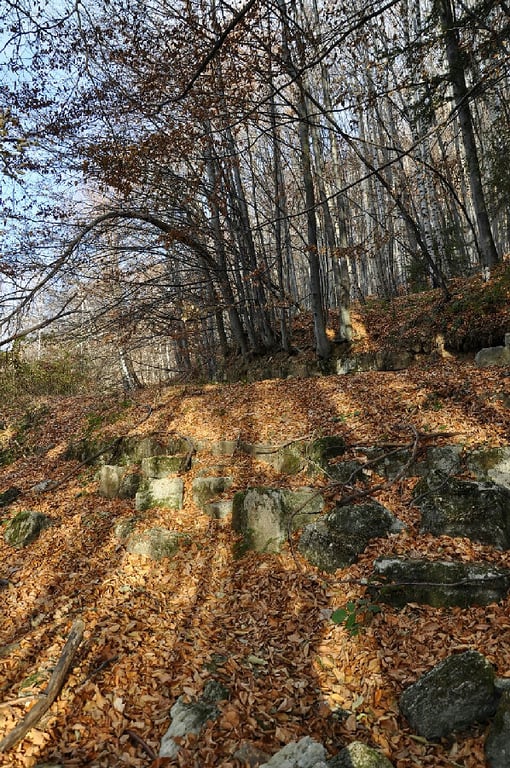
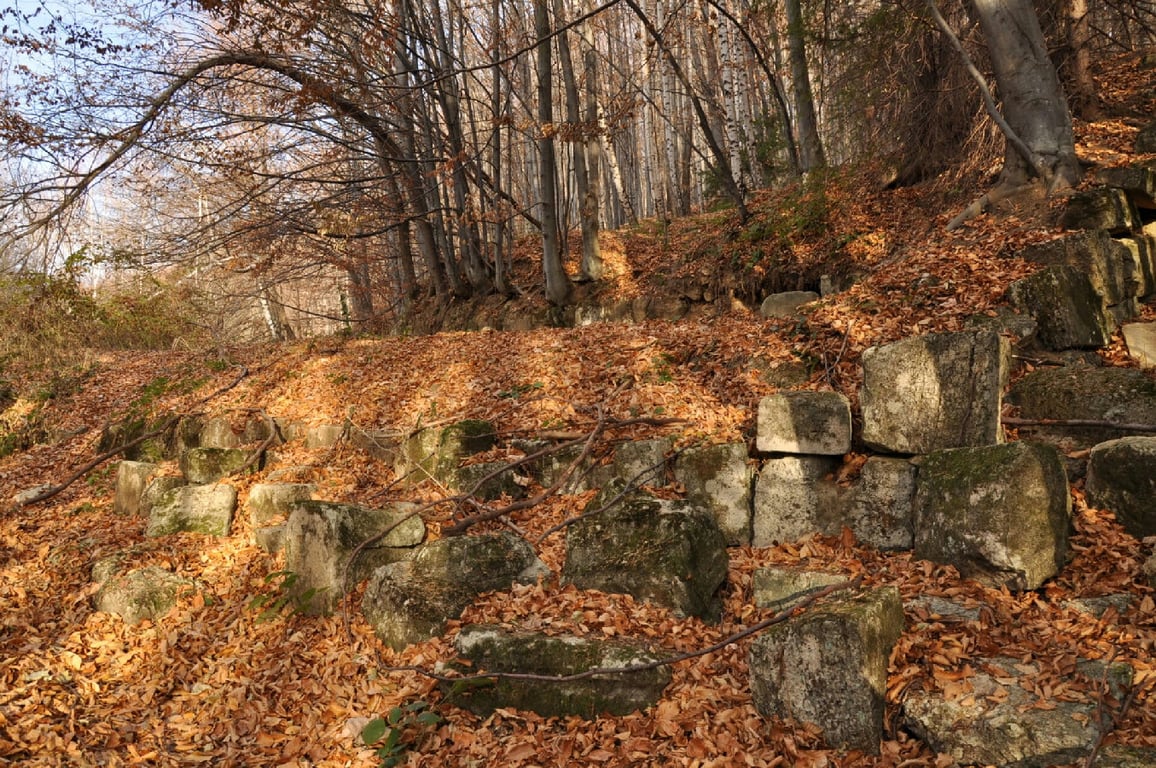
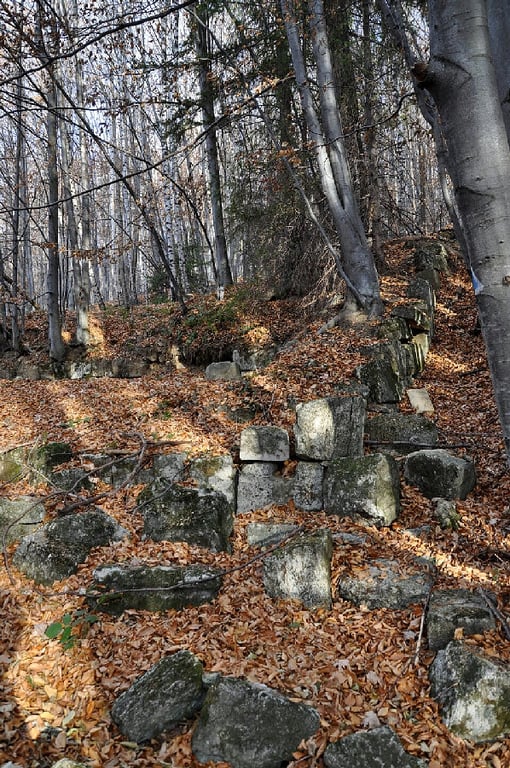
Deep within the dense forests of Romania's Șureanu Mountains lies Cetatea Dacică Fetele Albe, a remote and mysterious Dacian fortress. Located near the grand capital of Sarmizegetusa Regia, this site was a crucial part of the pre-Roman defensive network, now recognized as a UNESCO World Heritage site. Unlike the more overtly military fortresses in the region, Fetele Albe exudes an aura of sacred ritual, believed to have served primarily as a sanctuary. Its name, translating to "The Fortress of the White Maidens," hints at the enigmatic activities that once took place upon its carefully constructed terraces, a purpose lost to time but partially illuminated by archaeology.
The Enigma of the White Maidens
The fortress's evocative name is a modern invention, its true Dacian name unknown. The origin of "Fetele Albe" is the subject of local folklore and scholarly debate. Legends speak of priestesses who served ancient deities here, their presence lingering in the site’s name. Another theory suggests the name derives from the appearance of the sanctuary itself. The primary construction material was local limestone, which, when freshly quarried and set against the dark forest, would have appeared brilliantly white. This stark visual contrast may have inspired a name that referenced its pale, almost ethereal appearance, which over centuries evolved into the more romantic "White Maidens."
A Fortress Built for Ritual
The design of Fetele Albe departs from typical military architecture, pointing to its special status. The site is built on a steep slope, organized across several artificial terraces supported by massive limestone walls constructed in the traditional Dacian style known as *murus dacicus*. This technique involved two outer walls of stone blocks filled with earth and rubble, creating a formidable barrier. However, the most significant feature is not its defenses, but the large circular sanctuary that dominates the upper terrace. This sacred enclosure, paved with stone slabs and featuring large wooden columns set on stone bases, was clearly the focal point of the entire complex, indicating that religious ceremony, not just warfare, was its primary reason for being.
Echoes from the Sanctuary
Archaeological investigations have revealed the sanctuary's sophisticated design. It consists of a circle of massive stone drums that once supported towering wooden pillars, likely forming a sacred ambulatory or colonnade. In the center, a stone-lined channel suggests a system for libations or water management during rituals. The alignment and nature of the sanctuary suggest a solar cult may have been practiced here, with ceremonies tied to solstices and equinoxes. Artifacts found, though sparse due to Roman destruction, support its use as a place of worship and high-status residence, possibly for a powerful priestly class tasked with overseeing the region's spiritual life.
Fall to the Roman Empire
Like the other fortresses in the Orăștie Mountains, Fetele Albe met a violent end. During the Second Dacian War (105-106 AD), Emperor Trajan's legions systematically dismantled the Dacian kingdom's defensive core. After a fierce siege, the fortress was conquered and deliberately destroyed. The Romans burned the wooden structures, toppled the stone walls, and desecrated the sanctuary, ensuring it could never again be a center of Dacian resistance or religion. After its destruction, the site was abandoned and gradually reclaimed by the forest, its secrets remaining buried for nearly two millennia until its rediscovery by archaeologists in the 20th century.
Where the Forest Hides Dacian Ghosts
While Sarmizegetusa Regia stands as the monumental heart of the Dacian kingdom, a different kind of power emanates from the nearby fortress of Fetele Albe. Shrouded in beech and fir forests, this site feels less like a military stronghold and more like a place where the veil between worlds is thin. Archaeologists have labeled it a sanctuary, but this simple term fails to capture the unsettling questions and strange oral traditions that cling to its weathered stones, suggesting a purpose far more esoteric than mere worship.
A Sanctuary Carved from Secrets
Beyond its well-documented stone walls and terraces, the true enigma of Fetele Albe lies in the artifacts left behind. Scholars rarely focus on the discovery of unique, anthropomorphic terracotta vessels, some meticulously shaped like human feet. These were not common items; they point to highly specific, unknown rituals. Were they offerings intended to ground a spirit to the earth, or symbolic representations of a pilgrim's journey to this sacred peak? The site also features a large, enigmatic circular sanctuary paved with stone slabs and clay, distinct from other Dacian temples. Its exact function remains a subject of fierce debate, with some researchers proposing it was a lunar calendar or a site for chthonic, underworld-focused ceremonies that have been lost to history.
Echoes of the White Maidens
The name "Fetele Albe" translates to "The White Maidens," a title that has birthed a host of legends separate from academic record. These tales offer a glimpse into the soul of the mountain and the people who have lived in its shadow for millennia.
Priestesses, Oracles, or Phantoms?
One persistent theory suggests the site was a college for virgin priestesses dedicated to Zalmoxis, the principal Dacian deity. In this view, the "White Maidens" were real women, keepers of sacred knowledge and oracular traditions, living in seclusion. Local folklore takes this a step further, claiming their spirits still guard the ruins. Visitors and locals have reported hearing faint chanting on the wind and seeing fleeting white figures moving between the trees at twilight, forever bound to their sacred duty.
The Curse of Decebalus's Daughters
A darker, more tragic legend ties the name to the daughters of the last Dacian king, Decebalus. As the Roman legions closed in, it is whispered that the princesses chose ritual suicide within the sanctuary's walls rather than face capture. This act, according to the story, imbued the fortress with a protective, sorrowful energy. Some believe the site is now a place of profound melancholy, where the land itself remembers the sacrifice of the last royal Dacian women.
The Mountain's Forgotten Language
Why was this specific, remote hilltop chosen? Some unconventional researchers and mystics propose that the Dacians were masters of earth energies, akin to the builders of Stonehenge or Carnac. The theory suggests Fetele Albe was intentionally built on a nexus of telluric currents, or "ley lines," to amplify ritual power. Its precise alignment with Sarmizegetusa Regia and the rising sun on the winter solstice suggests it was not merely a satellite temple, but a vital spiritual anchor in a landscape-wide sacred network, a language of stone and starlight we are only beginning to decipher.
Dacian Citadel 'The White Faces' — photo gallery