Treasury of Atreus
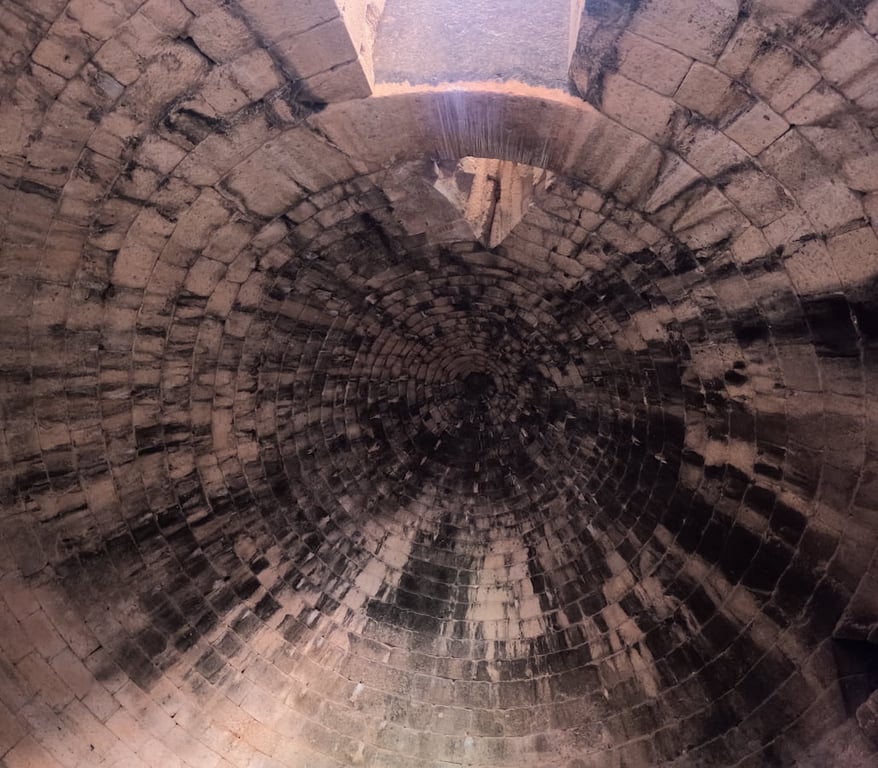
Marvel at the colossal corbelled dome of this Mycenaean tholos tomb. A powerful, prehistoric architectural statement for legendary rulers.
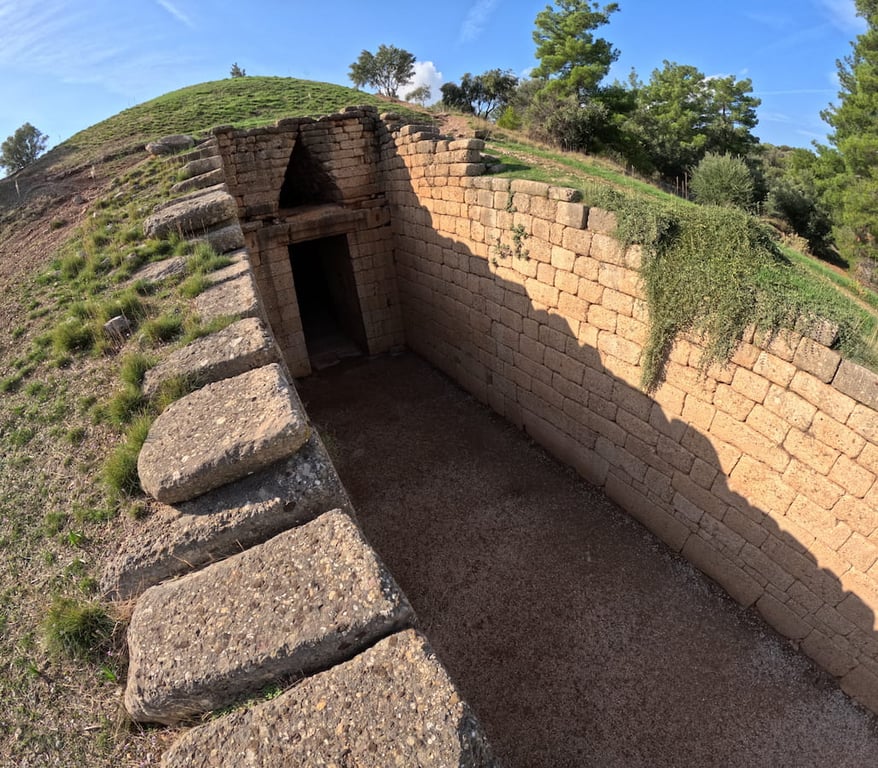
Nestled within the ancient citadel of Mycenae in Greece, the monumental structure known as the Treasury of Atreus stands as a breathtaking testament to the architectural prowess and cultural sophistication of the Late Bronze Age Mycenaean civilization.
Often referred to as the Tomb of Agamemnon due to a popular, albeit historically unproven, association with the legendary king, this magnificent tholos tomb is one of the most iconic archaeological wonders of the ancient world.
Its imposing scale, intricate engineering, and enduring mystery continue to captivate historians, archaeologists, and visitors, offering a profound glimpse into a civilization that shaped the very foundations of Western myth and history.
Unearthing Mycenae's Past
The Treasury of Atreus, dating back to approximately 1250 BCE, emerged during the zenith of the Mycenaean civilization, an era of powerful warrior kings, elaborate palaces, and sophisticated artistry. While its popular name connects it to the mythical House of Atreus and the tragic figure of King Agamemnon, archaeological evidence suggests it served as a royal burial chamber for a prominent Mycenaean ruler and their family.Architecture of a Royal Necropolis
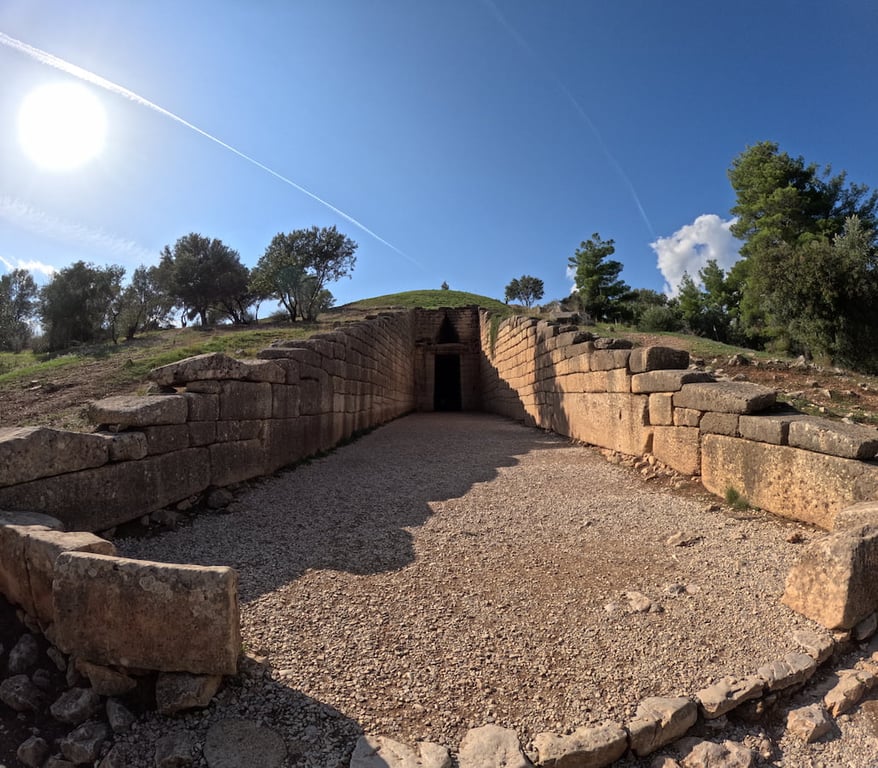
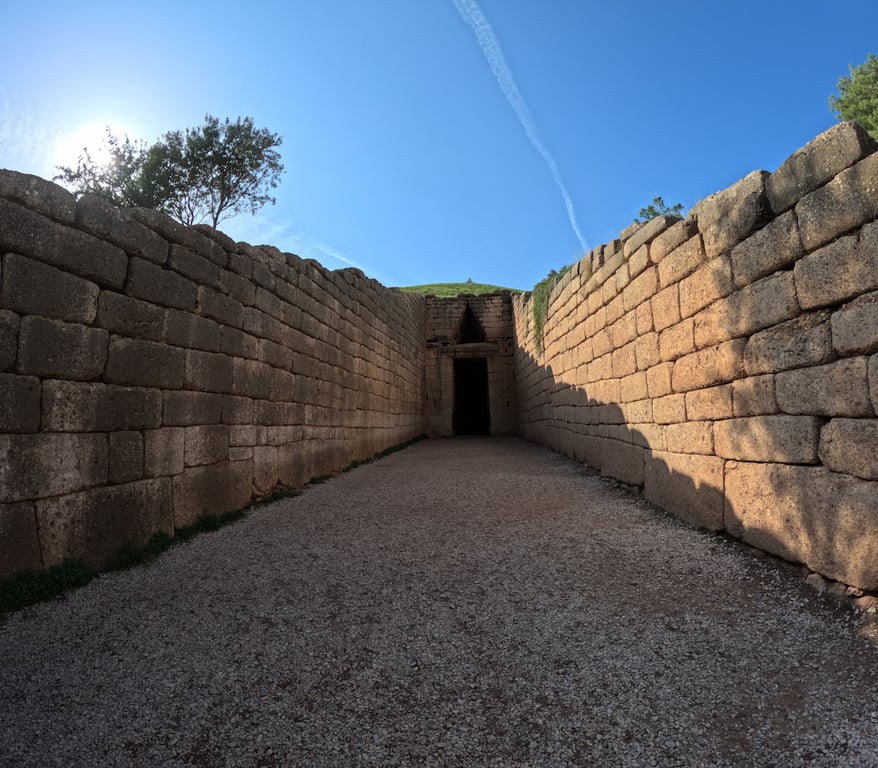
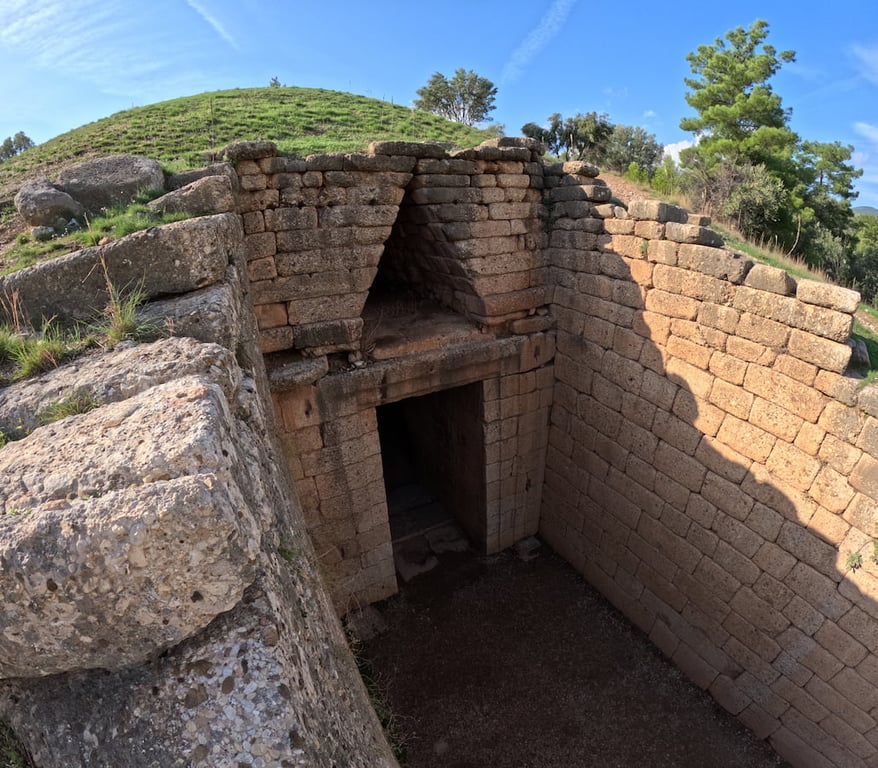
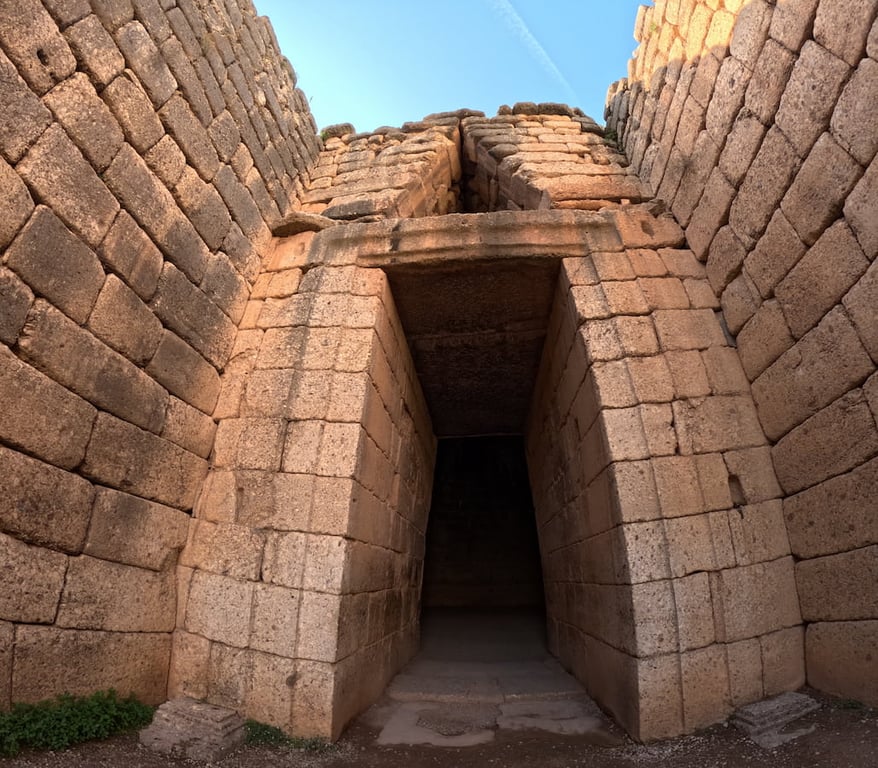
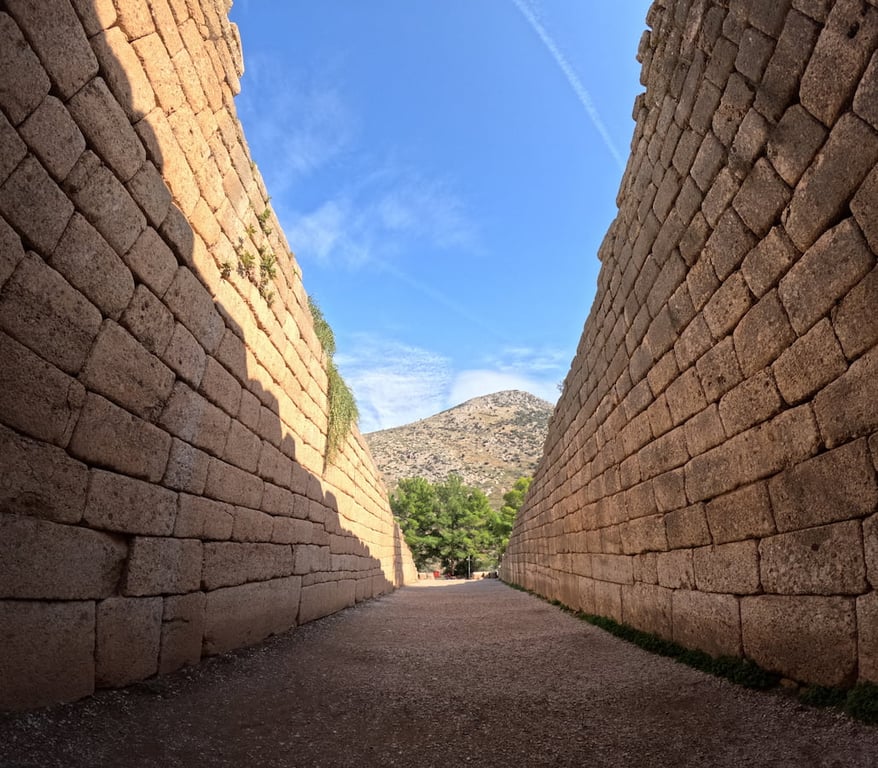
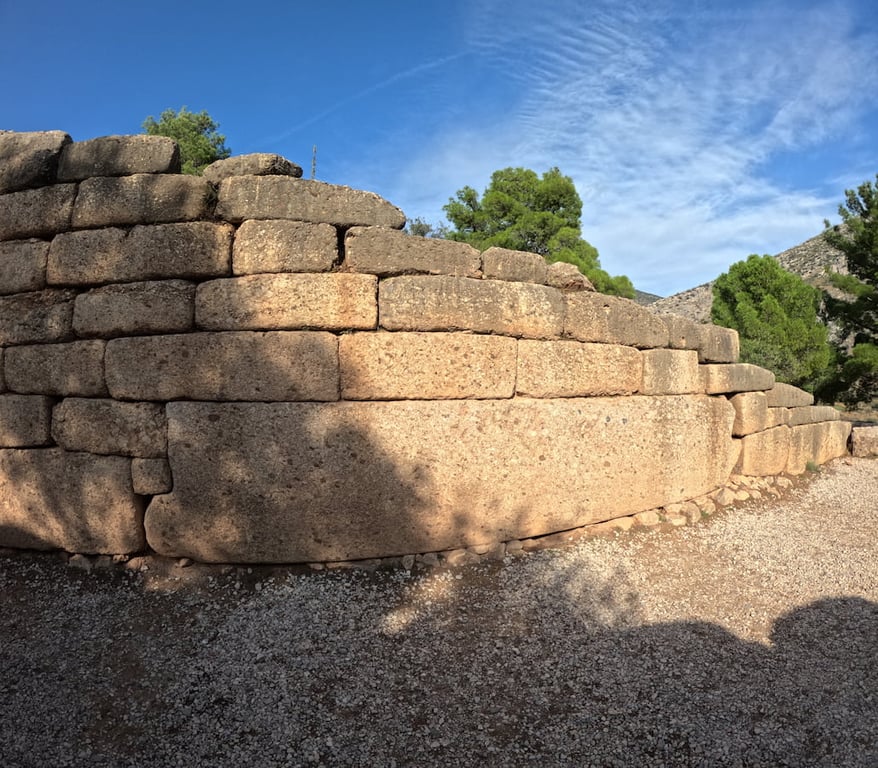
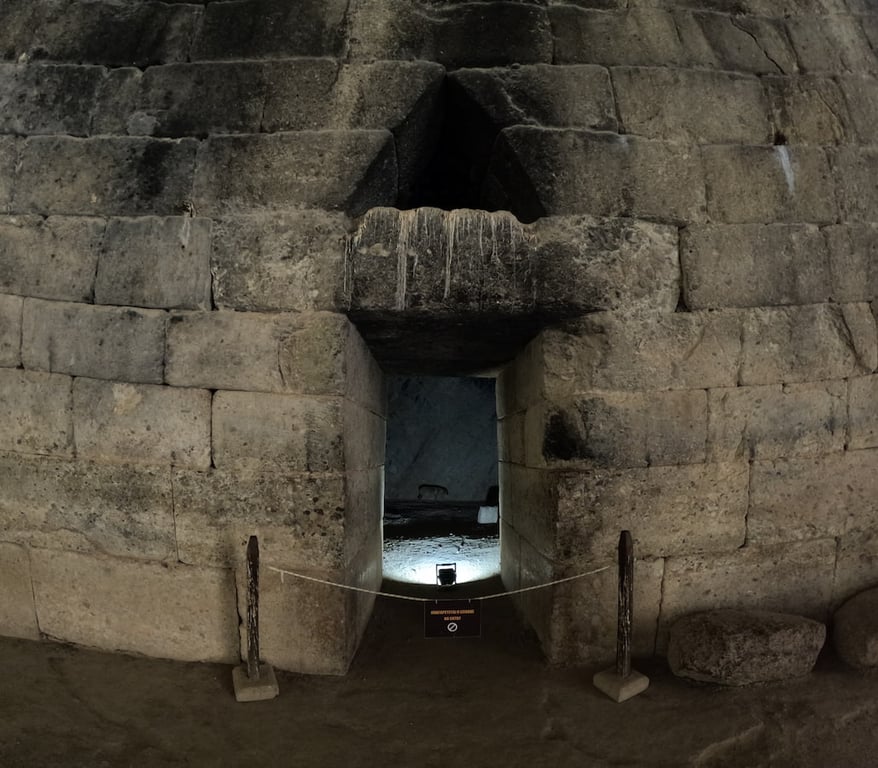
The sheer scale and ingenious engineering of the Treasury of Atreus are nothing short of astounding. Approaching the tomb, visitors first traverse a 36-meter-long *dromos*, or entrance passage, flanked by meticulously cut ashlar masonry. This leads to a towering doorway, once adorned with elaborate bronze rosettes and colored marble, framing the entrance to the main chamber.A Window into Mycenaean Grandeur
Beyond its architectural brilliance, the Treasury of Atreus offers invaluable insights into the beliefs and practices of the Mycenaean ruling class. As a royal burial site, it underscores the profound importance of funerary rites and ancestor veneration in Mycenaean society. The grandeur of the tomb suggests a belief in a powerful afterlife and the desire to provide the deceased with a fitting resting place, perhaps accompanied by grave goods befitting their status, though the tomb was looted in antiquity.Experiencing Ancient Mycenae Today
Today, the Treasury of Atreus stands as one of the most visited archaeological sites in Greece, drawing thousands to its ancient grounds. As part of the broader archaeological site of Mycenae, which includes the iconic Lion Gate and the palace ruins, the tomb is a crucial element of Greece's rich cultural heritage. Preservation efforts are ongoing to protect this incredible monument from the ravages of time, erosion, and the impact of tourism, ensuring its structural integrity for future generations.While the Treasury of Atreus stands as a celebrated marvel of Mycenaean engineering, its cyclopean stones guard far more than just ancient burial rites.
Beyond the conventional archaeological narratives and guidebooks, lie whispers of forgotten lore, baffling architectural secrets, and theories that push the boundaries of our understanding of this enigmatic Bronze Age civilization.
Prepare to delve into the lesser-known dimensions of this colossal tholos, where history intertwines with myth, and the extraordinary lurks just beneath the surface.
The Unseen Architects
Mainstream archaeology credits the Mycenaeans with the construction of this marvel, but the specifics remain shrouded in mystery. Who were the masterminds behind such an audacious project, and what forgotten techniques did they wield? The sheer precision of the corbelled dome, rising to an astonishing 13.5 meters without the use of true arches, suggests a level of geometric and structural understanding that continues to astound.
Scholars rarely dwell on the extraordinary effort – moving and fitting stones weighing many tons each, sometimes without visible tool marks, to create a seamless, self-supporting structure. Was there a specialized, perhaps even sacred, guild of builders whose knowledge has been lost to time? Some theories speculate that the construction process itself was a ritual, imbuing the structure with an energy or purpose beyond mere entombment, hinting at a deeper, almost spiritual connection between the builders and the very stones they shaped.
Whispers of the Earth
Local folk tales surrounding the Treasury of Atreus often echo the ancient Greek belief that only giants – the mythical Cyclopes – could have moved such immense blocks. These stories, though dismissed as myth, serve as a testament to the structure's awe-inspiring scale. Beyond giant builders, some legends speak of the tholos possessing an unusual resonance or "heartbeat." Villagers near Mycenae, even in more recent centuries, have occasionally recounted strange acoustic phenomena within the chamber, or an unsettling stillness that predates modern tourism.
Could the unique acoustics of the dome, designed to amplify certain frequencies, have been intentional? Was the tomb not merely a resting place, but a ritualistic space where specific sounds or incantations were performed, perhaps to communicate with the deceased or even to channel telluric energies from the earth itself?
The Nilotic Resonance?
While Mycenae had clear trade and cultural links with Minoan Crete, some architectural features of the Treasury of Atreus spark more controversial comparisons. The sheer scale, the monumental entrance, and the corbelled dome have, for some, drawn parallels to much older, geographically distant structures – notably, early Egyptian mastabas and even certain elements of pyramid construction.
Could there have been a more direct, yet unacknowledged, transmission of advanced architectural knowledge across the Mediterranean? Or does this uncanny resemblance suggest a convergent evolution of sophisticated building techniques among powerful Bronze Age civilizations, hinting at a shared, perhaps even global, network of master builders and esoteric knowledge that defies our current understanding of ancient communication and influence? The possibility challenges conventional timelines and established models of cultural diffusion.
Treasury of Atreus — photo gallery
Treasury of Atreus — collectible cards
Collectible cards for this site — AI-generated illustrations from our memory game, not photographs of the site.