Trovants of Ulmet
Enigmatic sandstone concretions that expand and evolve from the earth.
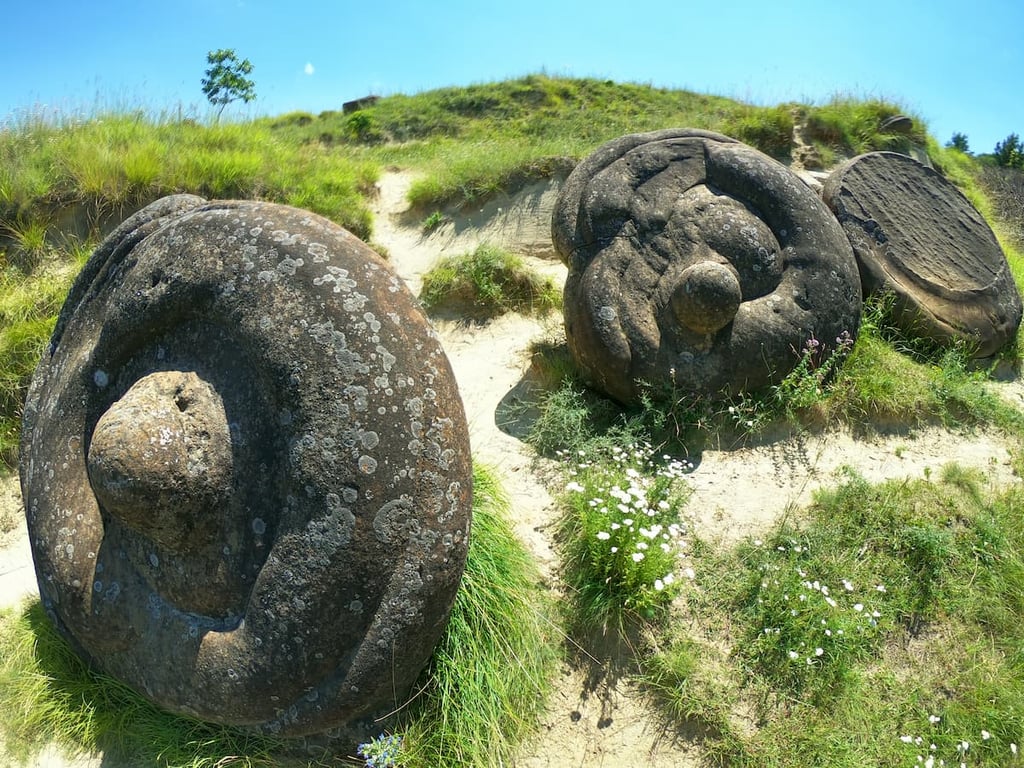
Located within the picturesque Buzău County of Romania, the Trovants of Ulmet, Bozioru, represent one of the world's most peculiar and captivating geological phenomena.
Locally known as "growing stones," trovants are a unique type of sandstone concretion that appear to increase in size and even multiply, especially after rainfall. This extraordinary site offers a rare glimpse into Earth's dynamic past and challenges our conventional understanding of geology, making it a must-visit destination for naturalists, scientists, and curious travelers seeking the unusual.
The Trovants' Deep Past
The story of the Ulmet Trovants begins millions of years ago, long before humans walked the Earth. These enigmatic formations are found in the sandy deposits of the Miocene period, a time when the region was covered by the Paratethys Sea.
Over countless millennia, mineral-rich waters percolated through layers of sand and gravel, depositing calcium carbonate around a central nucleus – often a small pebble or a grain of sand. This slow, concentric accumulation process formed the initial spherical or ovoid shapes that we see today, a testament to the patient artistry of geological forces.
A Geological Enigma
While the initial formation as concretions is well-understood by geologists, the "growth" phenomenon that gives the Trovants of Ulmet their legendary status remains a topic of scientific fascination and debate. After heavy rains, the outer layers of the trovants absorb moisture, causing the minerals within to crystallize and expand.
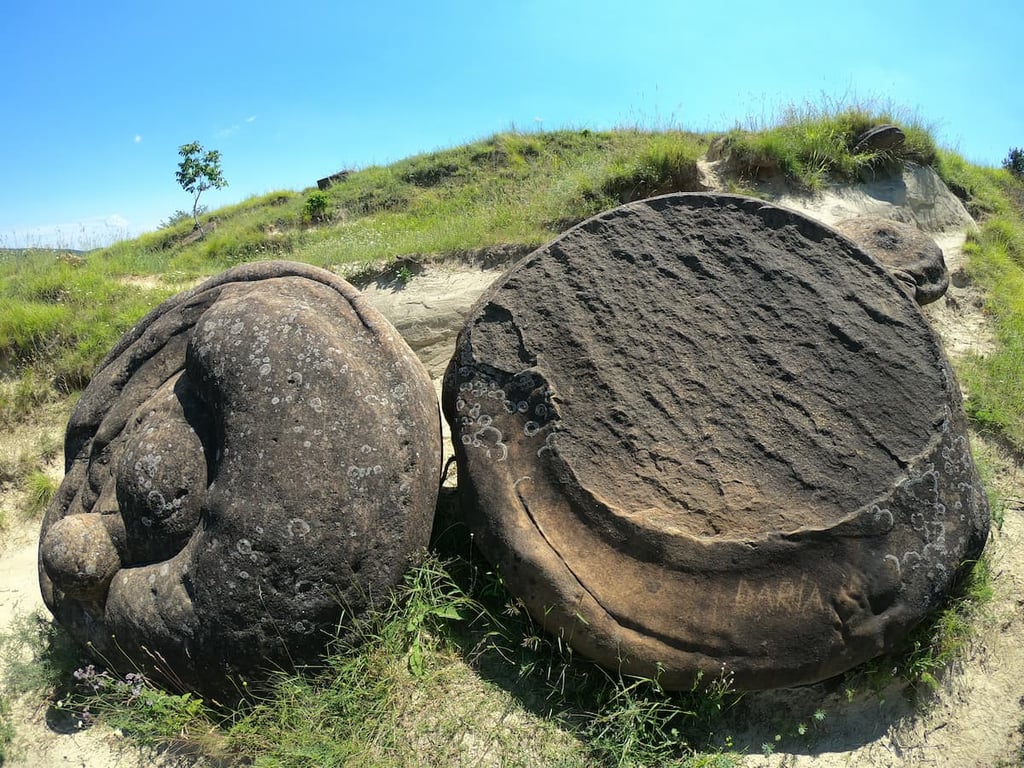
This expansion, though microscopic and incredibly slow, gives the distinct impression that the stones are indeed growing. Some even exhibit smaller, secondary concretions budding off their surfaces, further fueling the local folklore of "living stones." These aren't just static rocks; they are dynamic geological sculptures, constantly, albeit imperceptibly, evolving.
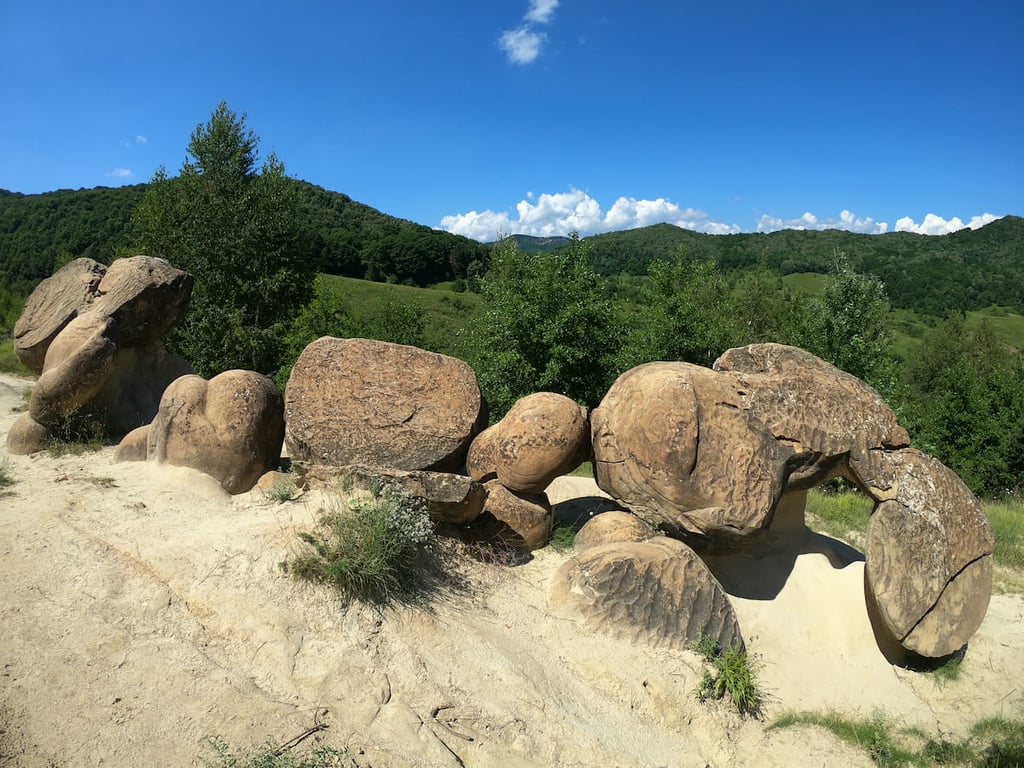
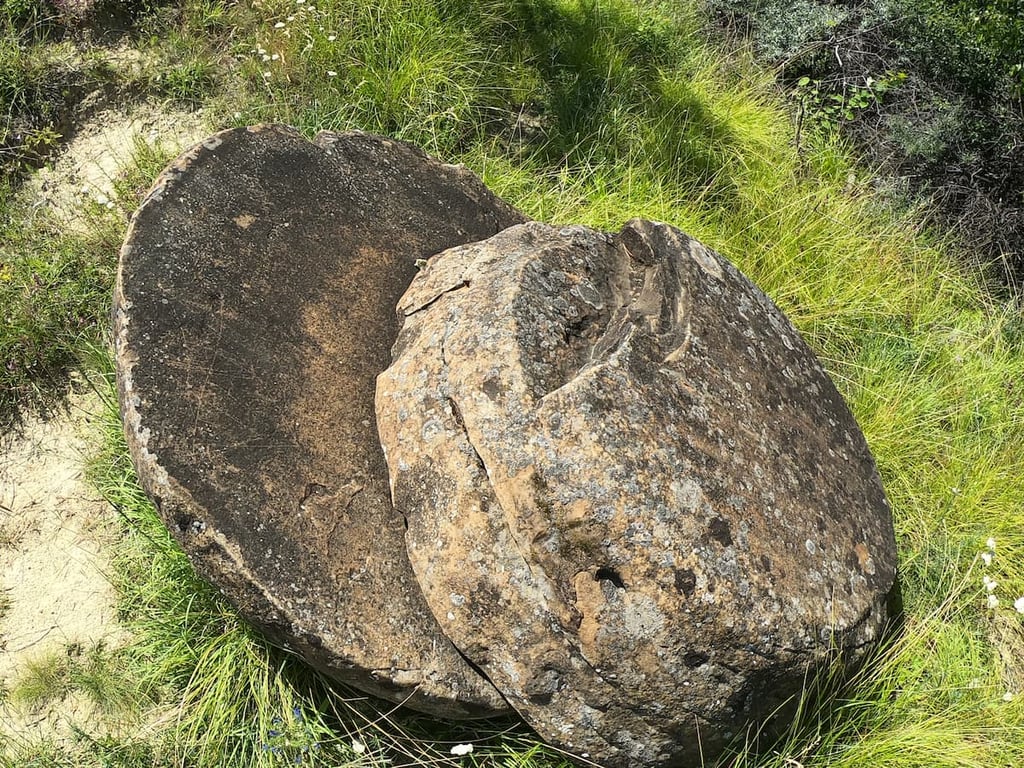
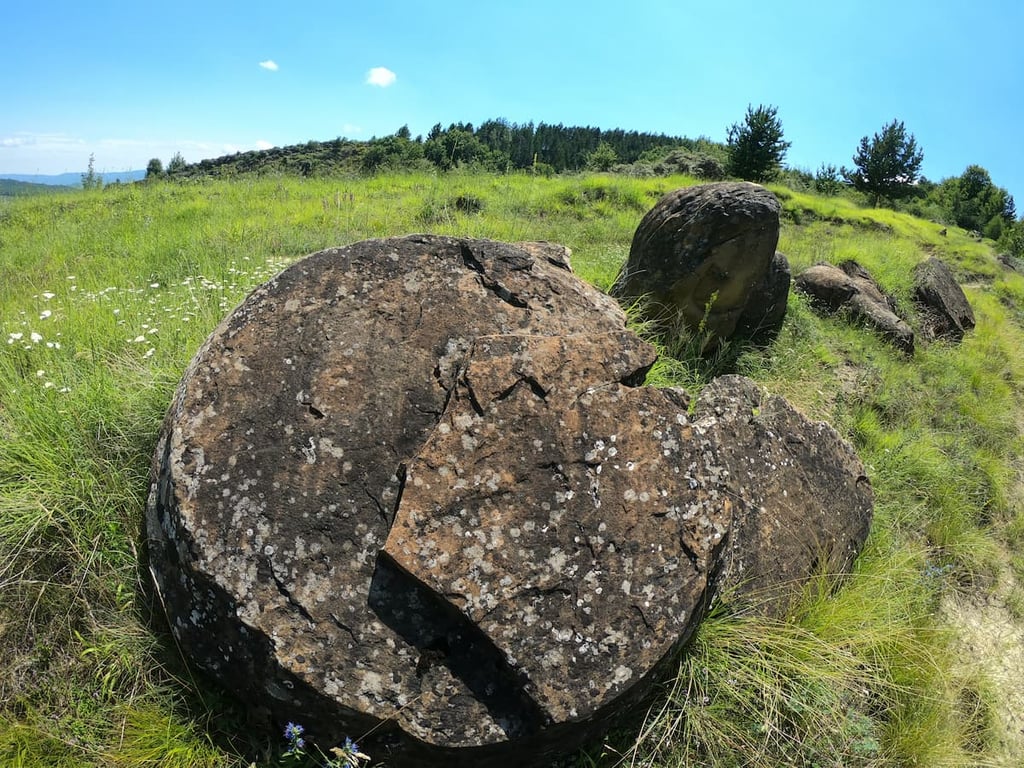
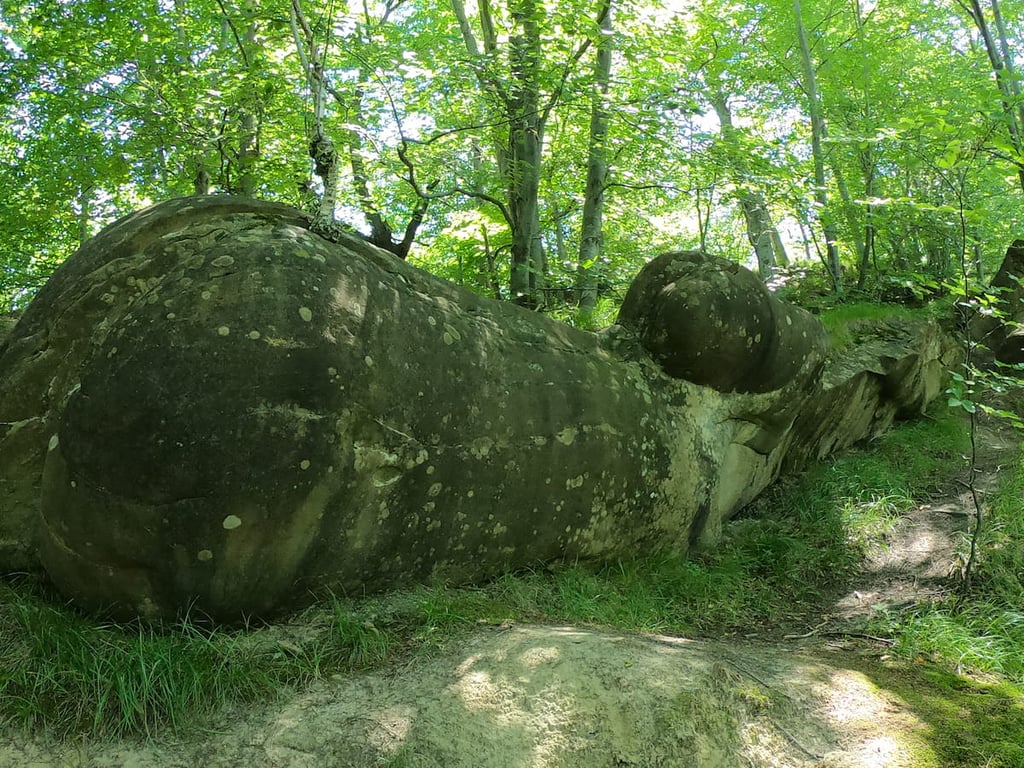
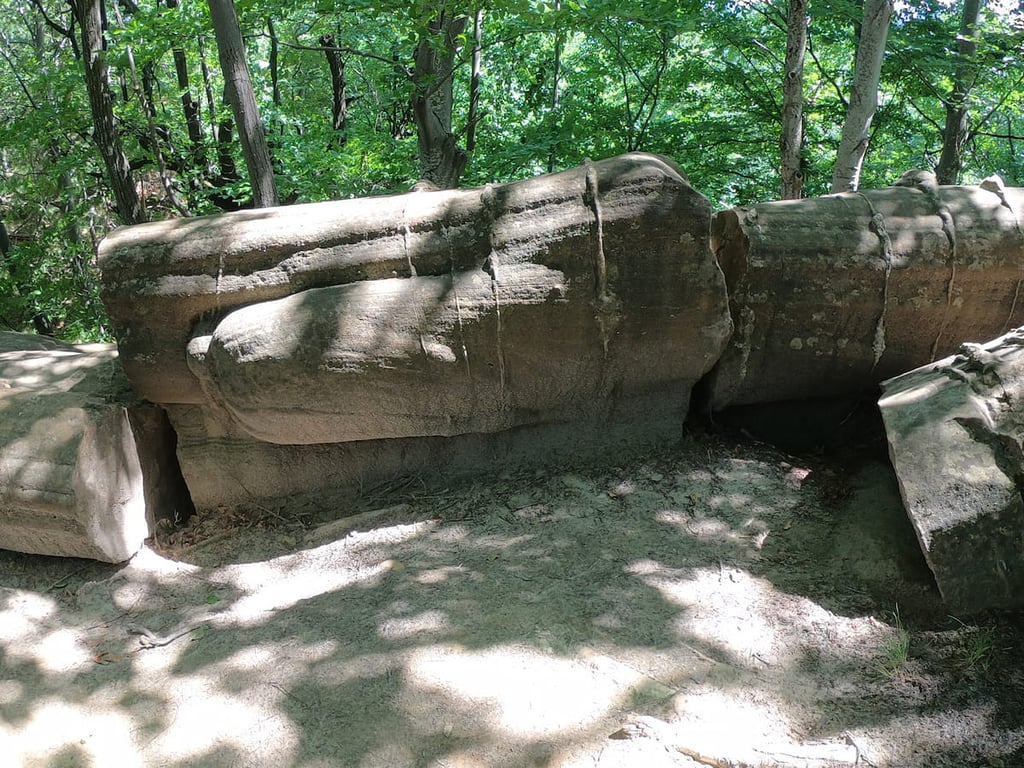
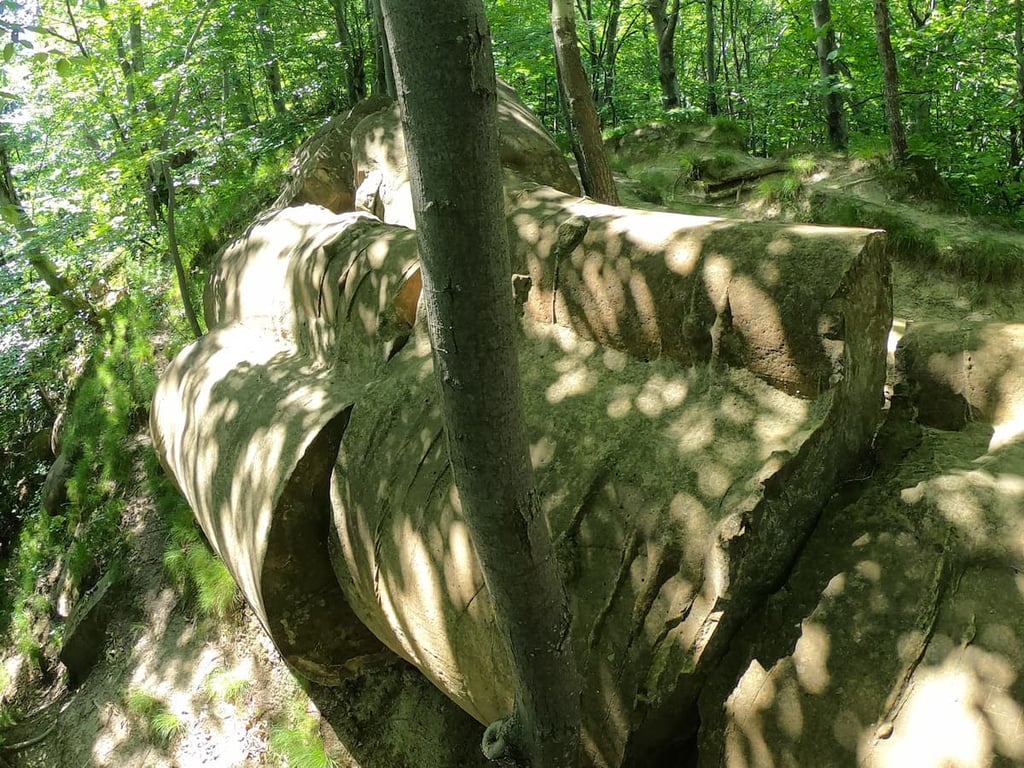
The Trovants of Ulmet are remarkably diverse in appearance, ranging from tiny, pebble-sized stones to colossal formations several meters in diameter. Their shapes are equally varied, encompassing perfectly spherical globes, elongated ovoids, and even more bizarre, almost disc-like or cylindrical structures. What unites them is their distinctive concentric layering, visible when a trovant is broken, revealing rings much like those of a tree trunk. This internal structure is a key indicator of their growth process, offering clues to their unique petrological history.
From Pebbles to Giants
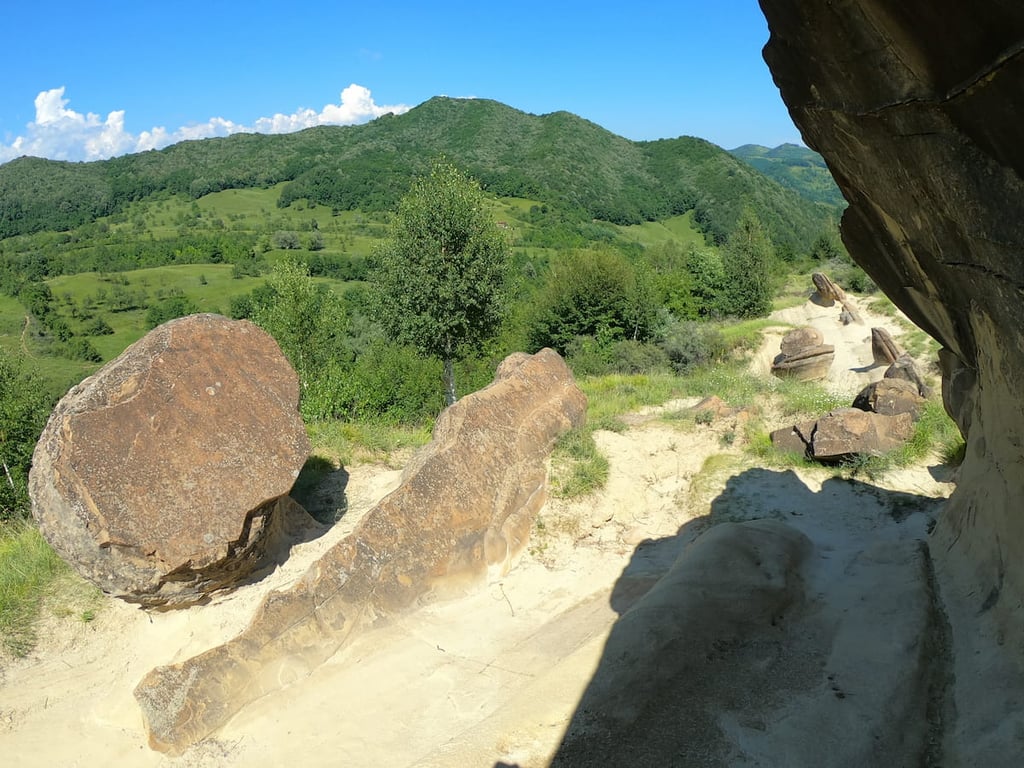
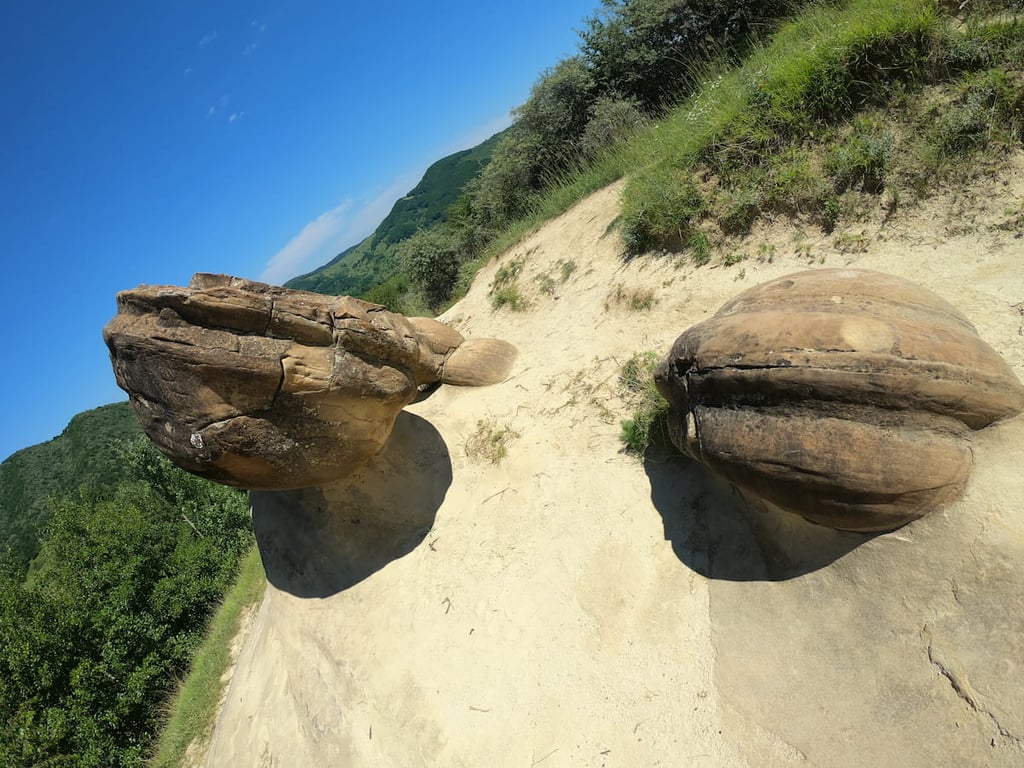
Walking through the Trovant Museum Natural Reserve, visitors encounter a surreal landscape dotted with these extraordinary stones. Some trovants sit atop slender pedestals, eroded by wind and rain, creating mushroom-like forms. Others are partially buried, hinting at larger structures beneath the surface.
The sheer variety of sizes and shapes, combined with their alleged ability to "grow" and "move" (another local legend, possibly due to seismic activity or soil erosion), makes the Ulmet Trovants a truly unparalleled geological spectacle. Each stone tells its own silent story, sculpted by the elements and time.
Trovants in Lore and Local Life
For centuries, the local communities around Bozioru have been captivated by these unusual stones. Before scientific explanations emerged, the trovants were often imbued with mythical qualities, becoming central to local folklore and superstitions. They were seen as objects of wonder, perhaps even imbued with a form of life, due to their mysterious changes in size and appearance. This deep connection to the land and its unique formations has woven the trovants into the cultural fabric of the region.
The "growing stones" have inspired numerous legends, some attributing their existence to ancient giants who dropped their pebbles, others believing them to be petrified eggs or even alien artifacts. This rich tapestry of human interpretation underscores the profound impact these natural wonders have had on the local imagination. While science offers its explanations, the folklore adds a layer of enchantment, connecting the geological marvels of Ulmet to the timeless human quest for meaning in the mysterious.
Conservation and Accessibility
Recognizing their exceptional scientific and cultural value, the Trovants of Ulmet, Bozioru, have been designated as a natural monument and are part of the Buzău Geopark, which is under UNESCO patronage. This protected status ensures the long-term preservation of these unique formations for future generations. Efforts are continuously made to educate visitors about their geological significance and the importance of respecting this fragile natural heritage.
Today, the Trovant Museum Natural Reserve is an accessible and educational site, drawing tourists and researchers from across the globe. Clearly marked paths guide visitors through the "stone garden," allowing for close observation of the trovants without disturbing them. Informative panels provide insights into their formation and the local legends surrounding them.
Visiting Ulmet offers not just a chance to witness a rare geological phenomenon but also an opportunity to connect with Romania's natural beauty and the enduring mysteries that lie beneath our feet, making it an unforgettable experience for all who venture to this extraordinary corner of the world.
While the geological marvel of Romania's Trovants of Ulmet, Bozioru, often captivates with their seemingly organic growth, a deeper, far more enigmatic narrative lies beneath their stony exteriors.
For centuries, these curious concretions have been more than mere geological oddities; they are silent witnesses to forgotten histories, whispered legends, and theories that challenge the very bedrock of scientific understanding.
Prepare to delve into the obscure corners of their existence, where conventional explanations fade, and the truly extraordinary begins.
Echoes from a Petrified Past
Beyond the modern geological explanations, the historical perception of the Trovants remains shrouded in mystery. Little is discussed in academic circles about how ancient cultures, particularly the Dacians or later Roman settlers, might have interpreted these "growing stones." Were they viewed as sacred sites, markers of powerful telluric energies, or perhaps even as living deities? Oral traditions, rarely transcribed, hint at a time when these stones were not merely curiosities but integral to spiritual practices.
Some local tales suggest that specific trovants were used as primitive altars or focal points for rituals tied to fertility and the earth's cycles, their expansion seen as a blessing or a sign of divine favor. Early chronicles from the region, often overlooked, occasionally mention "stones that move" or "rocks with hearts," suggesting a much older, more animistic understanding that has since been largely secularized or forgotten.
Venture beyond the scientific descriptions, and the local folklore surrounding the Trovants takes a dramatic, supernatural turn. Villagers speak of the stones with a reverence bordering on fear, believing they are not merely inanimate objects but entities with a slow, deliberate consciousness. One pervasive legend claims the trovants are petrified giants, trapped mid-growth, whose hearts still beat, causing their subtle expansion after rain. Another speaks of them as guardians of ancient secrets, perhaps even hidden gold, warning that disturbing them can bring misfortune or trigger unforeseen natural events.
There are whispers of certain trovants "crying" during specific lunar phases, their surfaces appearing damp even in dry weather, interpreted as a precursor to significant changes in the land or local community. These are not just quaint stories; they are deeply ingrained beliefs that shape how the local populace interacts with these enigmatic geological formations.
The Genesis Enigma
For the open-minded, the Trovants present a profound challenge to conventional geological paradigms. While mainstream science attributes their growth to cementation and mineral deposition, fringe theories propose far more radical explanations. Could these formations be evidence of a forgotten, advanced technology, perhaps used by an unknown ancient civilization to manipulate geological processes? Some speculate about a unique form of biomineralization, suggesting a quasi-biological mechanism at play that transcends our current understanding of life itself.
Debates ignite around the internal structure of the trovants, with some researchers pointing to peculiar concentric rings and fibrous textures that defy typical sandstone concretions, hinting at an intelligent design or an unknown energy field influencing their formation and expansion. These aren't just geological anomalies; they are phenomena that push the boundaries of what we consider possible in the natural world.
A Cosmic Alignment in Stone?
The mystery of the Trovants deepens when considering potential connections to a broader global pattern. Are these "growing stones" isolated marvels, or do they fit into an unexplained network of similar sites across the planet?
Researchers have drawn parallels to other unusual stone formations worldwide, often found in areas associated with high electromagnetic activity or ancient megalithic structures. Is it conceivable that the Trovants, perhaps unknowingly, act as markers or conduits for telluric currents, aligning with unseen energy lines that crisscross the Earth?
There are even speculative theories suggesting that the placement or growth patterns of certain trovants might correlate with celestial events or ancient astrological alignments, hinting at a connection to a lost cosmic knowledge.
These are the tantalizing questions that beckon those willing to look beyond the obvious, seeking a deeper, interconnected truth.
Trovants of Ulmet — photo gallery
Trovants of Ulmet — collectible cards
Collectible cards for this site — AI-generated illustrations from our memory game, not photographs of the site.