Rocha dos Namorados
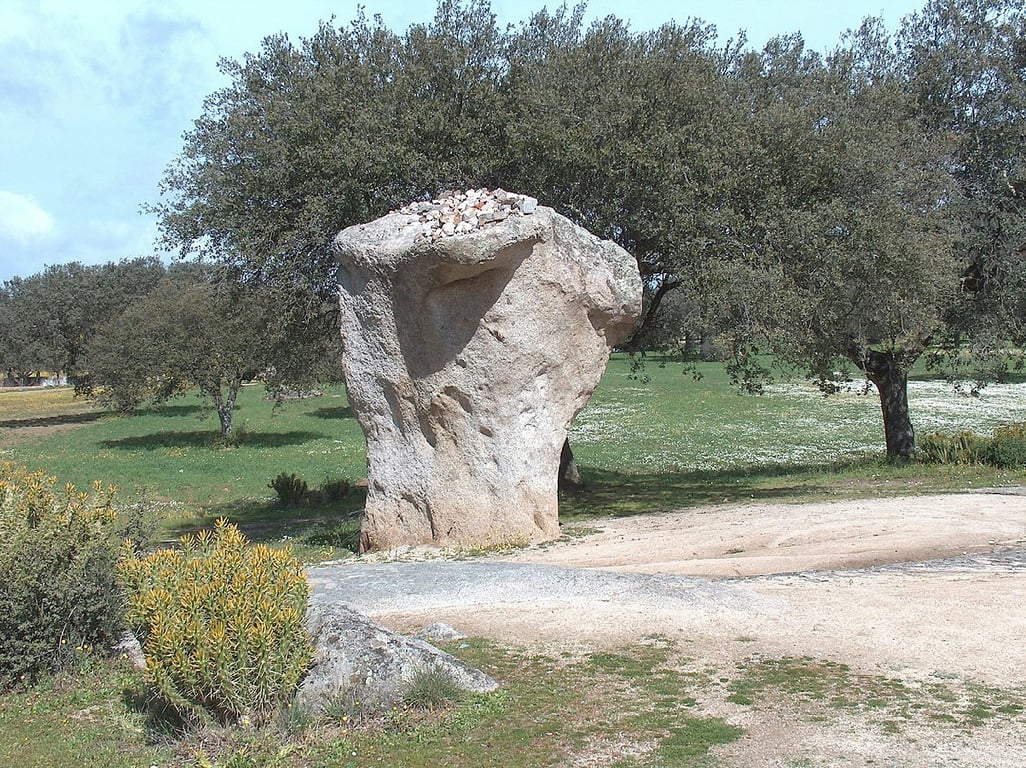
A mushroom-shaped granite megalith, this ancient fertility shrine still hosts local traditions. Legend says a backwards-thrown pebble will bring swift marriage.
Rocha dos Namorados
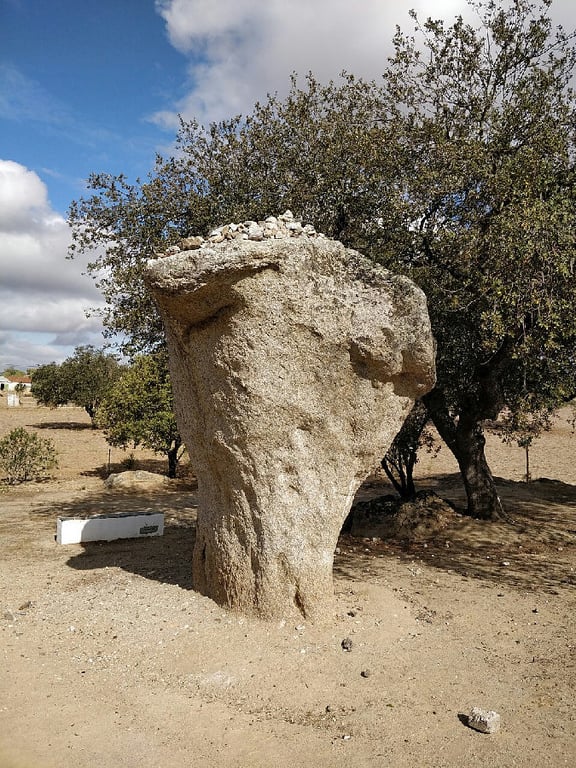
Near the pottery-making village of São Pedro do Corval, a short drive from Monsaraz, lies one of Portugal's most peculiar and enchanting megalithic sites: the Rocha dos Namorados, or 'Lovers' Rock'. This is not a man-made structure in the traditional sense, like a dolmen or menhir, but rather a natural granite outcrop that has been co-opted into human belief systems for millennia. Its extraordinary mushroom-like shape, with a large, ovular rock balanced precariously atop a narrower pillar, made it a natural focal point for ancient rituals. What makes it truly special is that the rituals have never stopped. It is a rare example of a prehistoric sacred site where folk traditions, deeply rooted in fertility and courtship, continue to be practised to this day. It is a living monument, a bridge between the Neolithic past and the present day.
The Mushroom Stone of Corval
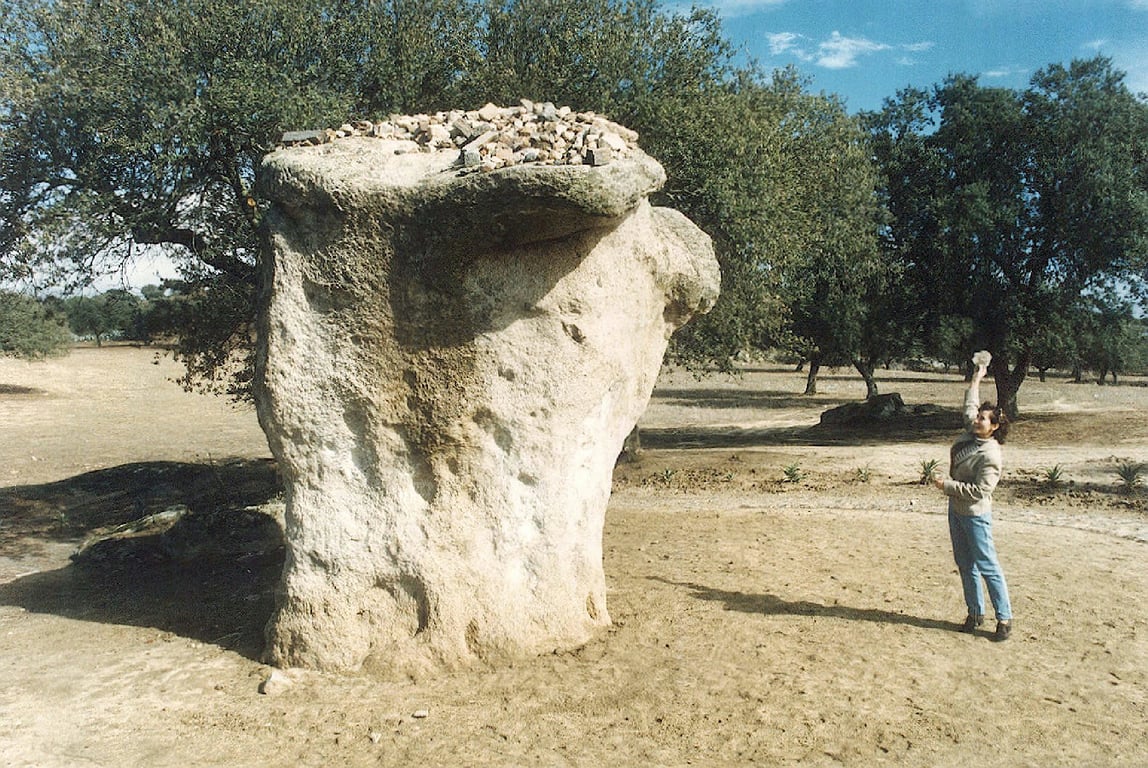
The unique form of Rocha dos Namorados is the result of millions of years of spheroidal weathering, a geological process that rounds and shapes granite blocks. To the Neolithic inhabitants of the Alentejo, however, its striking and unusual form must have seemed supernatural, a sign of divine presence. They appropriated this natural wonder, incorporating it into their sacred landscape. While there is no direct archaeological evidence of its specific use, its distinct shape, reminiscent of both a mushroom and a human head on a neck, strongly suggests it was revered as a fertility symbol. Mushrooms, which appear suddenly from the earth, were often associated with fecundity and otherworldly power in ancient cultures. The rock likely served as a shrine, a place for offerings and ceremonies aimed at ensuring the fertility of the people and the productivity of the land, much like the intentionally-carved phallic menhirs found throughout the region.
The Stone-Throwing Ritual
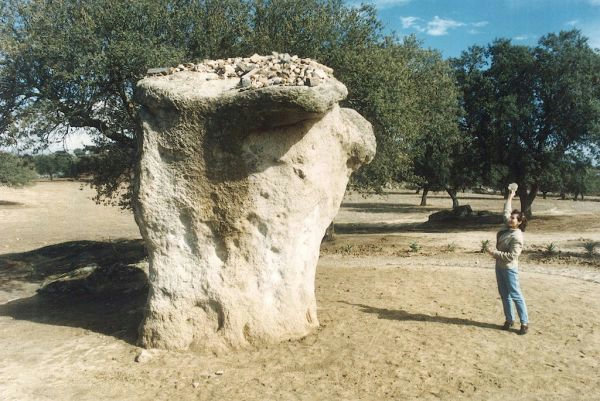
The most fascinating aspect of Rocha dos Namorados is the survival of its ancient purpose in the form of a local folk tradition. For centuries, the rock has been a place of pilgrimage for young women seeking a partner. According to the ritual, which is traditionally performed on Easter Monday, a young woman must stand with her back to the monument and throw a small stone or pebble backwards over her shoulder, attempting to make it land and stay on top of the rock's 'hat'. Legend holds that for every failed attempt, a year will pass before she finds a husband. If she succeeds on her first try, she is destined to be married within that same year. This custom is a clear echo of ancient fertility rites, a Christianized folk practice that has preserved the site's original function as a powerful fertility oracle. It is a beautiful and direct link to the beliefs that gave the stone its sacred status thousands of years ago.
A Bridge Between Worlds
Rocha dos Namorados is more than just a geological curiosity or a prehistoric site; it is a testament to the remarkable persistence of cultural beliefs. It demonstrates how ancient pagan ideas can be absorbed into new belief systems, surviving in the guise of folklore and local traditions. The simple act of throwing a stone at this rock connects a modern person to an unbroken chain of human hope and desire that stretches back to the Stone Age. It is not a sterile monument in a museum but a dynamic, living piece of heritage, still actively used and cherished by the local community. For visitors, it offers a unique opportunity to witness the intangible heritage of the Alentejo, where the past is not something that is merely remembered, but something that is still very much alive.
Echoes from the Lovers' Stone
While many are drawn to Rocha dos Namorados for its famous fertility ritual, the stone's true story is etched far deeper than these modern traditions suggest. Beyond the hopeful pebbles tossed by lovers lies a history shrouded in archaeological debate and whispered folklore. This natural granite monument is not merely a passive backdrop for tradition but an active participant in a landscape teeming with ancient power, its mushroom-like form guarding secrets that challenge our understanding of megalithic Portugal.
Nature's Whim or a Sculptor's Hand?
The official narrative classifies the Rocha dos Namorados as a 'natural monument,' a geological curiosity co-opted by human belief. However, a persistent counter-theory circulates in esoteric and archaeological circles. This school of thought questions whether the perfect, precarious balance of the massive capstone is entirely the work of wind and rain. Proponents suggest subtle but intentional human modification—a strategic chipping away at the base or a deliberate leveraging of the top stone into its current, iconic position. While no tool marks have been officially confirmed, they argue that millennia of erosion could have erased the evidence of Neolithic ancestors enhancing nature's creation to serve as a more powerful spiritual symbol.
A Fulcrum in a Landscape of Giants
To view the Lovers' Rock in isolation is to miss its potential significance. It sits within the heart of one of Europe's densest megalithic regions, a silent neighbour to countless dolmens, menhirs, and cromlechs. Some researchers theorize that the rock was not a standalone oddity but a central axis point in a vast, sacred geography. They propose potential alignments with other major sites, such as the Almendres Cromlech or the Great Dolmen of Zambujeiro, suggesting it may have functioned as a natural marker for astronomical events or processional routes. In this view, the rock was the uncarved heart of a network, a place of raw, terrestrial energy that anchored the man-made ritualistic structures surrounding it.
Whispers Beyond the Wedding Vow
The well-known legend of securing marriage is but the sunlit surface of a much deeper pool of local lore. Older, darker tales speak of the rock's dual nature, a place that can grant boons but also demand respect.
The Shadow of the Unanswered Prayer
Local oral traditions, rarely shared with outsiders, warn of a spiritual consequence for those who approach the rock with a deceitful heart. It is said that a stone thrown with malicious intent—to bind someone against their will or to break an existing union—will not only fail but will invite a curse of profound loneliness. According to these whispers, the spirit of the rock, an ancient guardian of true unions, can distinguish intent and will actively turn dark wishes back upon the thrower.
The Stone That Hums
A few locals and sensitive visitors have reported a strange phenomenon: a low, almost imperceptible humming vibration emanating from the rock, particularly at dawn and dusk. Skeptics attribute this to wind or seismic activity, but mystics believe it is the sound of the earth's energy concentrated within the granite. They consider it a place where the veil between worlds thins, and the humming is the sound of ancient memory resonating within the stone itself, a testament to the countless generations who have imbued it with their hopes, fears, and spiritual energy.
Rocha dos Namorados — photo gallery