Piatra Roșie Fortress
Known as the "Red Rock," this fortress combines formidable defences with signs of an elite residence, featuring a unique and imposing ancient paved road to its main gate.
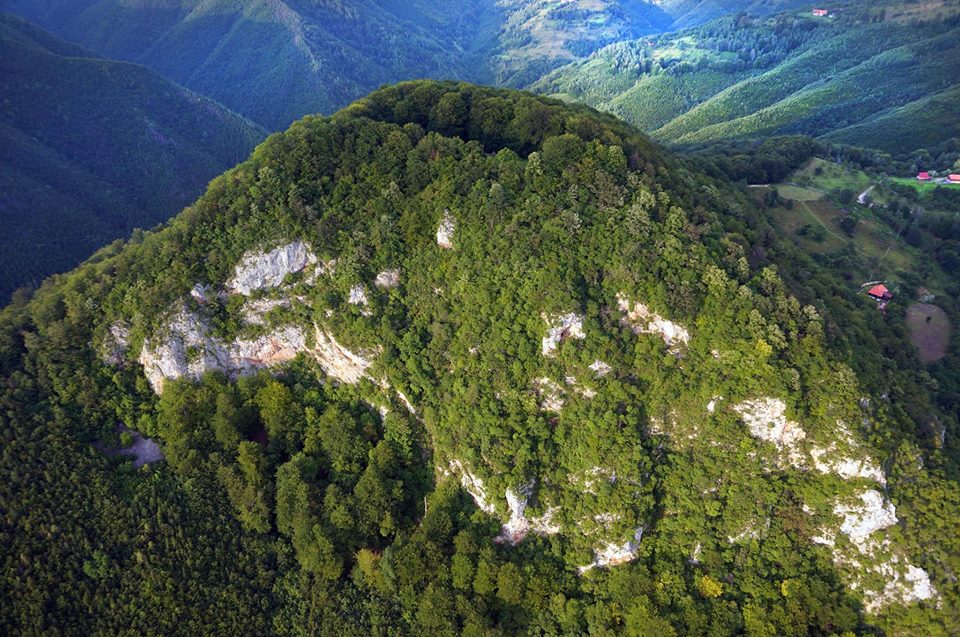
Piatra Roșie Dacian Fortress
Piatra Roșie, meaning "Red Rock," derives its name from the reddish hue of the local stone used in its construction. This Dacian fortress, perched on a high plateau, served a dual purpose as both a military stronghold and a significant political or aristocratic centre. Its strategic location controlled access to the heart of the Dacian kingdom from the west, making it an essential link in the defensive chain protecting Sarmizegetusa Regia. The site is renowned for its well-preserved walls, the unique paved road that leads to its gate, and the enigmatic "building with a platform," which hints at its use as a noble residence or cultic space. Built in the mid-1st century BC under the authority of King Burebista, Piatra Roșie stands as a testament to the power and complexity of Dacian society beyond the purely military sphere.
The Crimson Citadel
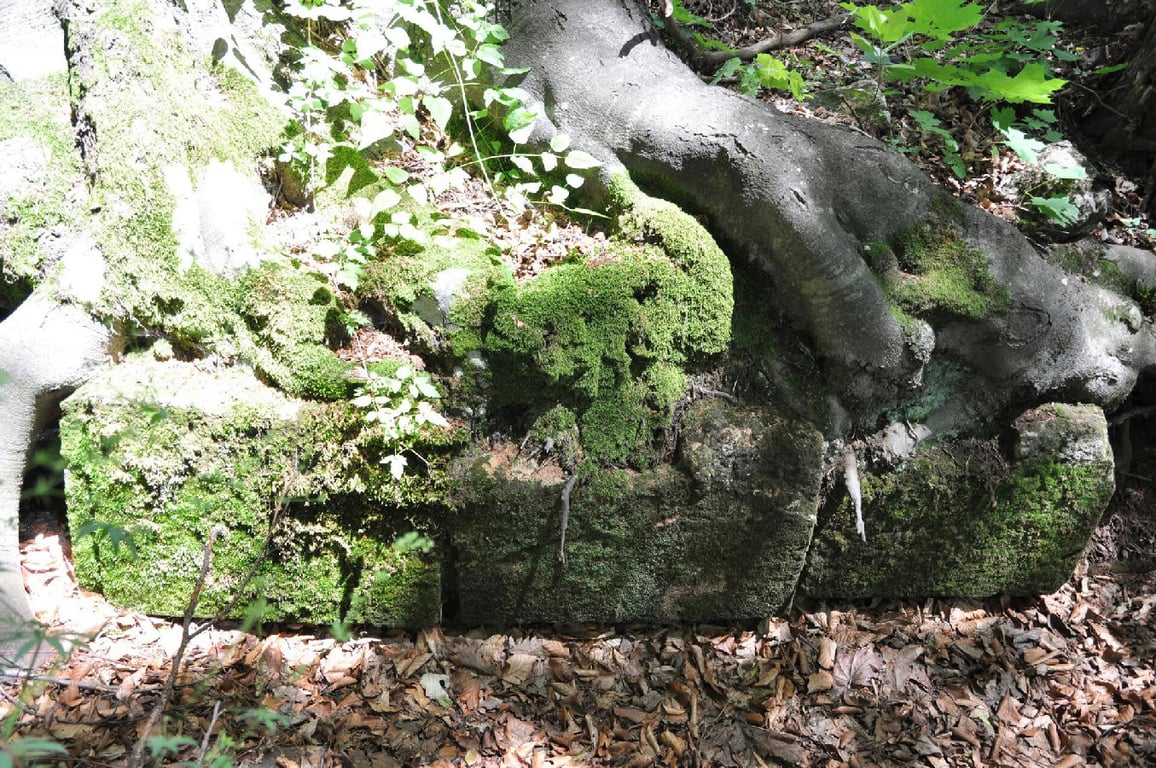
The fortress is defined by its impressive stone enclosure, which covers an area of over a hectare. The main rampart, reaching heights of up to 10 metres, was constructed using the traditional murus dacicus technique, with large, carefully cut blocks of local red stone forming the outer faces. This crimson-coloured wall was reinforced with four defensive towers, or bastions, which provided flanking fire against any potential attackers. The main gate, located on the eastern side, was heavily fortified. A unique feature of Piatra Roșie is the 100-metre-long paved road that ascends to this gate, a remarkable piece of engineering that facilitated movement while also creating a ceremonial and imposing approach to the citadel, befitting a place of high status.
A Road Paved with Power
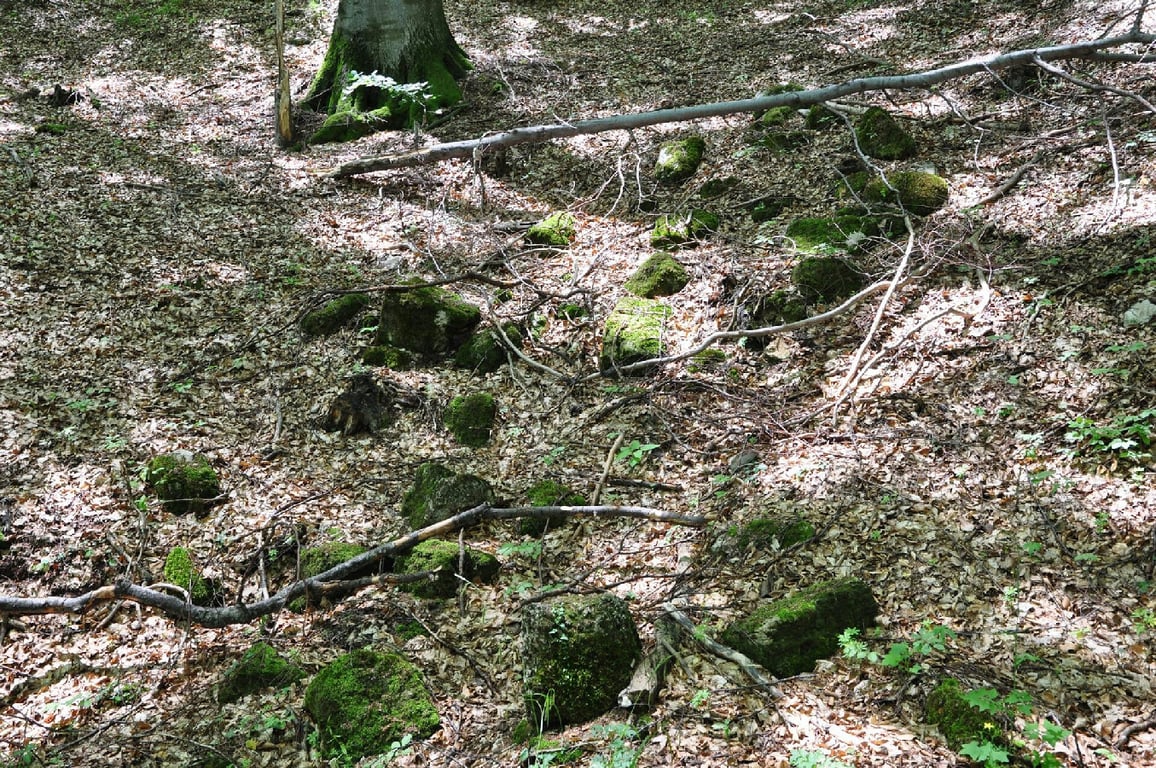
The most distinctive feature of Piatra Roșie is undoubtedly its paved access road. This ancient route, constructed from large, fitted stone slabs, winds its way up the final slope to the fortress gate. Such a sophisticated road is rare among Dacian sites and speaks to the importance of this particular stronghold. It was not merely a functional path for soldiers but a symbol of power and prestige, likely intended for ceremonial processions or for the passage of chariots belonging to the Dacian nobility who resided within. The road physically and symbolically connected the fortress to the surrounding territory it controlled, marking it as a centre of regional authority within the broader Dacian kingdom.
The Chieftain's Residence
Inside the fortress walls, archaeologists have uncovered evidence that points to more than just a military garrison. The foundations of a large wooden building, set on a carefully prepared stone platform, suggest a residential or religious function. This structure may have served as the dwelling of a powerful Dacian chieftain or aristocrat, a place where political and social life unfolded under the protection of the fortress's strong walls. The discovery of high-quality painted pottery and other artifacts further supports the theory that Piatra Roșie was an elite centre. This dual nature—a formidable military installation that was also a locus of social power—provides a more nuanced understanding of the Dacian settlement system and the organization of their society before the Roman conquest.
Echoes from the Red Rock: Piatra Roșie's Hidden Lore
Perched high in Romania's Şureanu Mountains, the ruins of Piatra Roșie stand as a silent testament to the lost Dacian civilization. While official histories label it a key military stronghold in the defensive system of Sarmizegetusa Regia, this narrative only scratches the surface. The fortress’s very name, "Red Rock," hints at a deeper, elemental purpose, and the dense forests surrounding it hold whispers of forgotten rituals, cosmic alignments, and treasures guarded by more than just stone walls.
A Fortress Forged in Blood and Iron
The name Piatra Roșie is not merely poetic; it is a geological and strategic declaration. The characteristic reddish hue of the local limestone comes from rich deposits of iron oxides—limonite and hematite. Mainstream archaeology rightly notes its defensive role, but often overlooks its function as a vital control point for the region's mineral wealth. The Dacians were master metallurgists, and their formidable iron weapons were a significant threat to the Roman legions. Piatra Roșie was likely less a simple garrison and more a sacred guardian of the very element that empowered their kingdom—the "blood" of the earth from which their iron was forged. The unusual double-walled palisades, often explained as purely defensive, may have served a dual purpose: protecting not just soldiers, but the sacred process of transforming red rock into steel.
Whispers on the Mountain Wind
The local communities living in the shadow of the Şureanu Mountains have passed down stories that defy conventional historical records. These tales speak of the fortress not as a ruin, but as a place where the veil between worlds is thin, especially on nights of the full moon. Folkloric accounts describe strange, ethereal lights seen dancing among the crumbling walls and a persistent feeling of being watched by unseen guardians in the ancient beech forests.
The Spectral Sentinels of the Kapnobatai
One persistent legend claims that Piatra Roșie was once a sanctuary for the *kapnobatai*, the ascetic "smoke-walkers" or high priests of the Dacian god Zalmoxis. It is said that their spirits remain bound to the fortress, eternally standing guard. Locals claim that those who visit the ruins with disrespect—littering, shouting, or attempting to remove stones—suffer from inexplicable bad luck, from sudden illness to bewildering disorientation that makes them lose their way on the well-trodden paths back down the mountain. These are not seen as curses, but as the stern, protective influence of its ancient, spectral sentinels.
The Sky-Watchers of the Red Citadel
Beyond its military and economic importance, a more controversial theory posits that Piatra Roșie was an integral part of a larger sacred landscape, designed to mirror the heavens. This perspective challenges the purely pragmatic view of the Dacian fortresses, suggesting they were sophisticated ceremonial centers where cosmology and warfare were deeply intertwined.
A Calendar Carved in Stone and Starlight
Proponents of archaeo-astronomical theories point to the precise orientation of the fortress's main gate and the strategic placement of its watchtowers. It is theorized that these alignments are not accidental but intentionally correspond to key solar and lunar events, such as the solstices and equinoxes. According to this view, the fortress functioned as a massive stone calendar, allowing Dacian priests to track the seasons for both agricultural and ritualistic purposes. Piatra Roșie may have been a place where earthly power was affirmed by celestial authority, a fortress built not just to watch for Roman armies, but to watch the very movements of the cosmos.
Piatra Roșie Fortress — photo gallery