Pyramid of Hellenikon
Greece's enigmatic Hellenikon pyramid - a prehistoric marvel predating its Egyptian counterparts.
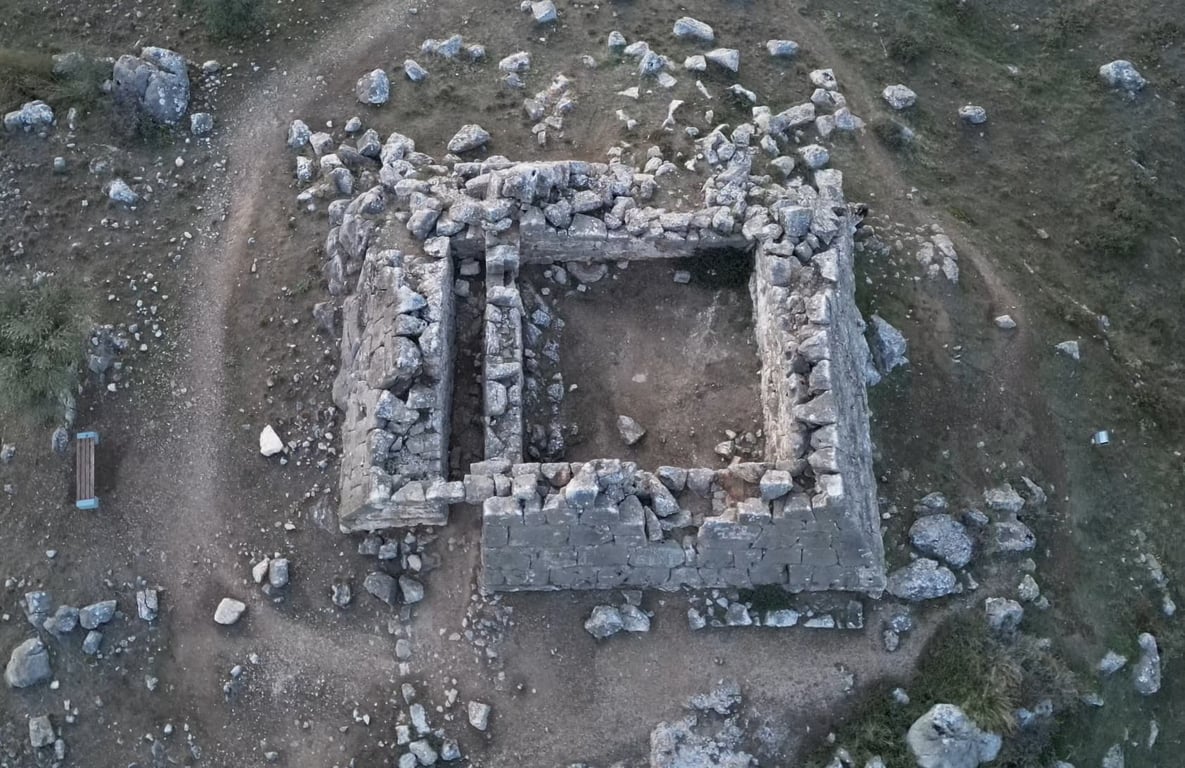
Nestled in the tranquil Argolid plain of Greece, near the village of Hellenikon (also spelled Hellinikon), stands a remarkable and enigmatic structure: the Pyramid of Hellenikon. Far from the colossal scale of its Egyptian counterparts, this ancient Greek pyramid offers a fascinating glimpse into early Hellenic architecture and engineering, sparking debate and wonder among historians and archaeologists for centuries. Its presence challenges preconceived notions about ancient Greek construction, making it a compelling subject for both scholarly inquiry and public fascination.
Historical Background
The precise dating of the Pyramid of Hellenikon has been a subject of considerable academic discussion, yet consensus places its construction firmly within the Classical or early Hellenistic period. While some earlier theories proposed a much older, even Mycenaean, origin based on stylistic similarities, contemporary archaeological research, including thermoluminescence dating of pottery found at the site, suggests a period between the 4th and 3rd centuries BC. This timeframe makes it a unique example of monumental architecture from a period typically dominated by temples and public buildings.
Its purpose remains a mystery, with theories ranging from a tomb for important figures, a fortified observation post, a granary, or even a symbolic monument marking a significant event or boundary. The pyramid's existence opens a window into the diverse architectural practices of ancient Greece, showcasing a lesser-known facet of their building traditions.
Physical Description & Notable Features
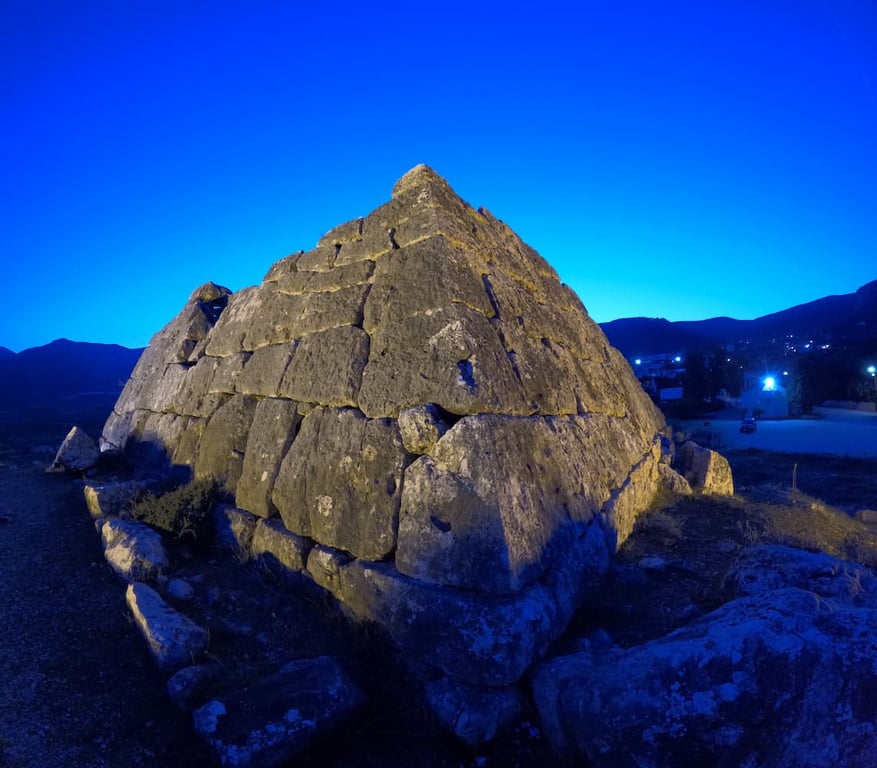
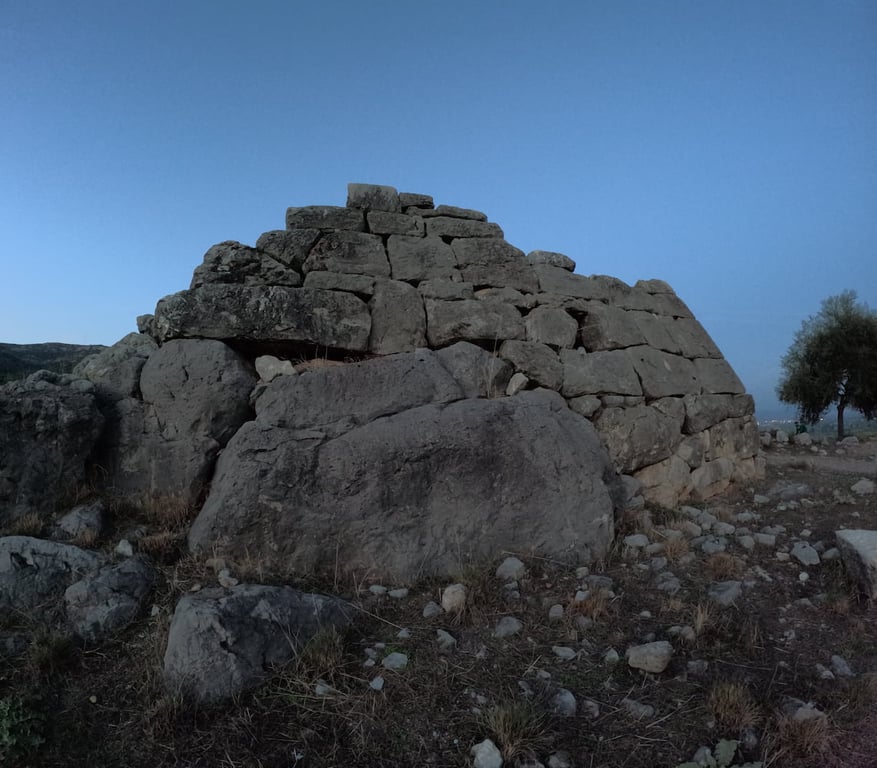
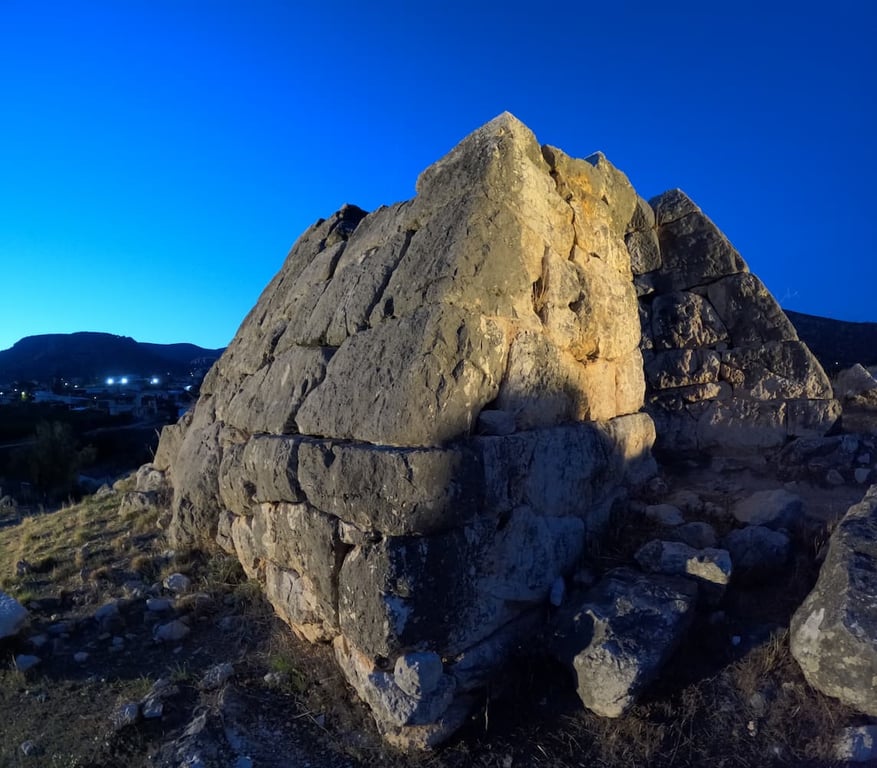
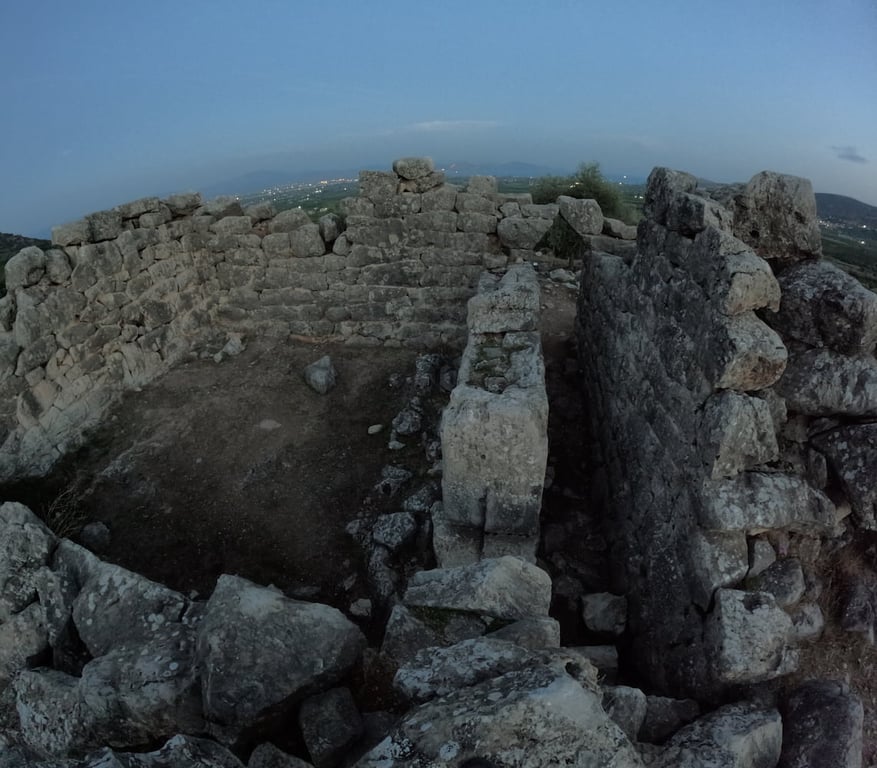
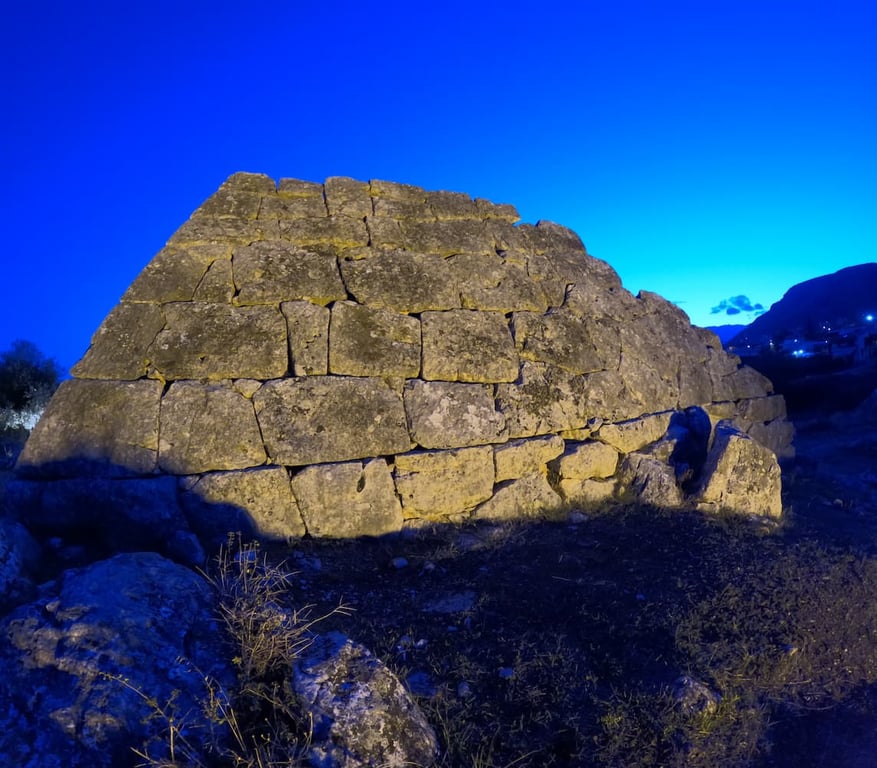
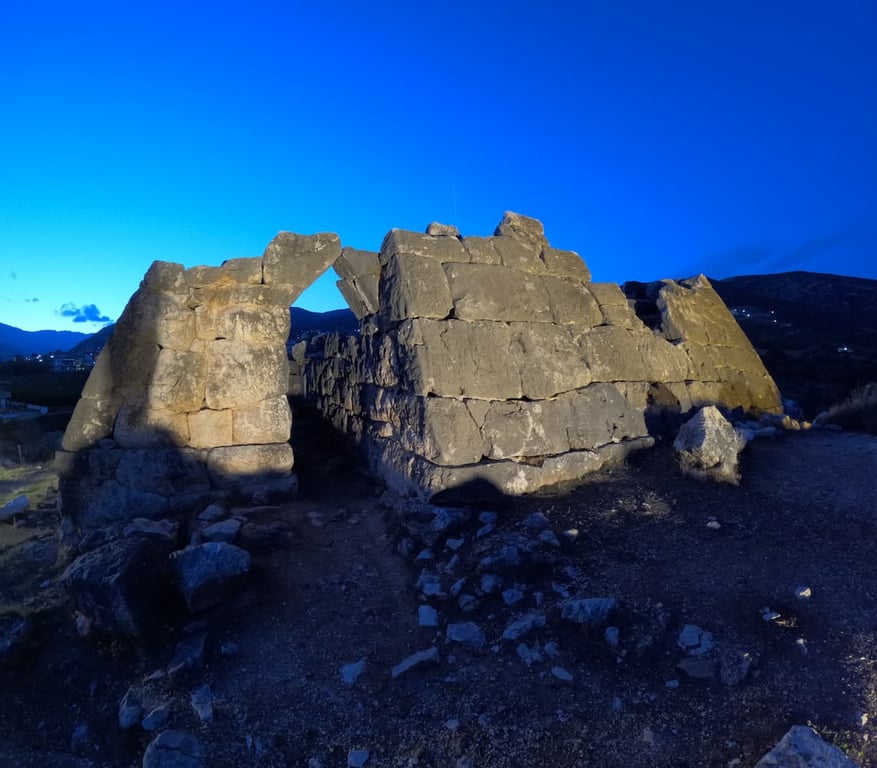
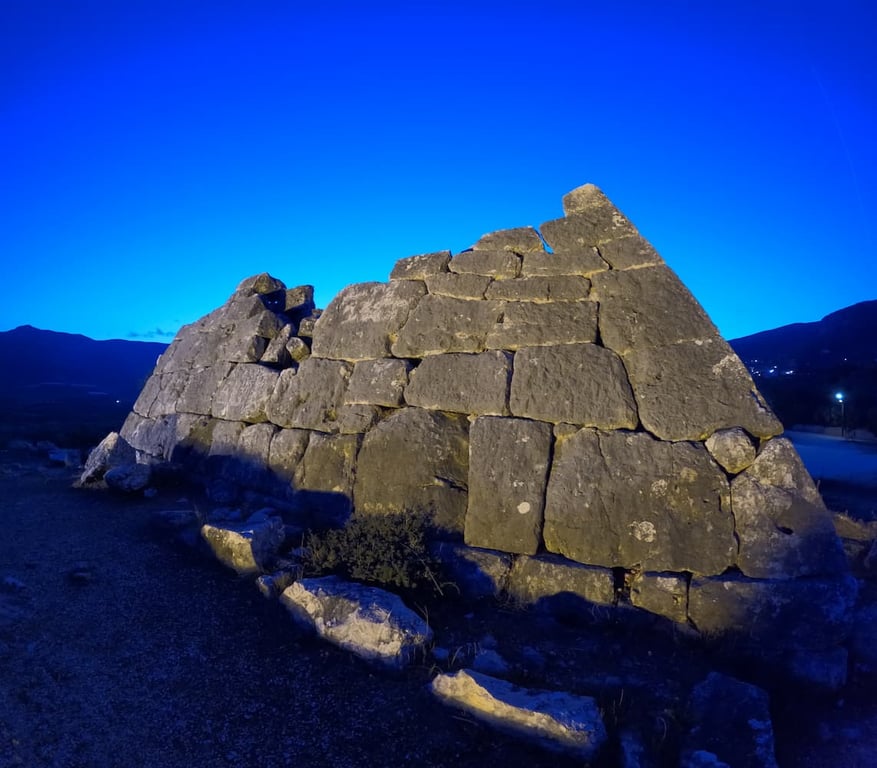
The Pyramid of Hellenikon, though modest in comparison to Egyptian pyramids, is an impressive feat of engineering. Constructed primarily from locally quarried grey limestone, it features a distinct pyramidal shape, remarkably well-preserved given its age. Its base measures approximately 14.7 meters by 12.5 meters (roughly 48 by 41 feet), and its present height reaches about 3.5 meters (11.5 feet), although it was undoubtedly taller in antiquity before erosion and neglect took their toll. The sides slope inward at an angle, creating the characteristic pyramidal form.
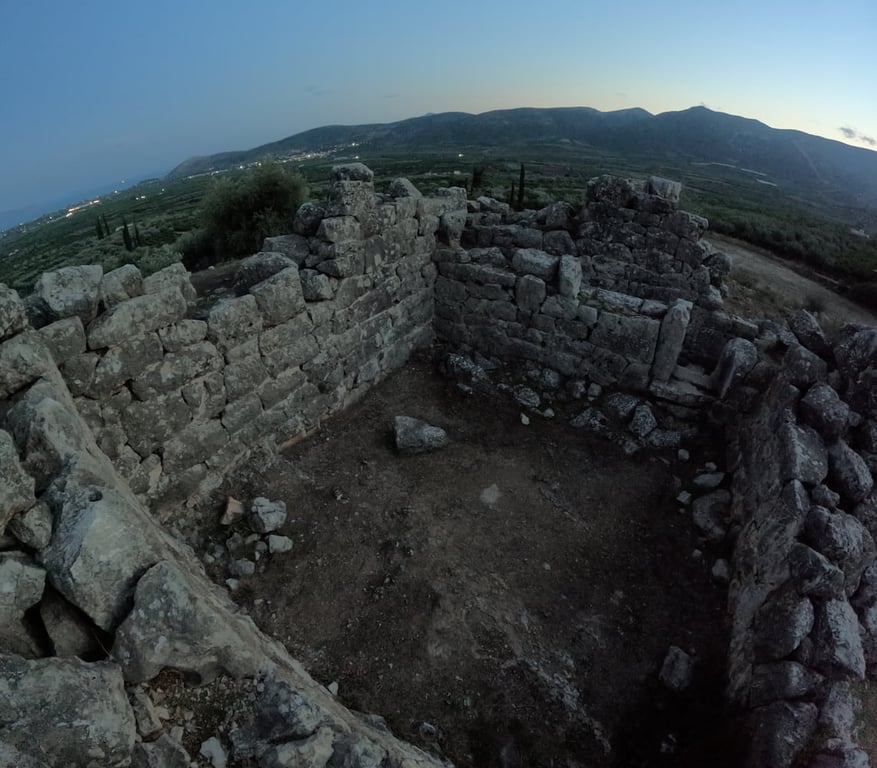
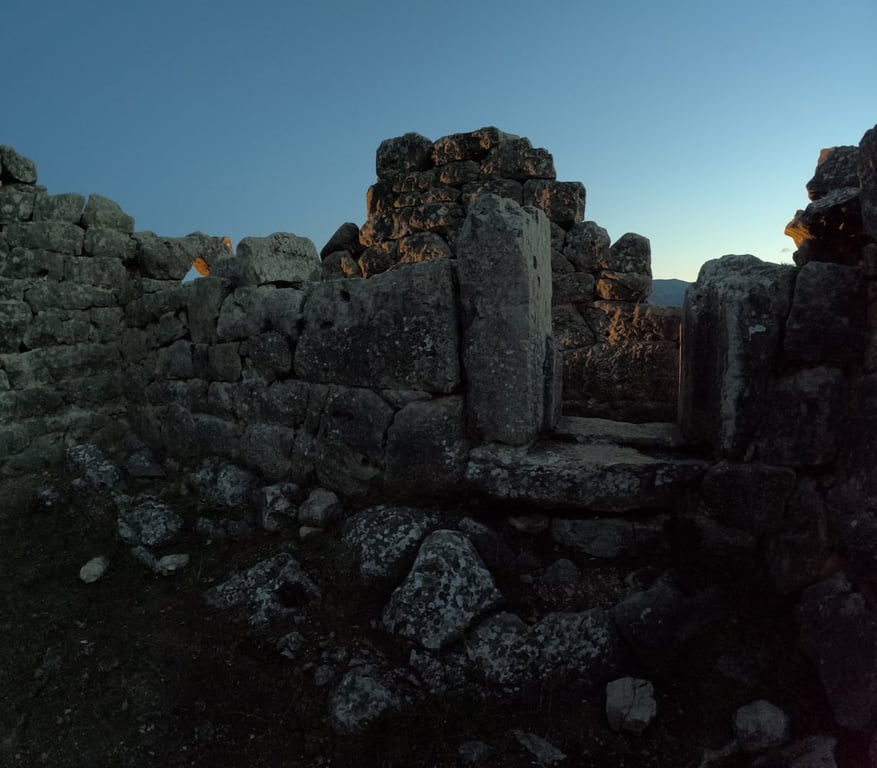
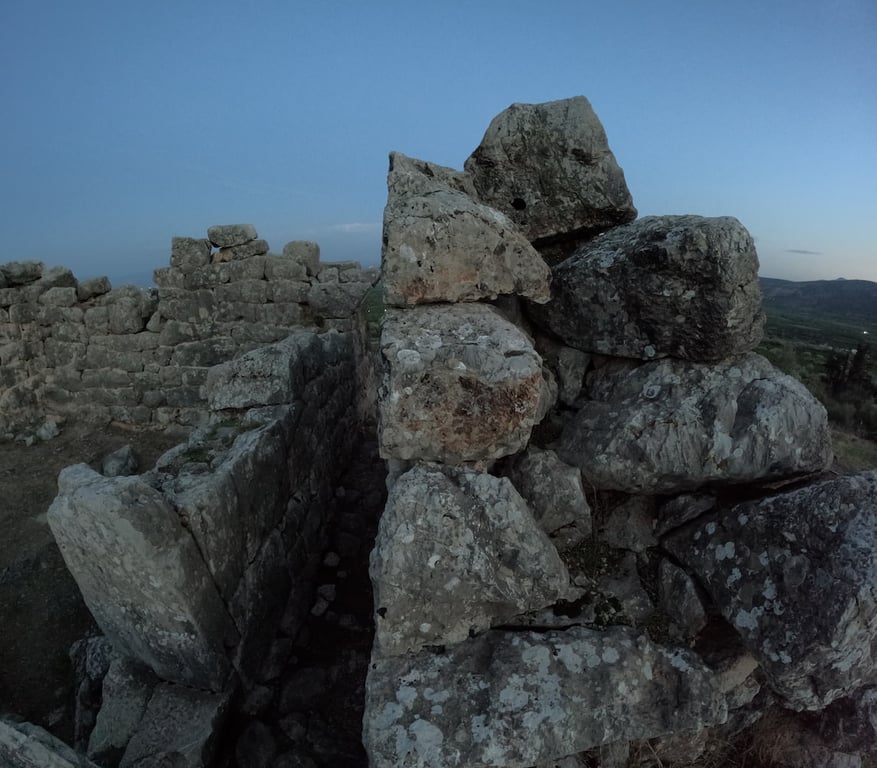
A notable feature is the carefully constructed entrance on its western side, leading into a narrow, vaulted corridor. This corridor, often referred to as a "dromos," hints at an intentional, possibly ceremonial, approach to the interior. The precision of the stonework, with large, meticulously fitted blocks, demonstrates a sophisticated understanding of construction techniques by its builders. The internal structure, though largely collapsed, suggests a central chamber or core, further fueling speculation about its original function. The pyramid's solid construction and careful alignment are testaments to the skill of ancient Greek stonemasons.
Cultural and Archaeological Importance
The Pyramid of Hellenikon holds significant cultural and archaeological importance, primarily because it is one of the few known examples of pyramid-like structures outside of Egypt and Mesoamerica. Its very existence broadens our understanding of ancient Greek architecture, suggesting that their builders were not confined to the classical temple forms but experimented with diverse monumental structures. Archaeologically, it provides crucial evidence for the building techniques and materials employed during the Classical to Hellenistic periods in the Argolid region.
The ongoing study of the Pyramid of Hellenikon helps researchers piece together the social, religious, and political landscape of ancient Greece, offering insights into the functions and symbolism of such unique monuments. Its distinctiveness challenges traditional narratives of Greek art and architecture, inviting further exploration into lesser-known aspects of their rich cultural heritage. The mysteries surrounding its purpose only add to its allure, making it a valuable site for continued archaeological investigation.
Preservation and Current State
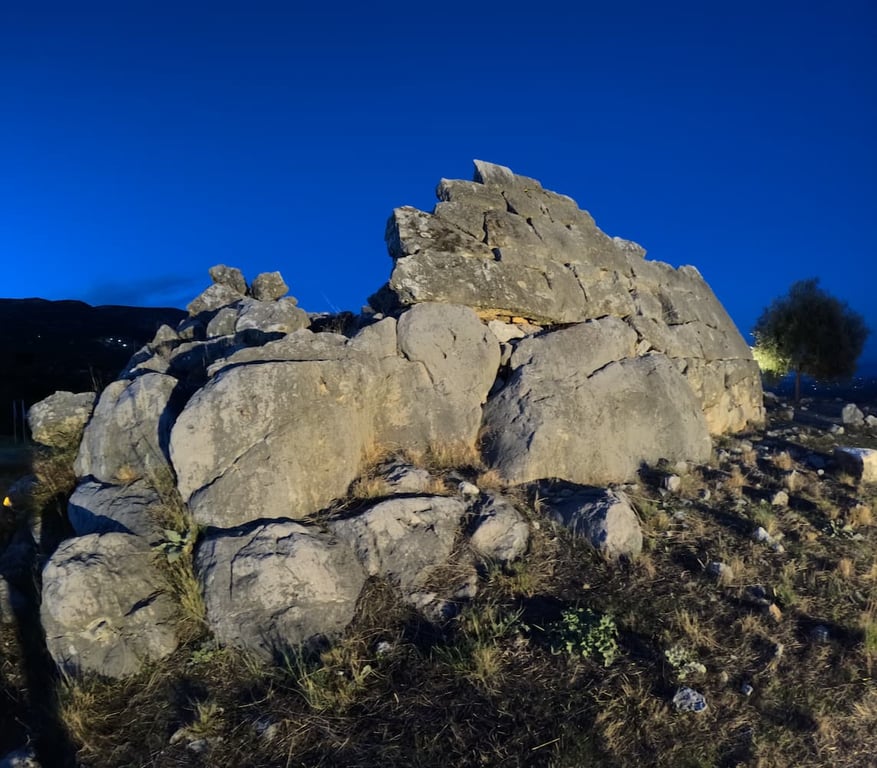
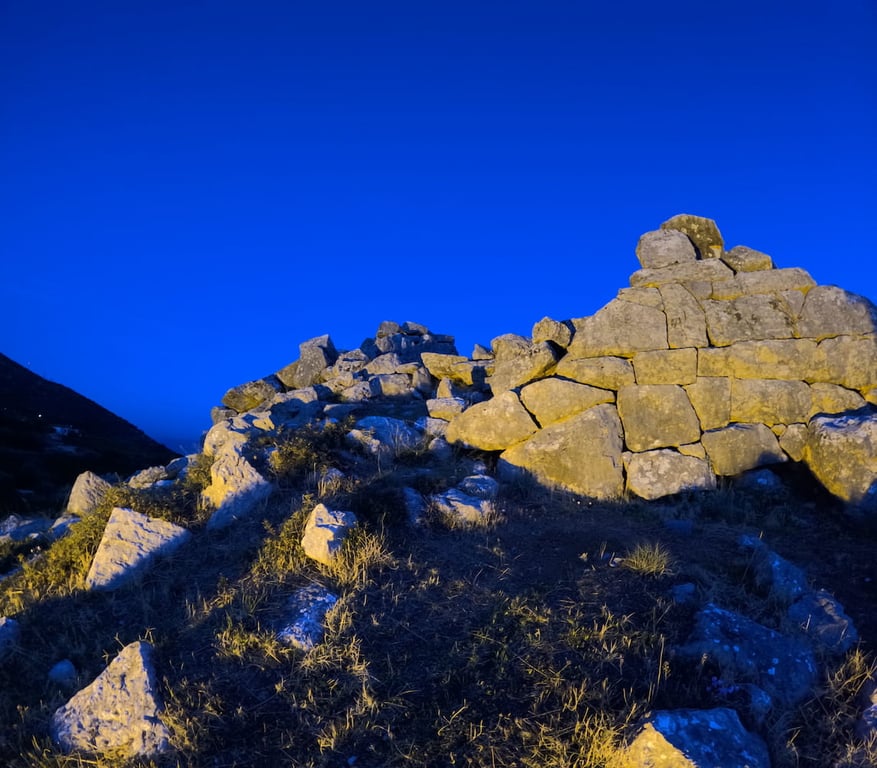
Today, the Pyramid of Hellenikon stands as a protected archaeological site, albeit one that has faced the inevitable ravages of time and human interaction. While significant portions of its lower structure remain impressively intact, the upper courses have largely collapsed, creating a more truncated appearance than its original majestic form. Conservation efforts have focused on stabilizing the existing masonry and preventing further deterioration.
The site is accessible to the public, allowing visitors to marvel at this ancient Greek anomaly. Surrounding the pyramid, ongoing archaeological surveys continue to reveal new information about the broader ancient landscape and potential connections to nearby settlements or activities. Although not as widely known as the Parthenon or Delphi, the Pyramid of Hellenikon represents a fascinating piece of Greece's architectural puzzle and is a testament to the diverse and inventive spirit of its ancient builders. Its continued preservation is vital for future generations to study and appreciate this unique historical artifact.
The Hellenikon Pyramid, often overshadowed by its more monumental Egyptian counterparts, quietly guards secrets and provokes questions that transcend conventional archaeology. Far from being a mere anomaly, this humble structure in the Argolid Plain may hold keys to forgotten traditions, lost technologies, and a mystical understanding of the ancient world.
Lesser-known Historical Facts
While often cited as one of the oldest pyramid-like structures in existence, dating back to 2700 BCE according to some controversial thermoluminescence dating, mainstream archaeology prefers a more conservative 4th century BCE or even Hellenistic era classification. What often goes unmentioned is the tantalizing possibility that the Hellenikon Pyramid is not a standalone structure, but part of a larger, yet undiscovered, network of similar formations across Greece. Early 20th-century explorers and local folklore hinted at other 'pyramidia' – smaller, forgotten stone edifices – that have since been lost to time, erosion, or agricultural development. Could Hellenikon be the last visible remnant of a widespread, pre-Classical architectural tradition that has been largely erased from the historical record?
Legends and Folk Tales
Unlike the well-documented funerary or religious purposes of other ancient structures, the Pyramid of Hellenikon’s original function remains a subject of intense debate. Local legends, however, whisper of its purpose as a ‘telesterion’ – a hall of initiation for mystery cults. These tales suggest that seekers would undergo rites within its dark, unadorned chambers, designed to facilitate altered states of consciousness or communion with chthonic deities.
Another captivating folk tale speaks of its construction by Cyclopes, colossal one-eyed giants, attributing its unmortared, precisely fitted stones to their superhuman strength and wisdom, hinting at a technology far beyond known human capabilities of the era. Could its stark, monumental simplicity itself be a design for esoteric practices, rather than practical utility?
Unproven Theories and Controversies
One of the most persistent and provocative theories surrounding Hellenikon postulates an astronomical alignment far more intricate than simple solar or stellar observations. Some researchers propose that the pyramid’s orientation, when considered alongside other ancient Greek sites like Mycenae and Tiryns, forms a sophisticated geodetic network, potentially mapping celestial constellations or even acting as a rudimentary form of inter-site communication. The precision required for such a network, if proven, would necessitate an advanced understanding of geography and astronomy generally attributed to much later civilizations. Furthermore, the striking similarity in architectural style – cyclopean masonry – with the mythical walls of Tiryns has fueled speculation about a common, perhaps even pre-Mycenaean, precursor civilization.
Mysterious Connections
Beyond its local context, the Hellenikon Pyramid has been drawn into the wider global mystery of ancient pyramid construction. Enthusiasts of ancient astronaut theories or lost civilizations often point to its existence as evidence of a global interconnectedness in deep antiquity – a shared, advanced knowledge possibly disseminated from a common, forgotten source. Is it a coincidence that similar trapezoidal or pyramidal structures appear in varying forms across the globe, separated by vast oceans and millennia? Could Hellenikon be a subtle echo of a pan-global architectural ‘signature’ from an era when humanity's understanding of engineering and cosmic principles was far more sophisticated than conventional history permits us to believe? Its enduring enigma challenges us to look beyond accepted narratives and consider alternate histories of our planet.
Pyramid of Hellenikon — photo gallery
Pyramid of Hellenikon — collectible cards
Collectible cards for this site — AI-generated illustrations from our memory game, not photographs of the site.