Mnajdra Archaeological Park
Explore a prehistoric solar temple where chambers align with the solstices and equinoxes, making it one of the world's oldest astronomical calendars set against a dramatic clifftop.
Mnajdra Archaeological Park
On the sun-drenched southern coast of Malta, perched dramatically on a clifftop overlooking the Mediterranean Sea, the Mnajdra Archaeological Park stands as a testament to the astronomical prowess of its Neolithic builders. Dating back to approximately 3600 BC, this UNESCO World Heritage site is not merely a collection of ancient stones but a sophisticated celestial calendar. Its three distinct temple structures are meticulously aligned to mark the rising sun on the solstices and equinoxes, events that would have been central to the agricultural and ceremonial lives of the community that built it. The raw beauty of the surrounding landscape, combined with the architectural ingenuity on display, makes a visit to Mnajdra a profound journey into Europe's prehistoric past.
A Celestial Clock in Stone
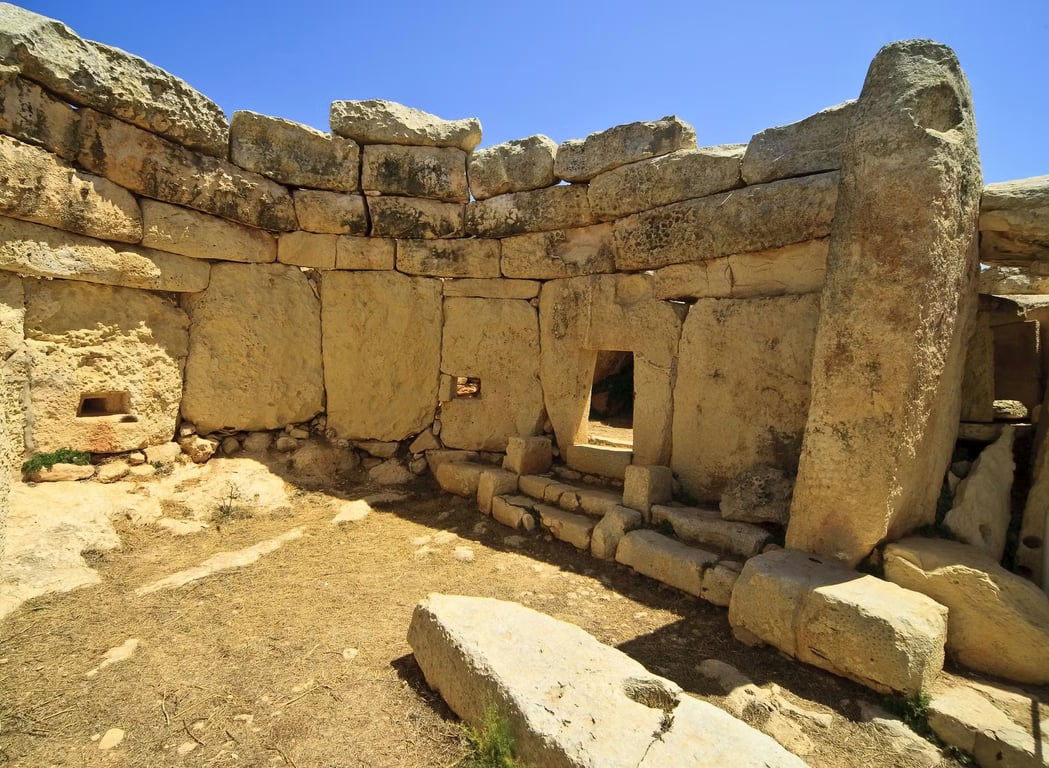
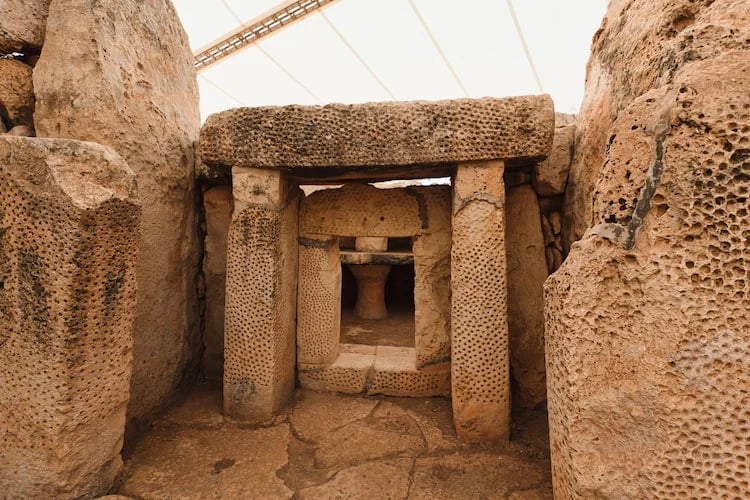
The most remarkable feature of Mnajdra is the precise solar alignment of its South Temple. During the spring and autumn equinoxes, the first rays of sunlight pass directly through the temple's main doorway, illuminating its central axis. On the summer solstice, the sunlight illuminates the edge of a megalith to the left of the doorway, while on the winter solstice, it lights up a corresponding megalith on the right. This intricate understanding of celestial mechanics allowed the temple builders to track the changing seasons, making Mnajdra one of the oldest astronomical observatories in the world. The precision involved is staggering for the period, demonstrating a deep connection to and understanding of the cosmos, which was likely integrated into the inhabitants' spiritual beliefs and daily rhythms.
The Three Temples
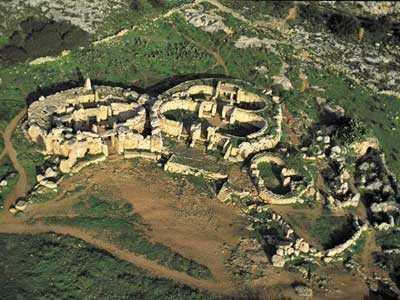
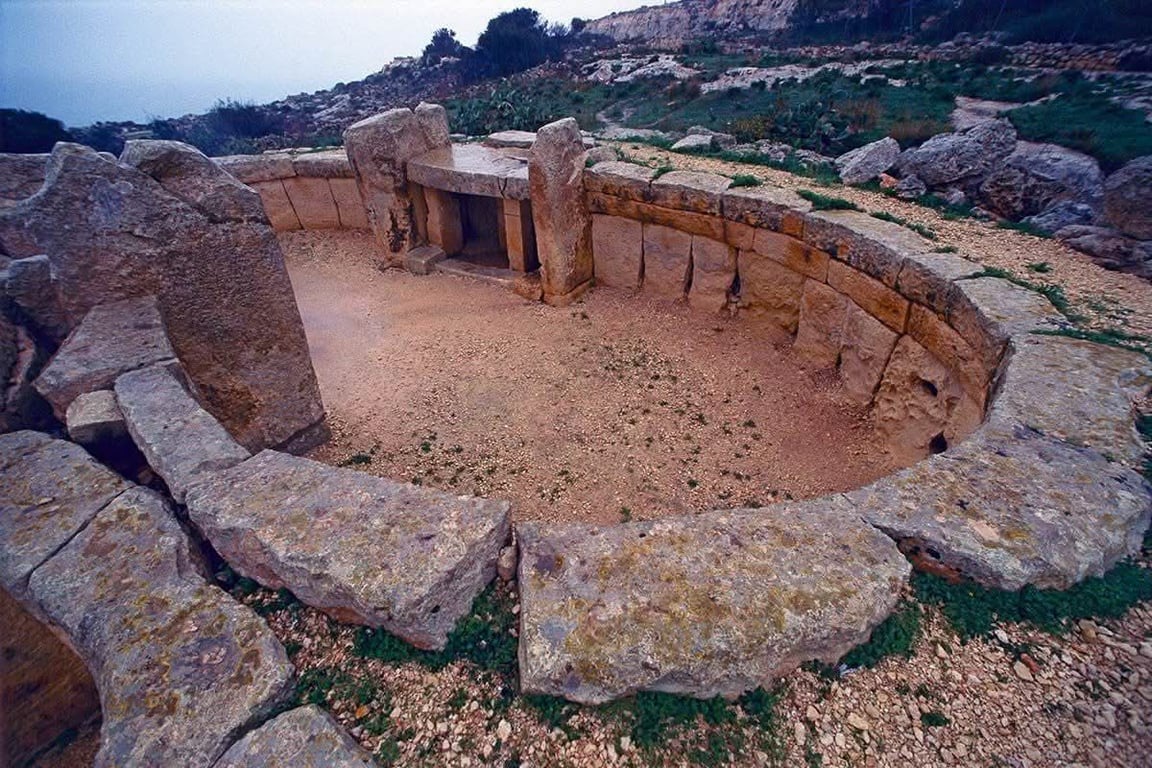
Mnajdra is comprised of three separate but adjoining temples. The oldest and uppermost temple dates to the Ġgantija phase (c. 3600–3200 BC). It is a simple three-apsed structure, its design setting the stage for the more complex constructions that would follow. The most impressive is the South Temple, built during the later Tarxien phase (c. 3150–2500 BC), which features the renowned solar alignments. Its smooth, coralline limestone blocks and well-preserved porthole doorways showcase the builders' advanced masonry skills. The Central Temple, constructed on an artificial platform between the other two, is the most recent and follows a similar plan. Together, these three structures illustrate the architectural evolution of Malta's temple-building culture over a thousand years.
A Landscape Through Time
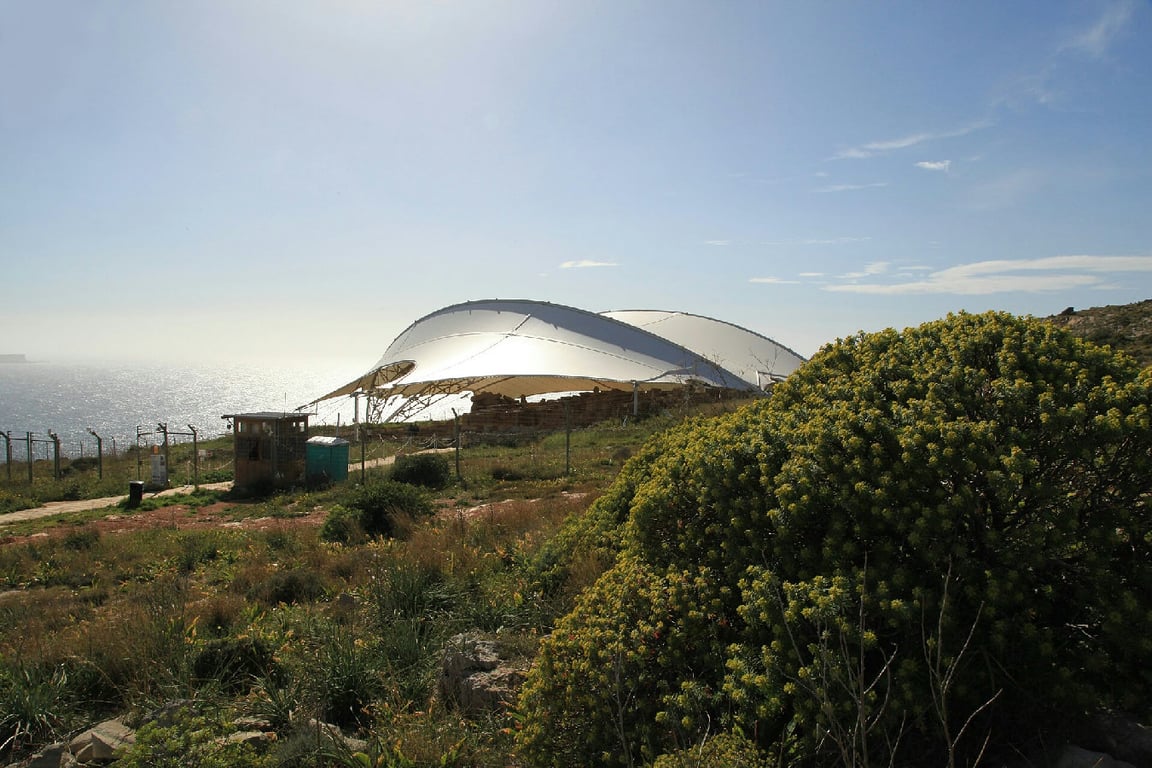
The experience of Mnajdra is inseparable from its stunning natural setting. The temples are located just 500 meters from the Ħaġar Qim complex, and a scenic pathway connects the two sites, allowing visitors to appreciate them within their broader historical landscape. The panoramic views of the turquoise sea and the uninhabited islet of Filfla on the horizon are breathtaking. This location was not chosen by accident; the relationship between the man-made structures and the natural world was clearly paramount. Today, the entire area is protected, with a large tent structure shielding the delicate limestone from the elements, ensuring that this window into our distant past remains open for generations to come.
Mnajdra's Silent Echoes
Beyond the well-documented solar alignments and the official narratives of Neolithic farmers lies a deeper, more enigmatic Mnajdra. While guidebooks celebrate its function as a celestial calendar, they often fall silent on the stranger questions whispered by the wind across its megalithic courtyards. These are the mysteries that resonate not in academic papers, but in the subtle energies of the limestone, the curious anomalies in its construction, and the enduring local folklore that speaks of an origin far more profound than mere human engineering.
Echoes in the Oracle Holes
Scattered throughout the temple complex are small, deliberately drilled apertures known as "oracle holes." The conventional explanation suggests they were used for securing doors or partitions with rope. However, this utilitarian view fails to capture their mystique. An alternative theory posits these holes were acoustic portals, designed to amplify and transmit sound. Standing in one chamber, a priest or priestess could whisper or chant, their voice carrying with an otherworldly resonance to a supplicant in another, unseen space. Some researchers even speculate these channels were used for divination, allowing the temple to "speak" through the disembodied voices of its oracles.
The Giants Who Sang the Stones into Place
Maltese folklore offers a far more poetic origin for Mnajdra than archaeological timelines. Legends speak of a race of giants who built the temples in a single night, carrying the colossal limestone slabs as if they were pebbles. These tales often hint at an forgotten technology, suggesting the giants did not use brute force, but a form of sonic power. They were said to have "sung the stones into place," using harmonic resonance to levitate the megaliths and fit them with seamless precision. This fringe theory, while dismissed by mainstream science, resonates with those who question how a prehistoric society could achieve such monumental architecture.
Whispers of the Serpent Priestess
The discovery of corpulent "fat lady" statuettes at similar sites points to a powerful fertility cult, likely matriarchal in nature. At Mnajdra, this idea takes a more mystical turn. Some theorists propose the temples were sacred to a Serpent Priestess, a shamanic figure who communed with chthonic earth energies. The temples' curved, womb-like apses are seen as physical representations of the goddess's body. According to this view, the oracle holes were not just for sound, but for channeling serpentine earth currents, allowing the priestess to enter trance states and deliver prophecies from the spirit world.
A Submerged Blueprint
Perhaps the most startling theory about Mnajdra is that it is merely a small, surviving part of a much vaster sacred landscape, now lost beneath the waves. Proponents of this idea point to Malta's mysterious "cart ruts"—unexplained parallel tracks carved into the limestone that often run directly off cliffs and disappear into the sea. This suggests the island's coastline was vastly different when they were made. Could Mnajdra and its sister temples have been hilltop sanctuaries in a sprawling coastal plain, the heart of a civilization whose full extent was swallowed by the rising Mediterranean at the end of the last Ice Age? The silent stones offer no easy answers, leaving us to wonder what other secrets lie submerged just offshore.
Mnajdra Archaeological Park — photo gallery