Göbekli Tepe
Earth's oldest known temple, Göbekli Tepe, rewrites the story of human civilization with its massive, T-shaped megalithic pillars.
Göbekli Tepe
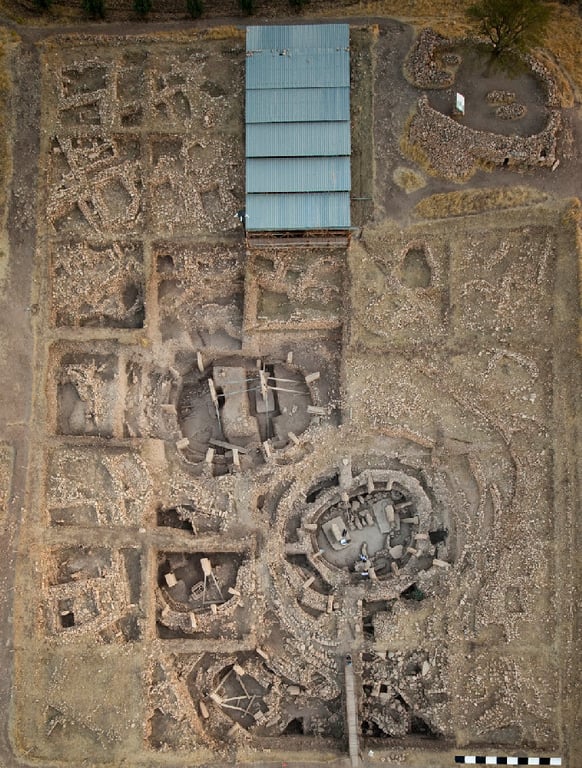
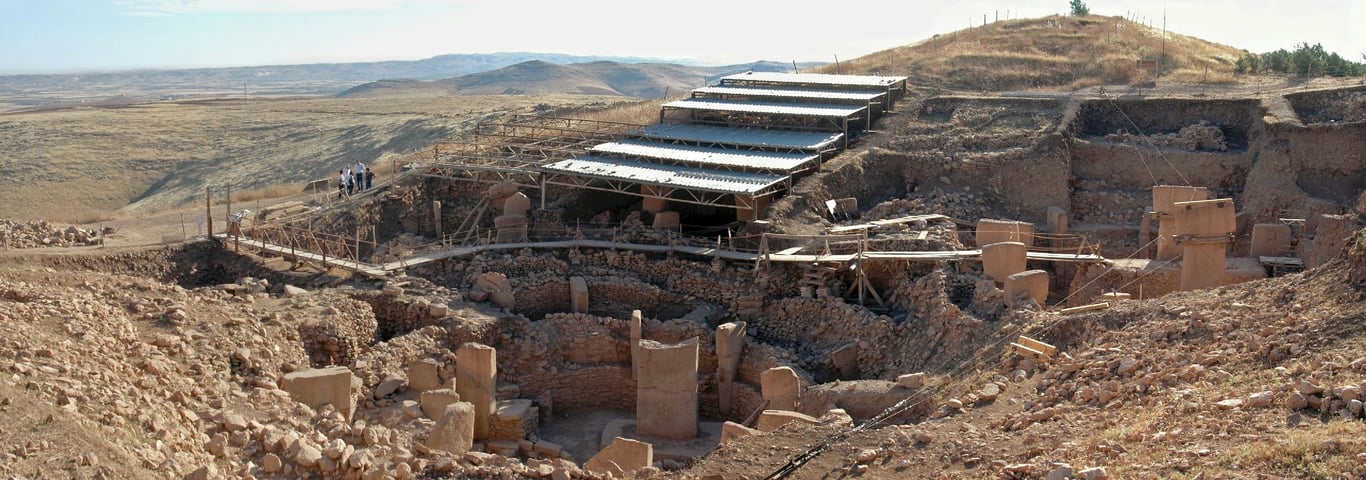
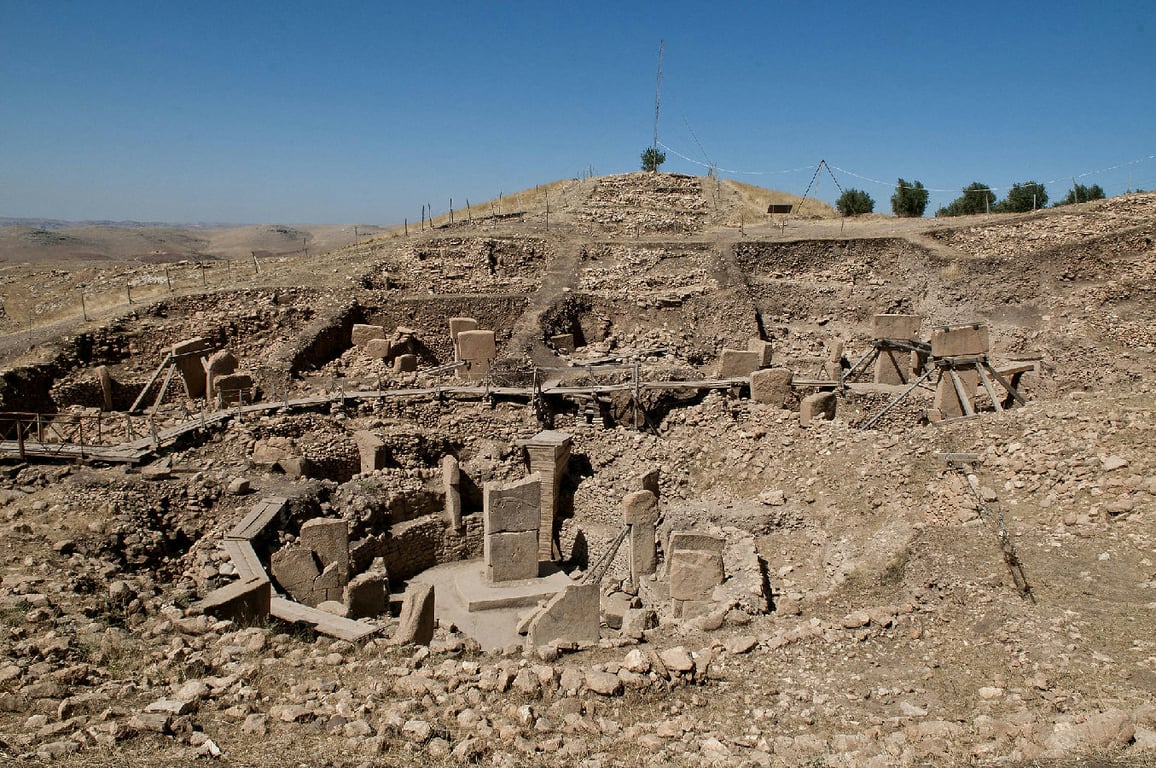
Göbekli Tepe, or "Potbelly Hill," stands as a monumental testament to a pivotal moment in human history. Located in southeastern Anatolia, this archaeological site is widely considered the world's oldest known temple, predating Stonehenge by 6,000 years and the Egyptian pyramids by 7,000. Its discovery in the 1990s sent shockwaves through the archaeological community, fundamentally altering our understanding of early Neolithic societies. It suggests that the impulse to build complex religious structures may have preceded the development of settled agriculture, challenging the long-held theory that farming was the sole catalyst for complex civilization. The site consists of multiple circular and oval-shaped structures, built and then intentionally buried over a period of centuries.
Sanctuary of the Stone Giants
The most striking features of Göbekli Tepe are its immense T-shaped pillars. These monoliths, some reaching over 18 feet in height and weighing up to 10 tons, are arranged in rings, facing inward. The pillars are not merely structural supports but are stylized representations of human figures, complete with abstract depictions of arms, hands, and loincloths. This anthropomorphic quality suggests they may represent venerated ancestors, supernatural beings, or deities from a long-forgotten pantheon. The effort required to quarry, transport, and erect these stones would have demanded a significant level of social organization and a shared, powerful belief system, something previously thought impossible for hunter-gatherer societies of the 10th millennium BCE.
A Prehistoric Menagerie
What brings these stone figures to life are the intricate bas-relief carvings that adorn their surfaces. The pillars are covered with a diverse array of animal figures, depicted with remarkable naturalism and detail. Foxes, snakes, boars, cranes, lions, and scorpions crawl and fly across the stone surfaces. This rich iconography provides a fascinating window into the symbolic and cosmological world of the people who built Göbekli Tepe. Scholars believe these animals were not simply representations of local fauna but held deep symbolic meanings, possibly related to shamanistic beliefs, astronomical observations, or foundational myths. The prevalence of dangerous creatures might suggest a role as protectors or spirit guardians of the sacred enclosures.
A Deliberate End
One of the most enigmatic aspects of Göbekli Tepe is its conclusion. Around 8,000 BCE, the entire site was deliberately and carefully buried under tons of earth, preserving it for millennia. The reasons for this intentional interment remain a profound mystery. Was it a ritual act to decommission the sacred space? Was it done to protect the site from outsiders or a perceived threat? Or did it represent a fundamental shift in the society's religious beliefs, a closing of one chapter of human spirituality to begin another? This final act of burial ensured that the secrets of the world's first temple would wait nearly 10,000 years to be rediscovered, offering a stunningly preserved glimpse into the dawn of civilization.
Echoes from the Dawn: The Unseen Göbekli Tepe
Beyond the established facts of Göbekli Tepe being the "world's first temple" lies a far deeper and more unsettling mystery. For every answer archaeologists unearth from its soil, a dozen more questions claw their way to the surface. The true story of this 12,000-year-old sanctuary is not just about who built it, but why they meticulously buried their own creation, entombing it for millennia as if to hide it from the future.
The Conscious Entombment
Perhaps the most baffling aspect of Göbekli Tepe is not its construction, but its decommissioning. For over a thousand years, generations of hunter-gatherers labored to erect these monolithic circles. Then, around 8,000 BCE, they undertook an equally monumental task: they deliberately and carefully buried the entire complex under thousands of tons of earth, flint, and animal bones. This was no gradual abandonment to the elements; it was a conscious, ritualistic burial of their most sacred achievement. Scholars debate whether this was a final, grand offering, an act to protect its sacred power, or a desperate measure to conceal something that had become feared.
Adding to this enigma is the evidence of a sophisticated "skull cult." Archaeologists have discovered fragments of three human skulls, intentionally de-fleshed and carved with deep, linear grooves. These were not signs of cannibalism, but of a complex ritual focus on the dead. This suggests the site was not just for feasting and worship, but also a place where the remains of venerated ancestors were integrated into arcane ceremonies, their skulls perhaps displayed as potent relics.
A Celestial Rosetta Stone?
While mainstream archaeology views Göbekli Tepe as a ceremonial gathering place, a more controversial theory posits that it was a sophisticated astronomical observatory. Proponents argue that the T-shaped pillars are not merely stylized human figures but also celestial markers, aligned to track solstices, equinoxes, and the rising of specific stars like Sirius. In this view, the temple was a mechanism for understanding and recording the movements of the cosmos.
The Vulture Stone Prophecy
The most compelling evidence for this celestial connection is Pillar 43, known as the "Vulture Stone." Fringe theorists and some archaeo-astronomers interpret its complex carvings not as a simple hunting scene, but as a detailed star map. They contend it depicts constellations (Scorpius, Sagittarius, Lupus) and a date stamp for a cataclysmic event: the comet impact believed to have triggered the Younger Dryas ice age around 10,950 BCE. According to this theory, the builders of Göbekli Tepe were the survivors of this global catastrophe, using the pillars to memorialize the event and track the heavens to prevent being caught unaware again.
The Fertile Crescent's Forgotten Network
For decades, Göbekli Tepe was seen as a singular, miraculous anomaly. Recent discoveries, however, have shattered that perception. Sites like Karahan Tepe, Boncuklu Tarla, and Nevalı Çori reveal a vast, interconnected landscape of similar megalithic sanctuaries spread across the region. This was not one isolated temple, but potentially the spiritual capital of a widespread and highly organized "T-pillar culture" that flourished for millennia. We are not looking at a single site, but the faint outline of an entire lost civilization that chose to express its worldview not in cities or writing, but in stone circles oriented toward the sky.
Göbekli Tepe — photo gallery