Costești-Cetățuie Fortress
The main military gateway to the Dacian capital, this fortress features powerful earth ramparts, stone watchtowers, and a remarkably preserved ancient water system.
Costești-Cetățuie Dacian Fortress
Perched on a commanding hilltop, the fortress of Costești-Cetățuie served as the primary military gatekeeper on the road to the Dacian capital, Sarmizegetusa Regia. Established as early as the 2nd century BC, it was one of the first and most important strongholds in the sophisticated defensive system of the Orăștie Mountains. Its purpose was clear: to guard the main access route along the Apa Grădiștei valley, acting as a formidable first line of defence against any invading force. The fortress's visible stone ramparts, powerful watchtowers, and ingenious infrastructure demonstrate the Dacians' advanced military architecture. As a key part of the UNESCO World Heritage site, it provides a crucial understanding of the strategic thinking that underpinned the power of the Dacian kingdom before its ultimate conquest by Rome.
A Fortress of Earth and Stone
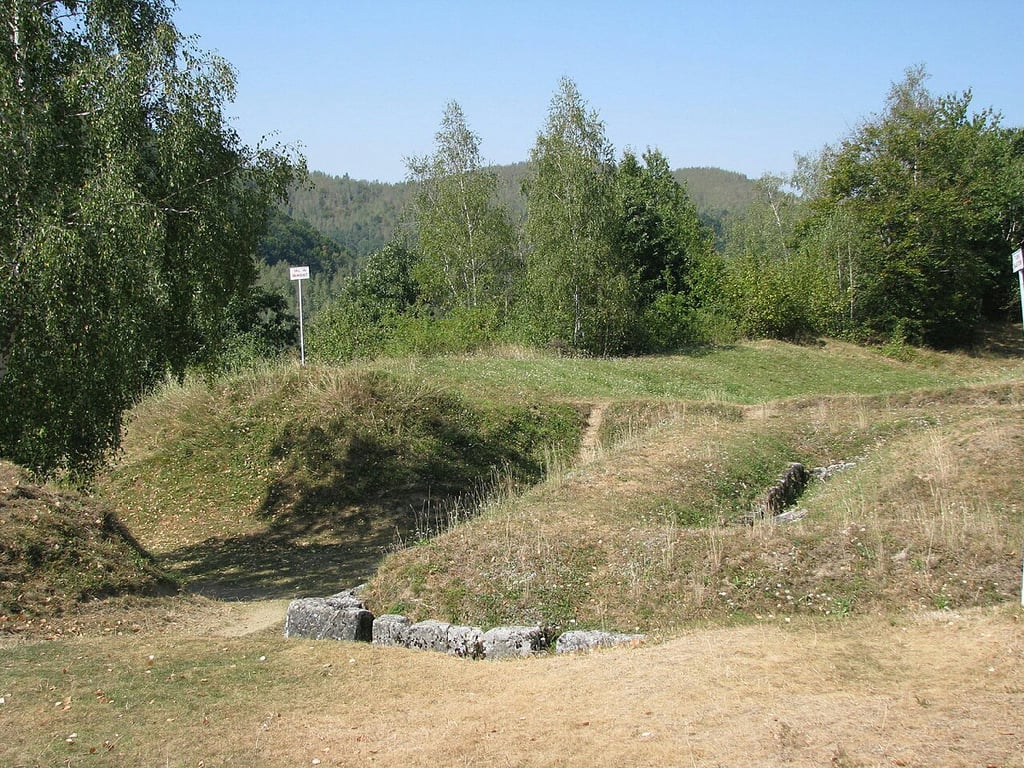
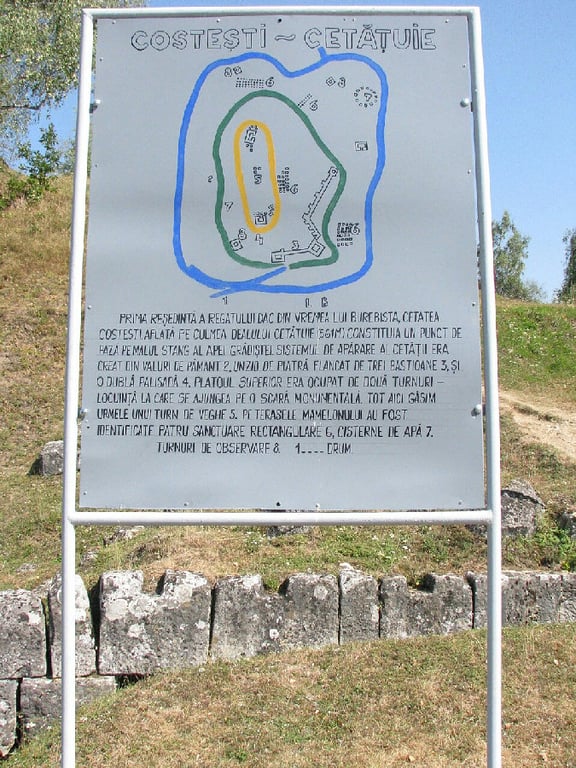
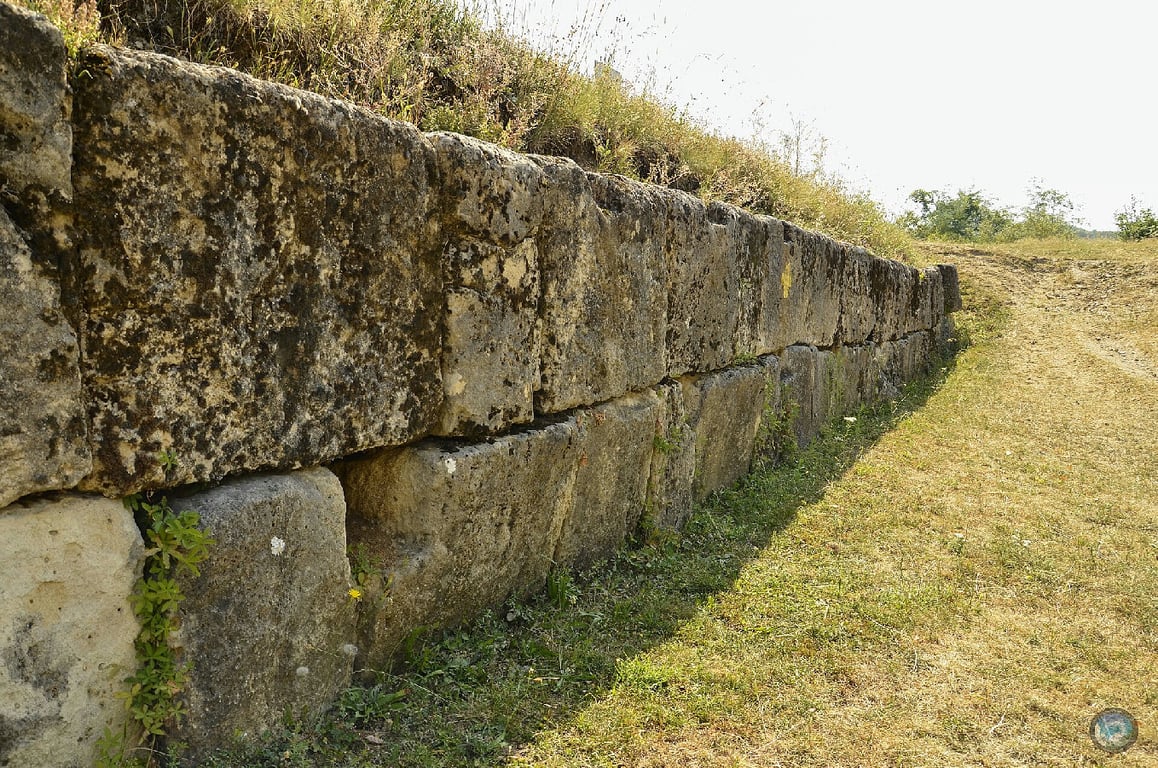
The defensive ingenuity of Costești-Cetățuie is immediately apparent from its well-preserved earthworks and stone walls. The fortress is dominated by two massive earthen ramparts, or valli, topped with wooden palisades, which formed the outer defences. Inside this enclosure, the heart of the fortress was a citadel of stone, constructed with the signature murus dacicus technique. This double-faced stone wall, filled with earth and reinforced with timber, created a resilient barrier against attack. Four imposing watchtowers were strategically placed along these walls, providing sentinels with a sweeping view of the valley below, ensuring that no enemy could approach the capital undetected. This layered defence system made the fortress a tough obstacle for any aggressor.
The Redoubt of Kings
Beyond its military function, Costești-Cetățuie was also a significant place of residence, likely for Dacian chieftains or military commanders. Archaeological excavations have revealed the foundations of several dwellings built on wooden platforms. Most intriguing are the two "tower-dwellings" (locuință-turn), unique structures in Dacian architecture that combined defensive features with residential comfort. These buildings had stone foundations and multi-story wooden superstructures, serving as both fortified homes and command posts. The presence of these elite residences underscores the fortress's high status within the Dacian defensive network and its role as a centre of regional power, not just a simple military outpost.
Spring of the Citadel
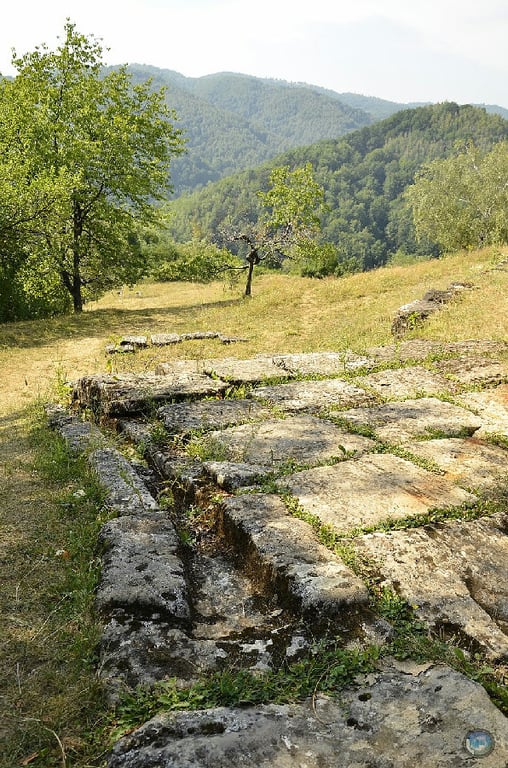
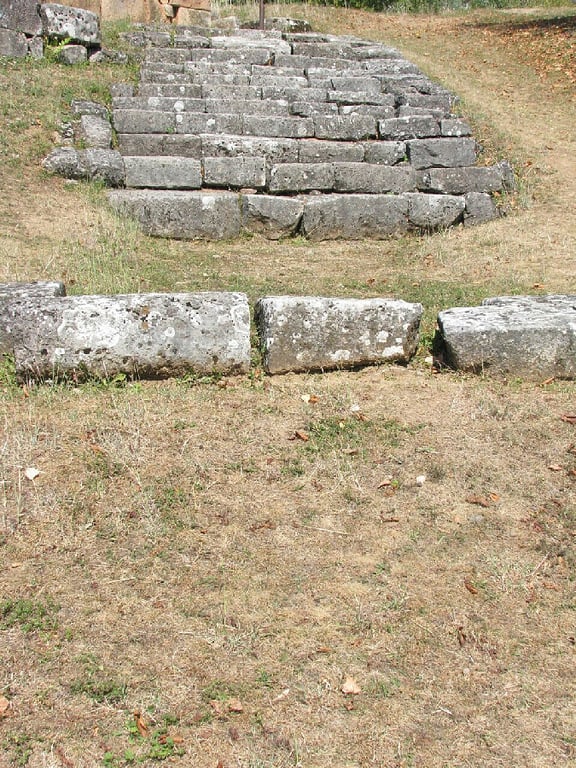
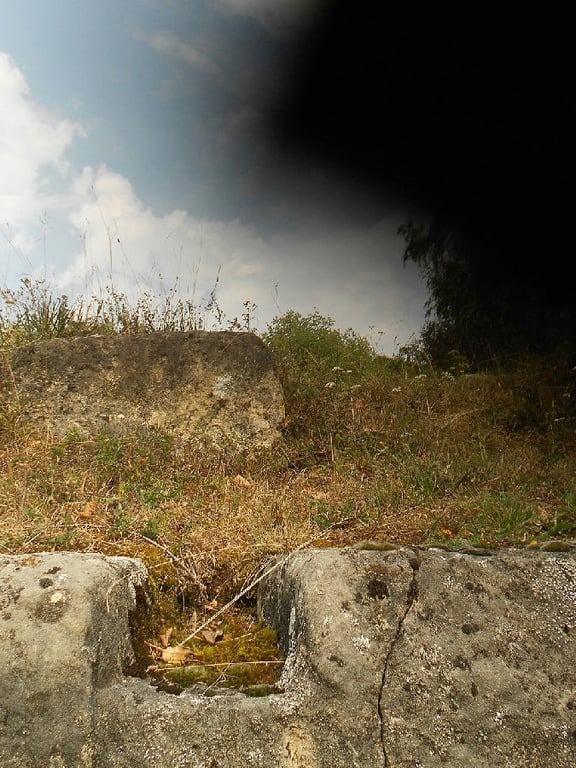
A reliable water supply was critical for any fortress to withstand a prolonged siege, and Costești-Cetățuie features a remarkable example of Dacian hydraulic engineering. Carved directly into the bedrock at the base of the hill is a sophisticated water collection and filtering system. A cistern, fed by a natural spring, was designed with a decantation basin to purify the water, ensuring a clean and constant supply for the garrison. A monumental staircase, also carved from the rock, leads down to this vital resource. The survival of this ancient water system is a testament to the Dacians' practical skills and their meticulous planning in every aspect of fortress construction, ensuring their strongholds could endure the harshest of conditions.
Guardians of the Sacred Mountain: The Unseen Layers of Costești-Cetățuie
While history books frame Costești-Cetățuie as a masterclass in military engineering—a stone sentinel guarding the path to a kingdom's heart—this perspective only scratches the surface. To truly understand this place, one must listen to the echoes in the wind and look beyond the fallen walls. The fortress was more than a barrier of wood and stone; it was a nexus of power, ritual, and cosmic belief, and many of its deepest secrets remain unspoken, buried beneath layers of academic caution and local folklore.
The Bastions That Watched the Stars
Conventional wisdom holds that the fortress's four imposing bastions were purely defensive structures, designed to repel Roman legions. Yet, a closer look at their construction reveals peculiarities that defy simple military logic. Their unusual horseshoe shape and precise placement have led some researchers to speculate on a dual purpose. Could these platforms have served as celestial observatories? The Dacian priesthood was renowned for its knowledge of astronomy, using the stars to guide both spiritual and worldly affairs. It's theorized that these bastions were not just for soldiers with bows, but for priests tracking solstices and planetary alignments, turning the entire fortress into a functional, terrestrial calendar meant to synchronize the kingdom with the cosmos.
Whispers of the Mountain's Heart
The Orăștie Mountains are steeped in legends that predate recorded history, and Costești-Cetățuie is at their epicenter. Local folklore speaks not of Roman invaders, but of far older guardians. These tales describe the *uriași*, a race of benevolent giants who built the original mountain strongholds, piling stones that mortal men could not lift. It is said their spirits still linger, protecting the sacred ground from those with impure intentions. Treasure hunters and archaeologists alike have reported strange phenomena: disembodied whispers on windless days, tools mysteriously moving, and an unnerving sense of being watched from the dense, surrounding forests.
The Phantom Fire of Zalmoxis
One of the most persistent legends involves a mysterious, recurring light. Locals have recounted seeing an ethereal, cold fire flickering atop the fortress hill on certain nights, particularly around the winter solstice. This phenomenon is often attributed to the lingering spirit of Zalmoxis, the primary deity of the Dacians, who was believed to grant immortality. Skeptics suggest natural gas or phosphorescence, but no scientific explanation has ever been confirmed. Believers maintain it is a spiritual beacon, a sign that the sacred energy that once powered a kingdom has not been extinguished, but merely lies dormant.
A Landscape Etched in Sacred Geometry
The fortress of Costești-Cetățuie was not an isolated outpost; it was a vital node in a vast, interconnected network of Dacian sites. Emerging theories propose that the placement of the six major fortresses in the Orăștie Mountains was not determined by military strategy alone. Instead, they may form a massive terrestrial map of a specific star constellation, possibly Draco or Ursa Major. According to this view, the entire mountain range was a single, sprawling temple complex. The roads connecting the fortresses were not just supply lines, but processional ways, and Costești-Cetățuie’s role as the "gatekeeper" was as much spiritual as it was physical—an initiation point for those entering the most sacred heartland of the Dacian civilization.
Costești-Cetățuie Fortress — photo gallery