
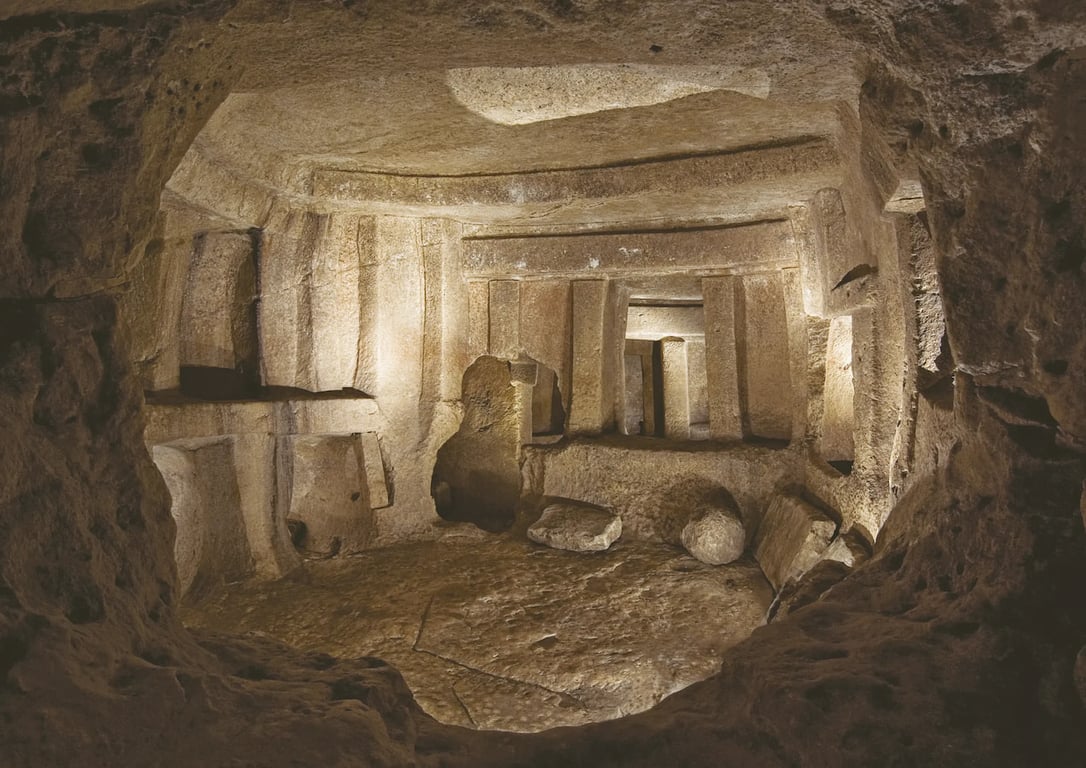
Ħal Saflieni Hypogeum
Rated 4.7(9,810 reviews)Age: Neolithic, ~5,000 years old
About Ħal Saflieni Hypogeum
In short
The Ħal Saflieni Hypogeum is a prehistoric underground cemetery in Paola, Malta, cut into limestone on three levels between about 4000 and 2500 BCE by the island's Neolithic temple-building communities. Builders broke into it in 1902, and it has been a UNESCO World Heritage Site since 1980.
Under a street of houses in Paola, on the hill above Malta's Grand Harbour, a prehistoric cemetery goes down more than 10 meters into solid rock. The Ħal Saflieni Hypogeum (hypogeum is Greek for “underground”) is a maze of halls, chambers and passages cut into soft globigerina limestone on three levels, about 500 square meters in all. People cut and used it for some 1,500 years, from around 4000 to 2500 BCE, and UNESCO added it to the World Heritage List in 1980 as one of the best-preserved monuments of a Neolithic culture that has since disappeared.
Who made the Hypogeum, and when?
The Hypogeum belongs to the same Neolithic communities that raised Malta's great stone temples above ground, at Tarxien, Ħaġar Qim and Mnajdra. Its finest rooms copy the inside of those temples in the living rock: doorways shaped like trilithons, two uprights with a stone laid across the top, and ceilings that step inward as they rise.
Dating the levels is hard. The early excavation records were lost and no precise scientific dates exist, so the ranges are approximate. Archaeologists place the upper level around 3600–3300 BCE, the middle level around 3300–3000 BCE and the lowest around 3150–2500 BCE. Heritage Malta, which manages the site, extends its use to about 1500 BCE.
It was a shared tomb. When it was cleared, the floors were covered in red earth packed with human bones. The figure of 7,000 people often quoted is an estimate by the excavator Themistocles Zammit, not a count. He studied one block of deposit 3 meters long, 1 meter wide and 1 meter deep, found at least 120 people in it (judging by 119 right kneecaps), and scaled that up to the whole site.
The three levels of the Hypogeum
- Upper level: a large hollow, probably open to the sky at first, with a central passage and burial chambers to each side. One chamber still holds its original burial deposit, and excavations in the early 1990s found traces of a monumental structure that once marked the entrance.
- Middle level: smoothly finished rooms carved to look like the inside of a built temple, with trilithon doorways and stepped, corbelled ceilings.
- Lower level: the deepest room lies 10.6 meters below the road and has four side niches. Excavators found no bones or offerings here.
The middle level is the one most visitors remember. In the roughly round Main Chamber, most walls are washed with red ochre. The room known as the Holy of Holies has a porthole-like opening set inside a carved trilithon, and its corbelled ceiling gives a rare clue to how the roofs of the surface temples, none of which survive, may have been built. Nearby, the small Oracle Room has a niche in one wall, and a deep voice spoken beside it carries through the neighboring rooms.
Several ceilings carry paintings in red ochre: spirals, spots and honeycomb patterns. Spirals also run across the Oracle Room and the round Decorated Room.
What was found inside
Alongside the bones, excavators recovered pottery, beads, shell buttons, amulets, stone axe-heads and small carved figures of people and animals. The best known is the Sleeping Lady, a small clay figure of a woman lying asleep on her side, found in the Main Chamber and now in the National Museum of Archaeology in Valletta.
How the Hypogeum came to light
In 1902 builders working on new houses in Paola broke through the roof of the upper level. At first they tried to keep the find quiet, and by the time it was reported the houses above had already damaged the upper chambers beyond repair.
The priest Manuel Magri began excavating in November 1903, but he died in Tunisia in 1907 and his report was never found. Some bones and grave goods from this early phase were thrown away without being recorded. Zammit took over, published his findings from 1910 and finished in 1911, and his finds went to the national museum in Valletta. The site opened to visitors in 1908, while digging was still going on. Anthony Pace, Nathaniel Cutajar and Reuben Grima led new excavations in 1990–1993.
Questions the Hypogeum still raises
A place this old and this carefully cut draws people from many fields. Acoustic researchers, among them Linda Eneix of the Old Temples Study Foundation and the acoustics researcher Rupert Till of the University of Huddersfield, have measured how the Oracle Room carries a deep voice, and they read their results in different ways. The skulls Zammit's team called “long-headed” have drawn independent researchers who see something unusual in them, while Heritage Malta's specialists describe ordinary Neolithic skulls. And a story of a school class lost in the tunnels has been told since at least 1940. Beyond sets out each of these in full.
Visiting the Hypogeum today
The Hypogeum closed to visitors from 1991 to 2000 for conservation, and again from September 2016 to May 2017 for a €1.1 million upgrade. The challenge is the visitors themselves: breath, body heat and humidity raise carbon dioxide levels and feed algae, which UNESCO experts flagged as a threat to the wall paintings as early as 1983.
Entry is by guided tour in very small groups, with no more than about ten people inside at a time, so Heritage Malta advises booking well ahead; a small number of last-minute tickets go on sale the day before. Photography is not allowed, and children under six are not admitted. The temples at Tarxien, a short walk away, make a natural second stop.
Beyond: more about Ħal Saflieni Hypogeum
Checking…
Contributors
No contributions yet
Be the first to add photos or videos!
Play and learn
Test Your Knowledge!
Think you know everything about Ħal Saflieni Hypogeum? Take our interactive quiz and become an Ancient Sites Expert!
Frequently asked questions
How old is the Ħal Saflieni Hypogeum?
It was cut and used over roughly 1,500 years, from about 4000 to 2500 BCE, with the upper level oldest and the lowest level youngest. Heritage Malta extends its use to about 1500 BCE.
How many people were buried in the Hypogeum?
The usual figure is about 7,000, but it is an estimate. The excavator Themistocles Zammit counted at least 120 people in one small block of deposit and scaled that number up to the whole site.
Can you visit the Hypogeum in Malta?
Yes, on guided tours run by Heritage Malta. Groups are kept to about ten people at a time to protect the site's air and humidity, so booking well ahead is advised; photography is not allowed and children under six are not admitted.
What is the Oracle Room in the Hypogeum?
A small chamber on the middle level, painted with red ochre spirals, with a wall niche that makes a deep voice carry through the complex. Linda Eneix's foundation reported resonance near 110–111 Hz in Maltese temple rooms, Debertolis and colleagues measured about 70 and 114 Hz, and Rupert Till measured 41, 72 and 76 Hz; all find strong bass.
Were elongated skulls found in the Hypogeum?
The excavators called the eleven measurable skulls long-headed. Researchers such as Anton Mifsud and the HERA writers Di Cesare and Forgione see unusual features in them, while Heritage Malta says they are no more elongated than modern skulls; a study of the remains with Macquarie University began in 2019.
Who discovered the Hypogeum?
Builders working on new houses in Paola broke into it in 1902. Manuel Magri began excavating in 1903, and Themistocles Zammit completed the excavation by 1911.
Related Tags
Sources
- whc.unesco.org/en/list/130
- whc.unesco.org/en/soc/1612
- heritagemalta.mt/explore/hal-saflieni-hypogeum
- heritagemalta.mt/?p=4755
- heritagemalta.mt/news/hal-saflieni-skulls-to-be-studied-in-interdisciplinary-collaboration-under-international-research-grant
- heritagemalta.mt/news/hypogeum-skulls-exhibition-extended-till-end-of-october
- eprints.hud.ac.uk/id/eprint/30678
- um.edu.mt/library/oar/handle/123456789/16630
- ar5iv.labs.arxiv.org/html/2010.13697
- earth.org.uk/bibliography/cook2008resonance.html
- stonepages.com/news/archives/003629.html
- maltatoday.com.mt/news/national/19246/chanting-altered-minds-in-hypogeum-20120630
- um.edu.mt/library/oar/handle/123456789/9125
- guidememalta.com/en/why-are-these-elongated-skulls-at-hal-saflieni-hypogeum-shrouded-in-mystery
- maltatoday.com.mt/comment/opinions/106743/either_they_were_human_or_were_aliens
- bdlbooks.com/product/the-hal-saflieni-hypogeum-skulls
- en.wikipedia.org/wiki/%C4%A6al_Saflieni_Hypogeum
Other Sites You Might Like
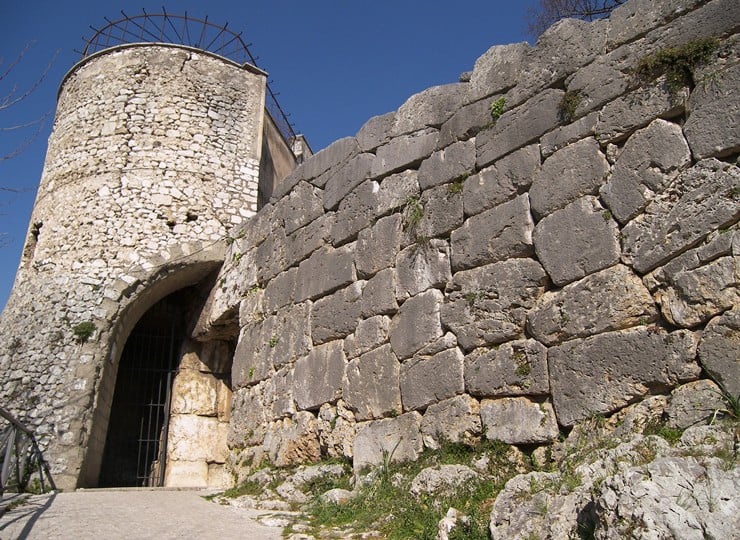 Italy
Alatri Cyclopean Walls
Many-sided limestone blocks, fitted so closely no paper slips between them, wrap the hilltop citadel of Alatri.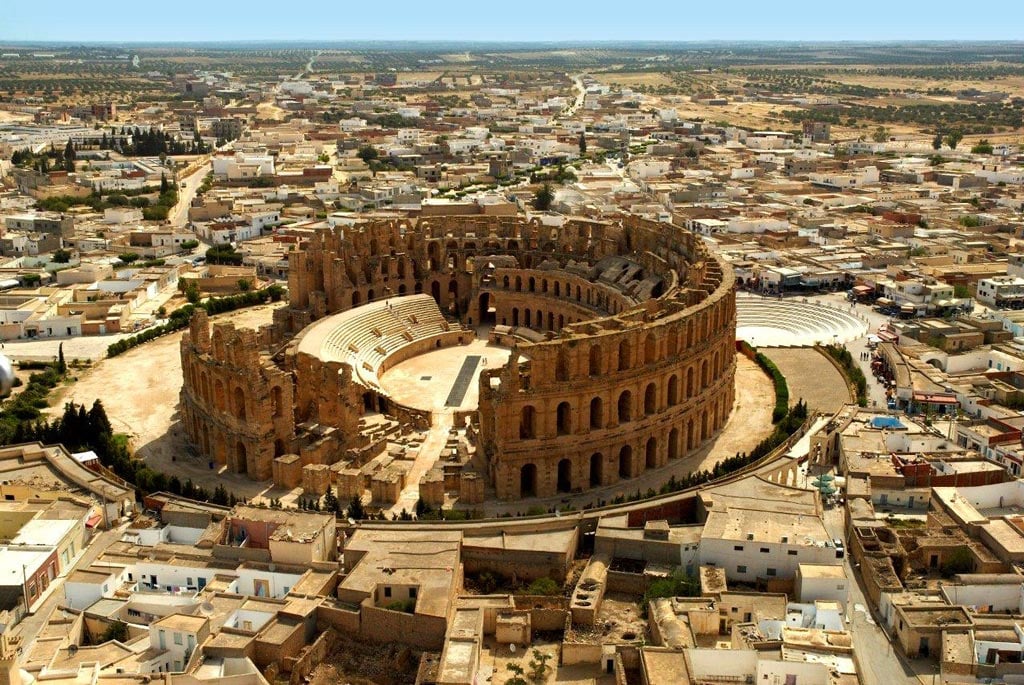 Tunisia
Amphitheatre of El Jem
A three-story Roman arena for some 30,000 spectators, still towering over the Tunisian town that grew up around it.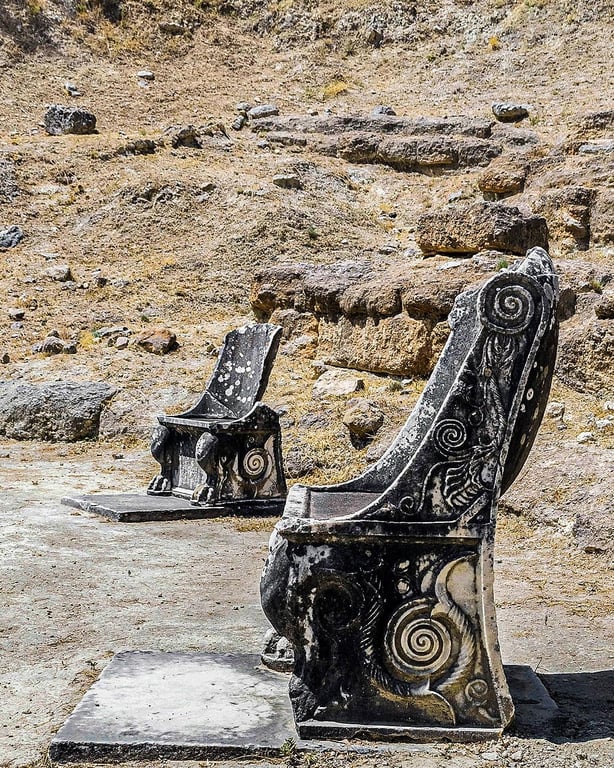 Greece
Ancient Marble Thrones
Five marble seats of honor ring the orchestra of a small theater at the Amphiareion, a healing sanctuary north of Athens.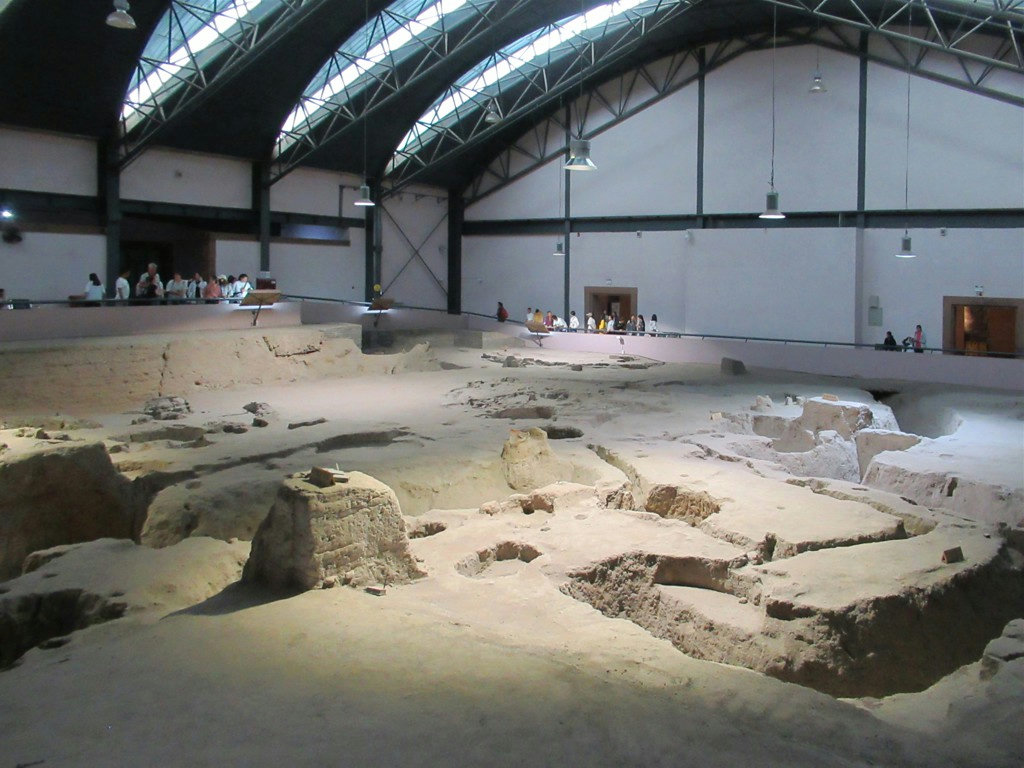 China
Banpo Neolithic Village
Round houses, a ring ditch, painted fish bowls and children buried in jars: a millet farmers' village on Xi'an's edge, 6,000 years old.- United States
Butler Wash
A cliff village of about 1200 CE in a sandstone alcove on Utah's Comb Ridge, which Hopi people call a footprint of their ancestors. 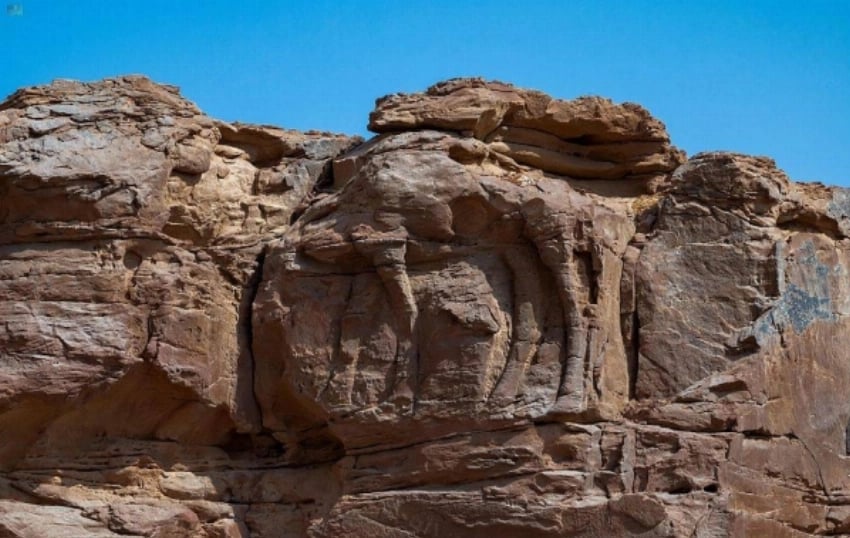 Saudi Arabia
Camel Carvings Site
Life-size camels carved into sandstone near Sakaka, first read as Nabataean work, now dated by its team to the Neolithic.