Ġgantija Temples
Stand in awe of one of the world's oldest freestanding structures, a massive two-temple complex on the island of Gozo that predates even the pyramids of Egypt.
Ġgantija Temples
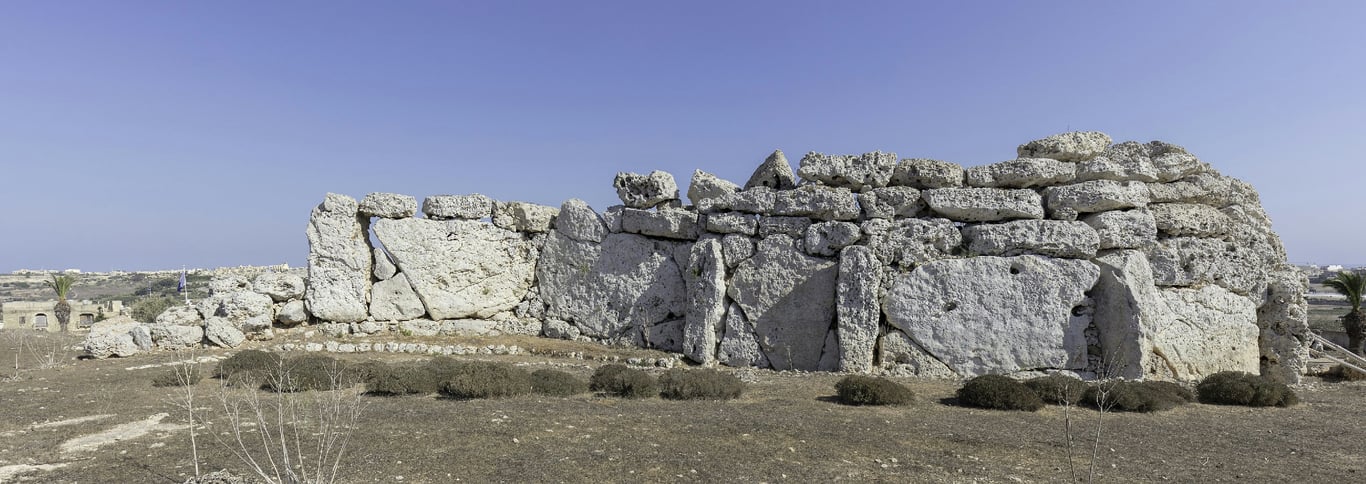
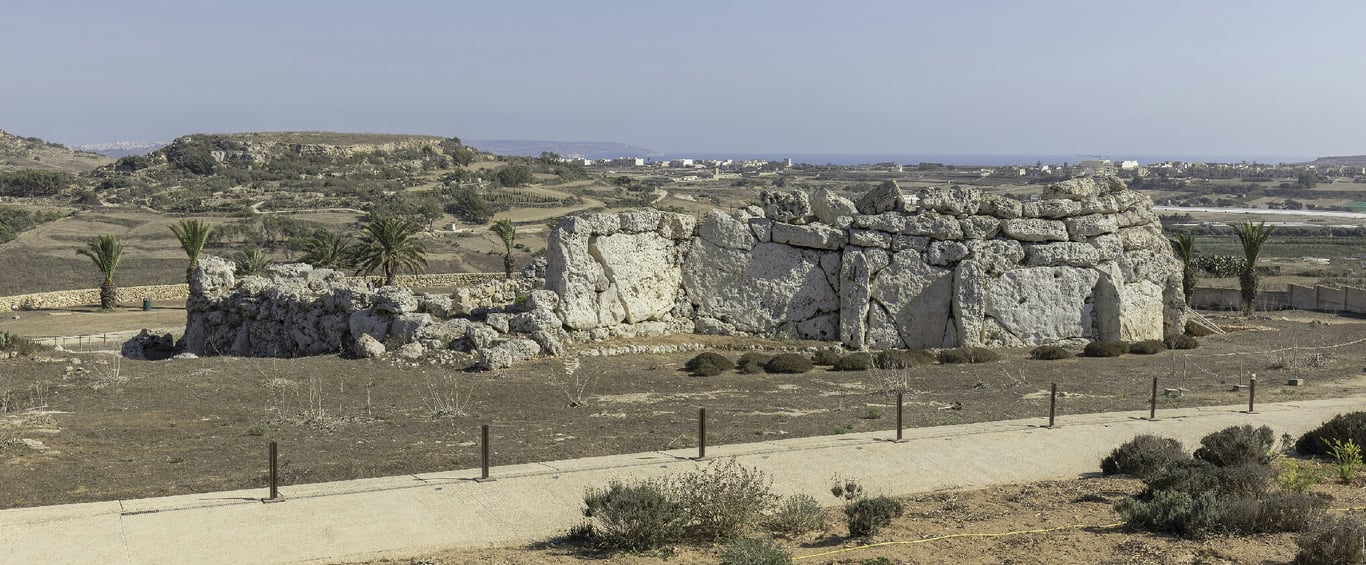
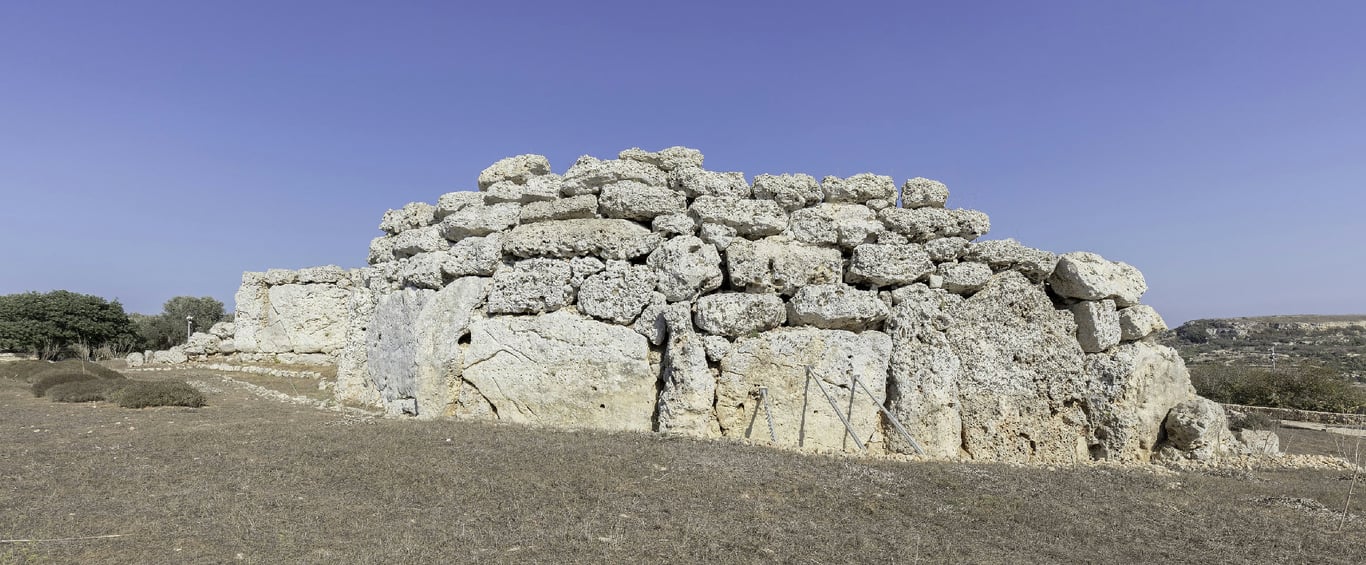
On the island of Gozo, sister island to Malta, stand the colossal Ġgantija Temples, a monument so ancient it reshapes our understanding of the prehistoric world. Dating to approximately 3600 BC, this UNESCO World Heritage site is officially the second-oldest freestanding man-made structure in the world, predating both Stonehenge and the Great Pyramids of Giza. The name Ġgantija derives from the Maltese word for "giant," reflecting a local legend that the temple was constructed by a giantess named Sansuna, who built it in a single night while nursing a child. Looking at the sheer scale of the limestone megaliths, some weighing over fifty tons and standing several meters high, it is easy to see how such a myth was born.
A Tale of Two Temples
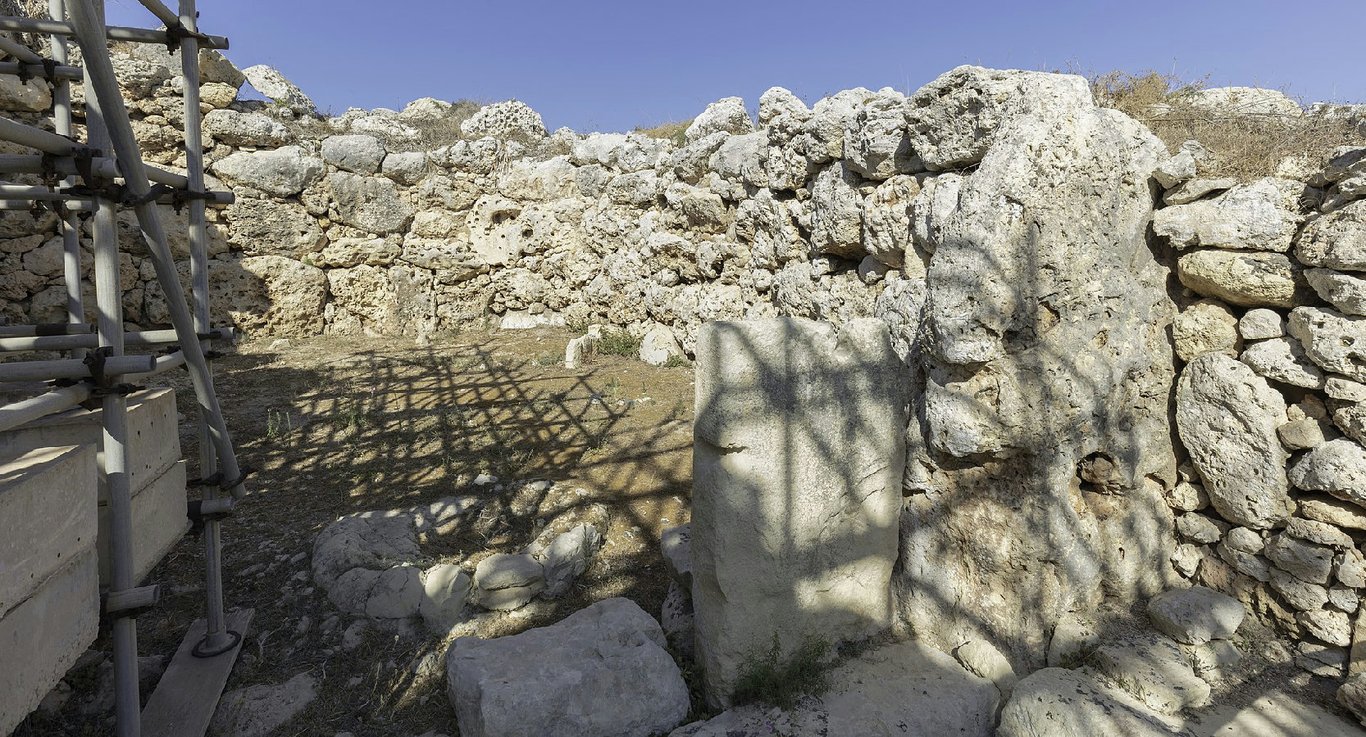
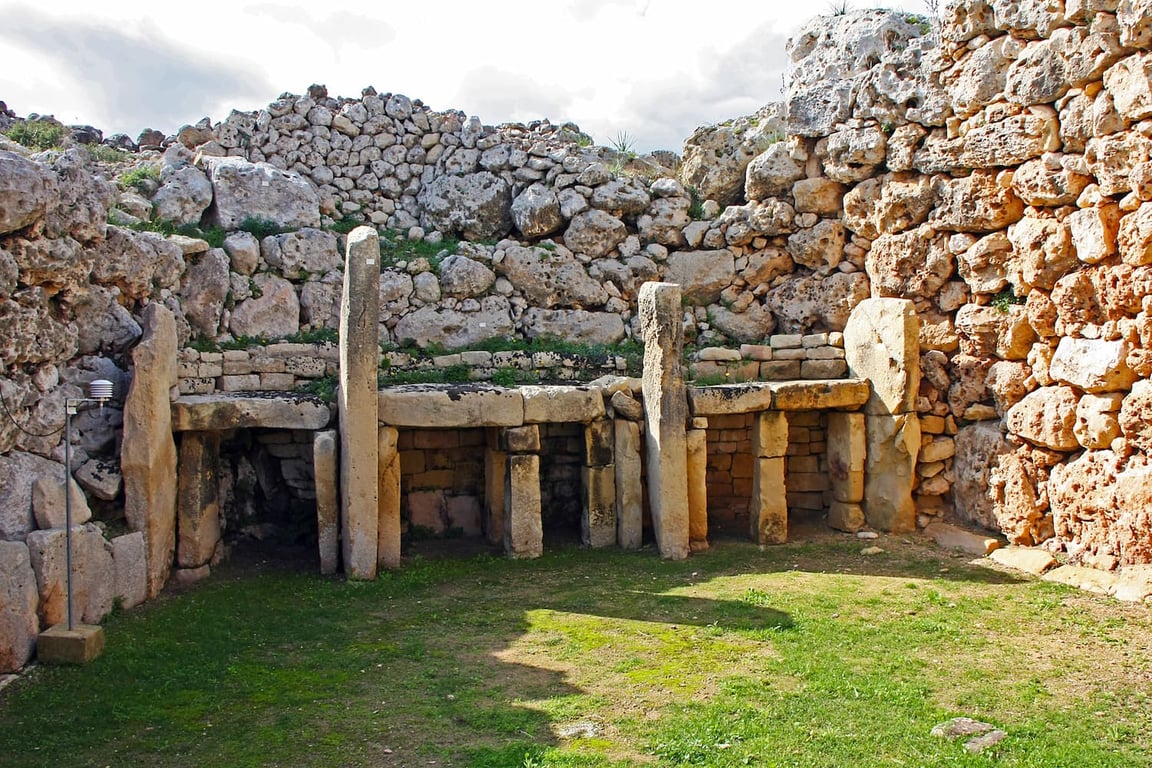
The Ġgantija complex consists of two separate temples, the South and the North, enclosed within a single massive boundary wall. The South Temple is the larger and older of the two, featuring five semi-circular apses that branch off a central corridor. The altars, libation stones, and animal bones found within these chambers suggest a site of intense ritual activity, likely centered around fertility and animal sacrifice. The North Temple is smaller and was built later, but it follows the same five-apse plan. The floors were once covered with a layer of torba, a special cement-like mixture of crushed globigerina limestone, while the interior walls would have been plastered and painted, hinting at a far more vibrant and decorated appearance than the bare stone we see today.
Gozo's Prehistoric Heart
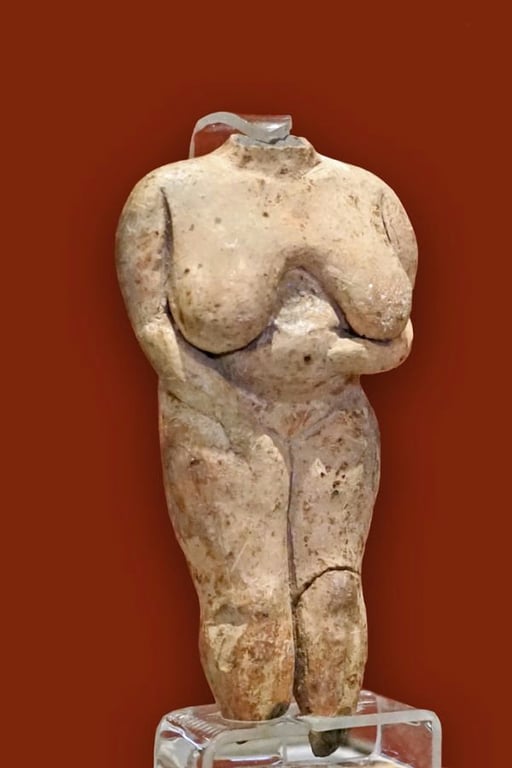
For a thousand years, Ġgantija was likely the most important ceremonial center on the island of Gozo. The construction of such a monumental site would have required a tremendous amount of social cooperation, planning, and engineering skill. The community that built it was a sophisticated Neolithic society of farmers who, without the use of metal tools or the wheel, managed to quarry, transport, and erect these enormous stones. The site's orientation, facing southeast, suggests a possible connection to celestial events, though not as precisely as the later Mnajdra temple. The discovery of numerous figurines and statuettes on site further reinforces its role as a religious hub, where a community gathered to connect with their deities and the cycles of the natural world.
A Legacy in Stone
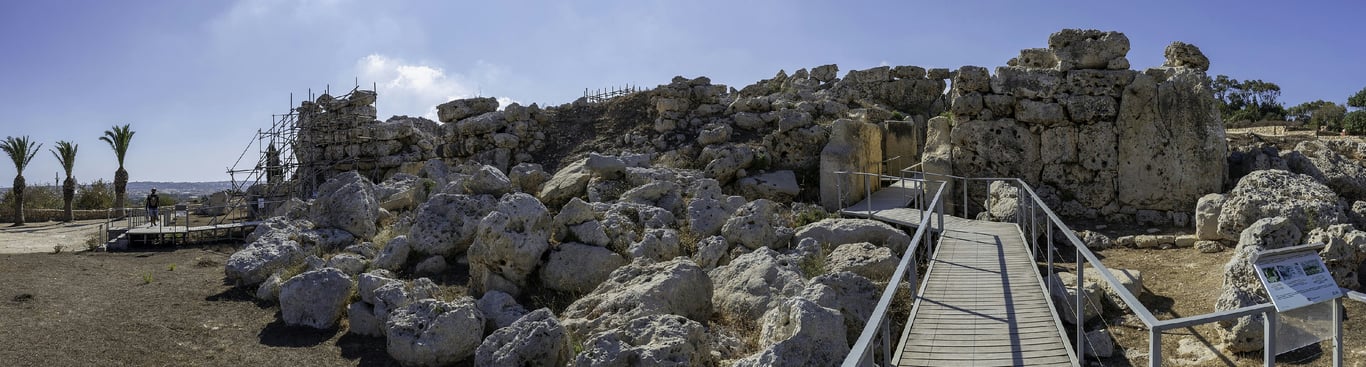
The survival of Ġgantija for over 5,500 years is nothing short of miraculous. Its sheer massiveness has ensured its endurance through millennia of weathering and human activity. Today, the site is managed by Heritage Malta and features an excellent interpretation center that provides context for the temples and displays many of the artifacts found there. A raised walkway allows visitors to explore the temple's interior without disturbing the prehistoric floor, offering intimate views of the altars, doorways, and towering walls. Standing within Ġgantija is a humbling experience, a direct connection to the dawn of architecture and the deep spiritual yearnings of our most distant ancestors.
Whispers from Gozo's Stone Heart
While history books celebrate Ġgantija's staggering age, they often fall silent on its soul. Beyond the colossal limestone blocks and the official timelines lies a deeper mystery—a story whispered by the wind that sweeps across the Gozitan hills. The builders of this megalithic marvel left behind no written language, bequeathing to us a magnificent architectural riddle. We know who did not build it—giants of myth—but the true identity, beliefs, and ultimate fate of its creators remain one of archaeology's most profound enigmas.
The Oracle's Resonant Hum
Standard tours focus on what can be seen, but what if Ġgantija’s greatest secret was meant to be heard? The temple’s inner apses, constructed with smooth, curved walls of coralline limestone, possess extraordinary acoustic properties. Scholars and esoteric researchers have noted that sounds produced within these chambers, particularly low-frequency male chants, create a powerful resonance that vibrates through the floor and stone. Some theorize these were not merely places of worship, but sophisticated instruments of consciousness alteration. A small, hidden opening, often called an "oracle hole," connects a concealed chamber to the main apse, suggesting a priest or priestess could project disembodied, seemingly divine pronouncements to entranced gatherings.
A Matriarch Forged in Stone
The archaeological record across Malta and Gozo is dominated by corpulent, feminine statuettes, leading many to believe the Temple Culture revolved around a mother goddess or a powerful matriarchal society. This archaeological evidence finds a mythic echo in Ġgantija’s own foundation story, a tale that transcends simple folklore.
The Legend of Sansuna's Midnight Labour
Local legend does not speak of a team of builders, but of a single giantess named Sansuna. With a child slung over her shoulder, she is said to have carried the massive megaliths from the southern coast of Gozo and constructed the entire temple complex in a single night. This tale is more than a fanciful explanation for the impossible; it’s a powerful metaphor for a culture that may have revered the fusion of immense creative power with profound maternal strength. Was Sansuna a folk memory of a revered queen, a high priestess, or the human face of their earth goddess?
A Silence of a Thousand Years
Perhaps the most unsettling mystery of Ġgantija is not its construction, but its abandonment. Around 2500 BC, after more than a millennium of sophisticated building and cultural development, the Temple People vanished. The archaeological record shows no evidence of invasion, plague, or singular catastrophe. The temples were simply left behind, and the islands appear to have been sparsely populated, if at all, for centuries. This "silent century" gap has fueled intense debate. Did a catastrophic drought or soil exhaustion lead to societal collapse? Or was it a crisis of faith—a belief system that promised prosperity but ultimately failed, causing its adherents to forsake their gods and their colossal stone sanctuaries forever?
Celestial Blueprints on a Limestone Canvas
While not as precisely aligned as Stonehenge, Ġgantija’s orientation is far from random. The temple's entrance faces southeast, aligning with the equinox sunrise, suggesting the builders possessed a sophisticated understanding of solar cycles. This was no isolated phenomenon. The distinctive trefoil (clover-leaf) design of Ġgantija is a recurring motif in other Maltese temples like Mnajdra and Ħaġar Qim. This architectural consistency hints at a unified, island-wide belief system and a shared cosmological blueprint. These were not just individual temples, but perhaps interconnected nodes in a sacred landscape, each a stone gear in a larger celestial clock designed to map the heavens and sanctify the earth.
Ġgantija Temples — photo gallery