Ħaġar Qim Temples
Gaze upon some of the largest megaliths ever quarried at this clifftop temple, offering stunning Mediterranean views and featuring remarkably preserved ancient stonework.
Ħaġar Qim Temples
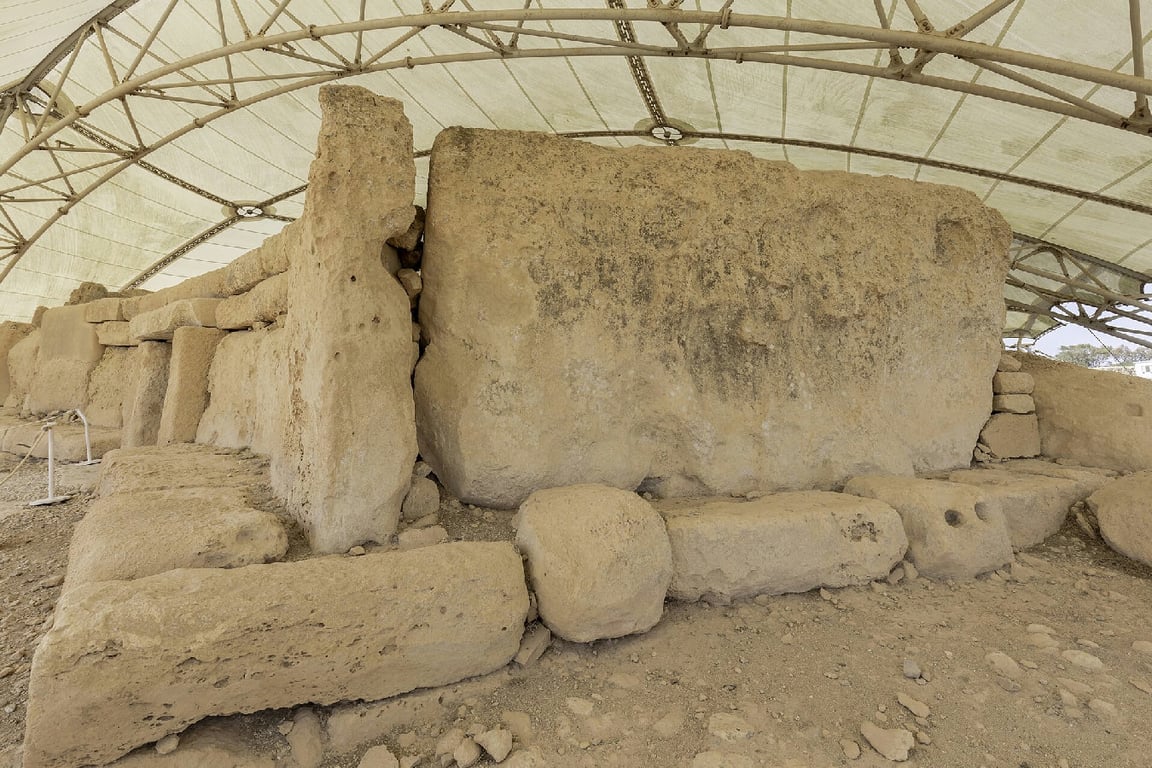
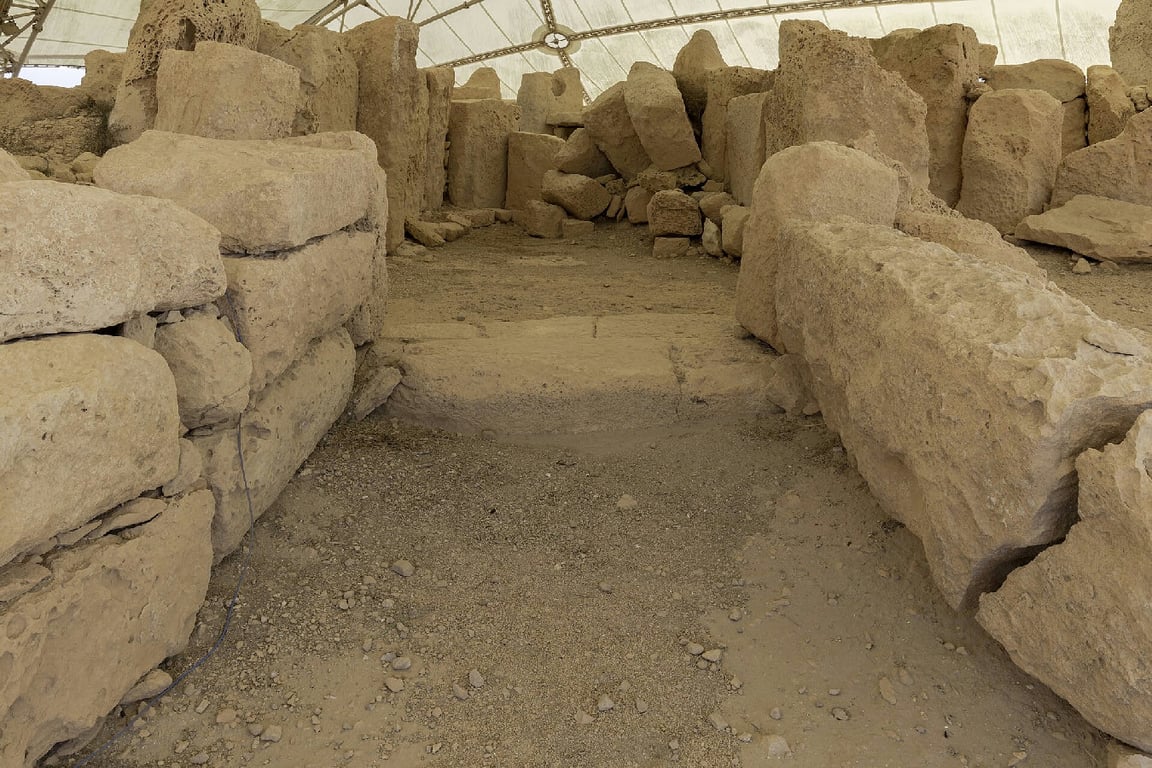
Just a short walk from its celestial neighbour, Mnajdra, the Ħaġar Qim temple complex commands a majestic position atop a limestone ridge with sweeping views of the Mediterranean Sea and the islet of Filfla. Constructed around 3600 BC, this monumental site is renowned for housing some of the largest megaliths used in any of Malta's prehistoric temples. The name itself, which translates to "standing stones," barely does justice to the scale of the undertaking. One massive block is estimated to weigh over 20 tons. The soft globigerina limestone used for its construction has allowed for intricate carvings and features, which have been remarkably preserved thanks to a modern protective shelter that now covers the entire site.
The Realm of Giants
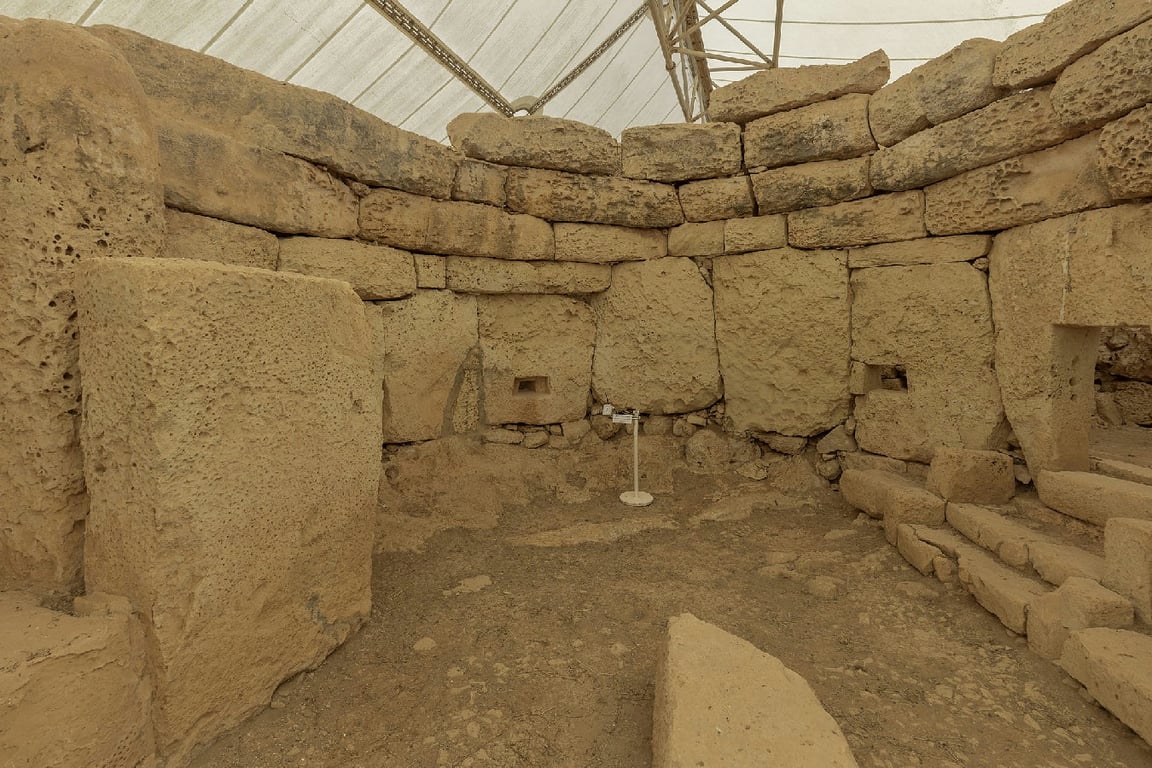
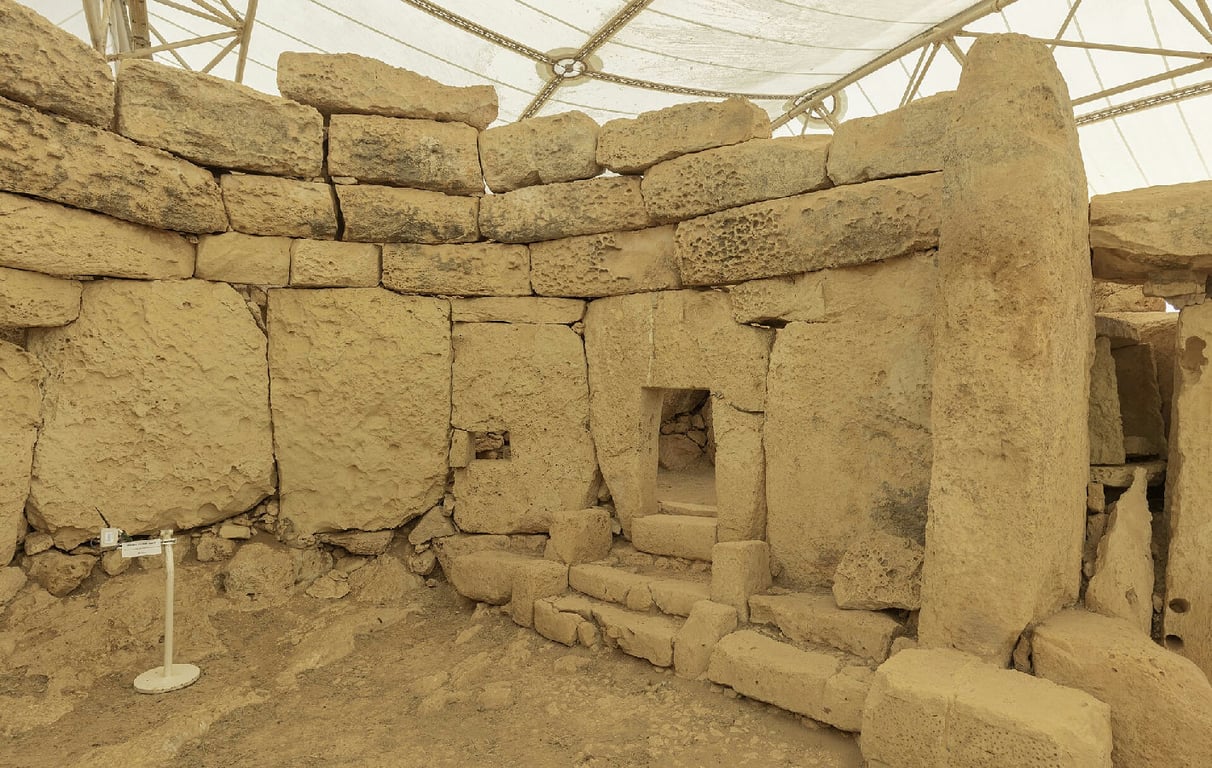
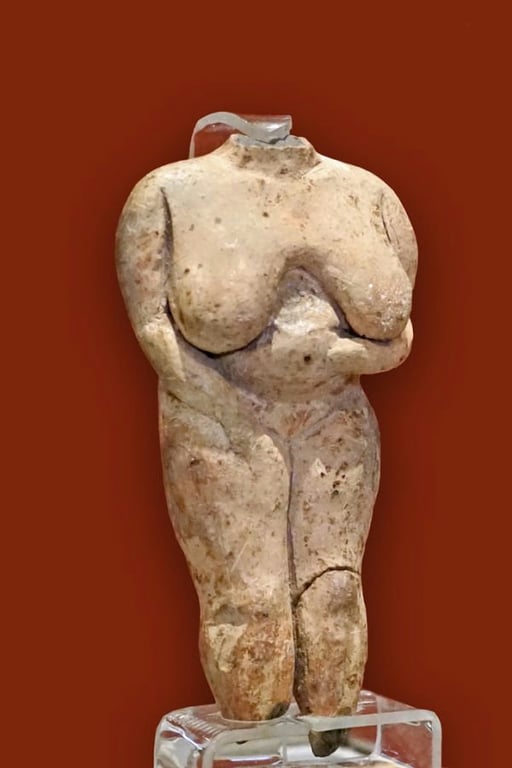
The sheer size of the stones at Ħaġar Qim has captivated visitors for centuries and speaks to the incredible social organization and engineering capabilities of its Neolithic builders. The temple's main building has a central corridor leading to a series of C-shaped apses, a typical layout for the period, but its scale is anything but ordinary. The complex also includes a separate, smaller temple and the remains of other outlying structures, suggesting it was a major ceremonial hub. Within these chambers, archaeologists uncovered several "fat lady" statues, stylised representations of fertility and abundance, which are now housed in the National Museum of Archaeology in Valletta. These figures, along with ornate altars and unique features like a small, elliptical hole in one of the chambers that aligns with the summer solstice sunrise, point to a vibrant and sophisticated ritualistic life.
Echoes of the Oracle
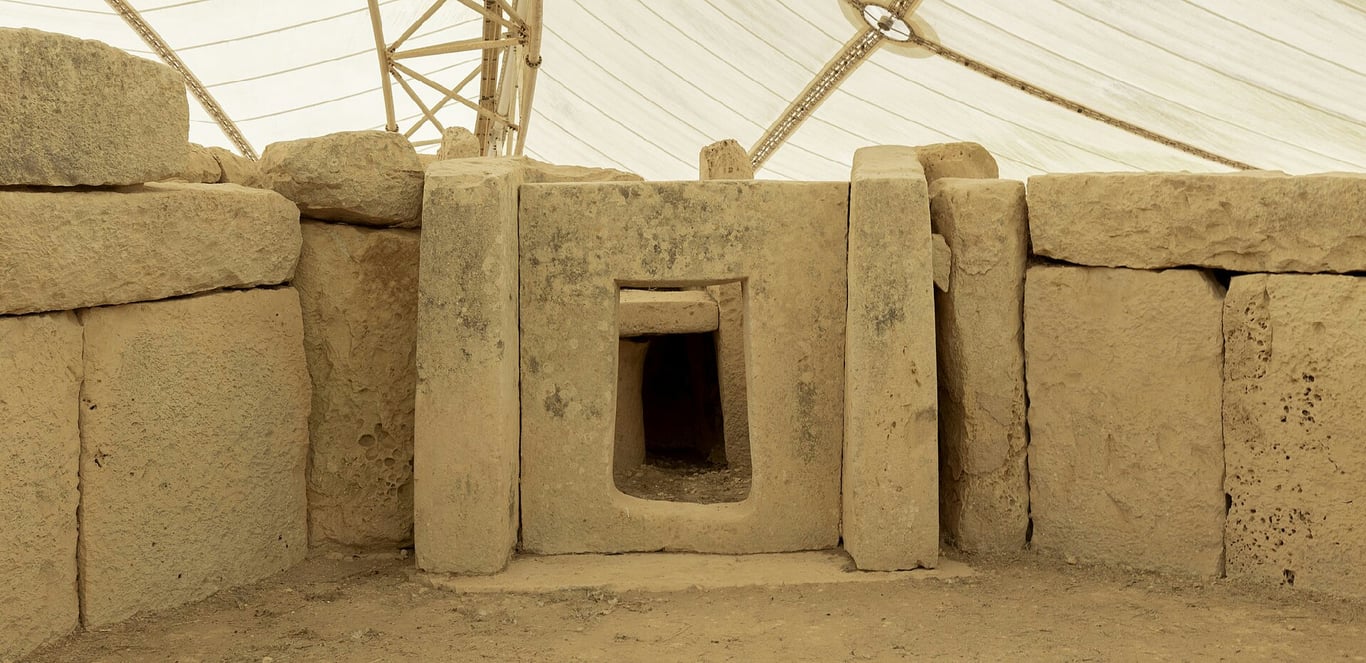
One of the most intriguing features of Ħaġar Qim is a small chamber with a low, circular opening known as the "oracle hole." It is theorized that a priest or priestess could have hidden within the chamber, their voice amplified through the hole to address worshippers in the main apse, creating a sense of divine communication. This acoustic feature adds another layer to our understanding of the sensory experiences that these temples were designed to create. The combination of awe-inspiring scale, celestial alignments, and mysterious oracular features suggests that these were not just places of worship but dynamic arenas for community gathering, ritual performance, and connection with the divine forces believed to govern the natural world.
Preserving a Prehistoric Marvel
Like Mnajdra, Ħaġar Qim is now protected from the harsh sun and salt-laden winds by a monumental tent shelter. This modern intervention, while visually striking, is crucial for the long-term preservation of the soft limestone, which is highly susceptible to erosion. The shelter ensures that the subtle details of the temple's construction—from the carefully crafted porthole doorways to the remnants of decorative carvings—can still be appreciated by visitors. The site is part of the same UNESCO World Heritage designation as Mnajdra, recognized as a unique architectural masterpiece. Together, they form one of the most important and evocative prehistoric landscapes in the world, offering an unparalleled glimpse into a lost civilization of master builders and astronomers.
Ħaġar Qim: Echoes from a Forgotten Cosmos
Beyond the well-trodden paths and standard historical accounts lies a different Ħaġar Qim—a place of subtle energies, cosmic riddles, and forgotten folklore. While official narratives focus on its staggering age and architectural prowess, they often omit the stranger details that whisper of a far more esoteric purpose. This is not a story of just standing stones, but of a sacred landscape designed to interface with the heavens, the earth, and perhaps, other realms of consciousness entirely.
The Oracle's Pinhole and the Serpent's Mark
Deep within the temple's main building, a small, elliptical hole pierces one of the massive megaliths, connecting two chambers. Known as the "oracle hole," its mainstream explanation suggests it was used for passing objects or delivering priestly proclamations. Yet, a more mystical interpretation persists. Some researchers and sensitives claim the aperture was a channel for sound, designed to amplify chants or create disorienting acoustics during rituals, inducing altered states of consciousness. Adding to the enigma are the rarely discussed spiral carvings and pockmarked patterns found on certain stones. While some see them as mere decoration, others theorize they are primitive star charts or symbolic representations of cyclical death and rebirth, much like a serpent shedding its skin.
Where Giants Slept and Spirits Dwell
Maltese folklore offers a far more dramatic origin story for Ħaġar Qim than any archaeological text. Local legends speak of a race of giants who, in a single night, carried these colossal stones from across the island to build their sacred dwelling. This tale may be a mythologized memory of the incredible feat of engineering required, a way for later cultures to comprehend the seemingly impossible.
The Lingering Presence on the Ridge
Even today, local stories speak of a palpable energy that clings to the limestone ridge. Some visitors report strange feelings of disorientation, sudden temperature drops, or hearing faint, chant-like sounds on the wind, especially near dusk. These tales suggest the site was not merely abandoned but remains a liminal space, a gateway where the veil between worlds is unusually thin, forever guarded by the spirits of its creators.
A Celestial Clockwork Aimed at a Phantom Island
While the solar alignments of nearby Mnajdra are famous, Ħaġar Qim’s cosmic connections are more subtle and fiercely debated. Its orientation doesn't conform to the simple solstices or equinoxes. Instead, unconventional theories propose it was part of a larger geodetic and astronomical system. The most compelling and controversial of these ideas involves the now-uninhabited islet of Filfla, which sits ominously on the horizon.
Filfla: The Lost Meridian Marker?
Some researchers argue that Ħaġar Qim was precisely positioned to use Filfla as a distant foresight. From specific points within the temple complex, the rising and setting of certain stars, or even the moon at its major standstill, would align perfectly with the islet's unique silhouette. This would transform the temple from a simple place of worship into a sophisticated celestial observatory. The theory suggests Malta's temple builders possessed a far deeper understanding of long-cycle astronomy than they are typically given credit for, charting a cosmic rhythm that we have long since forgotten.
Ħaġar Qim Temples — photo gallery