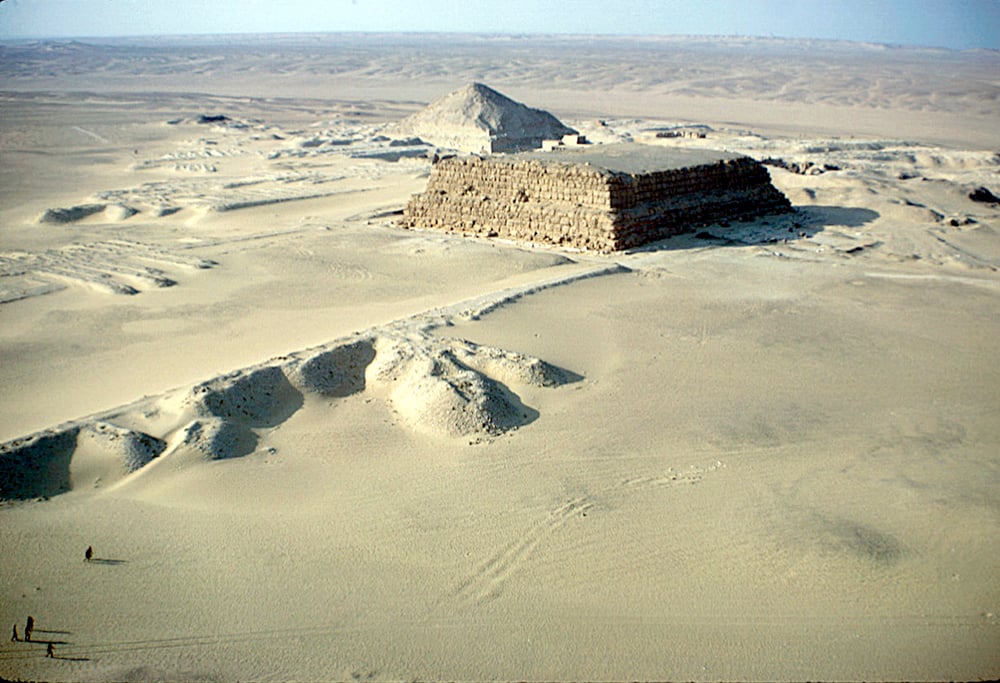
Unfinished Pyramid of Zawyet El Aryan
A controversial and restricted site between Giza and Saqqara. A vast pit descends to a massive, granite-lined oval basin, the intended tomb of a mysterious Old Kingdom pharaoh.
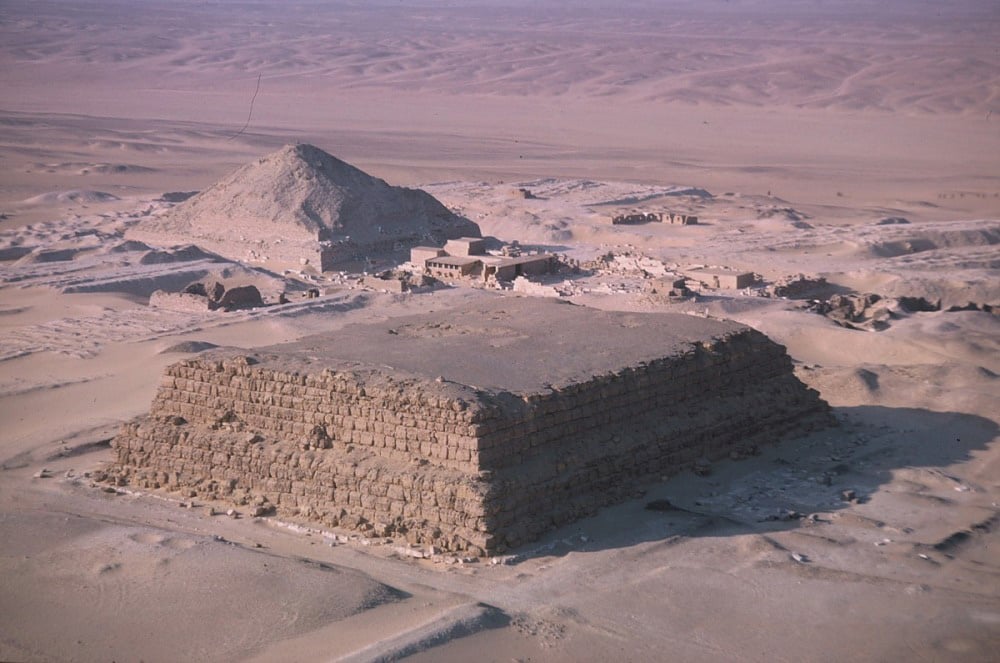
Unfinished Pyramid of Zawyet El Aryan
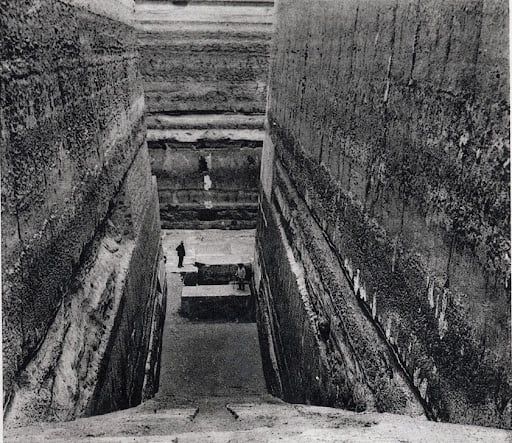
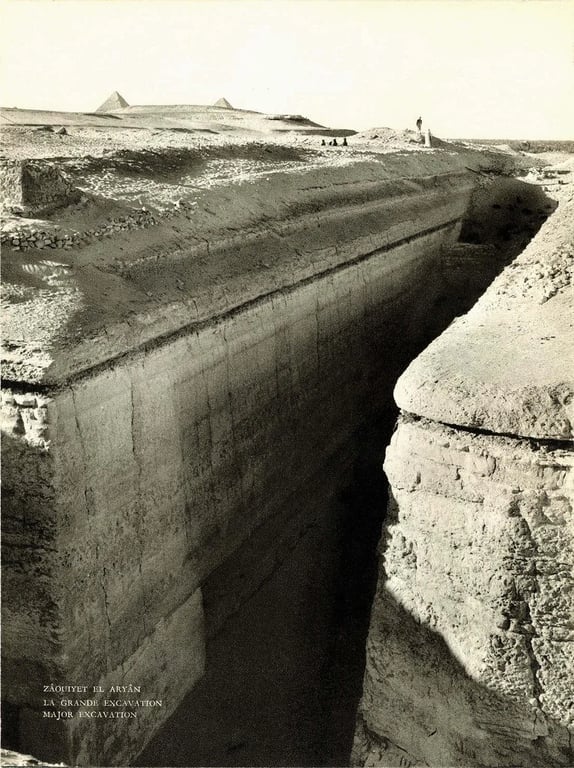
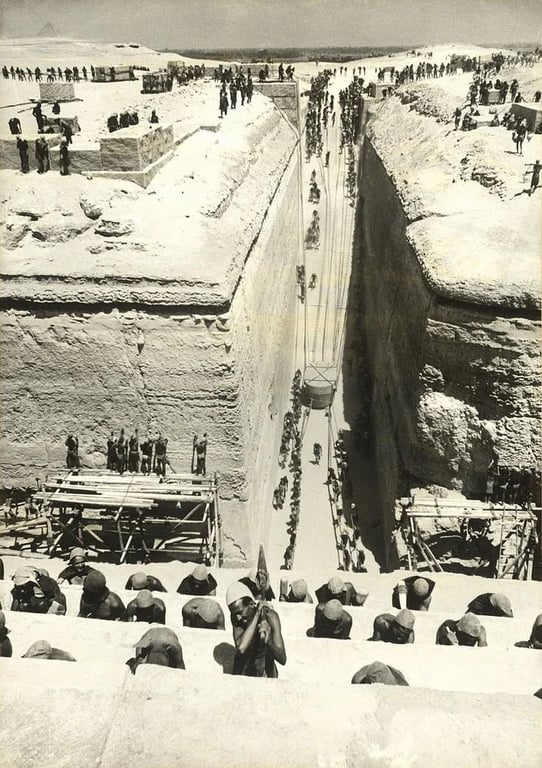
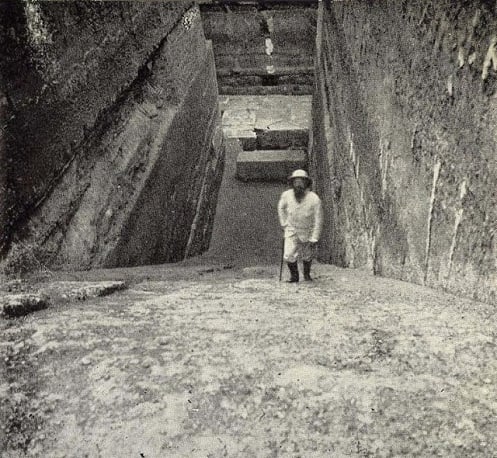
In a restricted military zone between the famous necropolises of Giza and Abusir lies one of Egypt's most mysterious and inaccessible sites: the Unfinished Pyramid of Zawyet El Aryan. Sometimes called the "Layer Pyramid" or "Baka's Pyramid," this structure is little more than a monumental, subterranean excavation. It consists of a massive, trench-like descending passage leading to a vast, rock-cut chamber. At the bottom of this chamber sits a perplexing and beautifully crafted oval sarcophagus made of polished granite, which appears to be empty and was found with its lid still sealed. The structure above ground was either never built or was so thoroughly dismantled in antiquity that almost nothing remains.
A Pit of Granite and Gold
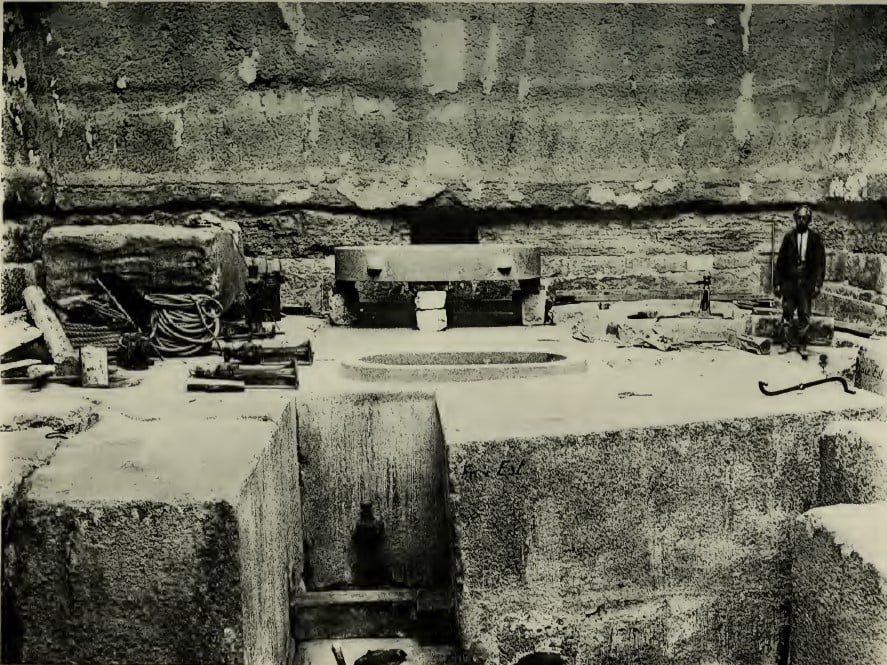
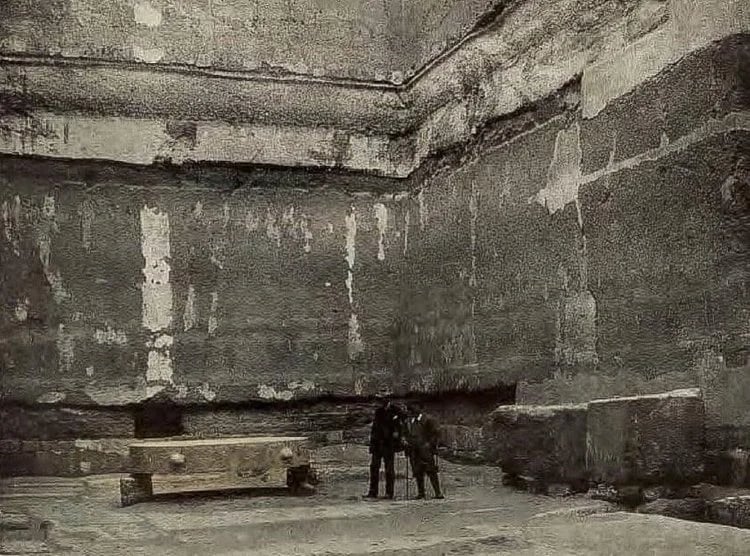
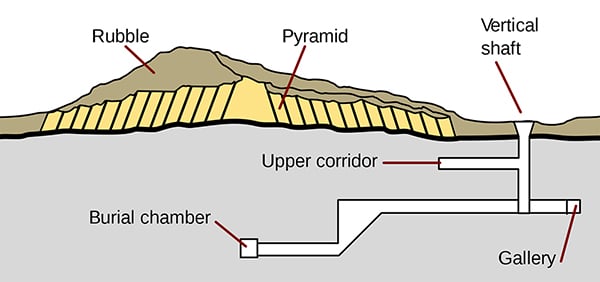
The pyramid's most remarkable feature is its subterranean architecture. A steep stairway and ramp descend into the bedrock, opening into a huge pit lined with massive limestone and granite blocks. The scale of the excavation is immense, testifying to the grand ambitions of its builder. The floor of the final burial chamber is paved with granite blocks weighing up to 45 tons. The presence of such colossal stones deep underground showcases the incredible engineering skills of the Old Kingdom Egyptians. The purpose of the 32 small chambers or "magazines" carved into the walls around the main pit remains unclear, though they were likely intended for storing funerary goods.
The Alabaster Enigma
The focal point of the entire structure is the unique sarcophagus. Unlike the rectangular coffins of other pharaohs, this one is oval-shaped and was carved directly into the granite floor paving, with a separate lid. When the Italian archaeologist Alessandro Barsanti discovered it in the early 20th century, he was astonished to find it sealed but empty. This has led to endless speculation: Was the pharaoh buried elsewhere? Was the sarcophagus a dummy tomb? Or was it intended as a vessel for a symbolic or ritual purpose rather than a physical body? The mystery is deepened by the fact that the sarcophagus itself shows incredible craftsmanship, making its empty state all the more baffling.
The Ghost King's Tomb
The identity of the pharaoh who commissioned this massive project is uncertain. Inscriptions found in the vicinity refer to a king whose name is difficult to read, but is often interpreted as Baka or Bikheris, a little-known son of the pharaoh Djedefre. He is believed to have had a very short reign during the Fourth Dynasty, around 2570 BC. The incomplete nature of the pyramid strongly suggests its construction was halted abruptly, which would be consistent with the premature death of the king. The site thus represents the abandoned dream of a forgotten pharaoh, a monumental effort frozen in time.
The Forbidden Zone
Today, Zawyet El Aryan is almost impossible for tourists or even archaeologists to visit. It lies within a heavily restricted military base, and has been off-limits for decades. This has prevented modern archaeological investigation, leaving many questions unanswered. The photographs and reports from the early 20th-century excavations are the only sources of information available. The site remains shrouded in secrecy, a tantalizing puzzle from the age of the pyramid builders, waiting for the day it might once again be studied.
The Sunken Enigma of Zawyet El Aryan
Beyond the veil of military restriction, the Unfinished Pyramid of Zawyet El Aryan is not merely an abandoned construction project; it is a profound question carved into the bedrock of Egypt. While its official narrative points to a forgotten Fourth Dynasty pharaoh, its bizarre features and colossal scale suggest a purpose far stranger than a simple tomb. The site's inaccessibility has shielded it from scrutiny, allowing its deepest enigmas to fester in the silent, sun-scorched sands.
A Scar in the Stone
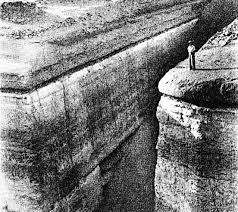
Conventional archaeology focuses on what was intended to be built upwards, but the true mystery lies in what was dug down. The immense T-shaped trench, descending over 21 meters (70 feet), is an anomaly. Its walls are unnervingly smooth, showing a level of quarrying precision that seems excessive for a mere foundation. At the bottom, a floor paved with colossal granite blocks, some weighing an estimated 45 tons, creates a pristine surface deep within the earth. Why invest such monumental effort and precious materials in a subterranean floor that was destined to be buried forever under a pyramid?
The Granite Bathtub's Riddle
The centerpiece of the chamber is a peculiar, lidless oval sarcophagus made of polished granite. Found empty by excavator Alessandro Barsanti in the early 20th century, its shape is highly unusual for the Old Kingdom. More perplexing is the method of its placement. The sarcophagus is so large that it must have been lowered into the pit *before* the massive granite floor blocks were installed around it. This implies an extraordinary level of pre-planning for an object that seems to have served no discernible funerary purpose. Was it truly a coffin, or was it a vessel for something else entirely—a container for a ritual process we no longer comprehend?
A Project Too Grand for a Pharaoh?
The sheer ambition of Zawyet El Aryan dwarfs many completed pyramids. The base of the excavation is larger than that of the Step Pyramid of Djoser, suggesting the final structure was intended to be one of the largest in Egypt. This has led to intense debate and several controversial theories that challenge its identity as a royal tomb.
The Subterranean Power Chamber Theory
Some researchers propose that Zawyet El Aryan was never meant to be a tomb. Pointing to the massive granite flooring, the deep shaft, and the strange "sarcophagus," they theorize it was part of a lost technology. In this view, the structure was a component of a larger geological or energy-harnessing machine, with the granite tub acting as a resonating chamber or a containment unit. The project's abandonment, therefore, may not have been due to a king's death, but to a catastrophic failure of this ancient technology.
The Osirion Connection
The Unfinished Pyramid shares a striking architectural "DNA" with another deeply enigmatic structure: the Osirion at Abydos. Both feature massive, precision-fitted granite blocks deep underground, both are associated with water (the Zawyet El Aryan pit is often flooded), and both defy easy explanation. Could these sites be remnants of a single, forgotten building culture that predated or operated parallel to the dynastic Egyptians, one whose purpose was not funerary but something far more elemental and mysterious?
Unfinished Pyramid of Zawyet El Aryan — photo gallery