Terracotta Army, Mausoleum of the First Qin Emperor
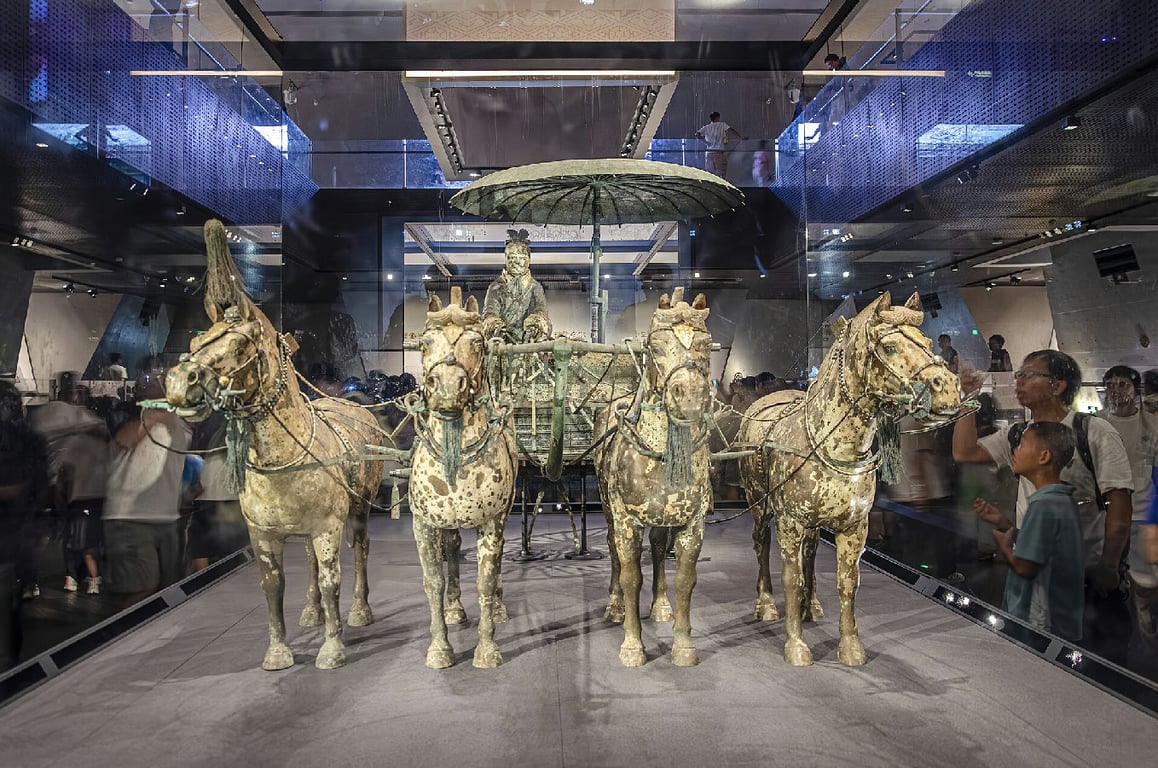
An awe-inspiring subterranean army of thousands of life-sized terracotta warriors, horses, and chariots, guarding the tomb of China's first emperor, Qin Shi Huang. Discovered in 1974, it remains an unparalleled archaeological marvel.
Terracotta Army: Guardians of an Imperial Legacy
The Terracotta Army, an astonishing collection of thousands of life-sized clay sculptures, stands as one of the most significant archaeological discoveries of the 20th century. Located near Xi'an in Shaanxi Province, China, this subterranean army was created to guard the mausoleum of Qin Shi Huang, the first emperor of a unified China, and serves as an enduring testament to his immense power and the advanced craftsmanship of the Qin Dynasty (221–206 BC).
The Accidental Unearthing
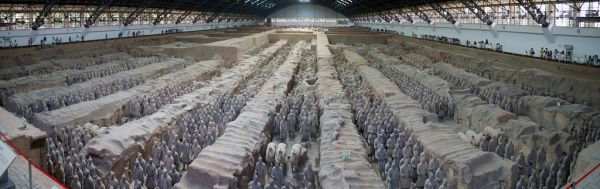
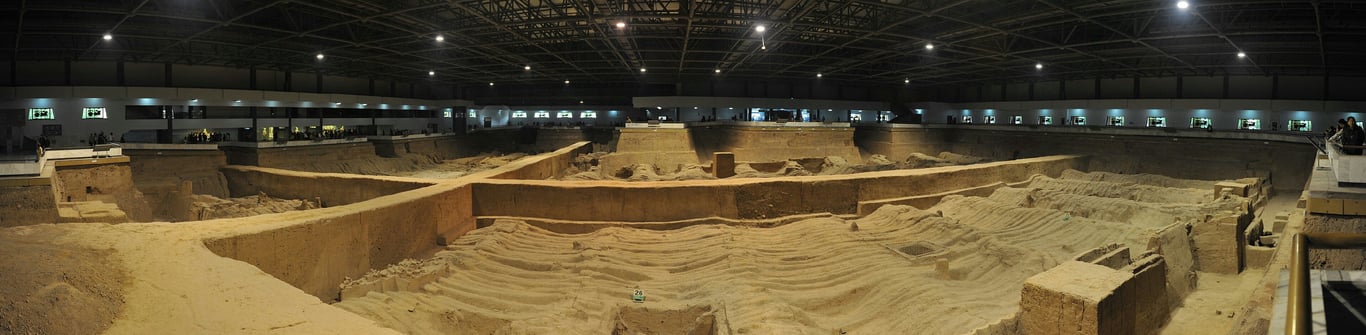
The Terracotta Army lay hidden for over two millennia until its accidental discovery in March 1974 by local farmers digging a well. What they initially thought were fragments of ancient pottery turned out to be pieces of an immense underground military complex. This serendipitous find led to extensive excavations, revealing multiple pits filled with an army of warriors, chariots, and horses, meticulously arranged as if ready for battle.
An Army for the Afterlife
Emperor Qin Shi Huang, who unified China in 221 BC, harbored a lifelong obsession with immortality and the afterlife. He began constructing his vast mausoleum complex shortly after ascending the throne, an undertaking that involved hundreds of thousands of laborers over decades. The Terracotta Army was intended to protect the emperor in his journey to the next world, mirroring his earthly military might and ensuring his continued reign in the spiritual realm.
Individualized Masterpieces
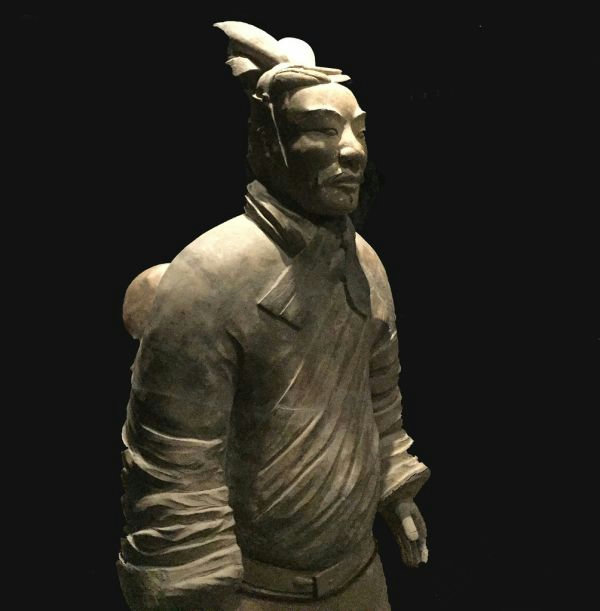
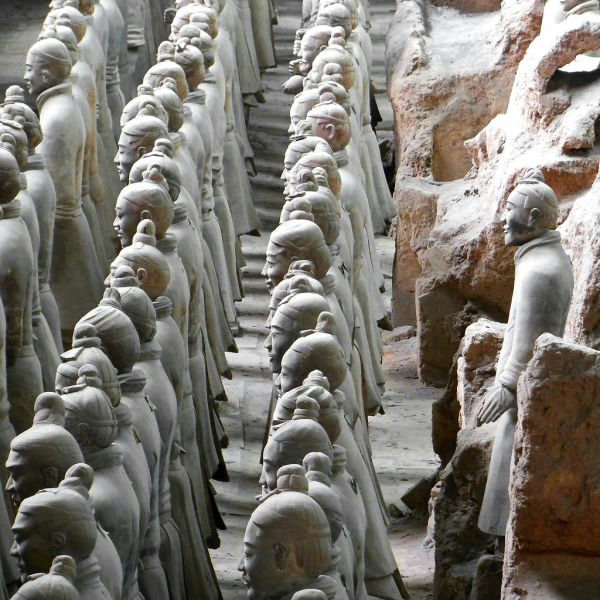
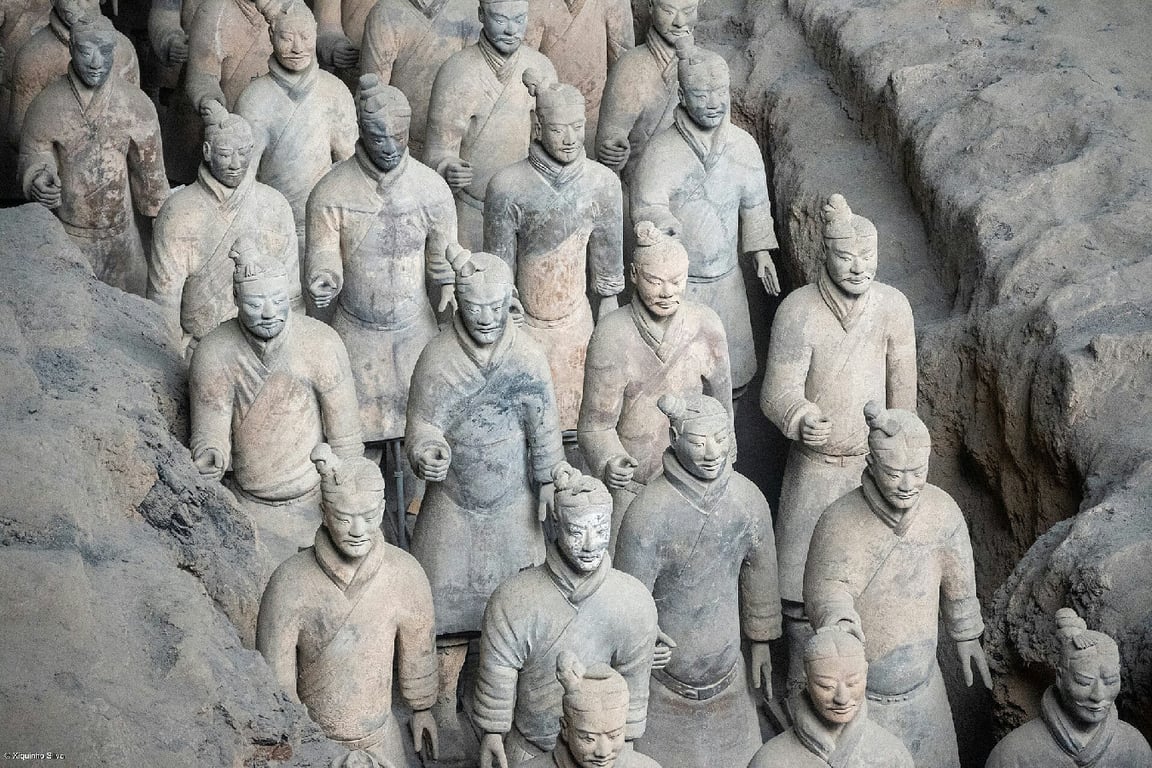
What makes the Terracotta Army truly remarkable is the incredible detail and individuality of each figure. While mass-produced using molds, individual features were then added by hand, ensuring no two warriors are exactly alike. Their faces reflect a diverse range of ethnic groups within the Qin Empire, and their hairstyles, armor, and uniforms accurately depict the military ranks and distinctions of the period. Originally, the figures were painted in vibrant colors, adding to their lifelike appearance, though most of this pigmentation has faded over time.
Pits and Formations
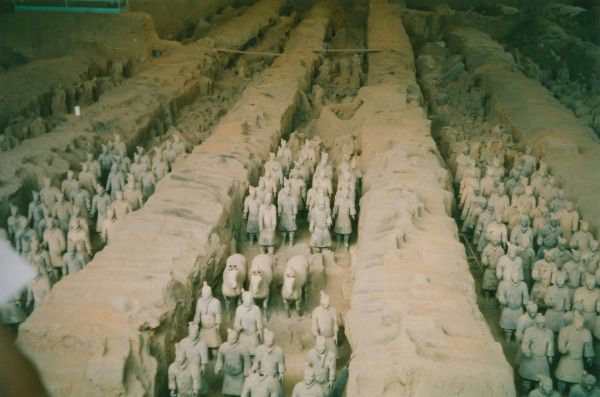
The primary excavation area, Pit 1, houses the main army formation, comprising over 6,000 warriors arranged in battle lines, complete with chariots and horses. Pit 2 contains cavalry and infantry units, as well as war chariots, showcasing the diversity of military branches. Pit 3 is smaller, believed to be the command post of the army. Ongoing excavations continue to reveal new sections and artifacts, expanding our understanding of this monumental undertaking.
A Glimpse into an Ancient Empire
The Terracotta Army provides invaluable insights into the military organization, weaponry, art, and belief systems of the Qin Dynasty. It reflects a society capable of immense engineering and artistic feats, driven by the vision of a powerful emperor. As a UNESCO World Heritage Site, the Mausoleum of the First Qin Emperor and its Terracotta Army stand as a powerful symbol of China's ancient past, attracting millions of visitors who come to marvel at this silent, eternal guard.
Where Clay Soldiers Guard Rivers of Mercury
Beyond the silent, stoic ranks of the Terracotta Army lies a far greater enigma: the unopened tomb of Qin Shi Huang himself. While the clay warriors are a breathtaking spectacle, they are merely the outer sentinels of a subterranean palace of secrets, a place where historical accounts blur into myth. The true mystery is not what has been found, but what remains sealed beneath a man-made mountain, protected by legends of poison and ancient ingenuity.
The Chrome-Plated Enigma
Archaeologists excavating the pits were stunned to find that many of the bronze weapons wielded by the terracotta soldiers—swords, crossbow triggers, and arrowheads—were still astonishingly sharp and largely free of corrosion after more than 2,200 years underground. Analysis revealed a thin, protective layer of chromium oxide, a metal plating technology that was not "invented" in the West until the 1920s. This finding has ignited a fierce debate. Was this an intentional, advanced anti-rust technique lost to time, or a coincidental chemical reaction caused by chromium-rich lacquer and the unique soil composition? The answer remains buried with the emperor.
The Emperor's Poisonous Cosmos
Ancient texts by the historian Sima Qian describe the emperor's tomb as a microcosm of his empire, complete with a ceiling depicting the heavens and a floor mapping his domain. Most chillingly, he wrote of "one hundred rivers" of flowing mercury, mechanically circulated to mimic the Yangtze and Yellow Rivers. For centuries, this was dismissed as a fantastical legend. However, modern scientific surveys of the soil in the unopened burial mound have revealed abnormally high, localized concentrations of mercury, lending terrifying credence to the ancient chronicles. The tomb may literally be shrouded in a toxic, silvery vapor.
A Curse Etched in Liquid Silver
Local folklore and the ancient texts warn that the tomb is protected by more than just its clay guardians. It is said to be laced with deadly, automated crossbows set to fire on any intruder. While these booby traps remain unproven, the very real threat of mercury poisoning serves as a potent modern-day curse. This toxic environment is a primary reason archaeologists have not attempted a full excavation, fearing that opening the tomb could release a deadly plume and irreparably damage the priceless artifacts within.
Echoes From a Forgotten West?
Perhaps the most controversial theory surrounding the army is the suggestion of foreign influence. Some scholars propose that the life-sized, naturalistic style of the sculptures is unlike anything seen in China before that time and may have been inspired by Hellenistic art brought to the East following the campaigns of Alexander the Great. The discovery of European DNA at sites within the mausoleum complex has fueled speculation that Greek artisans may have traveled to the Qin court, advising or even helping to train the local craftsmen. This radical idea challenges the long-held belief that the Terracotta Army was a purely indigenous creation, hinting at a far earlier and more complex cultural exchange between East and West than previously imagined.
Terracotta Army, Mausoleum of the First Qin Emperor — photo gallery