Stone Ravens Monastery (Corbii de Piatra)
Hidden in the cliffs of Argeș County, Romania, the Stone Ravens Monastery (Corbii de Piatră) guards centuries of faith, legend, and mystery — including the enigmatic petrified giant and stone formations nearby.
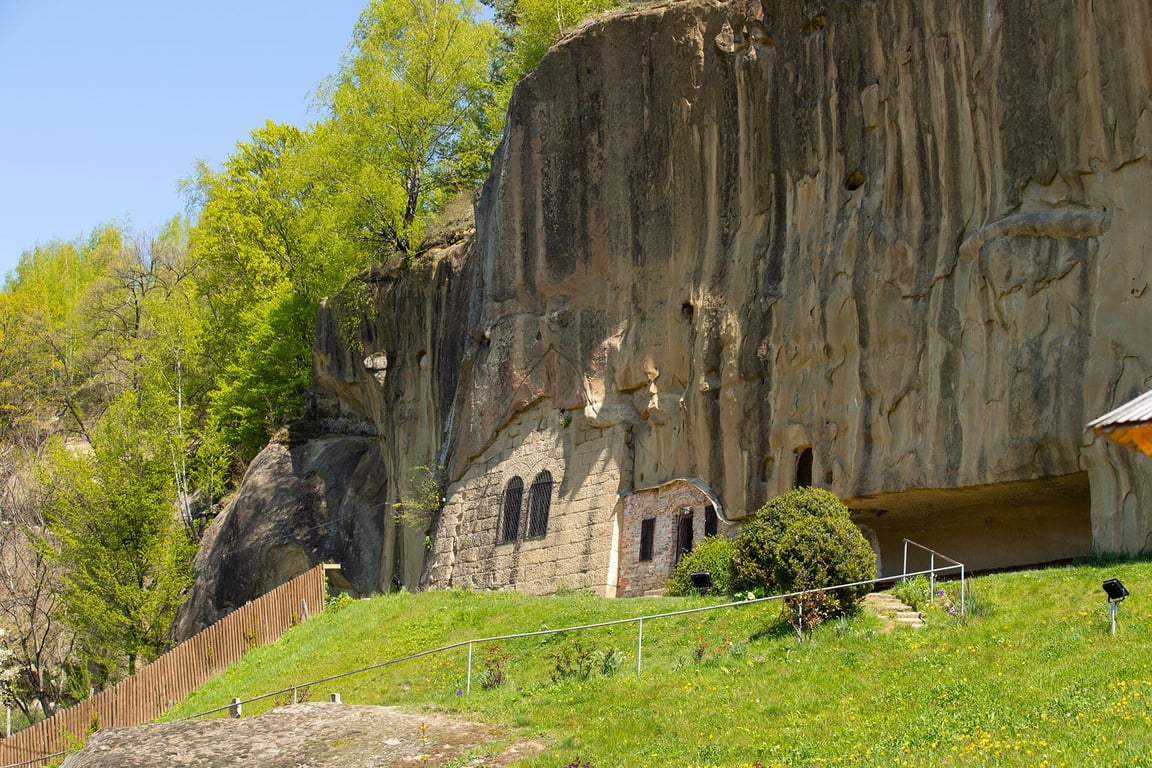
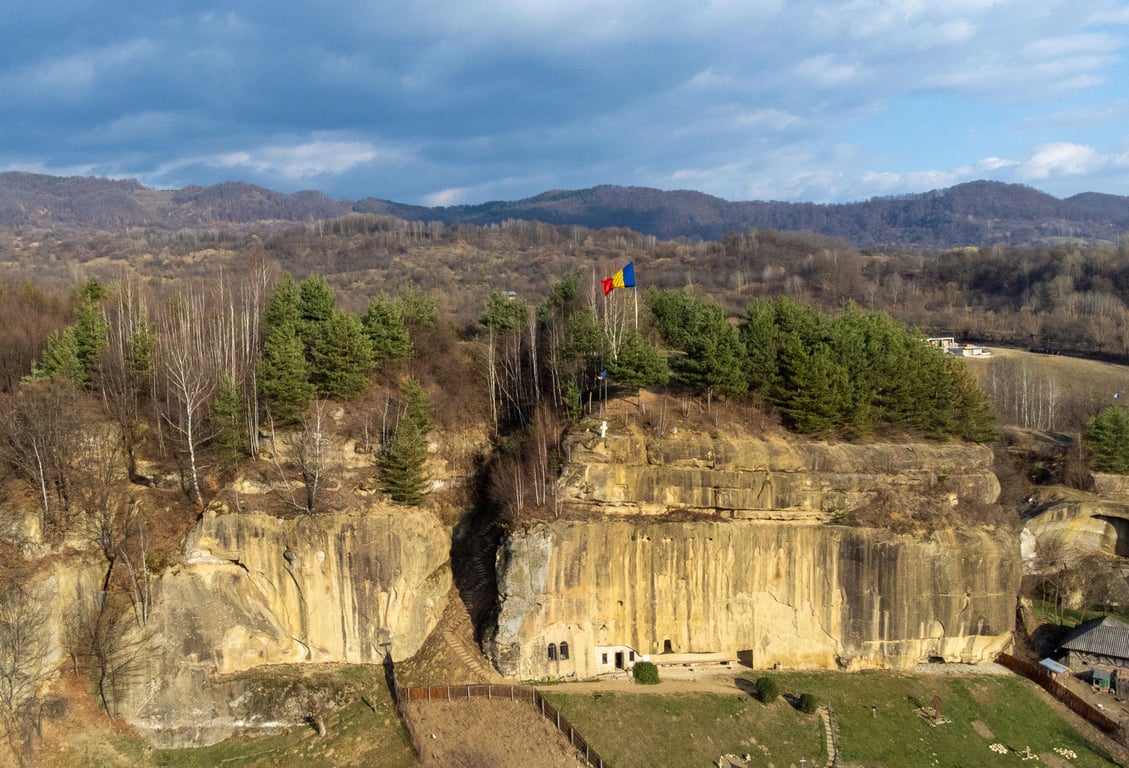
Hidden in the village of Jgheaburi, Corbi, Argeș County, on the banks of the Râul Doamnei, Corbii de Piatră Monastery (Stone Ravens Monastery) is one of Romania's most unusual sacred sites. Carved directly into a massive sandstone cliff, the monastery combines medieval Orthodox history, ancient-looking rock formations, Byzantine art, local legends and unanswered questions about what may have existed here before the documented monastery.
Today, the site is best known as a remarkable rock-cut church in Romania, but its story may extend considerably further back than the first surviving written record of 1512.
A monastery carved into the mountain
The first thing that makes Corbii de Piatră extraordinary is its setting.
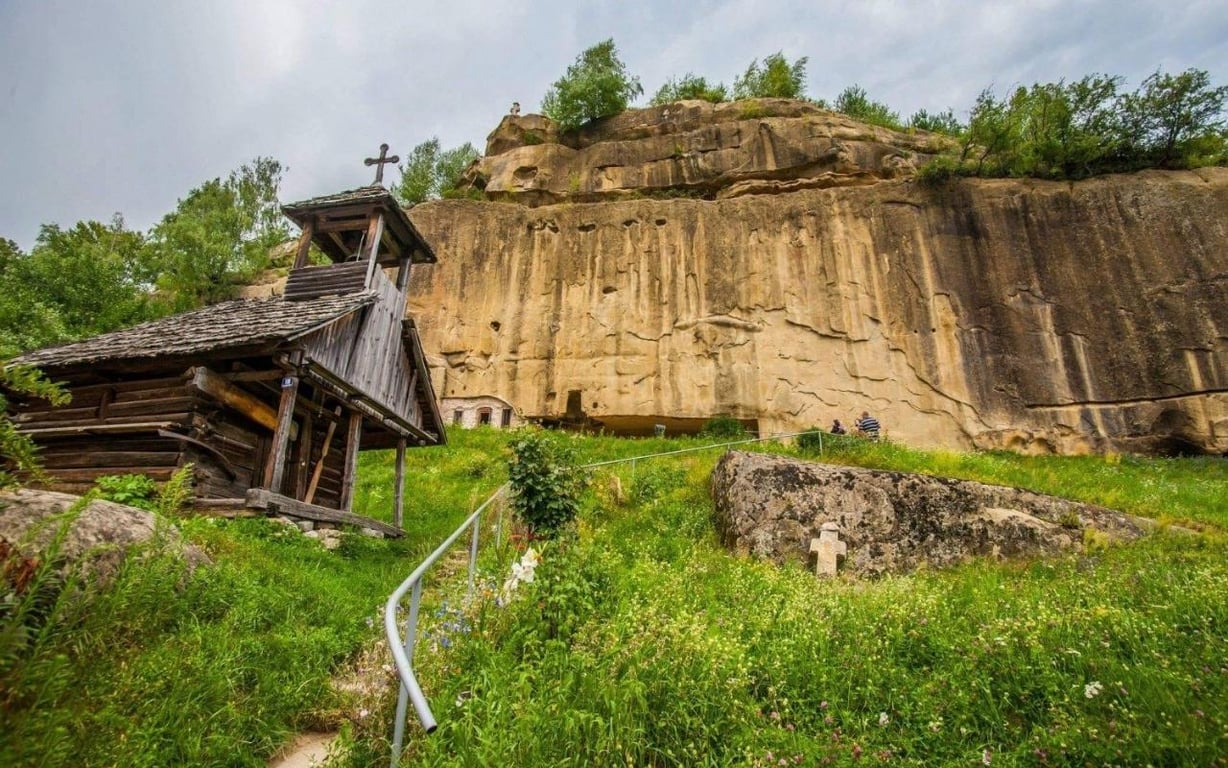
Rather than being constructed on top of the landscape, the church was cut directly into a large sandstone cliff, creating a sanctuary partly enclosed by the mountain itself. The rock wall reaches roughly 30 metres in height and about 14.5 metres in length, creating a dramatic natural backdrop for the church.
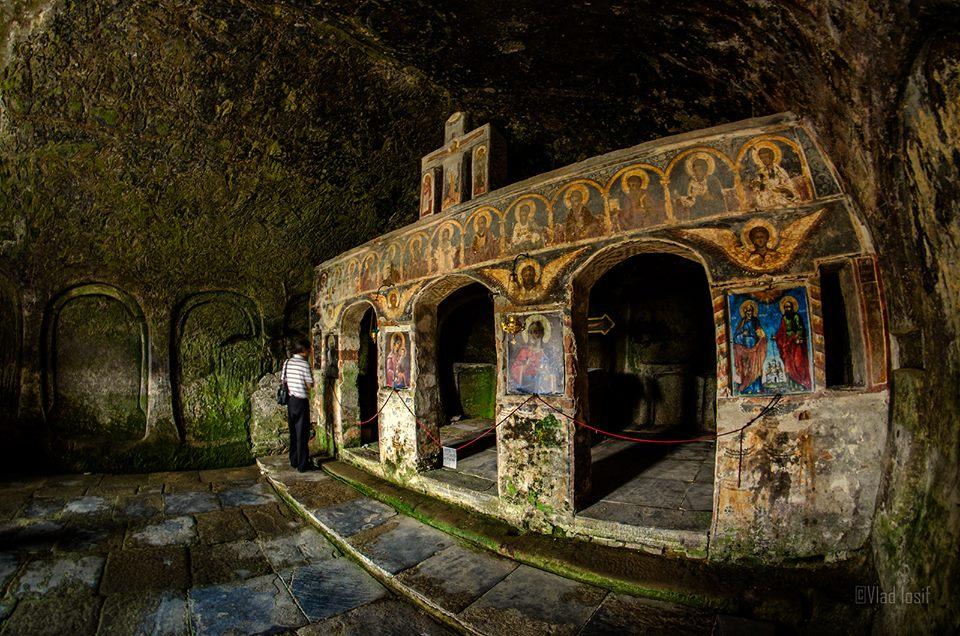
The church is particularly unusual because of its original interior arrangement: two sanctuaries, or altars, within a single nave. This configuration is extremely rare in the Romanian Orthodox landscape and has been compared typologically with certain Byzantine rock churches of Cappadocia.
The architecture therefore raises an obvious question:
Was the church created in 1512?
The answer is almost certainly no.
1512 was a beginning — not necessarily the beginning
The monastery's first surviving documentary attestation dates to 23 June 1512, when the nun Magdalina, born Mușa and a member of the Craiovești family, reopened the monastic establishment and dedicated it to her nephew, Neagoe Basarab, who granted it princely-monastery status.
This distinction is important.
Historical sources describe 1512 as the re-establishment or reopening of the monastery, rather than necessarily its original foundation. Local and historical traditions preserve memories of an earlier religious community, while the architecture and surviving paintings indicate that the rock sanctuary itself predates the sixteenth century.
A church older than its first document
One of the most intriguing aspects of Corbii de Piatră is the age of its religious architecture.
The Argeș and Muscel Archdiocese states that the architectural characteristics of the rock-cut complex place it broadly within the 10th–14th centuries, while its surviving Byzantine painting has been stylistically associated with the 13th–14th centuries.
The Argeș County Council likewise notes that the surviving paintings, including Greek inscriptions and scenes such as the Deesis, Annunciation, Nativity and Baptism of Christ, allow the painted ensemble to be dated to the first part of the 14th century.
This creates an intriguing timeline:
1512 — first surviving documentary record and reopening of the monastery
↓
13th–14th century — surviving Byzantine painting
↓
possibly earlier — architectural and monastic phases remain debated
In other words, people were using this sacred rock complex long before it appeared in the surviving sixteenth-century document.
The mystery of the earlier sanctuary
This is where history begins to overlap with speculation.
Some researchers and local traditions have proposed that the site could have had an even earlier Christian phase. The monastery's own historical material discusses the possibility that a natural cave or rock shelter may have been adapted for worship by an early hermit or religious community.
Some interpretations have pushed the possible beginnings as far back as Late Antiquity, even suggesting a connection with periods when Christians faced persecution. The argument has included the site's naturally concealed position and the former presence of a very small entrance.
However, these early dates should not be presented as established archaeological fact. The evidence is insufficient to demonstrate that the present church originated in the Roman period. What can safely be said is that the documented 1512 reopening was almost certainly not the beginning of the site's entire history.
That distinction makes Corbii de Piatră even more fascinating: the question isn't simply how old the monastery is, but how many layers of human use may lie beneath the history we can currently reconstruct.
The enigmatic stone in front of the monastery
Among the site's most intriguing features is a large stone traditionally known as the “Dacian Altar.”
The stone is described as a substantial block, approximately 3.5 metres long and 1 metre wide, with carved or eroded depressions and a small flight of steps cut into one end. Local tradition has interpreted these features as evidence that the stone was once used for pre-Christian ritual activity, sometimes specifically associating it with Dacian sacrifices and the god Zamolxis.
This is one of the stories that has helped give Corbii de Piatră its aura of antiquity.
But there is an important caveat.
Archaeology has not confirmed the “Dacian altar”
Archaeological investigation at the site has specifically considered the nature of the so-called altar. The available archaeological reporting indicates that recent research did not confirm the existence of a Dacian altar at the monastery.
So what is the stone?
That question remains much more interesting than simply calling it a Dacian altar.
Its unusual shape, carved depressions and relationship with the surrounding rock have contributed to centuries of interpretation, but without conclusive archaeological evidence, its original function should remain open.
For visitors, it represents a fascinating example of the boundary between:
archaeological evidence → local tradition → historical interpretation → legend.
Was Corbii de Piatră a pre-Christian sacred site?
This is one of the biggest questions surrounding the location.
Because the monastery is carved into an unusual natural rock formation, because there is a mysterious large stone nearby, and because local traditions associate the area with Dacian ritual activity, some modern interpretations have suggested that the Christian sanctuary may have replaced an older pre-Christian sacred landscape.
There is, however, an important difference between possible continuity of sacred use and proof of a Dacian sanctuary.
At present, the evidence does not establish that a Dacian temple or sanctuary stood here before the monastery.
What is documented is that the location contains an exceptionally old rock-cut Christian complex, unusual stone features, medieval archaeological remains and a body of local traditions that preserve memories of a much older landscape.
For that reason, Corbii de Piatră is best approached as an archaeological and cultural mystery rather than a solved ancient temple.
Two altars in one church
Perhaps the most remarkable architectural feature is found inside the rock itself.
The original church had two altars within the same nave, an arrangement that makes Corbii de Piatră exceptional in Romania. Its architecture has been compared with Byzantine rock-cut churches in Cappadocia and with a tradition of two-altar hall churches associated with the Byzantine world.
There have been various theories about why two altars were present, including the suggestion that they might have served different Christian traditions.
The monastery's own historical documentation rejects the idea that one altar was Catholic and the other Orthodox, emphasizing their Byzantine character.
Later alterations changed the interior. In the early nineteenth century, the dividing wall between the two sanctuaries was removed, creating the central altar arrangement visible today. A new pronaos was also carved into the rock, measuring approximately 5.5 × 4.5 metres.
The oldest surviving church paintings in Wallachia
The rock itself isn't the only ancient element.
Corbii de Piatră preserves an extraordinary collection of Byzantine-style wall paintings. Surviving scenes include the Deesis, Annunciation, Nativity, Baptism of Christ, Transfiguration, Raising of Lazarus and several images of saints. Greek inscriptions accompany parts of the painted program.
The paintings have been dated stylistically to the 13th–14th centuries, making the site an exceptionally important monument for understanding medieval Christian art in Wallachia. The Argeș and Muscel Archdiocese describes the church as having the oldest known religious painting in Wallachia.
This means that when visitors stand inside the dark rock chamber, they aren't simply looking at an old monastery.
They are standing inside a space where medieval Byzantine artistic traditions were painted directly onto an ancient geological landscape.
Neagoe Basarab and the royal monastery
The sixteenth century brought a new chapter.
In 1512, Magdalina (Mușa) reopened the monastery and dedicated it to her…
Stone Ravens Monastery (Corbii de Piatra) — photo gallery