Royal Kurgan
This Scythian burial mound is a masterpiece of ancient architecture, boasting a long, corbelled corridor leading to a mysterious, silent tomb.
Royal Kurgan
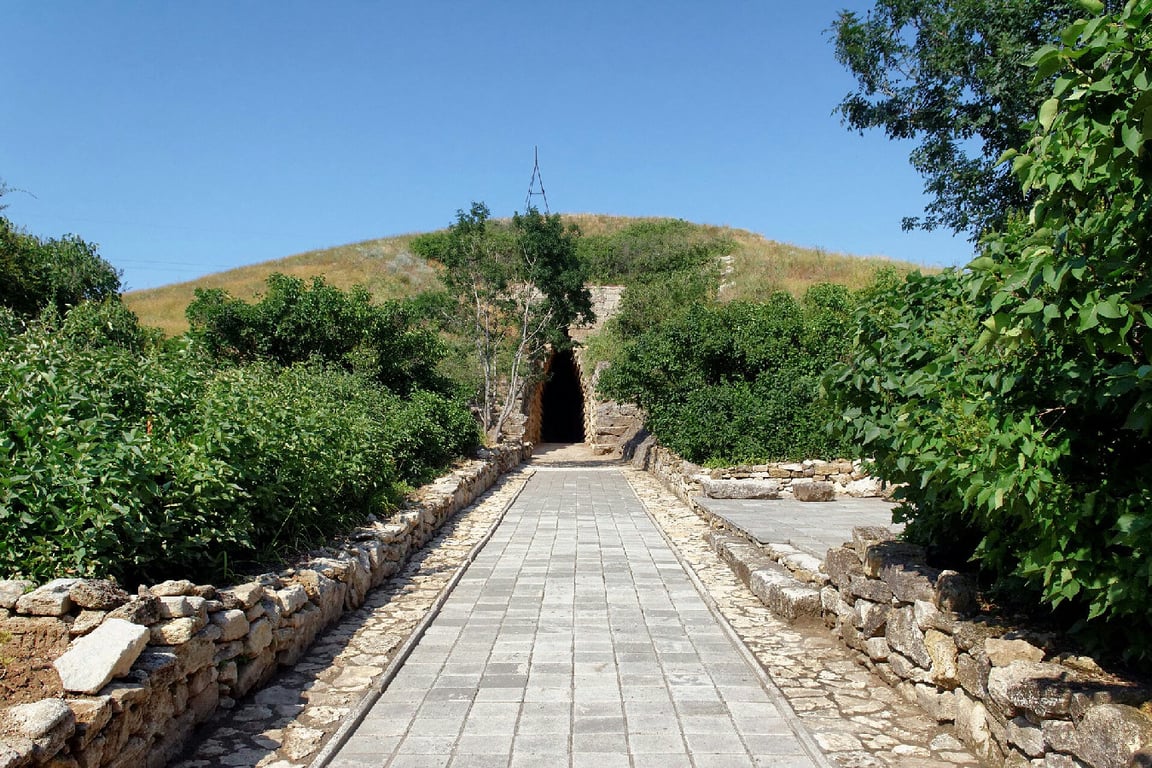
The Royal Kurgan, or Tsar's Kurgan, stands as a monumental testament to the power and architectural ingenuity of the Scythian people who dominated the Pontic-Caspian steppe. Located on the outskirts of modern-day Kerch in Crimea, this 4th-century BC burial mound is one of the most impressive and well-preserved structures of the ancient Bosporan Kingdom. Its purpose was to house the remains of a Bosporan ruler, a member of the Spartocid dynasty that held sway over the region. While the tomb was looted in antiquity, its magnificent structure continues to inspire awe and provides invaluable insight into the funerary practices and engineering skills of its creators.
The Grand Corridor of Kings
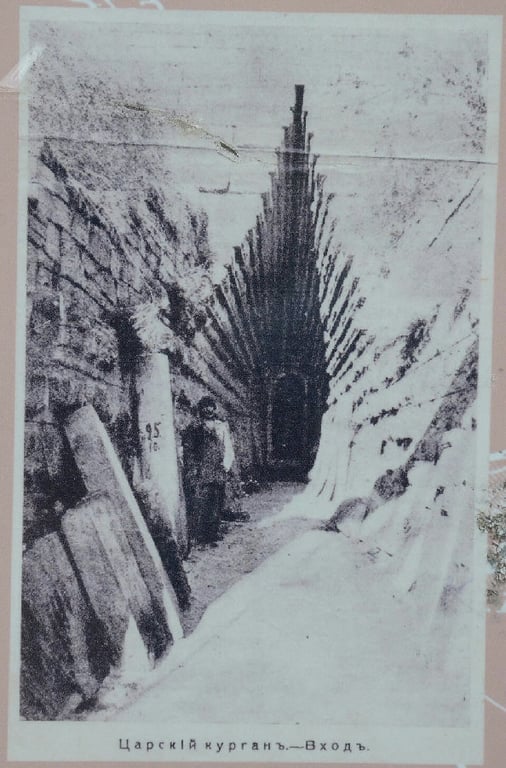
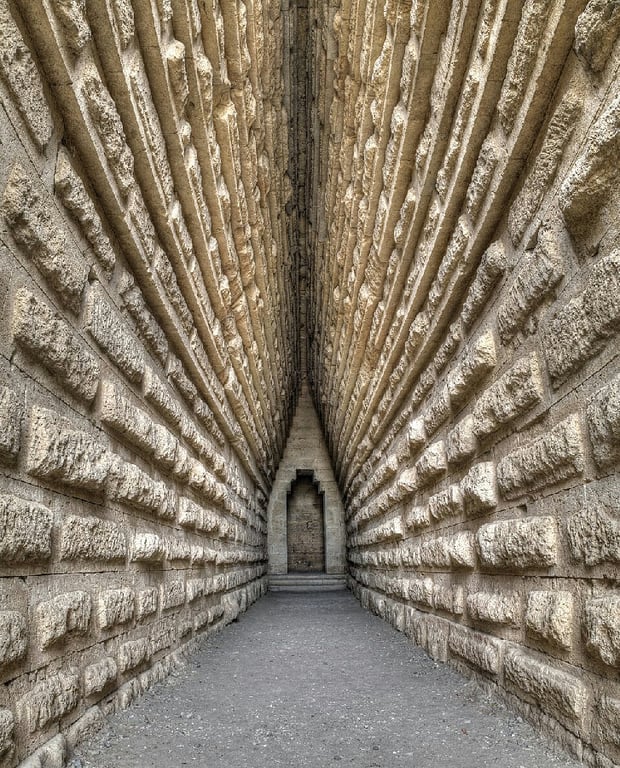
The most striking feature of the Royal Kurgan is its breathtaking dromos, or entrance corridor. Stretching for 36 meters, this passage is a masterclass in corbelled vaulting. The limestone blocks that form the walls are precisely cut and laid, gradually stepping inward as they rise to create a soaring, pointed archway that appears both elegant and cyclopean. This architectural technique, where each course of masonry projects slightly beyond the one below it, creates a strong, self-supporting structure without the need for a true arch or keystone. The visual effect is hypnotic, drawing the visitor from the bright Crimean sunlight into the cool, solemn darkness of the earth, creating a powerful sense of transition between the world of the living and the realm of the dead.
Whispers of the Departed
The long dromos culminates in a square burial chamber, also constructed with meticulous corbelled masonry, forming a distinctive beehive-shaped dome. The chamber itself is relatively small, measuring just under 4.5 meters on each side, which accentuates the grandeur of the approach. Though archaeologists found it empty, stripped of its treasures by ancient looters, the chamber's silent, perfect geometry speaks volumes. It was designed as the final, eternal home for a powerful individual. The precision of the stonework, with each block fitting seamlessly against the next, signifies the immense resources and reverence dedicated to the deceased ruler. The absence of the original occupant and their grave goods leaves a void that historians and archaeologists continue to fill with theories about the rituals and beliefs that animated this sacred space.
Echoes of Scythian Ritual
The construction of such a monumental tomb reflects the core tenets of Scythian eschatology. Like many ancient cultures, they believed the afterlife mirrored earthly existence, requiring the deceased to be accompanied by their wealth, servants, and symbols of power. Kurgans were not just graves; they were earthly palaces for the afterlife. The scale of the Royal Kurgan indicates the occupant was a figure of supreme importance. Historical accounts, notably from Herodotus, describe elaborate Scythian funerals involving the sacrifice of retainers and horses to serve their master in the next world. While no such evidence remains at this plundered site, the structure itself is a physical manifestation of the immense effort mobilized to ensure a king's eternal comfort and status.
A Monument Against Time
Today, the Royal Kurgan is a protected historical monument and a key attraction within the Kerch Historical and Cultural Preserve. Despite the loss of its original contents, it has survived millennia of history, from the decline of the Bosporan Kingdom to the tumultuous events of the 20th century. Its architectural brilliance, particularly the dromos, is studied by engineers and historians alike. It serves not only as a tomb but as a permanent marker on the landscape, a declaration of power by a long-vanished dynasty and a crucial piece of the puzzle in understanding the rich, multicultural tapestry of the ancient Black Sea region.
Beyond Royal Kurgan: Echoes from an Empty Tomb
While the Royal Kurgan is celebrated as a masterpiece of Bosporan architecture, its true story is not one of gold and kings, but of silence and speculation. Plundered in antiquity, the tomb presents a profound enigma. What it lacks in treasure, it makes up for in whispers—of impossible acoustics, phantom rulers, and ancient rituals that defy conventional explanation. This is not the history of what was found, but a journey into the mysteries that remain.
A Symphony in Stone: The Kurgan's Sonic Secret
Step inside the 36-meter-long dromos, the stone corridor leading to the heart of the mound, and you enter a world of acoustic anomaly. The walls, constructed from precisely fitted limestone blocks in a stunning corbelled design, create an unnerving resonance. A whisper at the entrance is said to travel, amplified and distorted, into the burial chamber, while sounds from within take on an ethereal, echoing quality. Archaeologists have noted this, but esoteric theorists propose a more profound purpose. Was this merely an architectural quirk, or was the kurgan designed as a resonant chamber for shamanic chants or funerary rites? Some believe the structure was engineered to facilitate communication with the spirit world, with the acoustics playing a vital role in the transition of the soul.
The Phantom Pharaoh of the Pontic Steppe
The tomb is empty. This stark fact is the kurgan's greatest mystery. While officially attributed to a 4th-century BC Spartocid king, perhaps Leukon I, no royal remains were ever found—only fragments of a wooden sarcophagus. This has fueled a contentious debate: was the tomb simply a victim of ancient grave robbers, or was it never meant to house a body at all? One fringe theory suggests the Royal Kurgan was a cenotaph, a symbolic memorial to a ruler lost at sea or in a distant battle. Another posits it was a site for initiatory rituals, a place of symbolic death and rebirth for Bosporan elites, rather than a final resting place. The absence of a king leaves a void that history cannot fill, inviting us to imagine a ruler so powerful his memory alone was enough to consecrate this monumental structure.
Whispers from the Underworld
For centuries, the kurgans dotting the Crimean landscape have been steeped in local folklore. These mounds are not just seen as graves, but as gateways—portals to the underworld guarded by powerful spirits. The Royal Kurgan, being the grandest of them all, is the subject of the most potent legends.
The Breath of the Earth
An old Tatar legend speaks of a subtle wind that sometimes emanates from the dromos entrance, even on the calmest of days. This is said to be the "breath of the earth," or the sigh of the restless king still guarding his domain. Locals once avoided the mound after dusk, believing that the spirits of the ancient Scythians and their vanquished enemies rise to reenact forgotten battles. While dismissed by mainstream science, these stories hint at a deep cultural memory, a belief that the kurgan is not a dead monument but a living, breathing entity tied to the very soul of the land.
The Royal Kurgan stands as a monument to questions, not answers. Its architectural perfection, eerie acoustics, and vacant heart challenge our understanding of the ancient Bosporan world. It reminds us that the greatest treasures left behind by antiquity are not always gold or artifacts, but the enduring mysteries that compel us to look beyond the veil of accepted history and listen for the echoes in an empty tomb.
Royal Kurgan — photo gallery