Petrified Forest Khorixas
Explore Khorixas's fossilized forest, where trees became stone over millennia. A unique geological gallery of solidified ancient life.
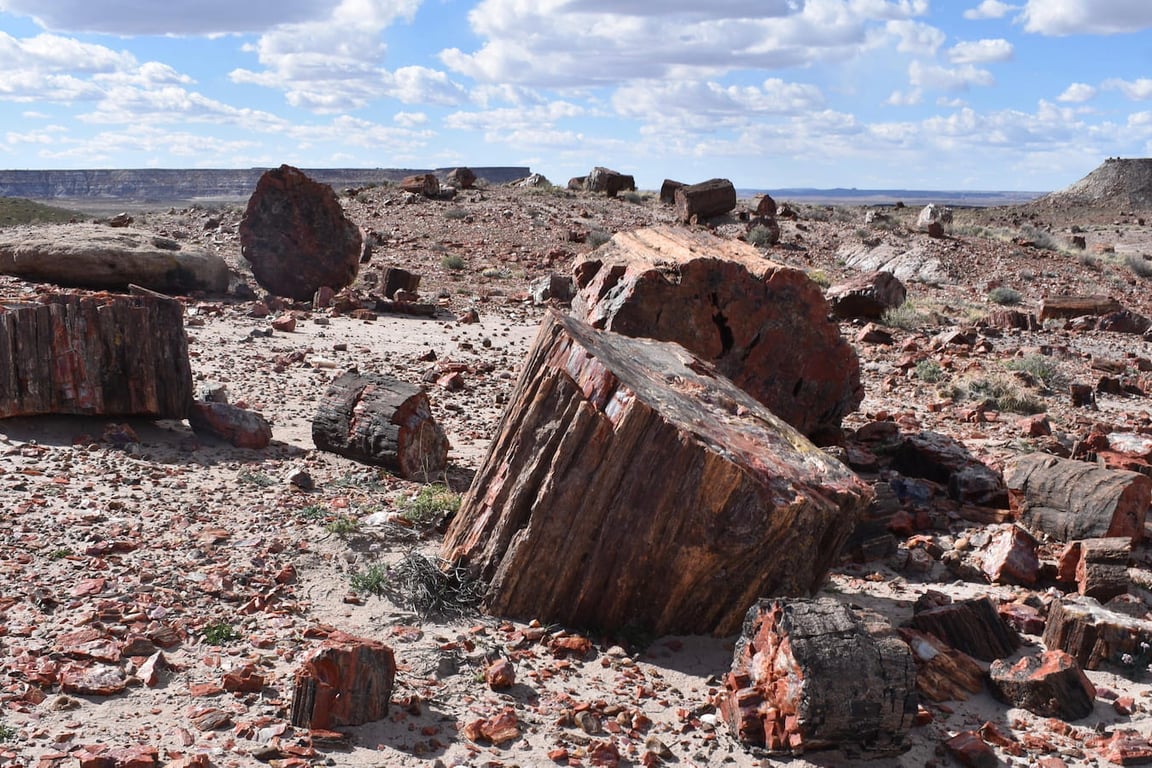
Bathed in sun-baked landscapes of Namibia's Kunene Region, the Petrified Forest, Khorixas, stands as a breathtaking testament to Earth's ancient past.
Far from being a traditional woodland, this extraordinary site is a geological wonder where millions of years have transformed colossal trees into solid stone.
It offers visitors a profound journey back in time, revealing a world that existed long before humans walked the earth, making it a must-see for anyone exploring Namibia's rich natural history and geological marvels.
When Giants Turned to Stone
The story of the Petrified Forest, Khorixas, begins approximately 280 million years ago, during the Permian period. At this time, a vast ancient forest, likely situated further north, was swept away by a colossal flood. These massive trees, primarily conifers related to modern-day pine and cedar, were transported downstream, eventually settling in what is now the Khorixas area. Over eons, they became buried under layers of sand and sediment, creating an anaerobic environment crucial for their remarkable transformation.
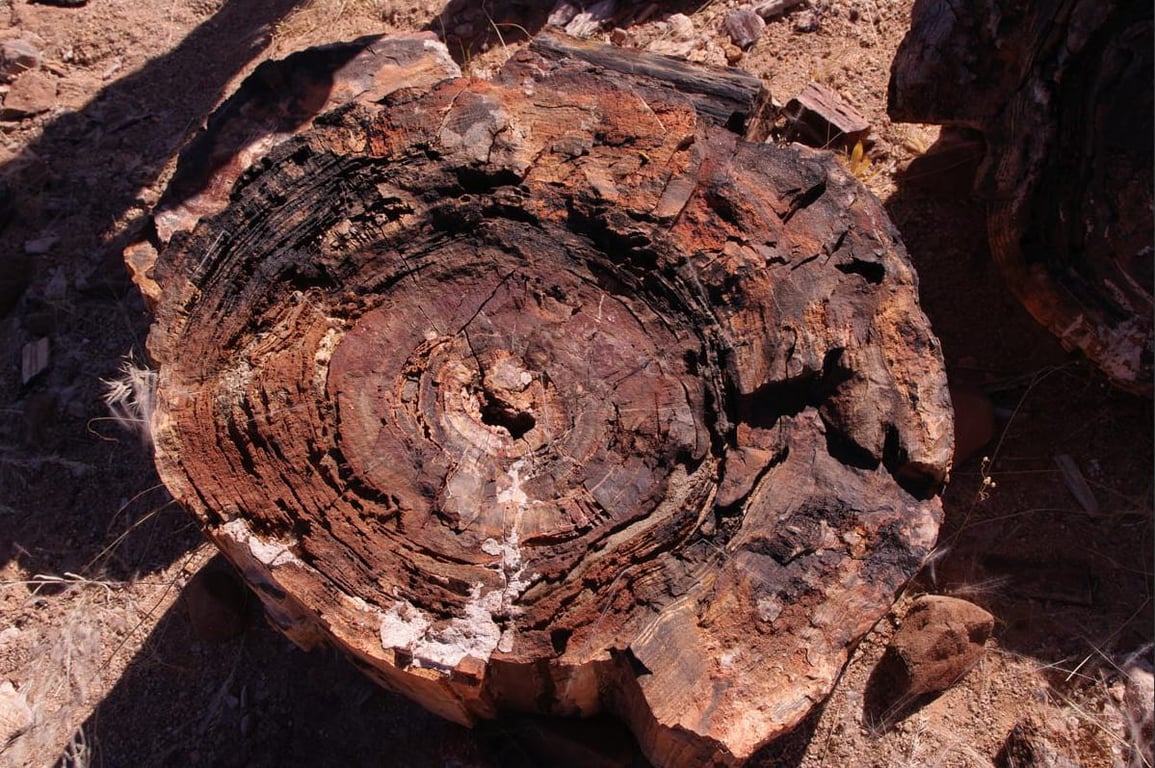
The magic of petrification then commenced. Groundwater, rich in dissolved silica, seeped into the buried logs. Slowly, molecule by molecule, the organic matter of the wood was replaced by silica. This meticulous process preserved the trees' intricate cellular structure, growth rings, and even bark details, effectively turning them into stone. What remains today is a geological masterpiece: an open-air museum of fossilized wood, a silent chronicle of a primordial ecosystem.
The Majestic Stone Logs
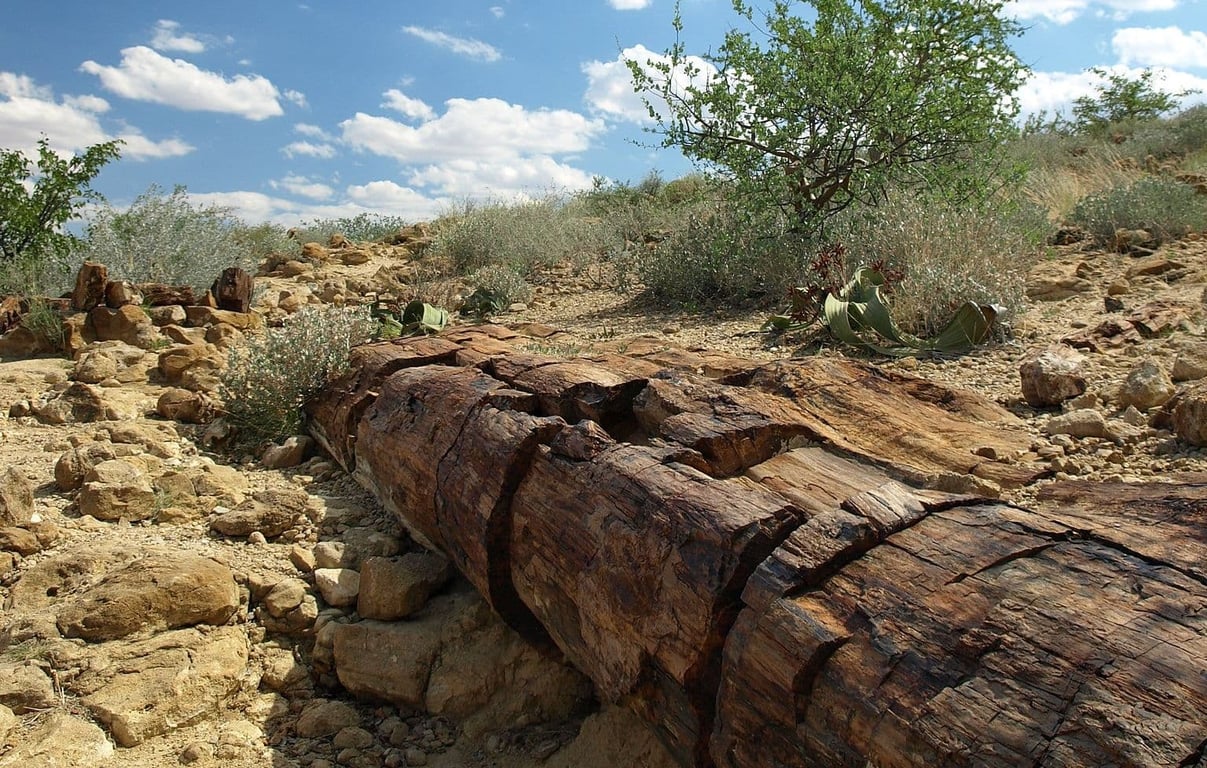
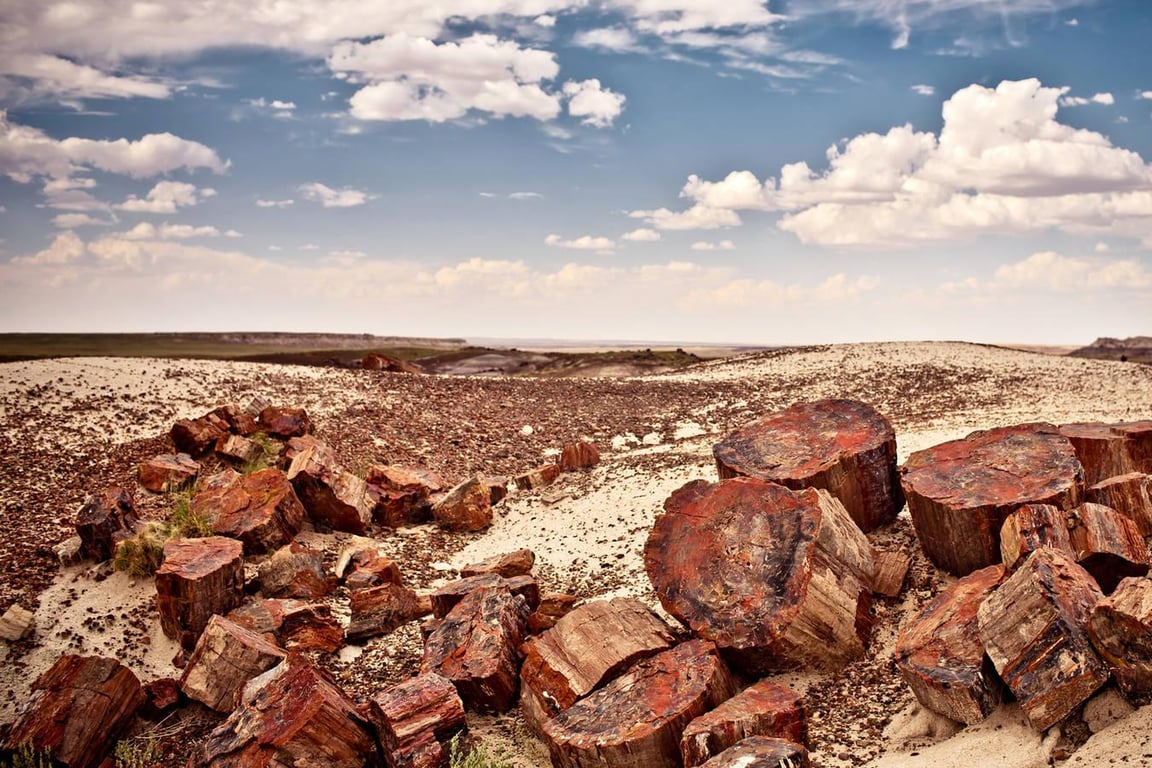
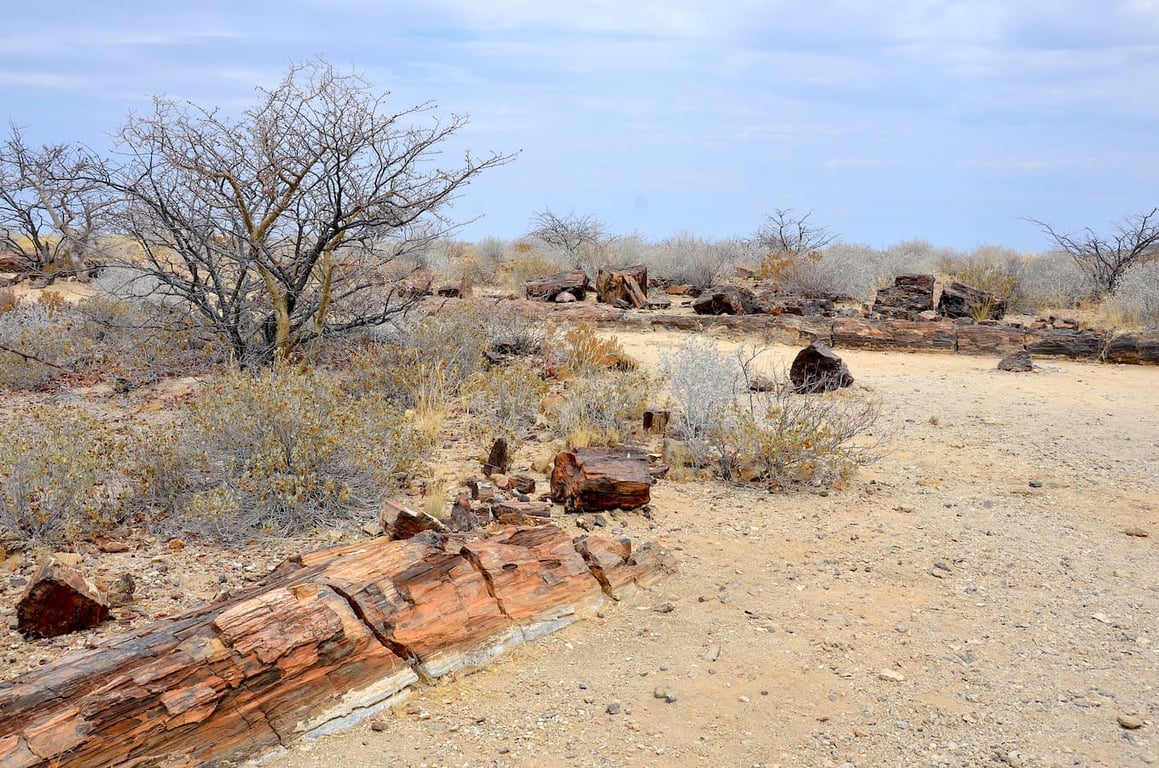
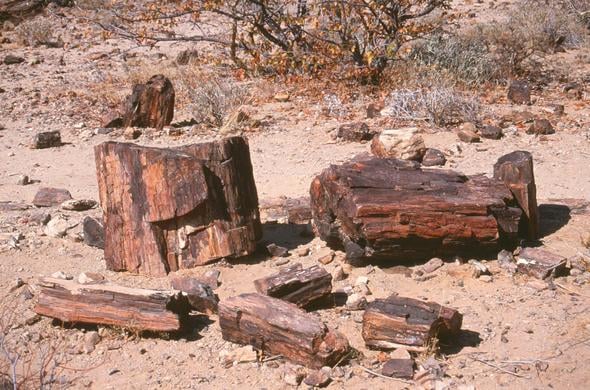
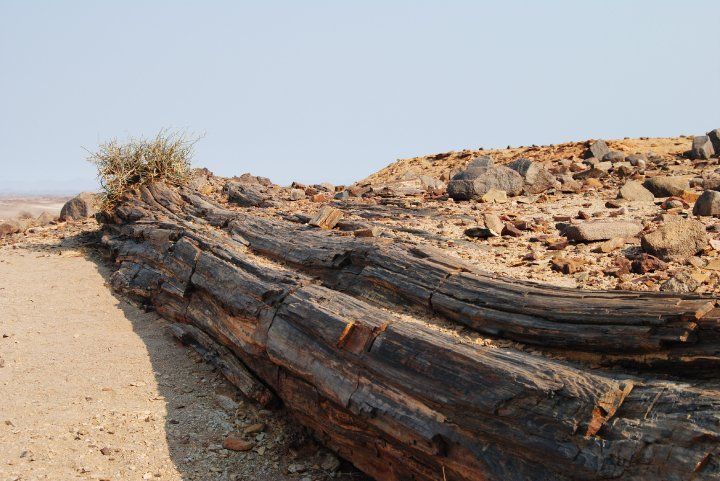
Walking through the Petrified Forest, Khorixas, is an awe-inspiring experience. Scattered across the arid terrain are dozens of enormous petrified logs, some stretching over 30 meters in length and measuring more than 1.2 meters in diameter. These ancient trees, now solid rock, glisten with hues of grey, brown, and red, their surfaces smoothed by time and erosion. Visitors can marvel at the incredible detail preserved within these silica skeletons, observing the distinct patterns of bark and the faint traces of internal wood grain, providing tangible evidence of their once-living form.
Adding another layer of biological intrigue to this ancient landscape are the remarkable Welwitschia Mirabilis plants that thrive around the Petrified Forest. Often referred to as "living fossils," these unique desert plants are endemic to the Namib Desert and can live for over 1,500 years. With only two leaves that continuously grow and fray over time, the Welwitschia Mirabilis stands as a symbol of resilience, coexisting with the stone giants and further emphasizing the deep time and extraordinary biodiversity of Namibia.
A Window into Prehistoric Ecosystems
The Petrified Forest, Khorixas, holds immense cultural and scientific significance. For paleobotanists and geologists, it is an invaluable outdoor laboratory, offering critical insights into the flora and climatic conditions of the Permian period in Southern Africa. The sheer scale and preservation quality of the petrified wood make it a crucial site for understanding ancient continental drift and the distribution of prehistoric plant life.
Recognized as a National Monument of Namibia, the site serves as a powerful educational resource, connecting visitors with deep time and fostering an appreciation for Earth's dynamic geological processes.
As a designated National Monument, the Petrified Forest, Khorixas, benefits from protected status, with ongoing efforts to preserve its unique geological formations. However, like many natural heritage sites, it faces challenges from natural erosion and the potential impact of human activity.
Conservation initiatives focus on maintaining the integrity of the site, ensuring that these ancient stone giants remain undisturbed for future generations to study and admire. Education plays a vital role in these efforts, raising awareness among visitors about the importance of respecting and protecting this irreplaceable natural treasure.
Beyond the well-documented geological marvels of Namibia’s Petrified Forest near Khorixas lies a deeper narrative, one not etched in scientific journals but whispered on the wind and pondered by the curious.
For those who seek more than just the surface explanation, this ancient landscape offers a tantalizing glimpse into a past far stranger and more complex than conventional understanding suggests.
It's a place where the line between natural history and the truly inexplicable blurs, inviting us to explore the less-trodden paths of its enduring enigma.
The Echoes Before the Geologists
While modern science meticulously dates the petrified giants of Khorixas, few records delve into the indigenous perspectives that predated colonial discovery. Local San and Damara communities, whose ancestors roamed these lands for millennia, certainly encountered these colossal stone trees. What names did they bestow upon them? Were they merely geological oddities, or were they imbued with spiritual significance, perhaps seen as ancient guardians or the petrified remnants of a primordial era when giants walked the earth?
Obscure ethnographic notes suggest that certain formations within the forest were regarded as sacred, places for ritual or storytelling, hinting at a rich, undocumented tapestry of pre-scientific belief that saw the stone trees as living entities transformed, rather than mere fossilized wood. This indigenous cosmology, largely unrecorded, represents a profound lost chapter in the site’s history.
The Silent Sentinels of Ancestral Dreams
One unverified Damara oral tradition speaks of the "Kunene's Stone Elders" – colossal beings who, in the dawn of time, chose to stand eternal vigil over the land, gradually turning to stone to fulfill their vow. This isn't a tale of a flood or a curse, but a voluntary transformation, a profound sacrifice. These Stone Elders are said to occasionally impart wisdom through dreams to those who sleep within their petrified embrace, or to influence the weather patterns of the region. While dismissed as folklore, such narratives offer a powerful, alternative lens through which to view the site, suggesting a conscious, almost sentient quality to the ancient forest that science cannot quantify.
The Unsettling Anomaly of the Silica Heart
The conventional explanation for petrification involves the slow replacement of organic material by minerals, typically silica, over millions of years. However, some researchers, often on the fringes of mainstream paleontology, have debated the sheer speed and perfection of the petrification process observed at Khorixas and similar sites. Could the circumstances that led to this transformation have been far more rapid and catastrophic than generally accepted?
The theory posits that an extraordinary, perhaps instantaneous, influx of silica-rich water, possibly triggered by a massive volcanic event or an extraterrestrial impact, could have encased these trees in a mineral solution, accelerating the fossilization to an almost unimaginable degree. This "instant petrification" theory challenges the gradualist view of geological change, suggesting an event of immense, sudden power that literally froze time, preserving the trees in their fallen, yet pristine, state.
A Global Stone Network?
Beyond the local narrative, some esoteric theories propose a deeper, global significance to sites like Khorixas. The existence of numerous large petrified forests across the globe, often containing similar species of trees (like the conifer *Dadoxylon* found at Khorixas), has led to speculation about a forgotten planetary pattern. Could these sites, stretching from Arizona to Argentina, Siberia to Namibia, be more than coincidental geological formations?
One intriguing, if unproven, theory suggests they are remnants of a vast, interconnected network of ancient "energy conduits" or markers, established by an unknown, sophisticated civilization that understood Earth's telluric currents. Or, perhaps more plausibly, they represent a uniform, planet-wide cataclysm that simultaneously affected vast swathes of the supercontinent Pangaea, leaving behind these stone sentinels as a silent, universal testament to a shared, lost epoch that transcended mere continental drift.
Petrified Forest Khorixas — photo gallery
Petrified Forest Khorixas — collectible cards
Collectible cards for this site — AI-generated illustrations from our memory game, not photographs of the site.