
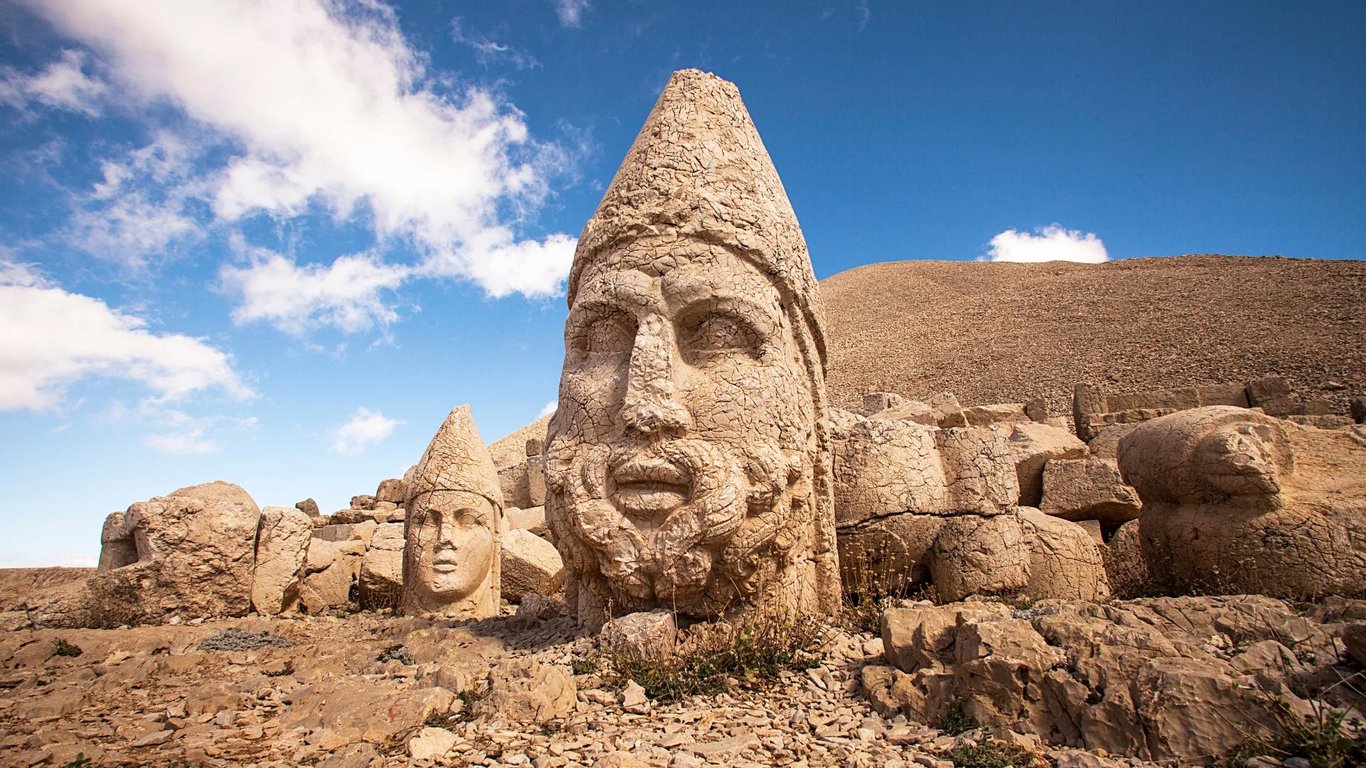
Mount Nemrut
Ancient SitesTurkey
About Mount Nemrut
In short
Mount Nemrut is a 2,150-meter peak in Adıyaman Province, Turkey, crowned by the tomb sanctuary of King Antiochus I of Commagene, built in the 1st century BCE: a stone mound about 50 meters high, colossal statues of gods and king, and carved reliefs. It has been a UNESCO World Heritage Site since 1987.
Mount Nemrut (Nemrut Dağı in Turkish, also spelled Nemrud Dağı) is a peak of about 2,150 meters in the Taurus Mountains of Adıyaman Province, southeastern Turkey. On its summit, in the 1st century BCE, King Antiochus I of Commagene piled up a cone of broken stone about 50 meters high and set seated statues of himself and his gods, each about 8 to 10 meters tall, on terraces at its foot. UNESCO listed the site as Nemrut Dağ in 1987 and counts it among the most ambitious building works of the Hellenistic age, the three centuries after Alexander the Great.
Who built Mount Nemrut, and when?
Commagene was a small kingdom on the upper Euphrates, on the border between Rome and Parthia. Turkey's Ministry of Culture gives its life as 163 BCE to 72 CE. Antiochus I ruled it from about 70 BCE into the 30s BCE; sources differ on when his reign ended. He traced his father's line back to the Persian king Darius I and his mother's to Alexander the Great, and he built a royal cult that joined both inheritances.
The long Greek text carved on the backs of the thrones, known as the nomos (the law), calls the summit a hierothesion, a sacred burial sanctuary. It names the place where the king's body was to rest, high on the Taurus ridges, and sets out the rites: feasts every month on the 10th, the day he took the throne, and on the 16th, his birthday. Which year the work began is still debated; that question, and the missing grave, are set out in Beyond.
What you see on the summit today
The Ministry of Culture gives the mound as about 145 meters across and 50 meters high, built of loose limestone rubble. It is ringed by terraces on the east, west and north. The east and west terraces hold the same row of five seated figures: Antiochus, the goddess Commagene, Zeus-Oromasdes, Apollo-Mithras-Helios-Hermes and Heracles-Artagnes-Ares, guarded at each end by an eagle and a lion. The double names join Greek gods with Iranian ones: Oromasdes is Ahura Mazda, and Artagnes is Verethragna, the Persian god of victory.
The statues were built of stacked limestone blocks, some weighing up to nine tons, according to UNESCO. Their heads have all fallen and now sit on the ground in front of the thrones, many without noses or lips. Otto Puchstein, who studied them in 1882 and 1883, thought an earthquake brought them down together; Bachmann, a co-author of the 1996 excavation report, suggested that centuries of weathering could explain it. The head of the goddess Commagene on the east terrace was still on her shoulders in 1953 and fell in the early 1960s after a lightning strike. In 2002 Turkish and Dutch archaeologists set the heads on low stone plinths to protect them from damp and winter frost.
The reliefs: ancestors, handshakes and a lion
In front of the statues stood rows of carved sandstone slabs, or stelae. One row showed the king's father's ancestors, Persian, Armenian and Commagenian, about 15 of them; the other showed some 17 ancestors on his mother's side, Greek-Macedonian kings and queens. In 1964 the scholar John Young pointed out that only Antiochus wears the tall Armenian tiara, which settled a long confusion between the king and Apollo.
Other stelae show Antiochus shaking hands with a god: Apollo-Mithras, Zeus-Oromasdes or Heracles. These scenes are called dexiosis, Greek for the giving of the right hand, and they are among the oldest known pictures of the handshake.
The best-known slab is the so-called Lion Horoscope. A striding lion is covered with 19 stars, with a crescent moon on its chest. Above its back are three larger stars, labelled in Greek as the stars of Heracles, Apollo and Zeus: the planets Mars, Mercury and Jupiter. A plaster cast of the slab, made in 1883, is now in Berlin.
How Mount Nemrut was rediscovered
The summit entered the scholarly record in 1881, when Karl Sester, a German engineer surveying roads, reported "Assyrian" monuments on the mountain. Otto Puchstein reached the top in deep snow in May 1882 and found the Greek inscription. In June 1883 he returned with Carl Humann to draw, photograph and cast the sculptures, and that same spring the Ottoman archaeologist Osman Hamdi Bey worked on the summit with the sculptor Osgan Efendi.
Systematic digging began with Theresa Goell, an American archaeologist who first climbed the mountain in 1947 and led work on the summit from 1953 into the 1960s. She shared the region with the German epigraphist Friedrich Karl Dörner, a scholar of inscriptions, who excavated Arsameia on the Nymphaios, a sister sanctuary at the mountain's foot. Goell died in 1985; her two-volume report was completed by Donald Sanders and published in 1996.
From 1998 the International Nemrud Foundation, led by Maurice Crijns and Herman Brijder of the University of Amsterdam, documented and conserved the summit, with fieldwork from 2001 to 2003. Its results fill a 686-page volume edited by Brijder in 2014, including reports by Şener Yıldırım on moving the Lion Horoscope and dexiosis stelae of the west terrace into a temporary restoration house. Since 2006, Middle East Technical University in Ankara has run the Commagene Nemrut Conservation Development Programme with the Ministry of Culture and Tourism.
Visiting Mount Nemrut
The summit is the heart of Nemrut Dağı National Park, created in 1988, which also takes in the Karakuş tumulus, the castles of Eskikale (Arsameia) and Yenikale, and the bridge at Cendere. Most visitors stay in Kahta, Adıyaman or Malatya. Snow covers the high ground for nearly half the year, and the Ministry of Culture says the summit road is open only from mid-April to mid-October.
Many people come for sunrise on the east terrace or sunset on the west, when the low light falls on the heads. It is cold at those hours even in summer.
Beyond: more about Mount Nemrut
Checking…
Contributors
No contributions yet
Be the first to add photos or videos!
Play and learn
Test Your Knowledge!
Think you know everything about Mount Nemrut? Take our interactive quiz and become an Ancient Sites Expert!
Frequently asked questions
How old is Mount Nemrut's monument?
It was built in the 1st century BCE by King Antiochus I of Commagene, who ruled from about 70 BCE into the 30s BCE. The year work began is debated; dates proposed from the Lion Horoscope and the terrace alignments range from 109 to 49 BCE.
Who is buried at Mount Nemrut?
The inscription on the thrones says the summit was to be the burial place of Antiochus I. No burial chamber has been found, despite geophysical surveys since the 1960s, and some scholars now ask whether it is a cenotaph.
Why are the heads on the ground at Mount Nemrut?
The heads have fallen from the seated statues, perhaps in an earthquake, as Otto Puchstein thought, or through centuries of weathering. In 2002 Turkish and Dutch archaeologists set them on low plinths to protect them.
What is the Lion Horoscope?
A sandstone relief on the west terrace showing a lion covered with 19 stars, a crescent moon and three planets labelled Mars, Mercury and Jupiter. Scholars have dated the sky it shows to 109, 98, 62 or 49 BCE.
When can you visit Mount Nemrut?
The summit road is open from mid-April to mid-October, because snow covers the mountain for nearly half the year. Most visitors stay in Kahta, Adıyaman or Malatya and come for sunrise or sunset.
Is Mount Nemrut a UNESCO World Heritage Site?
Yes. UNESCO inscribed it as Nemrut Dağ in 1987, and the mountain became the center of Nemrut Dağı National Park in 1988.
Related Tags
Sources
- whc.unesco.org/en/list/448
- turkishmuseums.kprod.kultur.gov.tr/blog/detail/the-unesco-sites-of-turkiye-nemrut-the-summit-where-the-gods-shake-hands/10086/4
- ktb.gov.tr/EN-99714/nemrut.html
- bmcr.brynmawr.edu/?p=36523
- zenon.dainst.org/Record/001402154
- scholarlypublications.universiteitleiden.nl/access/item%3A4294438/view
- incipit.csic.es/en/research_outcomes/publication/book-section/nemrut-dag
- iac.edu.es/en/science-and-technology/publications/antiochoss-hierathesion-nemrud-dag-revisited-adjusting-date-light-astronomical-evidence
- aasarchives.blob.core.windows.net/archives/BAAS/v34n4/aas201/1205.htm
- ifa.phil-fak.uni-koeln.de/fileadmin/IfA/EpiAna_pdfs/038145_Heilen_Zur_Deutung_und_Datierung_des_Loewnhoroskops_auf_dem_Nemrut_Dagi.pdf
- nationalgeographic.com/history/article/mount-nemrut-dag-wonder-of-the-ancient-world
- de.wikipedia.org/wiki/Nemrut_Da%C4%9F%C4%B1_(Ad%C4%B1yaman)
- en.wikipedia.org/wiki/Theresa_Goell
- en.wikipedia.org/wiki/Antiochus_I_Theos_of_Commagene
- cons.metu.edu.tr/en/node/90
Other Sites You Might Like
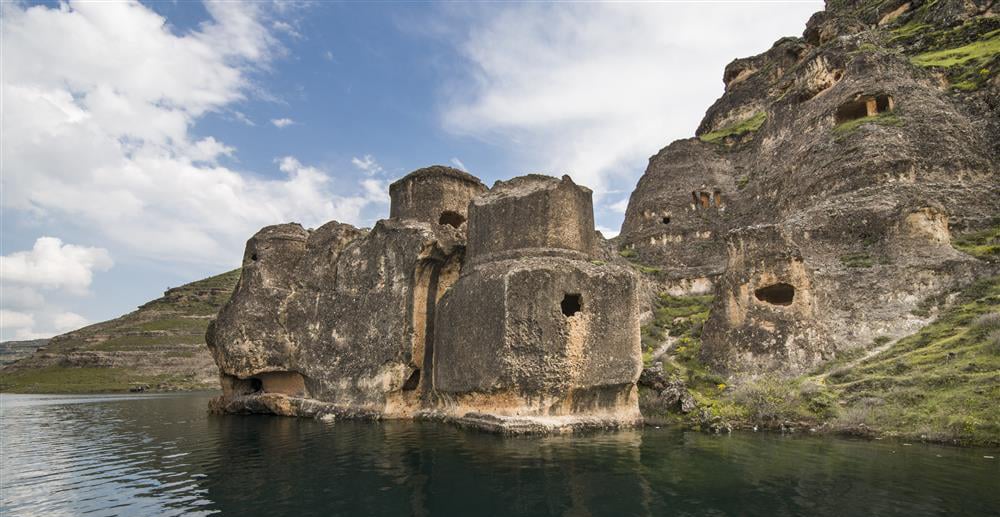 Turkey
Egil Rock-Cut Castle
A rock citadel above the dammed Tigris, with an Assyrian king carved in its cliff and royal tombs whose owners are still debated.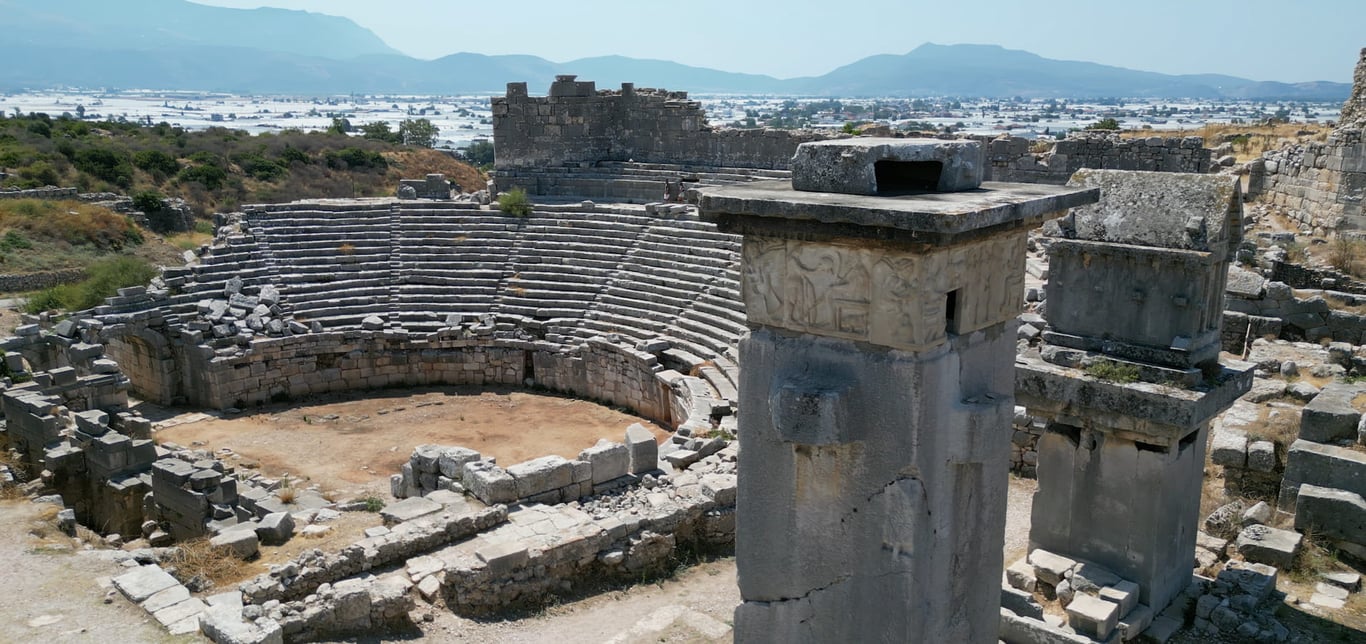 Turkey
Xanthos Ancient City
Tombs raised high on stone pillars, a shaft covered in Lycian script, and a city that ancient writers say burned itself twice.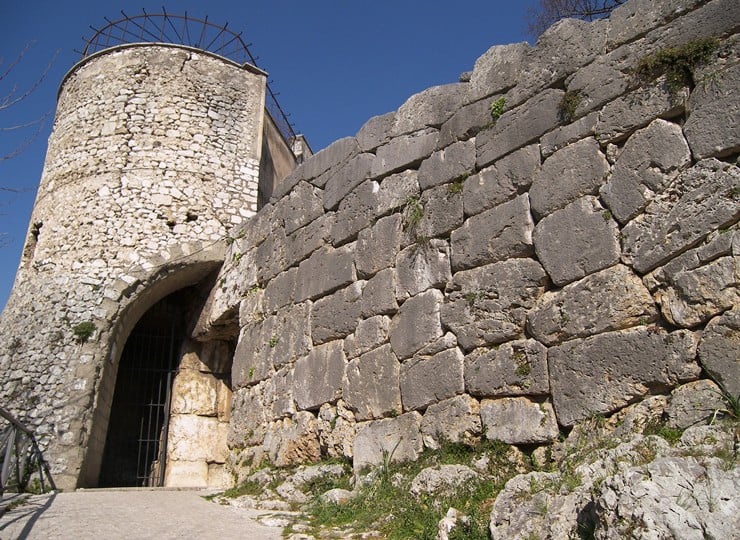 Italy
Alatri Cyclopean Walls
Many-sided limestone blocks, fitted so closely no paper slips between them, wrap the hilltop citadel of Alatri.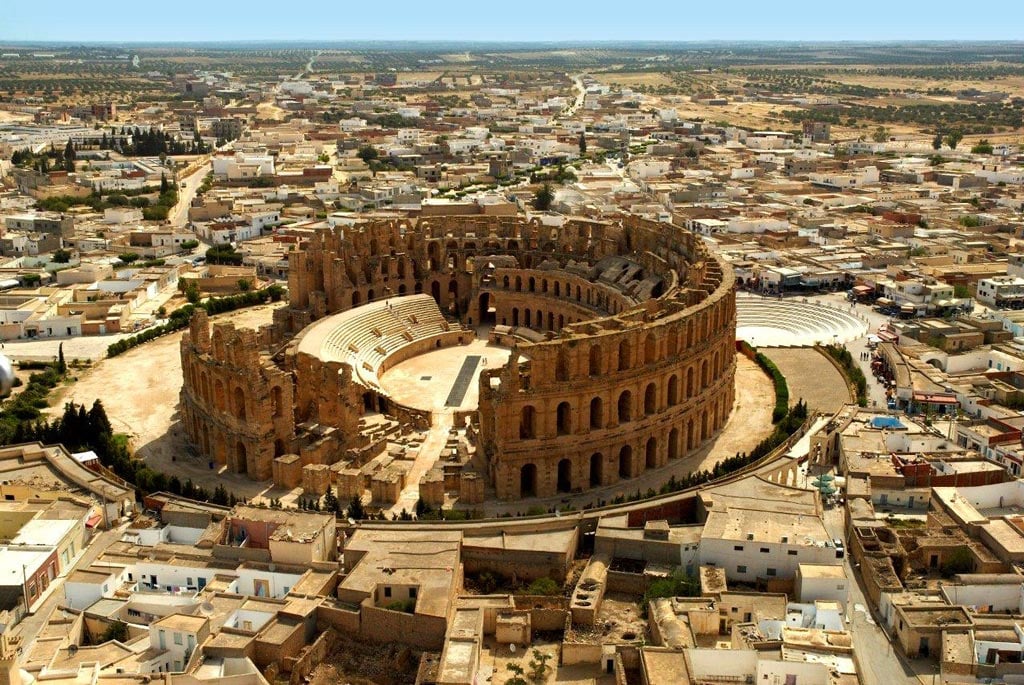 Tunisia
Amphitheatre of El Jem
A three-story Roman arena for some 30,000 spectators, still towering over the Tunisian town that grew up around it.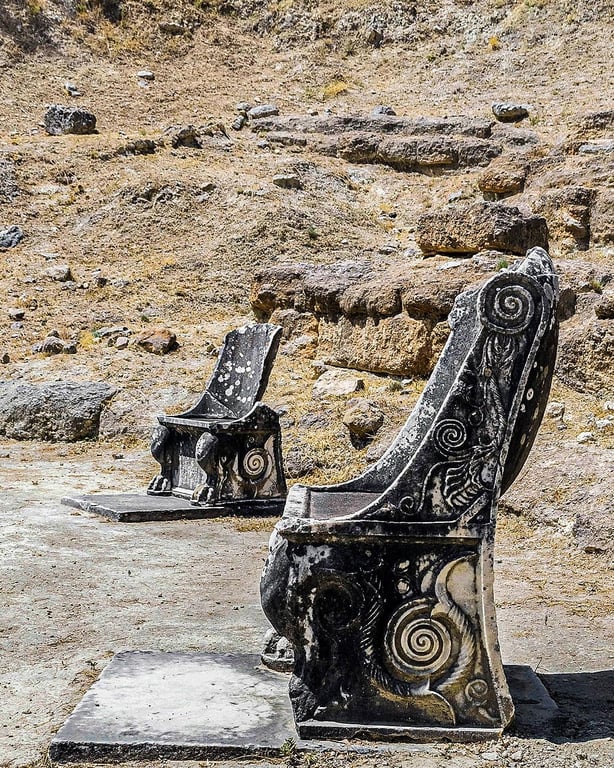 Greece
Ancient Marble Thrones
Five marble seats of honor ring the orchestra of a small theater at the Amphiareion, a healing sanctuary north of Athens.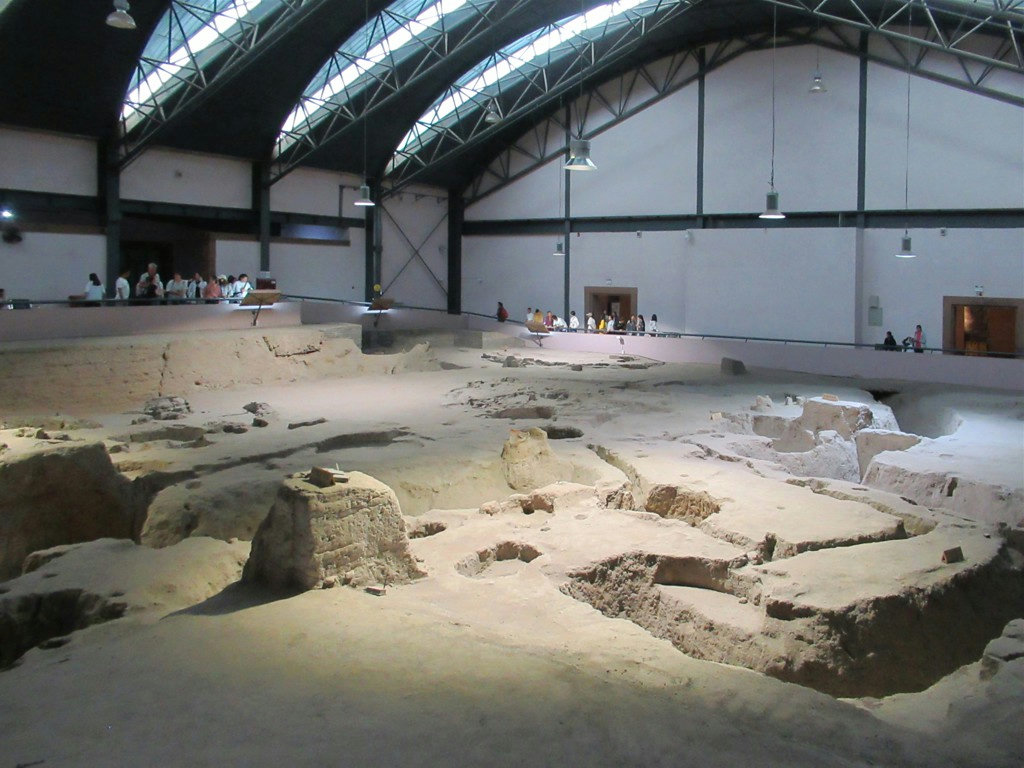 China
Banpo Neolithic Village
Round houses, a ring ditch, painted fish bowls and children buried in jars: a millet farmers' village on Xi'an's edge, 6,000 years old.