Joya de Ceren Archaeological Site
Village life of the Maya preserved by a 7th‑century eruption of Loma Caldera: kitchens, sweat bath, gardens, and even manioc fields captured in remarkable detail.
Northwest of San Salvador, near San Juan Opico in La Libertad, lies Joya de Cerén, a Late Classic Maya farming community entombed by the sudden eruption of the nearby Loma Caldera around AD 595. Encased beneath several meters of volcanic ash, the village’s houses, gardens, tools, and pathways survived in extraordinary condition, offering a rare, intimate view of everyday life among non-elite Maya households. No human remains have been found, suggesting residents fled as tremors and ashfall intensified, leaving an uncannily complete snapshot of domestic life at the moment of abandonment.
A Village Sealed by Loma Caldera
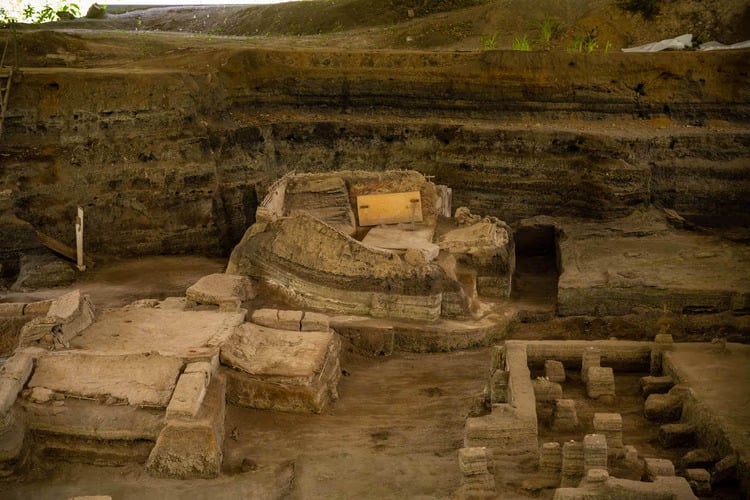
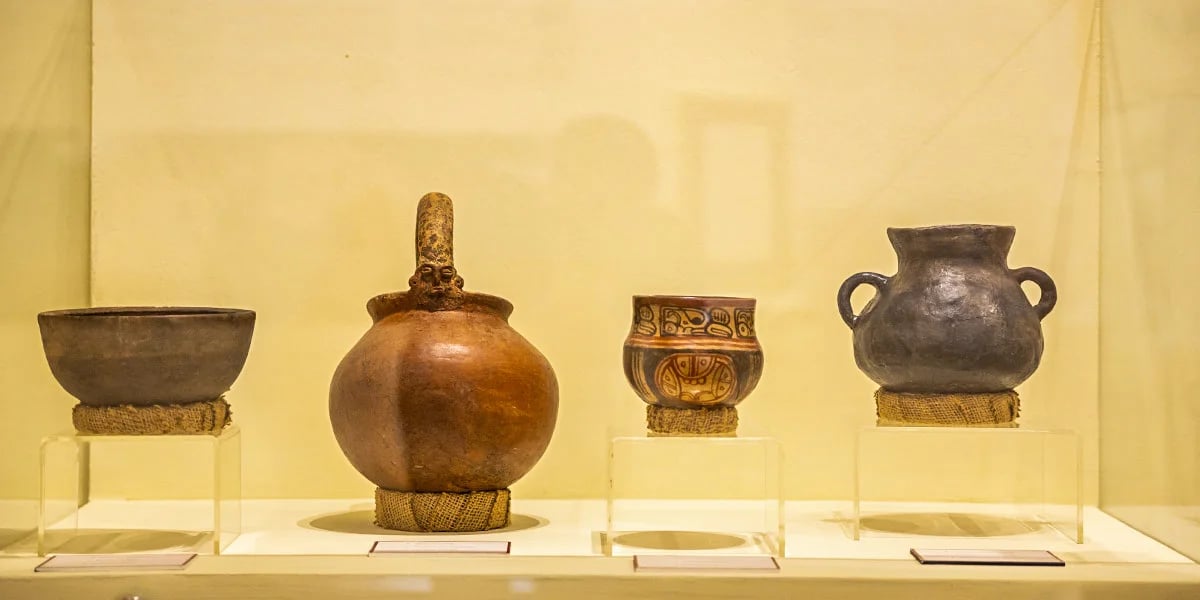
The eruption blanketed the settlement in successive ash falls, ultimately burying it under approximately 4–7 meters of tephra. Unlike sites destroyed by fire or looting, Joya de Cerén’s perishable materials were preserved as voids and impressions in the ash, later carefully cast and stabilized by archaeologists. Storage jars sat where they were last set down; grinding stones remained beside hearths; pathways still thread between house compounds. The result is a three-dimensional map of a living community, uniquely detailed for the Maya world.
Homes, Kitchens, and a Sweat Bath in Ash
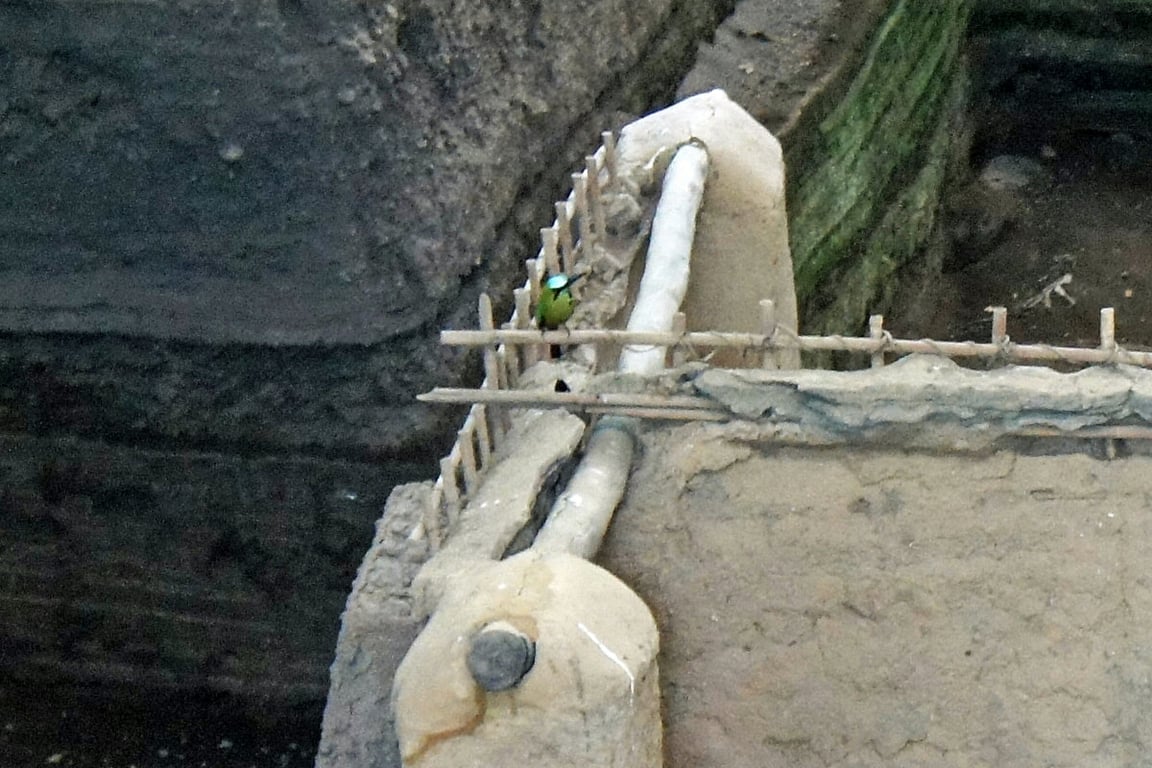
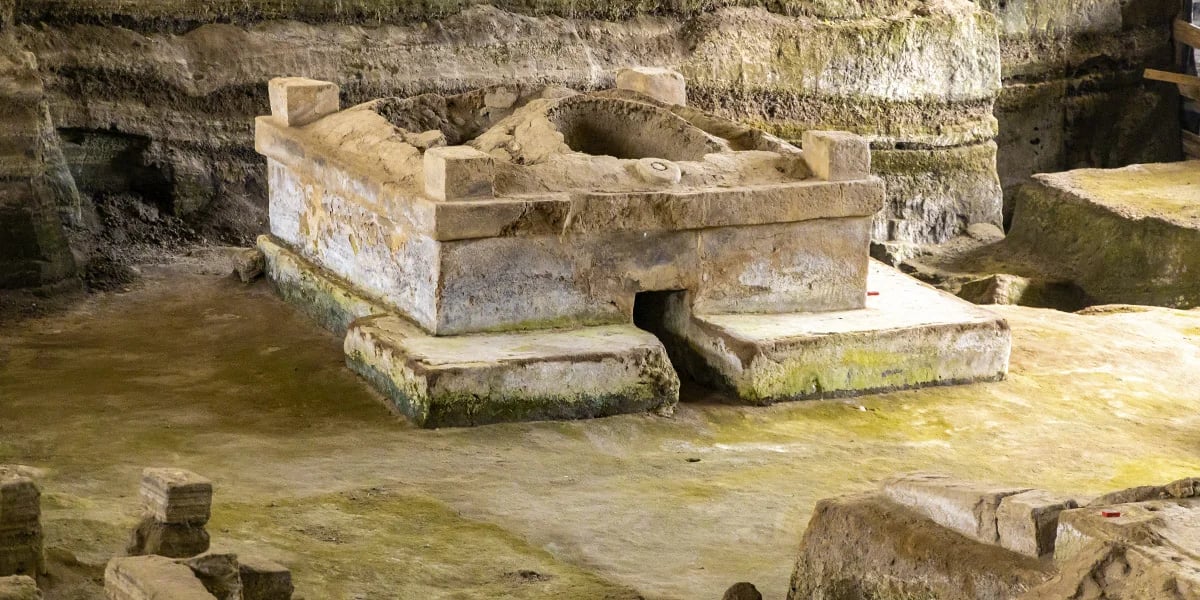
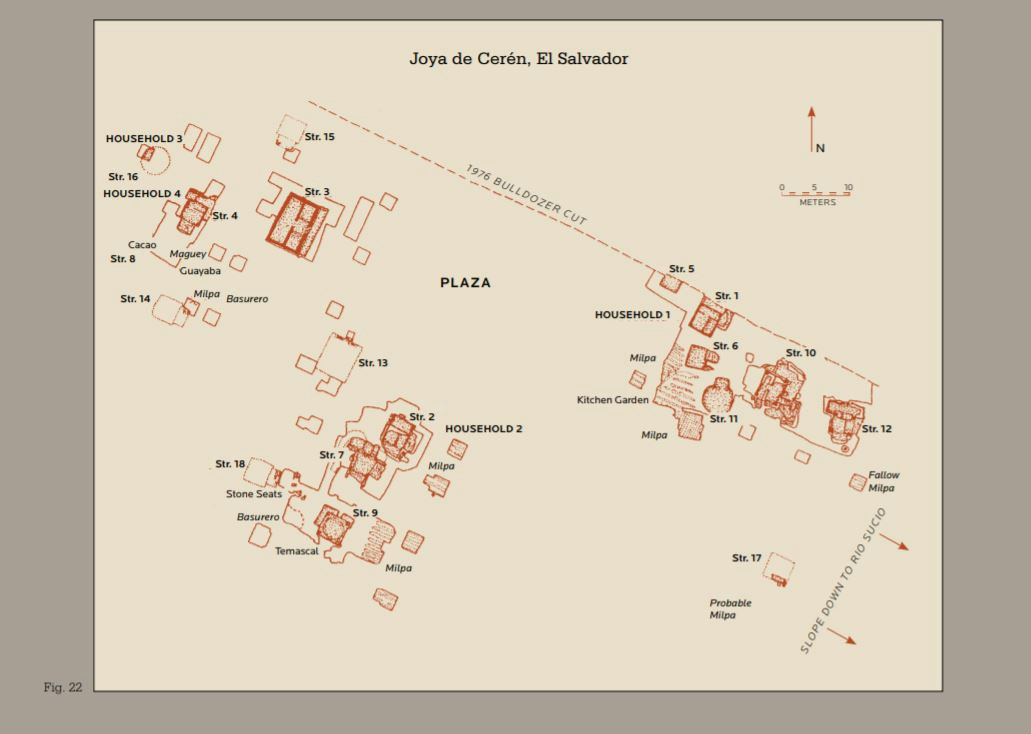
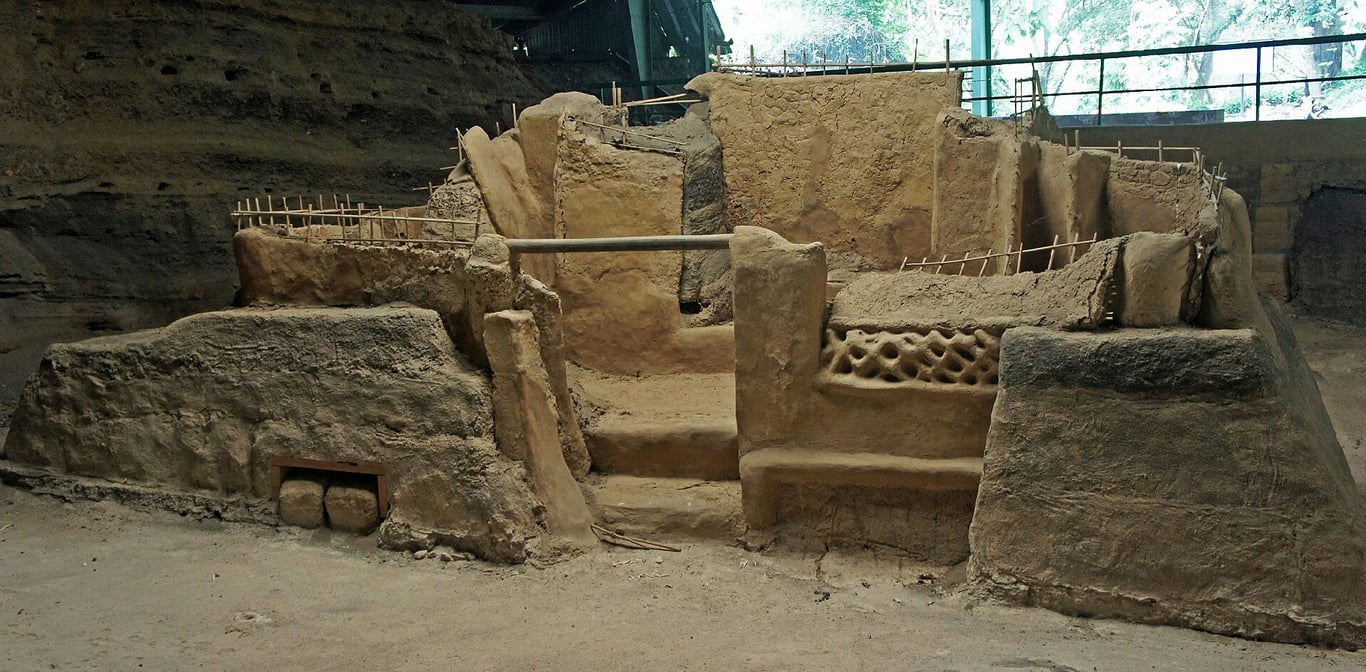
Excavations revealed compounds of wattle-and-daub (bajareque) buildings with thatched roofs, separated by packed-earth patios. Kitchens contain hearths, comales, and metates for preparing maize, alongside gourds and jars for storing water and food. One of the site’s most striking structures is a domed sweat bath (temazcal), complete with firebox and stone seating—evidence of the importance of bathing, healing, and ritual purification in daily routines. Nearby stands a community building with benches and a low platform, likely used for meetings, feasts, or rites that anchored social life beyond the household.
Ancient Fields and Foodways Rediscovered
Beyond the houses, archaeologists uncovered garden plots and cultivated fields, including the earliest direct archaeological evidence for intensively grown manioc (cassava) in the Americas. Preserved furrows, planting mounds, and root cavities, together with tools and storage areas, document a diversified subsistence economy that also featured maize, beans, squash, and chili. Living fences of maguey (agave) and post-and-rail boundaries channel movement through the village, while refuse deposits and storage rooms trace how food moved from field to hearth to communal event.
From Chance Discovery to UNESCO Status
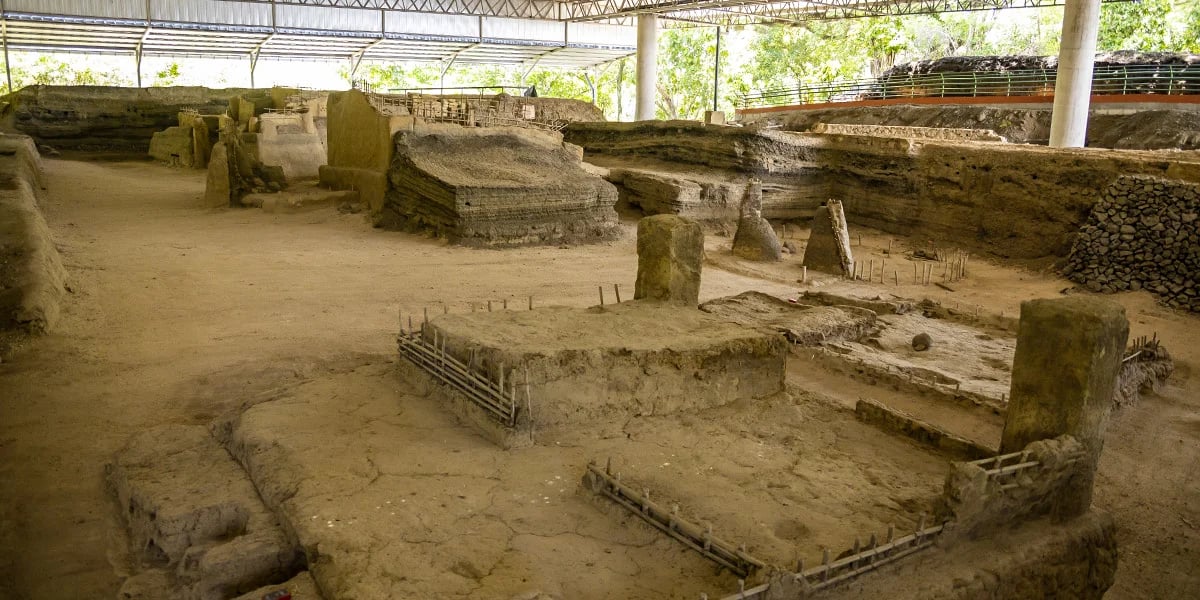
Joya de Cerén was discovered in 1976 during construction work, when machinery cut into the ash-encased architecture. Scientific excavations soon followed under the direction of Salvadoran authorities and international collaborators, most notably long-term research led by archaeologist Payson Sheets and colleagues. Protective hangars now shelter key areas from weathering, and a site museum interprets the discovery, conservation methods, and the lifeways revealed by the finds. Recognized for its unparalleled preservation of a pre-Hispanic village, the site was inscribed on the UNESCO World Heritage List in 1993.
Walking the Catwalks Over Buried Dwellings
Today visitors traverse raised walkways that pass above stabilized rooms and patios, observing the locations of hearths, storage jars, and benches exactly where residents left them on the day ash fell. Interpretive panels tie these fixed points to broader questions—how households organized labor, how communities coordinated ritual and governance, and how volcanic landscapes both nurtured and imperiled agrarian life. In its quiet detail, Joya de Cerén reshapes our understanding of the Classic Maya by centering ordinary people and their homes, fields, and shared spaces.
Known as the "Pompeii of the Americas," Joya de Cerén is celebrated for its snapshot of ancient life, frozen beneath a blanket of volcanic ash. But this comparison is misleading. Unlike Pompeii’s tragic tableau of its final moments, Joya de Cerén is a ghost story. The village is pristine, the meals half-eaten, the tools left where they were dropped, but the people are gone. This perfect preservation, coupled with a total absence of human remains, presents a far deeper enigma—not of how they died, but of how they lived, and why they were so completely erased.
The Ghost Feast and the Diviner's Vision
Archaeologists unearthed more than just buildings; they found moments suspended in time. In one household, a meal of beans lay in a ceramic pot, ready to be served. In the fields, the ghostly imprints of manioc plants reveal a crop previously thought to be introduced to the region much later. These aren't just artifacts; they are silent witnesses to an abrupt interruption. The most profound mystery, however, lies within Structure 10. Far from being a simple farmer's hut, this building is believed to have been the home of a shaman or diviner. Inside, investigators found crystals, a deer skull headdress, and other ceremonial objects, suggesting a community deeply connected to ritual and spiritual practice. Was this diviner able to foresee the cataclysm, providing the crucial warning that allowed for a mass exodus just moments before the sky fell?
Whispers of the Volcanic Veil
While mainstream archaeology focuses on geological evidence, local whispers tell a different story. The absence of bodies is not seen as a lucky escape but as a sign of a spiritual pact. Some folk tales hint that the Loma Caldera volcano was not a mindless force of nature but a living entity, a gateway to the underworld. The villagers, it is said, were not fleeing a disaster but participating in a planned ritual of departure, leaving their physical world behind as an offering to appease the earth gods. This theory, while unprovable, speaks to a worldview where the boundaries between the physical and spiritual realms were porous, and a village could simply… step across.
A Debt to the Earth Serpent?
One specific legend speaks of the Earth Serpent, a powerful deity awakened by seismic tremors. The village shaman, communicating through trance, supposedly struck a bargain: the villagers would abandon their homes and possessions, leaving a perfect, untouched offering, and in return, the Serpent would grant them safe passage to a new land. The ash, in this telling, was not an agent of destruction but a sacred veil, meant to protect the offering for eternity. This narrative transforms Joya de Cerén from a disaster site into a deliberately created monument of sacrifice.
A Cultural Island in a Maya Sea
Joya de Cerén defies easy categorization. While existing within the broader Maya cultural sphere, its architecture and societal structure are unique. The buildings, made of wattle-and-daub with thatched roofs, are unlike the grand stone pyramids of nearby centers like San Andrés. The presence of a communal sauna, or temazcal, points to a sophisticated social and ritual life that was self-contained. Was Joya de Cerén an independent community with its own distinct traditions, deliberately isolated from the politics of the larger Maya kingdoms? Or was it part of a network of non-elite settlements whose history has been completely overlooked, a culture whose voice was silenced until the volcano gave it a permanent, unchangeable form?
Joya de Ceren Archaeological Site — photo gallery