Guyaju Caves
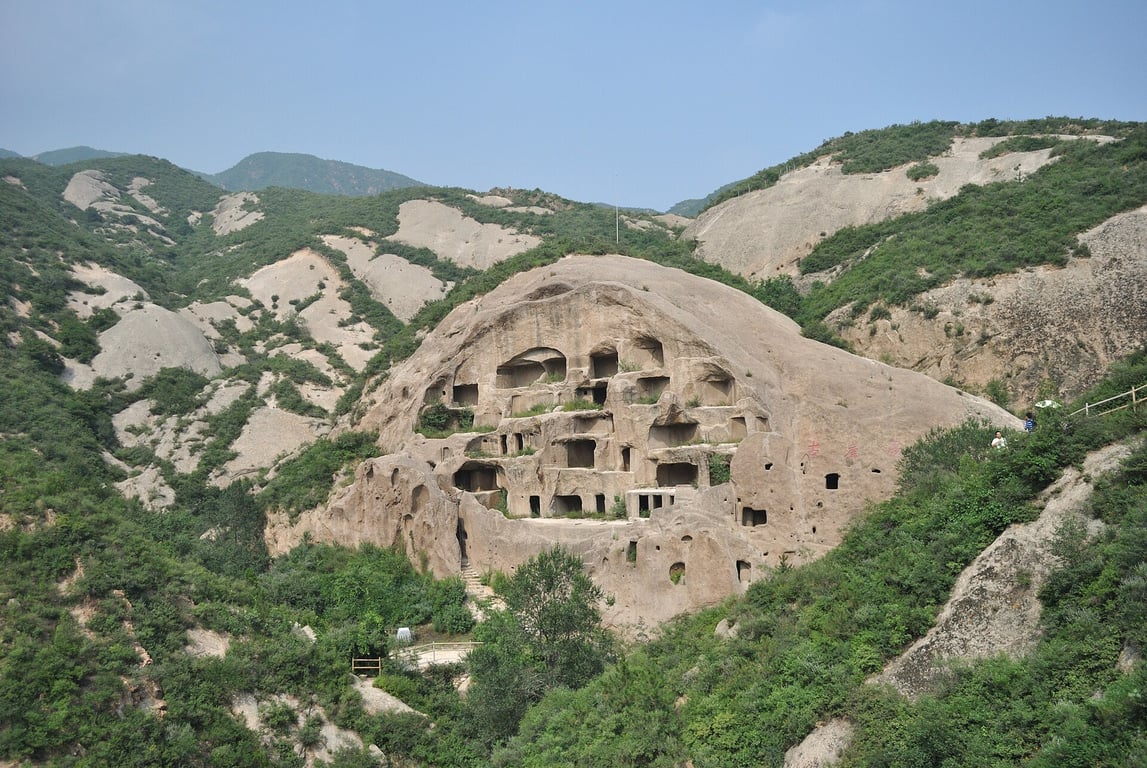
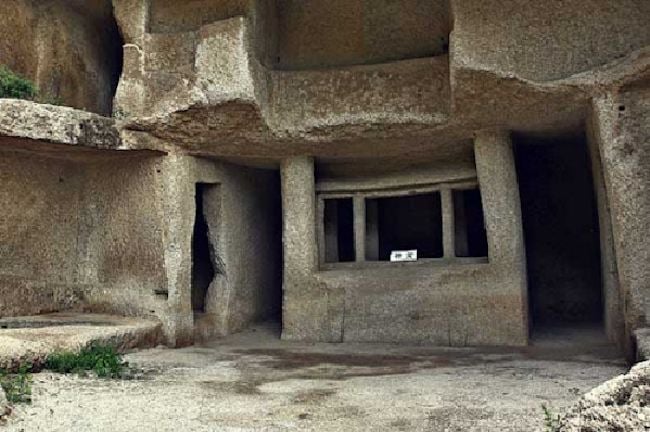
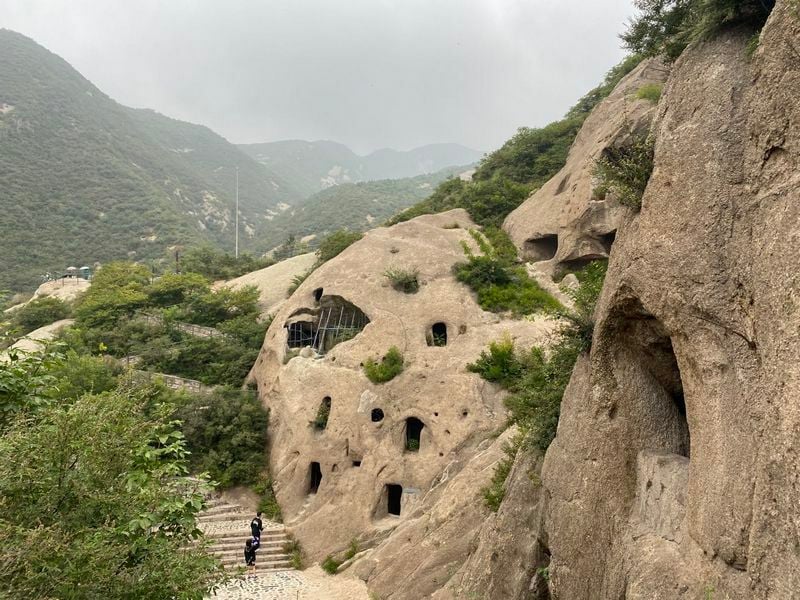
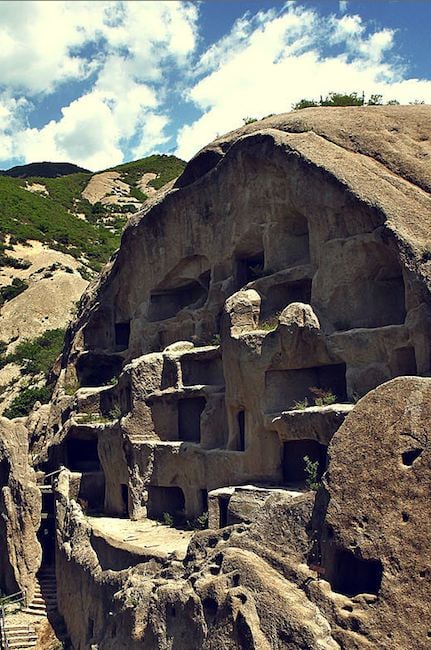
Carved into a vast cliff face near Beijing, the Guyaju Caves form a mysterious, multi-story stone village with over 170 individual dwellings.
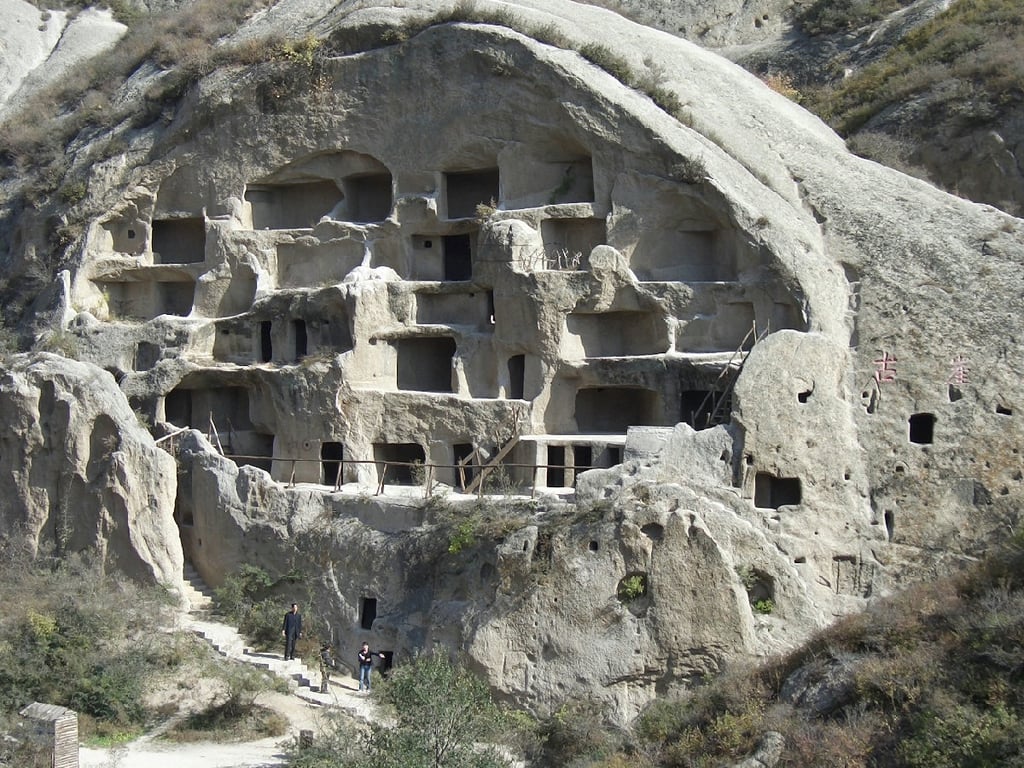
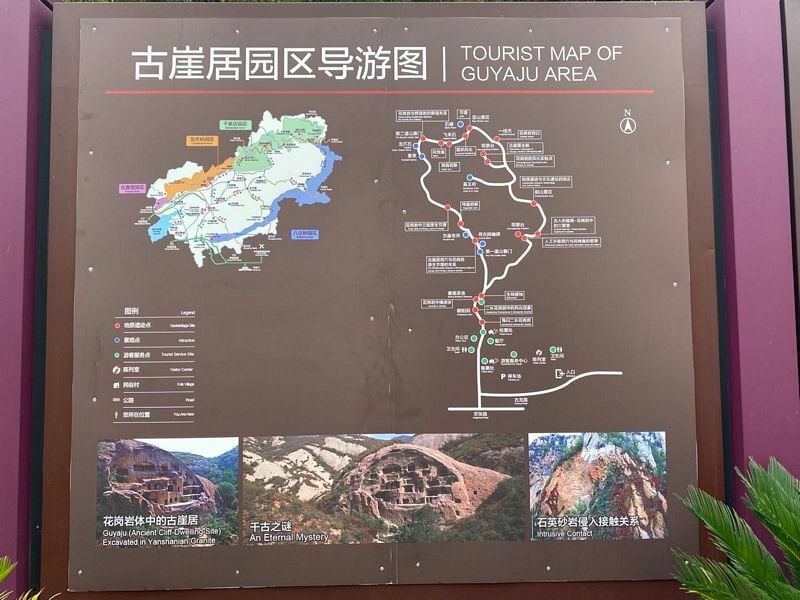
North of Beijing, etched into the steep granite cliffs of the Yanqing District, lies the enigmatic complex of Guyaju. Often called the 'biggest maze of China,' this extensive cliffside residence is a marvel of ancient engineering and a profound historical puzzle. Comprising more than 170 individual cave homes honeycombed across a cliff face stretching nearly 100 meters high, Guyaju stands as one of the largest ancient cave-dwelling sites ever discovered in the country. The settlement's origins, its builders, and the reasons for its eventual abandonment remain subjects of intense scholarly debate, leaving visitors to wonder about the lives of its mysterious former inhabitants.
A Metropolis Carved from Rock
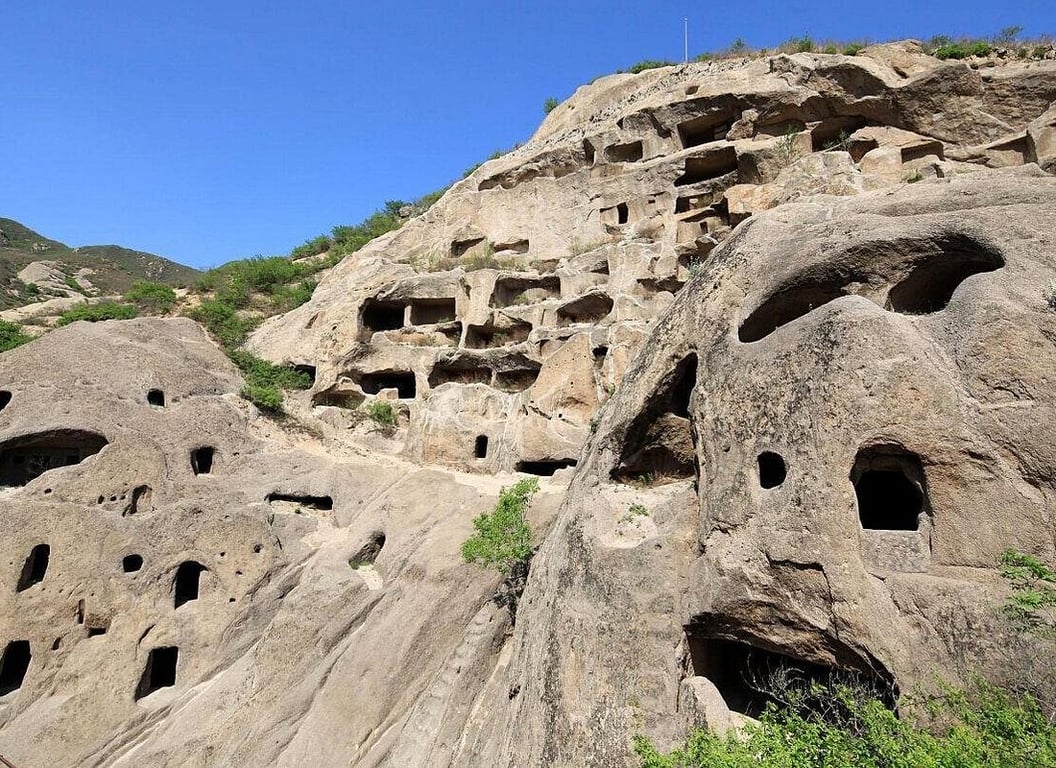
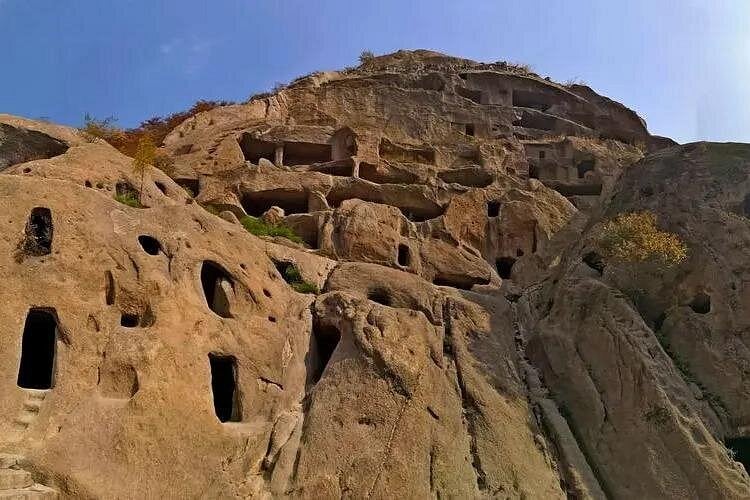
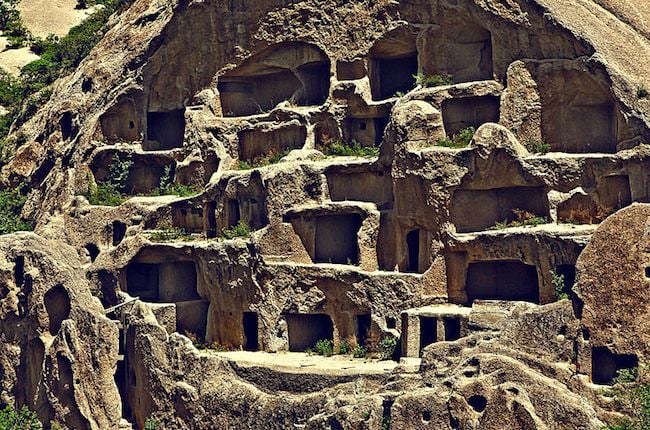
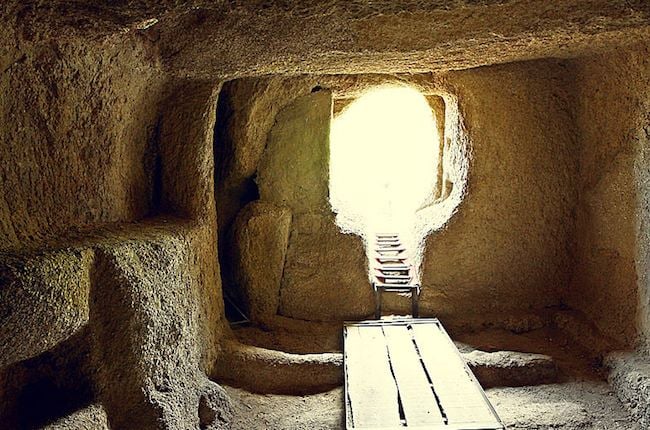
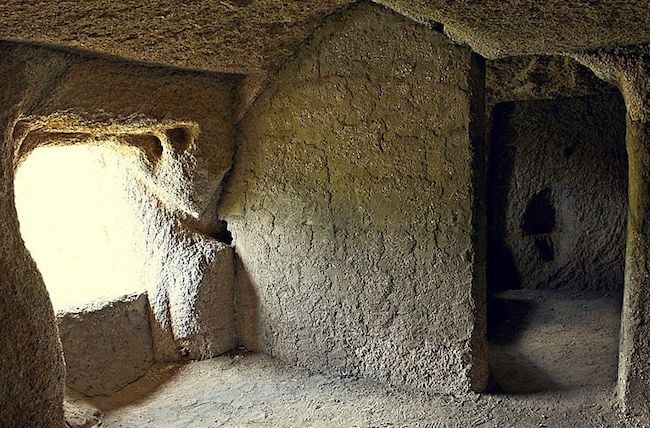
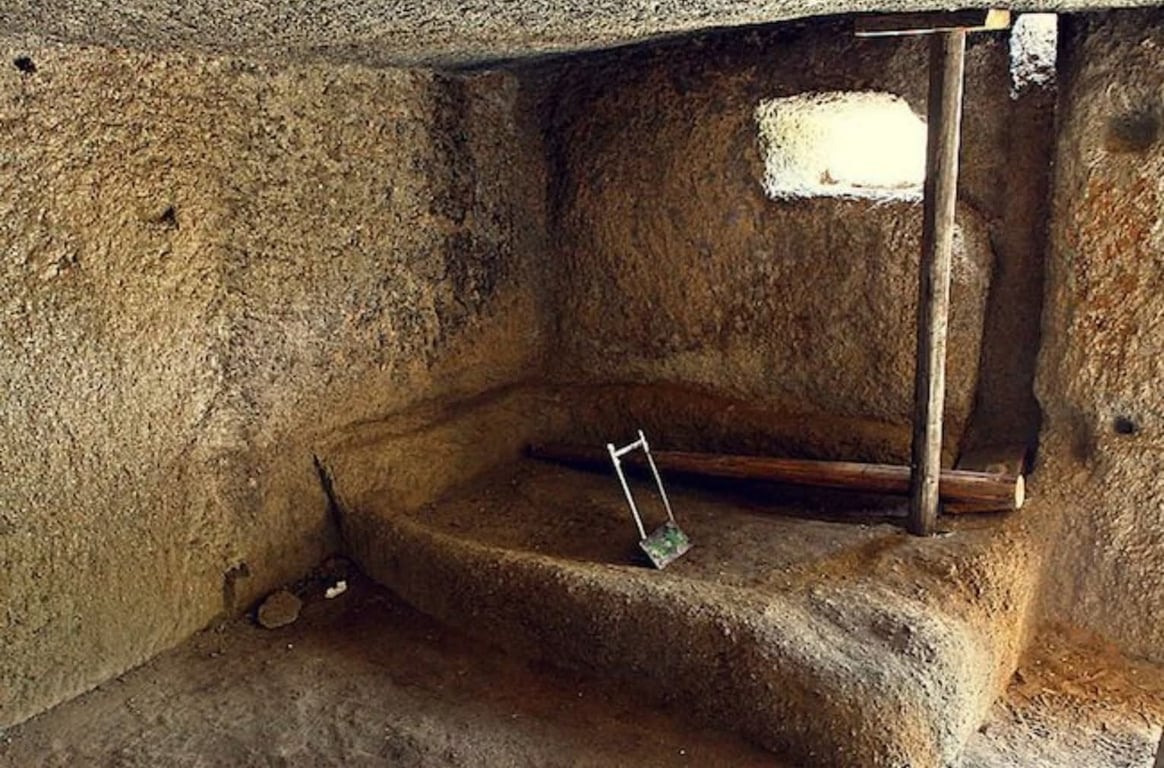
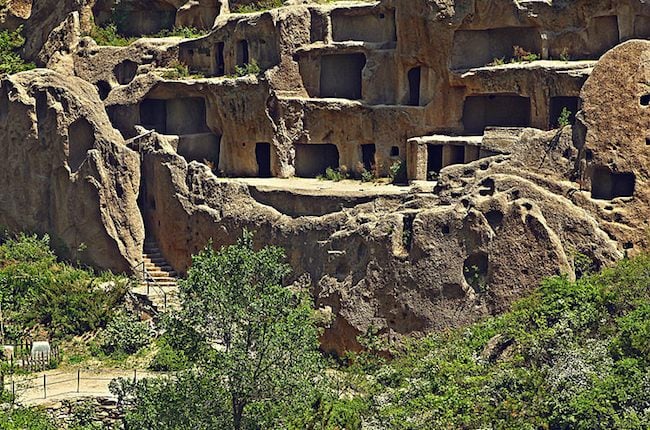
The layout of Guyaju is remarkably complex, suggesting a well-organized and structured community. The caves are not randomly placed but are arranged in a multi-level, almost apartment-like fashion. These chambers are interconnected by a network of vertical stone ladders, horizontal corridors, and winding staircases, all hewn directly from the rock. The dwellings themselves vary in size and function. Most are single-room abodes, but larger, multi-room complexes exist, possibly for families or community leaders. The ingenuity is astounding, with each unit featuring functional elements like stone beds (kangs), hearths for cooking and warmth, storage niches, and even mangers, indicating that livestock were kept within the cliff fortress.
Inside the Stone Houses
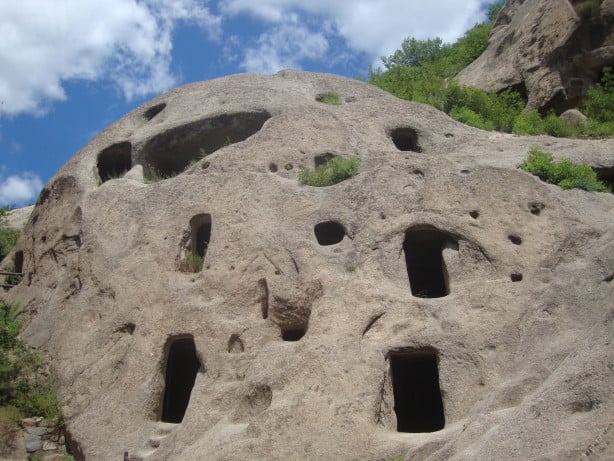
Peering into the individual caves offers a glimpse into the domestic life of the people who called this cliff home. The 'windows' are simple openings in the rock, framing views of the valley below. Smoke from the hearths was cleverly channeled outside through chimneys carved into the cliff face. Some of the most elaborate dwellings are found on the upper levels, including a two-story 'palace' at the pinnacle of the settlement. This particular chamber features a reception hall, bedrooms, and is supported by intricately carved stone pillars, suggesting it belonged to the community's chieftain or leader. The presence of a separate chamber believed to be a place of worship further underscores the organized nature of the society that thrived here.
The Unsolved Riddle of the Inhabitants
Despite the settlement's scale and sophistication, no historical records definitively identify who built or lived in Guyaju. The most prominent theory connects the site to the Kumo Xi, a nomadic people who were active in this region during the Tang and Liao Dynasties (7th-12th centuries). The term 'Ya' people is often used locally to describe the builders, but this name's origin is unclear. Scholars speculate that the Xi, facing threats from neighboring dynasties, may have carved this defensible fortress as a strategic refuge. The lack of written evidence, however, means their identity, their language, and their ultimate fate are lost to time, deepening the mystery that shrouds the cliffs.
Hidden in local memory and academic footnotes, Guyaju is more than a spectacular cliffside curiosity — it is a living puzzle that refuses tidy labels. Beyond guidebook photos and official summaries lie odd features, stubborn oral tales and speculative theories that thrill open-minded seekers: faint echoes of timber, stubborn soot rings, and stories of music at midnight. What follows gathers the unconventional threads — the whispers, the disputed claims and the uncanny parallels — that make Guyaju an enigma worth lingering over.
Traces the Textbooks Overlook
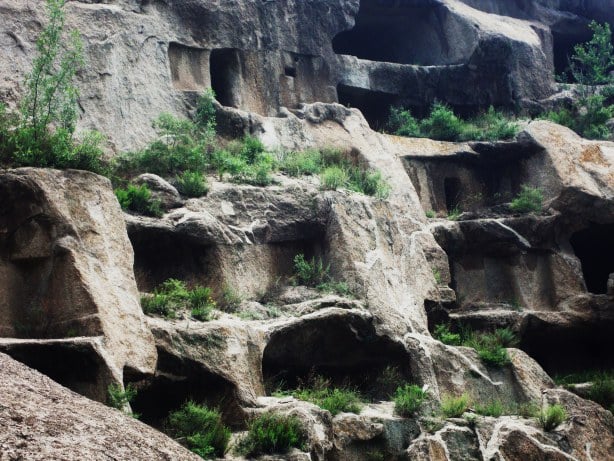
Beneath the tourist lens, the site preserves mundane but telling traces that scholars have only partially catalogued. Many caves show grooves and sockets carved for beams, implying roofs or wooden extensions once jutted from the rock face — a hybrid architecture of stone and timber that challenges the “pure cave” label. Soot rings and layered ash in hearth hollows hint at sustained indoor fires, not occasional shelter. Sparse artifact scatters — shards, occasional metal fragments and tiny hearth linings — suggest episodic occupation, specialized craft areas, or supply caches rather than a single, continuous settlement.
The Ghosts of Timber Joints
Those shallow beam-sockets are tiny but provocative evidence: did wooden porches, ladders or defensive galleries sit against the rock? If so, their disappearance (and lack of surviving documentation) hides a whole chapter of construction techniques now vanished from the visible record.
Whispers from the Cliff
Guyaju survives in village lore as a place that hums after dark. Locals tell of a lone flute heard through the ravine on certain nights, of lantern-light glimpsed in empty rooms, and of a refrain used to warn or invite. These are not the sensationalized ghost-tour tales but community memories: older residents insisting their grandparents spoke of refuge-seekers, bandit havens and brides hidden during turbulent eras. Such stories often encode social history — refugee movements, secret marriages, or temporary garrisoning — that leave little archaeological trace.
The Night Flute of Yanqing
The most persistent tale speaks of a flute-player who lured invaders into the maze and away from the sleeping village. It’s folkloric, yes, but also a social memory of how communities imagined protection — through cunning, sound and the labyrinthine topography itself.
Blueprints from an Unknown Hand?
Scholars and amateurs disagree fiercely about who carved Guyaju and why. Proposals range from frontier nomads adapting rock for permanence, to displaced groups fashioning a defensive enclave, to opportunistic bandit communities. The lack of inscriptions and limited scientific dating allows multiple timelines to survive simultaneously: each theory explains some oddities while leaving others untouched, making the site a focal point for archaeological debate rather than settled history.
The Nomad City Hypothesis
Proponents argue the complex’s layout — narrow passageways, trick staircases, and compact living cells — reflects a defensive, mobile-derived mindset rather than an agrarian village pattern. Critics reply that such features are also practical responses to cliff geometry and climate, not proof of a specific culture.
Echoes with Distant Caves
Across continents, people carved shelter into stone. Observers have pointed to curious parallels between Guyaju and other troglodyte complexes — from Anatolia’s conical hollows to Italy’s cliff towns — proposing a “global pattern” of cliff adaptation. More provocative are amateur claims of astronomical alignments or sight-lines to nearby fortifications that might hint at long-range signaling networks. Professional corroboration is scant, but the resonance of similar solutions to common problems — defense, climate control, resource scarcity — invites comparative curiosity.
A Line of Sky Markers?
Some enthusiasts map crude alignments with solstices or distant watchtowers; mainstream archaeology treats these as intriguing but unproven. Still, such ideas keep Guyaju on the edge between local mystery and a puzzle with potentially broader human significance.
Guyaju Caves — photo gallery