Giza Pyramid Complex
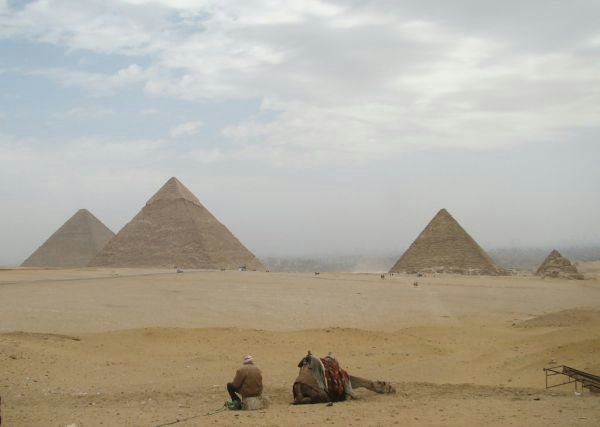
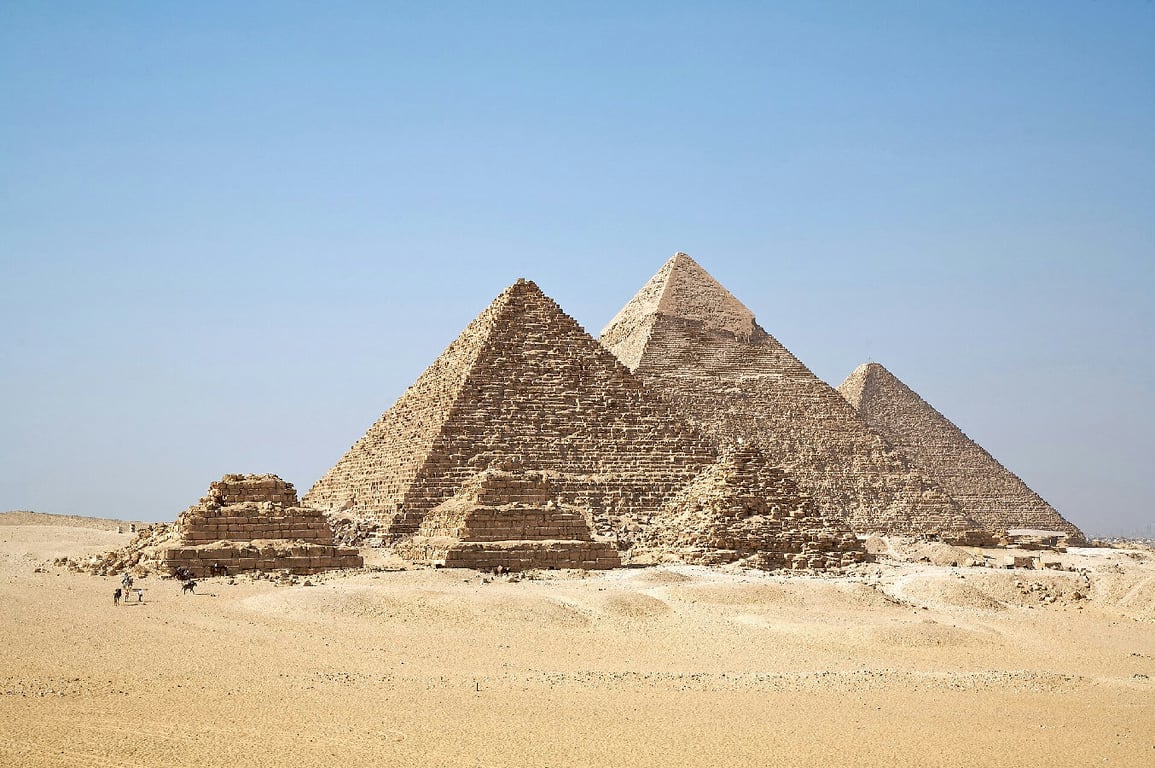
The last surviving Wonder of the Ancient World, the Giza complex still overwhelms. Three great pyramids, subsidiary structures, and a vast necropolis blanket the desert plateau.
Giza Pyramid Complex
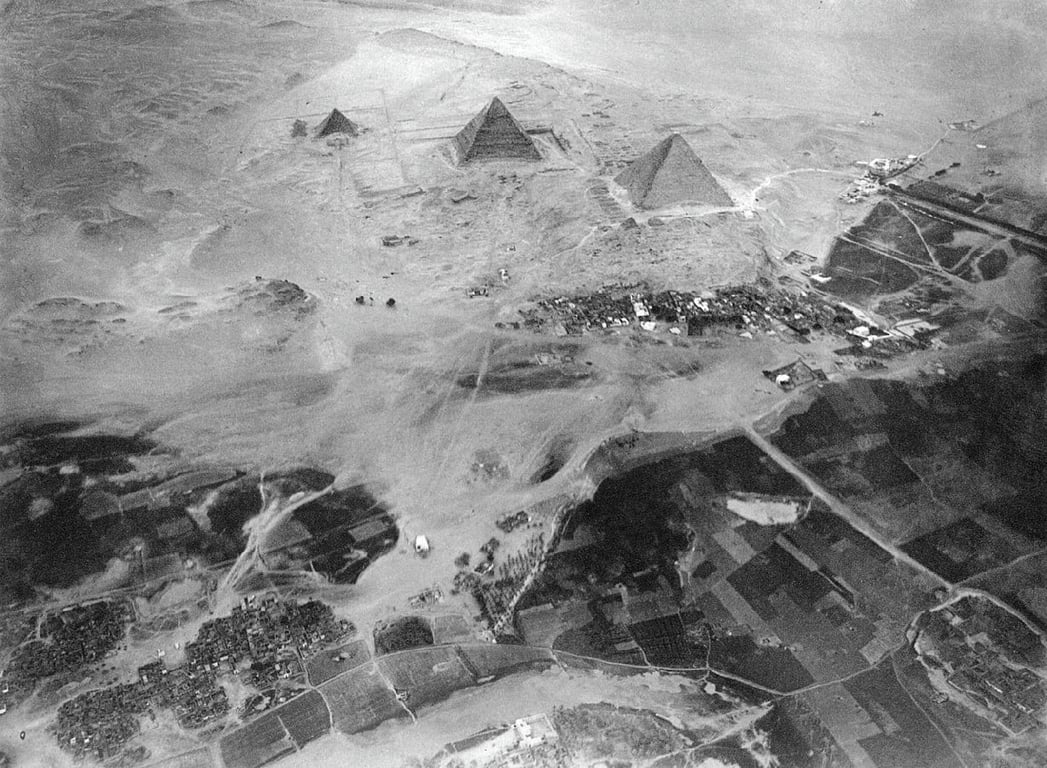
The Giza Pyramid Complex, on the arid plateau at the edge of modern Cairo, represents the absolute zenith of ancient Egyptian funerary architecture. For nearly 4,000 years, its largest structure, the Great Pyramid, stood as the tallest man-made object on Earth. The complex was the necropolis for at least three Fourth Dynasty pharaohs—Khufu, Khafre, and Menkaure—and served as a vast spiritual engine designed to propel their souls into the afterlife. More than just tombs, these monuments were the focal points of royal mortuary cults, which were endowed with estates of land and personnel to sustain the deceased king's spirit for eternity. The entire plateau is a carefully planned arrangement, including the three main pyramids, smaller queens' pyramids, the enigmatic Great Sphinx, multiple temples, causeways, and extensive fields of mastaba tombs for the royal family and high-ranking officials.
The Mountains of the Pharaohs
The three primary pyramids were built over a period of roughly 80 years, from about 2580 to 2500 BC. Each pyramid was the centerpiece of a complex that included a valley temple, a causeway, a mortuary temple directly at its base, and a fleet of sacred boats buried in pits nearby. The sheer scale of the project required a logistical mastery that is still staggering, marshalling a massive, highly organized workforce and colossal quantities of stone quarried both locally and from as far away as Aswan.
Khufu's Great Pyramid
The Great Pyramid, built for Pharaoh Khufu, is the largest and oldest of the three. Originally standing at 146.6 meters (481 feet) and clad in smooth, white Tura limestone, it was a breathtaking sight. It is comprised of an estimated 2.3 million stone blocks, some weighing over 80 tons. Its interior contains a complex system of passages and chambers, including the Queen's Chamber, the Grand Gallery, and the King's Chamber, which still houses Khufu's empty granite sarcophagus. The precision with which it is aligned to the cardinal directions showcases the advanced understanding of astronomy and mathematics possessed by its builders.
Khafre's Central Kingdom
Khafre, Khufu's son, built the second pyramid. Although slightly smaller than his father's, it appears taller due to its construction on a higher bedrock foundation. A significant portion of its original polished limestone casing remains at its apex, providing a glimpse of how the pyramids originally looked. Khafre's complex is the most complete on the plateau, retaining its valley temple, which is a masterpiece of Old Kingdom architecture, carved from massive granite blocks and housing the famous diorite statue of Khafre enthroned with the god Horus.
The Court of the Dead
Surrounding the great pyramids are hundreds of mastaba tombs. These flat-roofed, rectangular structures were the eternal homes for the pharaohs' relatives, priests, and highest officials. They were arranged in a grid-like pattern, creating veritable "streets" in this city of the dead. Many are decorated with intricate reliefs depicting scenes from daily life, religious rituals, and offerings, providing invaluable insight into the society and beliefs of the Old Kingdom. The smaller queens' pyramids, situated next to their husbands' monuments, ensured the royal women would accompany their kings into the afterlife.
Whispers from the Plateau of the Dead
Beyond the postcards and documentaries lies a Giza of whispers and shadows, a place of profound mystery that standard history often overlooks. While the world marvels at the mathematical precision of the pyramids, a deeper layer of enigma persists, woven from lost rituals, celestial maps, and forgotten voices. This is the Giza known not to tourists, but to mystics, fringe theorists, and the desert winds that have guarded its secrets for millennia. It is a puzzle box where the most fascinating clues are not the stones themselves, but the spaces between them.
The Ghost City of the Builders
For centuries, the dominant narrative held that legions of slaves toiled under the whip to raise the pyramids. Yet, just south of the plateau, archaeologists uncovered the "Lost City of the Pyramid Builders," a sprawling settlement that shatters this myth. This was no slave camp. Evidence points to a highly organized community of skilled artisans and laborers who were well-fed, receiving rations of prime beef, bread, and beer. They had bakeries, breweries, and medical facilities with evidence of advanced surgery, including brain operations and limb amputations. This discovery doesn't solve the mystery of Giza's construction; it deepens it. Who were these master builders, and what system of belief or civil duty inspired such a monumental, generation-spanning effort?
A Celestial Blueprint Etched in Stone
While the pyramids' alignment to the cardinal points is well-documented, some researchers propose a far more complex and controversial cosmic connection. These theories suggest the entire plateau is a terrestrial map of the heavens, a spiritual engine designed to interact with the cosmos in ways we are only beginning to comprehend.
The Star-Mirror on the Sand
The Orion Correlation Theory posits that the layout of the three main pyramids—Khufu, Khafre, and Menkaure—is a deliberate mirror of the three stars in Orion's Belt. The theory suggests the relative sizes and alignment of the pyramids, including their offset, precisely match the brightness and position of Alnitak, Alnilam, and Mintaka. Proponents argue the Giza complex was built as a grand homage to the celestial afterlife, a way to physically connect the pharaoh's journey with the constellation of Osiris, the god of rebirth.
The Chamber of Lost Frequencies
Inside the Great Pyramid, another mystery resonates—literally. Archaeoacoustic studies have explored the strange sonic properties of the King's Chamber. Built from solid granite, the chamber seems engineered to amplify sound and resonate at extremely low, infrasonic frequencies, many of which are below the range of human hearing. Some speculate these frequencies were central to ritualistic chanting, intended to induce altered states of consciousness and facilitate the pharaoh's spiritual transition. Was this stone sarcophagus not just a coffin, but a sonic instrument for a journey between worlds?
The Watcher's Ancient Riddle
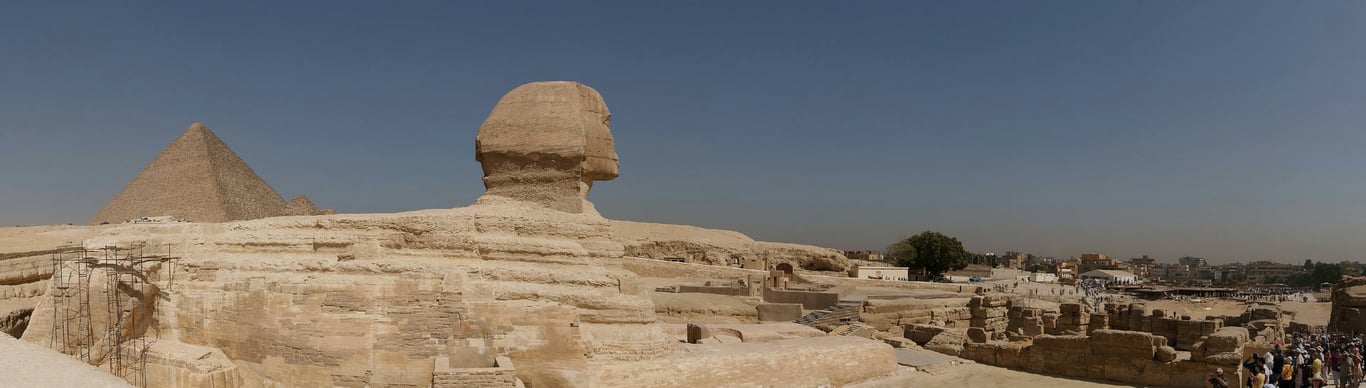
The Great Sphinx, known to early Arabs as Abu al-Hol or the "Father of Terror," is perhaps Giza's most profound enigma. Mainstream Egyptology dates it to the reign of Khafre, but its heavily eroded limestone body tells a different story to some geologists. The "Sphinx water erosion hypothesis" suggests the deep vertical fissures on its enclosure walls were caused by thousands of years of heavy rainfall—a climate pattern that hasn't existed in Egypt since before the dynastic pharaohs. This controversial theory places the Sphinx's origins in a much older, forgotten epoch, making it not a guardian of the pyramids, but a silent watcher that saw a different world entirely.
Giza Pyramid Complex — photo gallery