Ħal Saflieni Hypogeum
Descend into a unique three-level subterranean necropolis carved from solid rock, where over 7,000 individuals were laid to rest in a labyrinth of mysterious chambers.
Ħal Saflieni Hypogeum
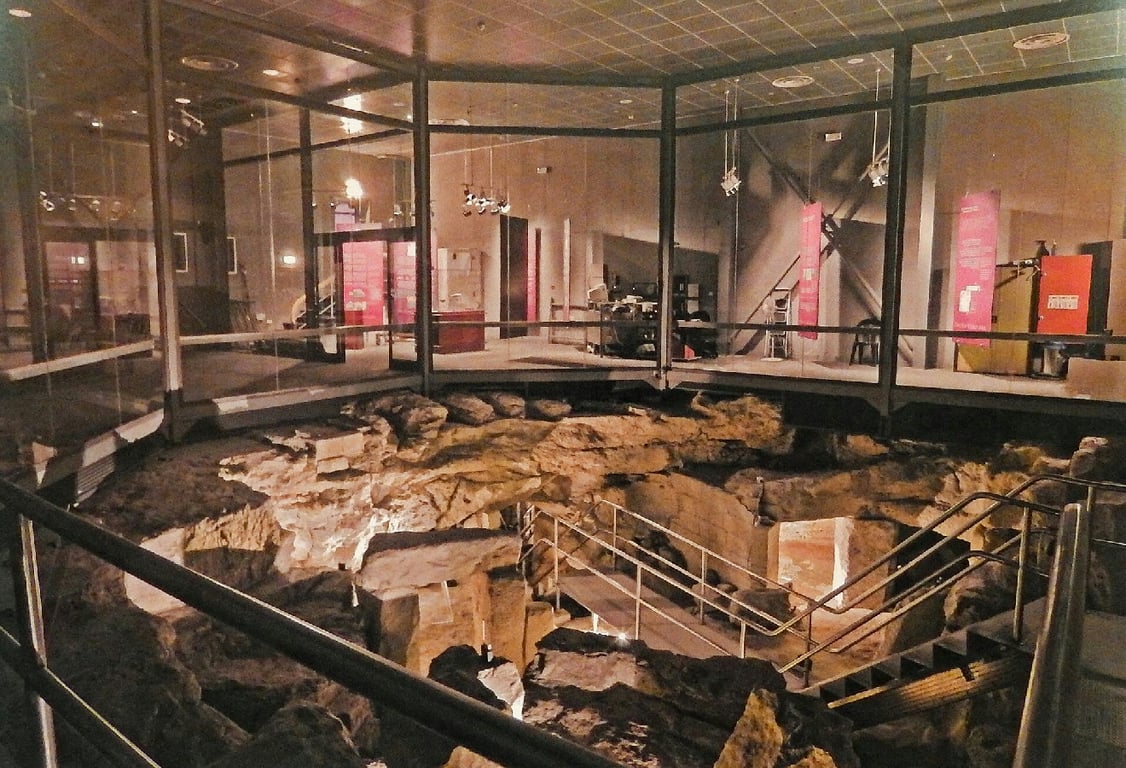
The Ħal Saflieni Hypogeum is an archaeological site unlike any other in the world. Carved directly from living limestone, this subterranean sanctuary is a multi-level labyrinth of chambers, passages, and halls that served as both a temple and a necropolis. Discovered by accident in 1902, this UNESCO World Heritage site dates back to approximately 4000-2500 BC. The remains of over 7,000 individuals have been found within its depths, making it a vast communal burial ground. Its exceptional state of preservation offers a direct, haunting window into the Neolithic mindset, revealing a world of ritual, death, and belief hidden beneath the earth. Due to its delicate microclimate, access is strictly limited, making a visit a rare and unforgettable privilege.
Journey Through the Underworld
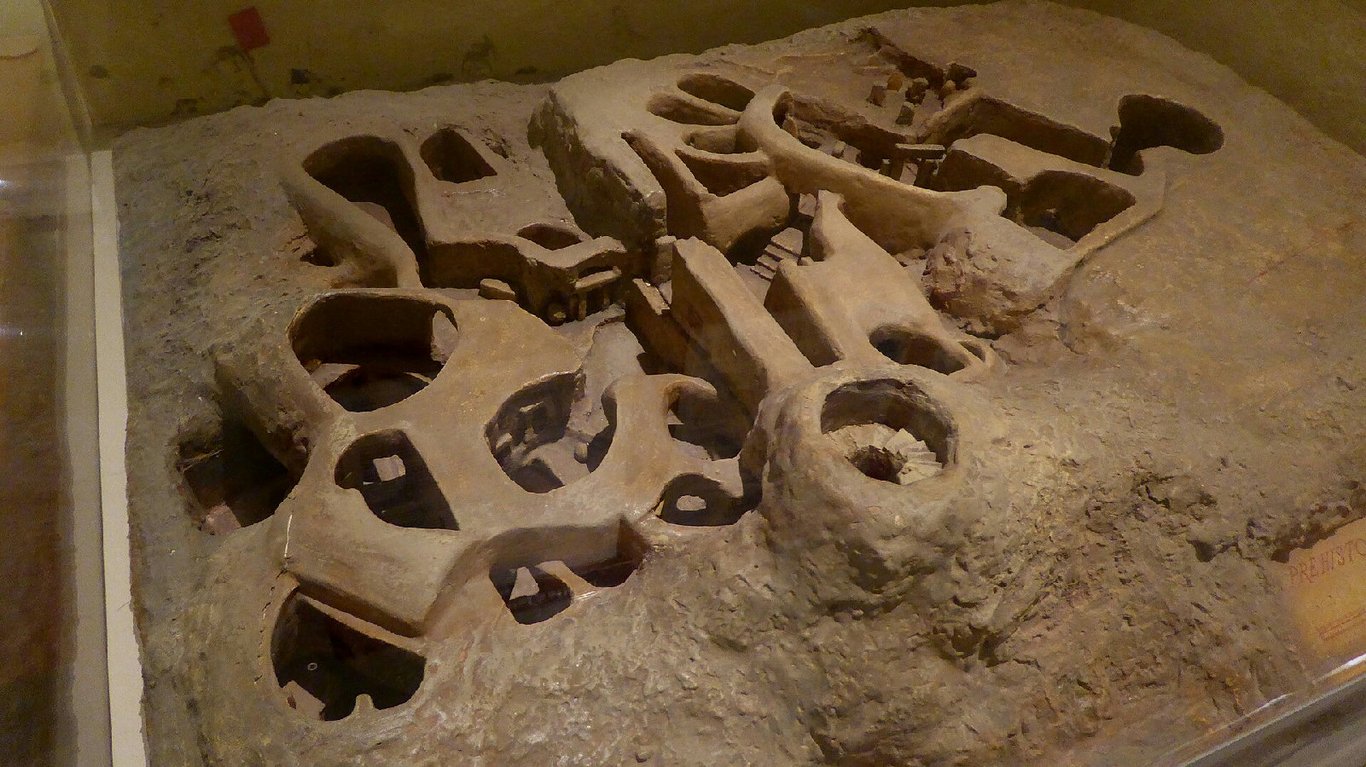
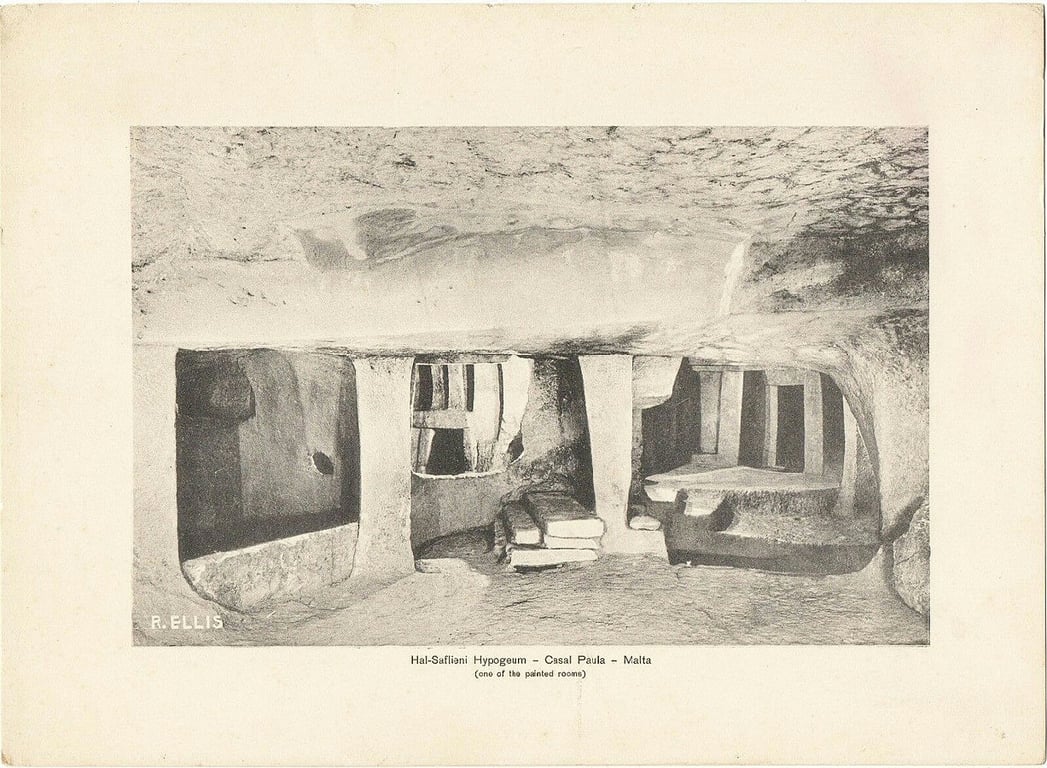
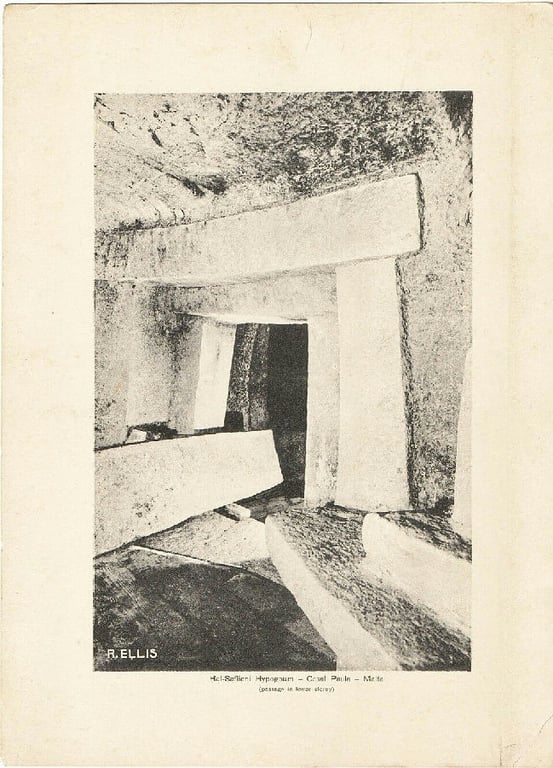
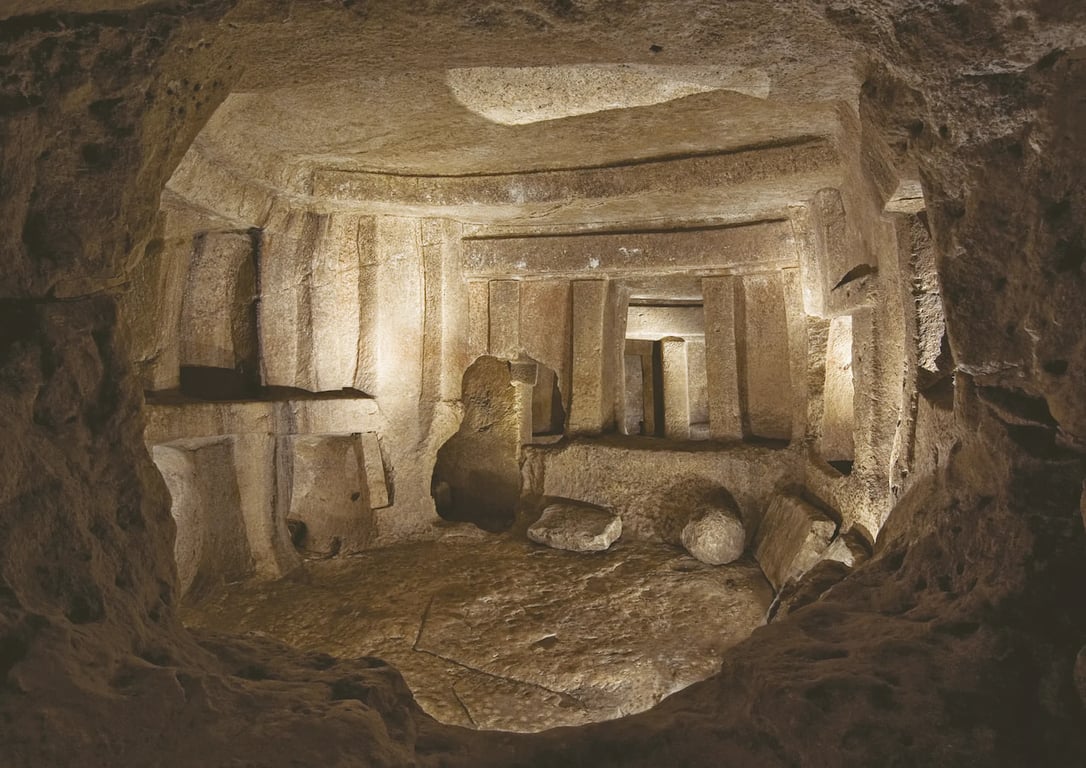
The Hypogeum is composed of three distinct levels, each carved at a different time. The uppermost level, the oldest, resembles the rock-cut tombs found elsewhere in Malta. The middle level, however, is where the craftsmanship reaches its zenith. Here, the chambers were meticulously shaped to imitate the architectural features of the above-ground megalithic temples, complete with corbelled ceilings, trilithon doorways, and false windows. This imitation of surface architecture in a subterranean space is unique and suggests a profound connection between the world of the living and the realm of the dead. It's as if the builders sought to create a permanent, eternal home for their deceased, mirroring the sacred spaces they used in life.
The Chamber of Echoes
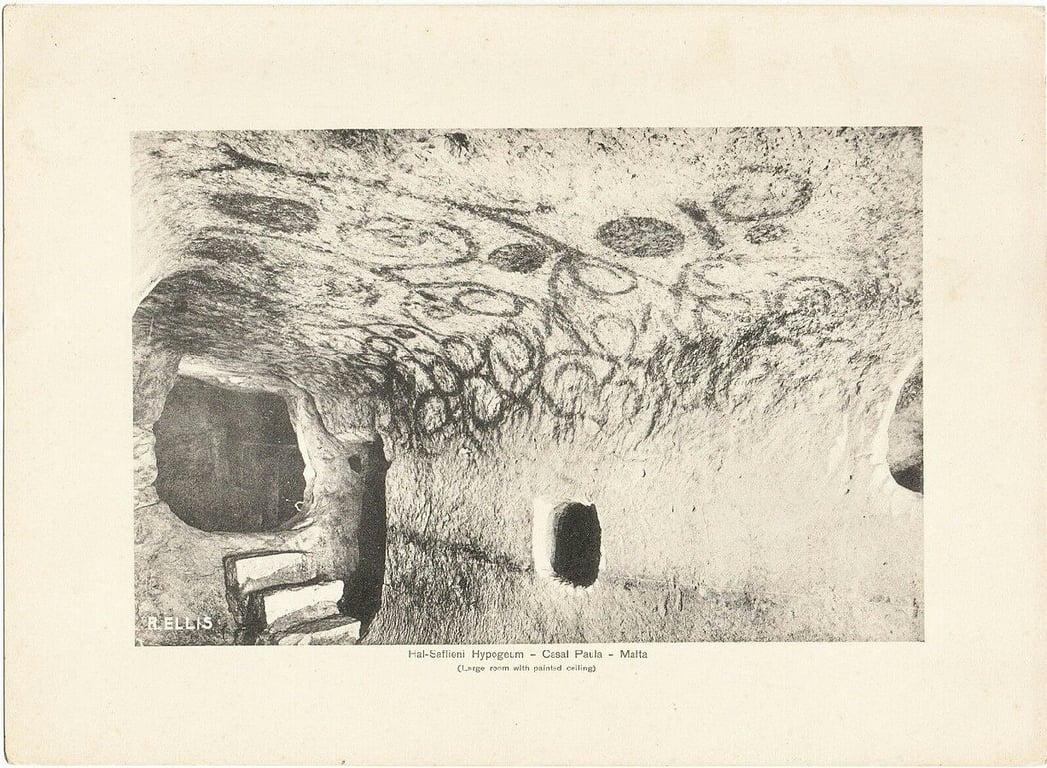
One of the most enigmatic spaces in the complex is the "Oracle Room" on the middle level. This small, rectangular chamber has a small niche cut into the wall which possesses extraordinary acoustic properties. A low-frequency sound (around 110 Hz) made within the niche is amplified and resonates throughout the entire Hypogeum, while higher-frequency sounds are barely audible. It is believed this was used during rituals, perhaps by a male oracle whose chanting voice would have filled the subterranean chambers with a disembodied, resonant hum, creating a powerful and transformative sensory experience for participants. This chamber, along with intricate red ochre spiral paintings found on the ceilings, points to the complex, multi-sensory nature of the ceremonies performed here.
A Fragile Legacy
The preservation of the Ħal Saflieni Hypogeum is a delicate balancing act. The carbon dioxide exhaled by visitors, along with changes in humidity and temperature, can cause irreparable damage to the limestone walls and the ancient ochre paintings. To protect this fragile environment, a strict conservation plan was implemented. Only a small number of visitors are allowed to enter each day in carefully controlled micro-groups. This necessary measure ensures the site's survival but also means that booking tickets well in advance is essential. The experience of walking through its silent, skilfully carved chambers is a profound one, connecting the visitor directly to the deep, mysterious history of Malta's prehistoric people.
Malta's Labyrinth of Whispers
While official narratives describe the Ħal Saflieni Hypogeum as a prehistoric necropolis, they barely scratch the surface of its profound strangeness. Beyond the staggering age and the thousands of souls laid to rest here lies a world of acoustic anomalies, unsettling legends, and archaeological enigmas that challenge our understanding of the ancient world. This subterranean complex was not merely a tomb; it was a place designed to alter consciousness, a stage for rituals we can only guess at, and the source of whispers that still echo today.
The Chamber That Sings to the Bones
Deep within the second level of the Hypogeum lies the "Oracle Chamber," a small room with a carved niche that possesses truly bizarre acoustic properties. A low-frequency male voice speaking into this niche is amplified and reverberates throughout the entire complex, while higher-frequency sounds are almost completely absorbed. Scientific analysis has revealed that the chamber resonates at a frequency of 110-111 Hz, a frequency found in other ancient sacred sites around the world. This specific resonance is known to have a powerful effect on the human brain, capable of shifting activity in the prefrontal cortex, deactivating language centers, and inducing a trance-like state similar to deep meditation. Was this chamber a tool for shamanic journeying, a way for a priest or priestess to speak with a "divine" voice that echoed through the bones of all who were present?
Echoes of a Lost Generation
Beyond the archaeological record, the Hypogeum is shrouded in chilling local folklore. The most persistent tale speaks of a group of elementary school students who vanished within its passages shortly before World War II. The story is a ghost light of Malta's collective memory, a tale told with eerie consistency.
The Vanishing Class
As the legend goes, a teacher led a class of students on a tour into the Hypogeum, venturing beyond the main chambers into one of the countless unexplored side passages. Suddenly, the rock behind them gave way in a landslide, sealing them in eternal darkness. For weeks afterward, faint cries of children were reportedly heard from deep underground, not just in the nearby village of Paola, but across the island. The story is dismissed as a macabre folktale, yet it persists—a warning that the labyrinth guards its secrets jealously and sometimes, it doesn't let go.
Riddles Written in Skulls
Perhaps one of the most controversial aspects of the Hypogeum is the nature of the human remains found within. Early excavation reports by Sir Temistocle Zammit describe thousands of skeletons, but a number of the recovered skulls were said to be highly unusual. These skulls were dolichocephalic, possessing an abnormal elongation of the cranium that was not characteristic of other human remains from the period. While mainstream archaeology often attributes such features to artificial cranial binding, others speculate they represent a unique race or a priestly elite. The mystery is only deepened by the fact that these specific skulls have since vanished from public display, fueling theories of a concerted effort to hide a history that doesn't fit the established timeline.
A Mirror to the World Above
The Hypogeum is not simply a cave; it is a meticulously sculpted imitation of architecture. Its creators painstakingly carved features like trilithon doorways, lintels, and corbelled ceilings from the solid rock, mimicking the construction of the megalithic temples found on the surface, such as Ħaġar Qim and Mnajdra. This raises a profound question: why replicate a surface world temple deep underground? Was the Hypogeum intended as a symbolic underworld, a "negative" of the sunlit temples of the living? Or was it a sacred blueprint, an eternal and unchanging sanctuary protected from the ravages of time, preserving the spiritual essence of a world that has long since passed away?
Ħal Saflieni Hypogeum — photo gallery