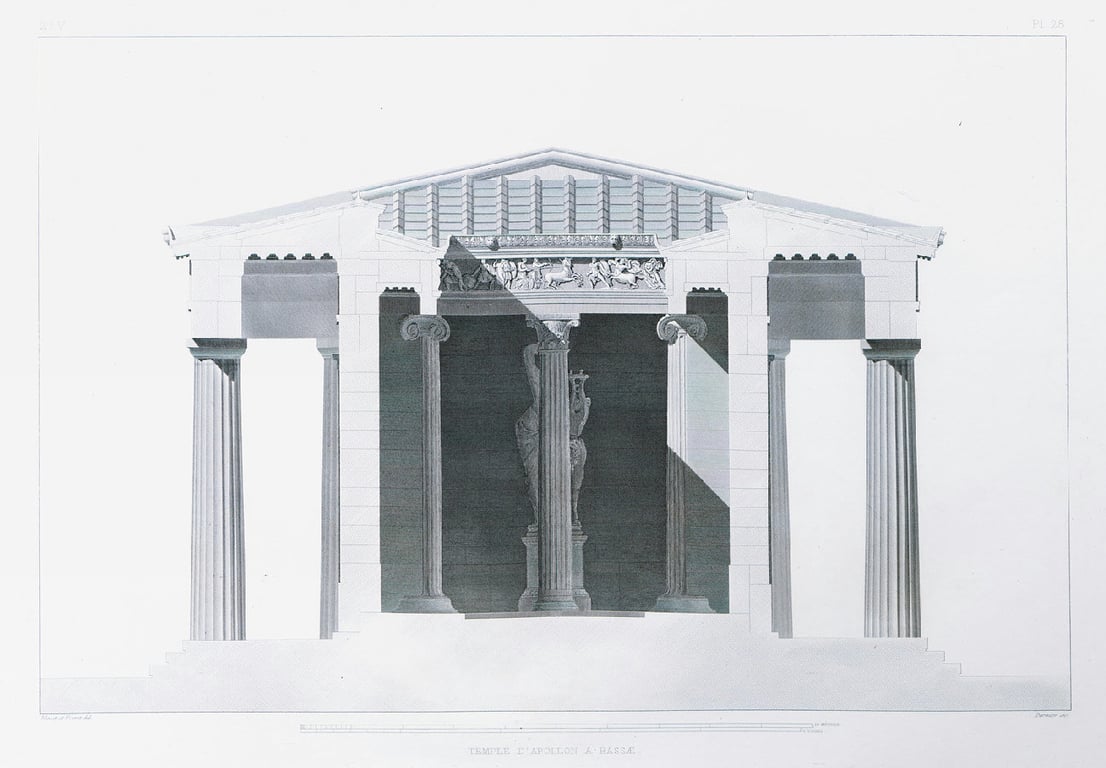
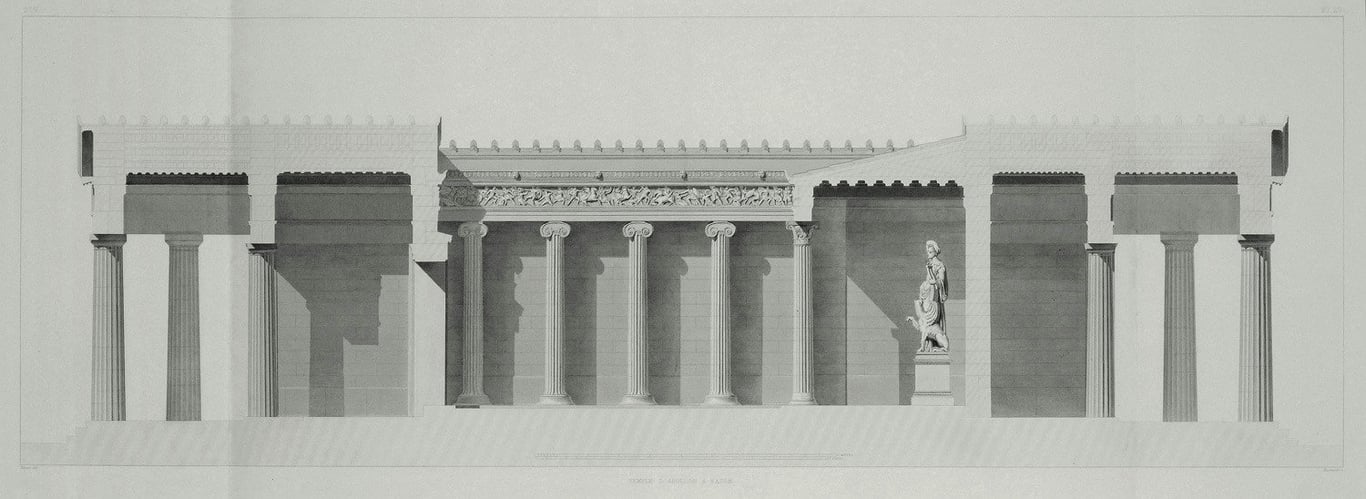
Temple of Apollo Epicurius at Bassae
An remarkably preserved Classical temple in the Arcadian mountains, famed for its innovative architectural features and the earliest known Corinthian capital.
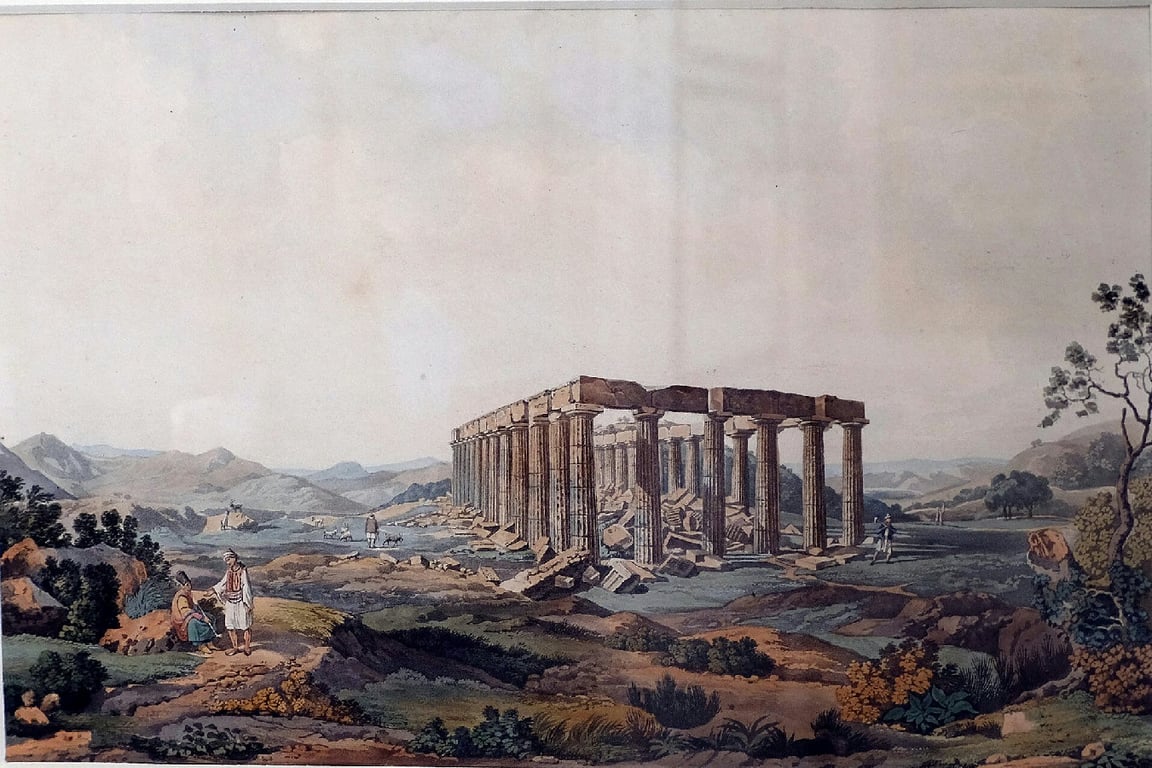
Temple of Apollo Epicurius at Bassae
Hidden within the remote, mountainous landscape of Arcadia, the Temple of Apollo Epicurius at Bassae stands as a testament to the genius of classical Greek architecture. Constructed between 420 and 400 BCE, this remarkable sanctuary is attributed to Iktinos, the celebrated architect of the Parthenon in Athens. Its remote location in the territory of Phigaleia contributed to its exceptional preservation, saving it from the ravages of war and the repurposing of its stone that befell many other ancient temples. It was one of the first Greek sites to be inscribed on the UNESCO World Heritage list in 1986, recognized for its unique artistic and architectural innovations.
A Unique Architectural Synthesis
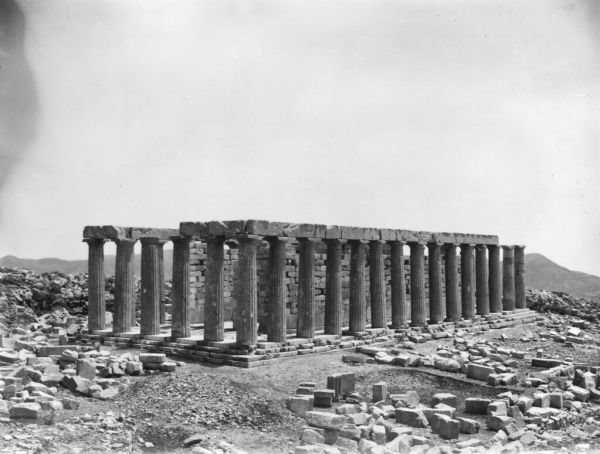
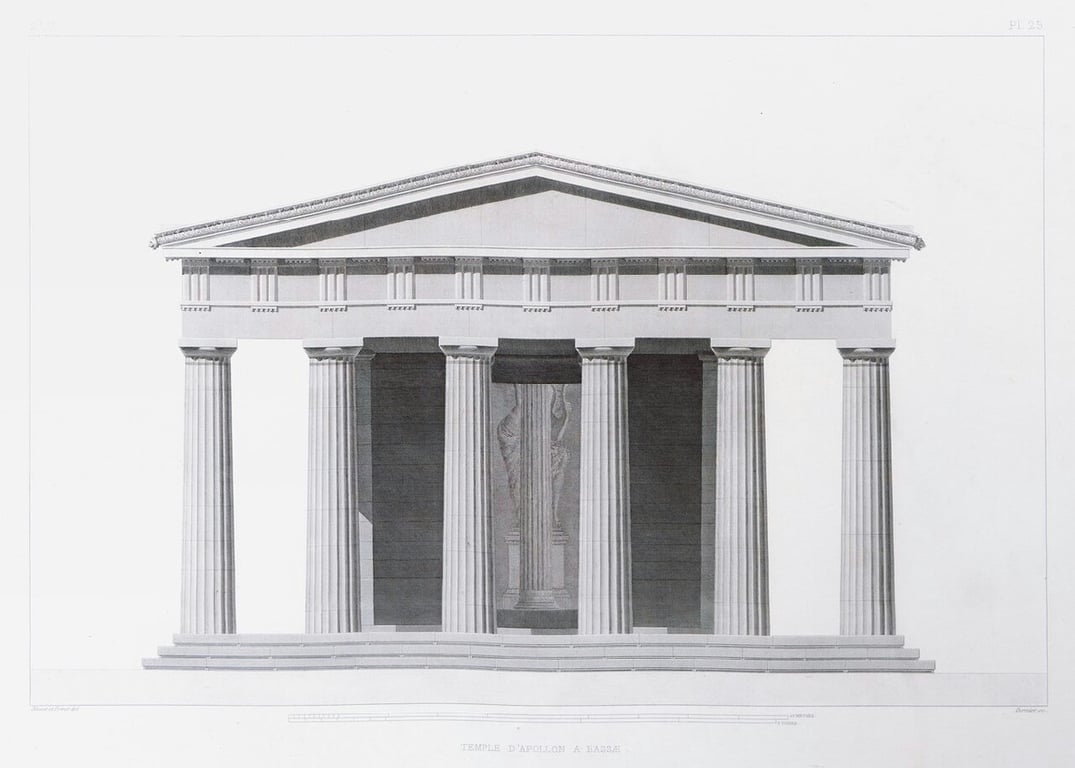
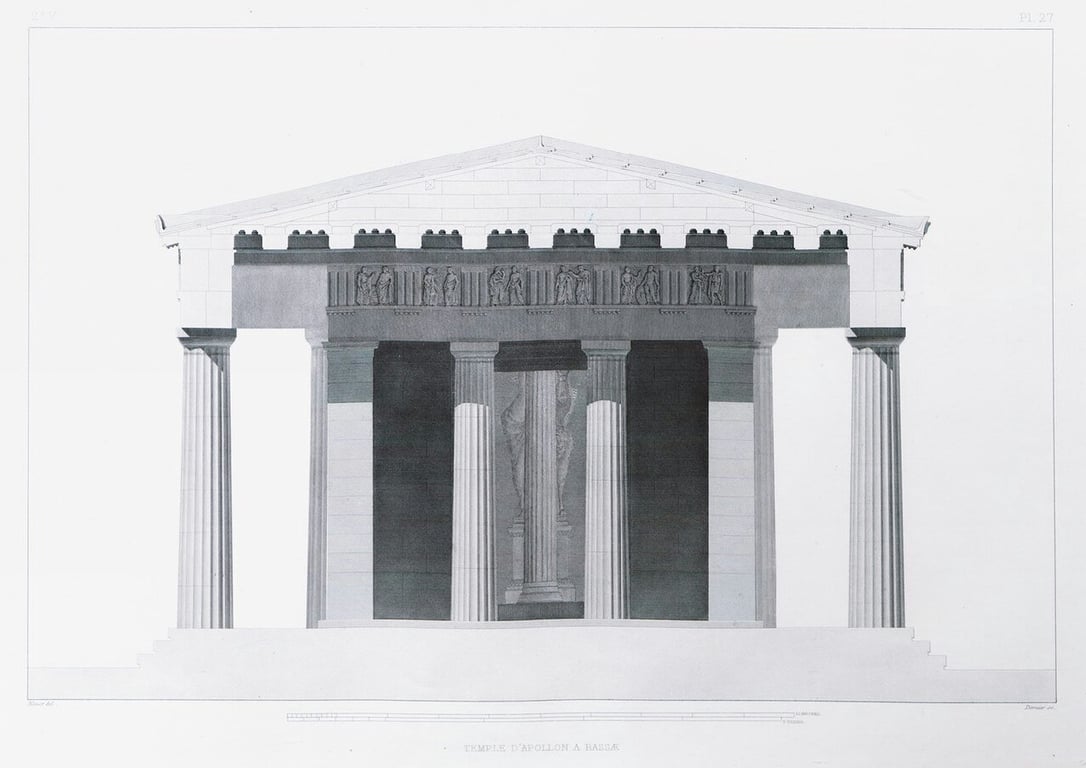
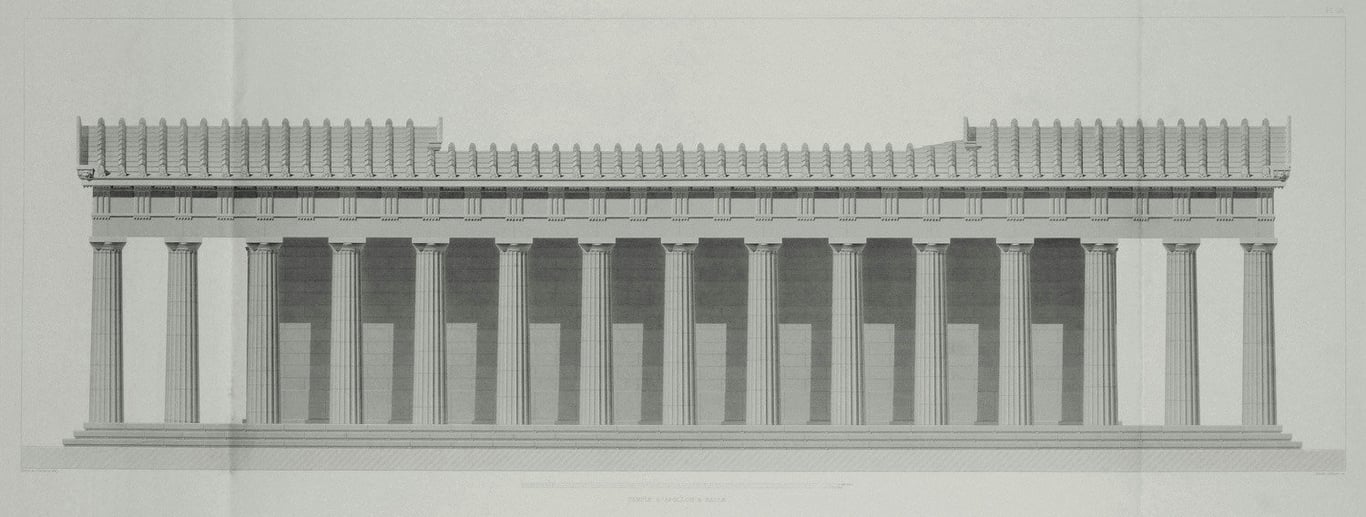
The temple's design is a marvel of creative synthesis, uniquely combining three different architectural orders. The exterior colonnade, a traditional peristyle of six by fifteen columns, is of the austere and sturdy Doric order, appropriate for the rugged landscape. Inside the cella, however, visitors would have been met with a series of engaged Ionic columns, creating alcoves along the walls. This interior arrangement was highly unusual, creating a more dynamic and enclosed space than a typical Greek temple. The ingenuity of Iktinos did not stop there; at the southern end of the cella, a single, central column stood, its capital being the earliest known example of the Corinthian order. This ornate capital, with its acanthus leaf decoration, became a foundational feature of later Roman and Renaissance architecture.
The Bassae Frieze
Another of the temple's most celebrated features was its continuous marble frieze that ran around the interior of the cella. Unlike the Parthenon frieze, which was on the exterior, this placement ensured it was viewed up close in a more intimate setting. The sculpted panels, totaling over 30 meters in length, depicted two epic mythological battles: the Centauromachy, the struggle between the Lapiths and Centaurs, and the Amazonomachy, the battle between the Greeks and the Amazons. The carving is noted for its high drama, deep emotion, and swirling motion, representing a masterwork of late Classical sculpture. Discovered in the 19th century, the frieze was removed from the site and is now a prized exhibit at the British Museum in London.
Preservation in Isolation
The temple's orientation is also unusual. While most Greek temples are aligned east-west, the Temple of Apollo Epicurius is aligned north-south. This may have been due to specific cult requirements or limitations of the terrain on the steep mountainside. Dedicated to Apollo Epicurius, meaning "Apollo the Helper," the sanctuary was likely built by the Phigaleians in gratitude for being spared from a plague. Today, the temple is protected from the elements by a large, semi-permanent tent structure, an essential measure to conserve its fragile limestone and marble from the harsh mountain climate as extensive restoration work continues. This protective shelter, while obscuring its profile against the sky, ensures that the visionary work of Iktinos endures for future generations to study and admire.
The Arcadian Anomaly: Bassae's Unspoken Secrets
Far from the well-trodden paths of ancient Greece, shrouded in the high-altitude mists of Arcadia, the Temple of Apollo Epicurius guards secrets far deeper than its celebrated architecture. While history credits Iktinos, the mind behind the Parthenon, with its creation, the temple at Bassae deviates from the classical playbook in ways that continue to baffle scholars. It is a stone enigma, a structure that seems to follow a different set of rules, whispering of forgotten purposes and celestial alignments lost to time.
A Cipher of Three Orders
The temple's most glaring peculiarity is its audacious blend of all three classical architectural orders. Externally, it presents a stoic, traditional Doric colonnade. Yet, upon entering the inner sanctum, or cella, one is met with elegant Ionic columns engaged with the walls. Most mysteriously, at the heart of the space stood a single, free-standing column crowned with the earliest known Corinthian capital in history. This stylistic fusion is unparalleled. Why would an architect of Iktinos's stature create such a hybrid in this remote location? Some theorists suggest it wasn't a mere aesthetic choice, but a symbolic representation of a philosophical or cosmic harmony—a unified architectural theory hidden from the public eye.
The Sun's Secret Doorway
Almost every Greek temple is oriented on an east-west axis, designed to face the rising sun. Bassae defies this fundamental rule, aligning itself north-south. This radical departure has fueled intense speculation for centuries. The most compelling clue is an unusual, intentionally placed door on the eastern wall of the cella. This placement is no accident.
A Celestial Clock for the Solstice
Fringe archaeological theories propose the temple was more than a place of worship; it was a sophisticated astronomical device. The north-south orientation, combined with the eastern door, allowed the first rays of the summer solstice sunrise to stream directly through the opening, brilliantly illuminating the cult statue of Apollo within. This annual event would have been a breathtaking spectacle, suggesting the temple was built to mark a specific, powerful moment in the cosmic calendar. It was less a building and more a celestial clock, binding the god of light to the very turning of the earth.
Whispers from the Frieze
Unlike the Parthenon's famous frieze, which adorned its exterior for all to see, the Bassae Frieze was placed inside the cella. This stunning marble narrative, depicting brutal battles between Greeks, Amazons, and Centaurs, was hidden from public view, visible only to priests or initiates who were permitted to enter the temple's sacred core. This interior placement suggests a more esoteric purpose.
A Lesson for the Initiated
One compelling theory argues the frieze was not public art but a private, symbolic teaching tool. For a select few, the violent imagery may have represented the internal struggle between civilization (Greeks) and primal chaos (Centaurs/Amazons)—a core lesson in a mystery school dedicated to Apollo. In the sacred quiet of the cella, the frieze served as a coded manuscript, a visual guide for esoteric rites and philosophical transformation, its true meaning reserved for those deemed worthy.
Temple of Apollo Epicurius at Bassae — photo gallery