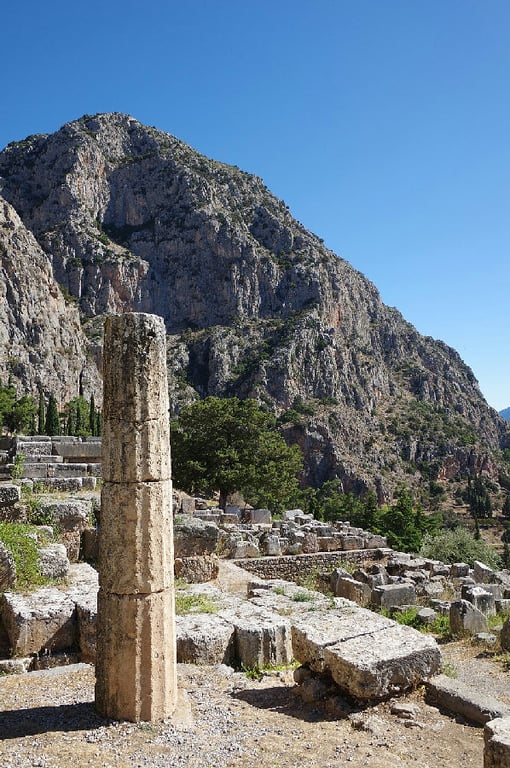
Temple of Apollo at Delphi
Once the most sacred site in ancient Greece, this mountain sanctuary was home to the legendary Oracle of Apollo. Her cryptic prophecies shaped the destinies of kings and empires.
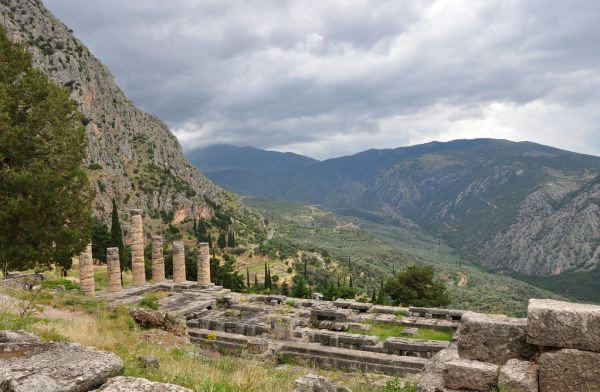
Temple of Apollo at Delphi
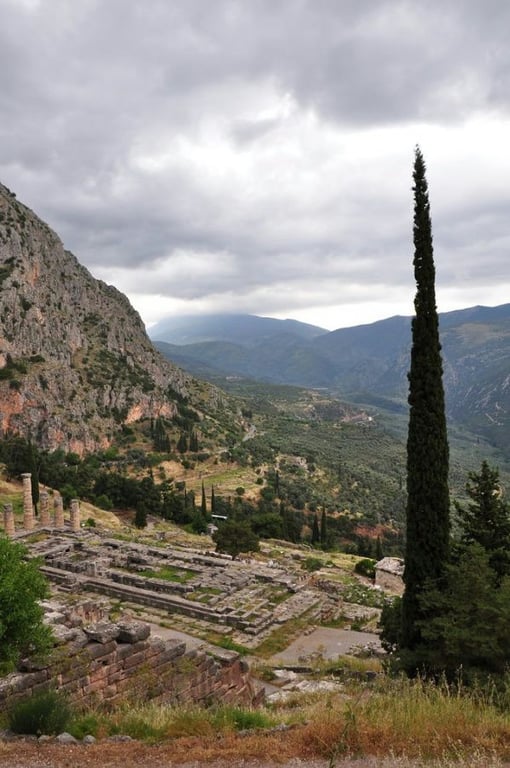
On the precipitous slopes of Mount Parnassus, the Sanctuary of Apollo at Delphi was the spiritual center of the ancient Greek world. For centuries, this was the home of the Pythia, the famous oracle who channeled the divine words of the god Apollo. Pilgrims, from common folk to kings and conquerors, journeyed here to seek guidance on matters of state, war, and personal destiny. The pronouncements of the Delphic oracle were famously ambiguous, yet they held immense power, shaping the course of Greek history. The site was not merely a temple but a sprawling complex of treasuries, altars, a theater, and a stadium, all set against a backdrop of breathtaking natural beauty that was believed to enhance the divine connection.
The Navel of the World
According to legend, Zeus released two eagles from opposite ends of the earth, and they met at Delphi, marking it as the center, or omphalos ("navel"), of the world. A sacred stone, the Omphalos, was housed in the temple's inner sanctum, the adyton, where the Pythia delivered her prophecies. This belief cemented Delphi's importance, making it a pan-Hellenic sanctuary where all Greek city-states could come together. They built magnificent treasuries along the Sacred Way, the path leading to the temple, to house their votive offerings to Apollo. These structures were not just for storage; they were lavish displays of wealth and piety, competing to outdo one another in grandeur and artistic merit, turning the sanctuary into a museum of ancient Greek art and architecture.
Echoes on the Slopes
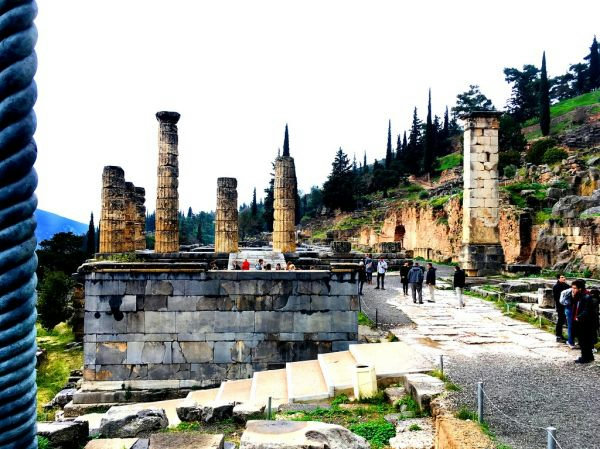
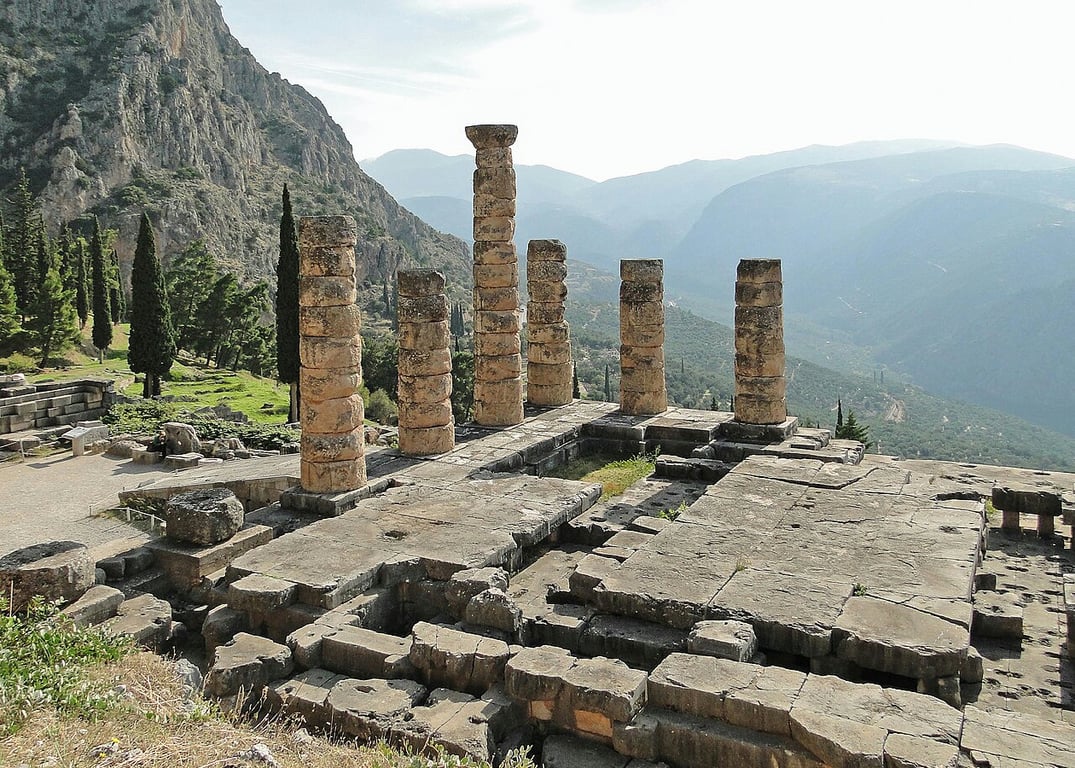
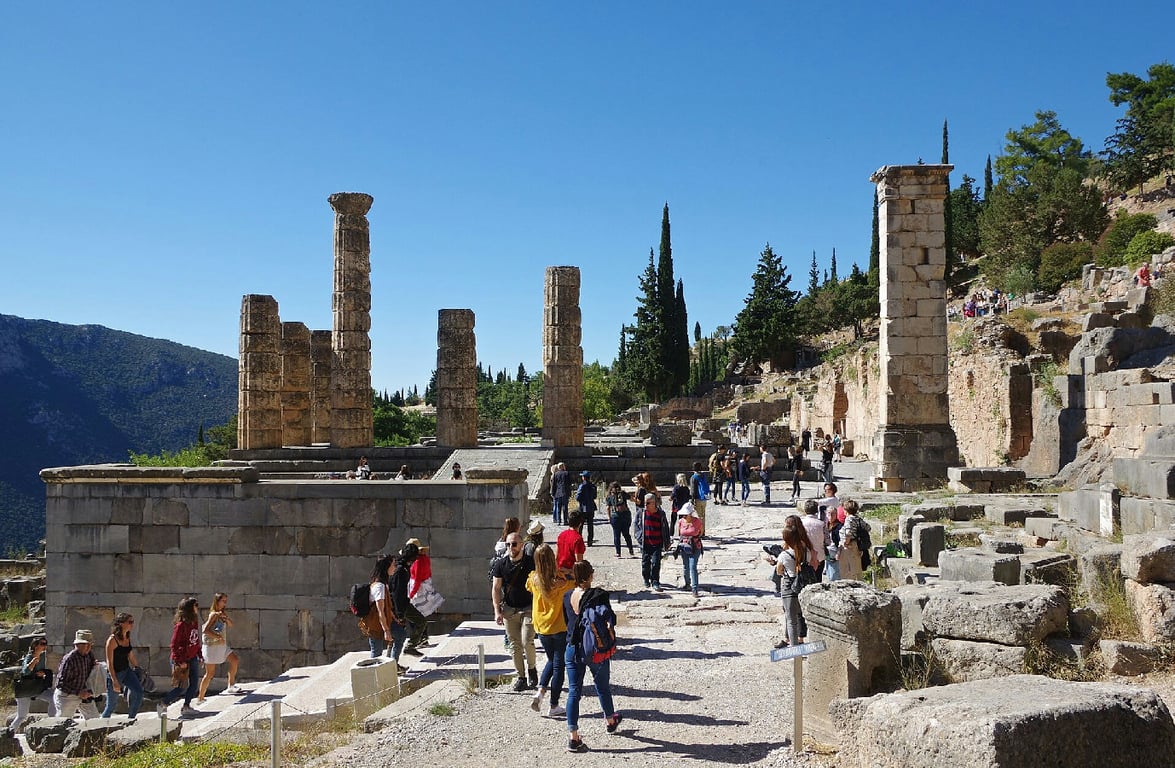
The physical heart of the sanctuary was the Temple of Apollo itself. The current ruins belong to the fourth version of the temple, built in the 4th century BCE after its predecessor was destroyed by an earthquake. Doric columns rose toward the sky, and its pediments were adorned with sculptures depicting scenes from Greek mythology. Inscribed on its forecourt were famous maxims, including "Know thyself" and "Nothing in excess," reminders of the wisdom that mortals should seek. Above the temple, a well-preserved theater offered seating for thousands, hosting musical contests during the Pythian Games, which were held every four years to honor Apollo. Further up the slope, the stadium held athletic competitions, its stone seats a testament to the site's role as a hub of both religious and cultural life. Today, wandering through the silent ruins, one can still feel the profound spiritual power that once emanated from this sacred mountain sanctuary.
Vestiges of Prophecy
While the temple now stands in ruins, its foundations and scattered columns evoke a powerful sense of its former glory. The path of the Sacred Way still winds up the mountainside, flanked by the remains of the treasuries built by city-states like Athens and Sicyon. Visitors can stand in the theater and imagine the ancient performances or walk the length of the stadium where athletes once competed. The Castalian Spring, where petitioners purified themselves before consulting the oracle, still flows nearby. Delphi is more than just an archaeological site; it is a landscape imbued with myth and history, a place where the line between the human and the divine was once believed to be at its thinnest, and its influence on the classical world is impossible to overstate.
Echoes from the Earth's Navel: Delphi's Deeper Mysteries
While the world remembers Delphi for the cryptic pronouncements of Apollo's Pythia, the true story of this sacred mountain is etched far deeper than the temple's surviving columns. Before Apollo claimed the site, other, older forces held sway here, and their whispers can still be felt by those who listen past the tourist guides. The true mysteries of Delphi are not just in the oracle's lost words, but in the very ground that birthed them—a place of geological anomalies, forgotten deities, and cosmic connections that scholars are only beginning to decipher.
The Shadow of the Pythoness
Long before the first stone of Apollo's temple was laid, Delphi was known as Pytho, a primary sanctuary dedicated to the primordial Earth Mother, Gaia. This was her domain, a place of chthonic power guarded by her child, the great serpent Python. The famous myth of Apollo slaying the serpent is not merely a heroic tale; it is a cultural memory of conquest. It signifies the violent overthrow of an ancient, female-centric earth cult by the new, male-dominated Olympian pantheon. The very title of the oracle, the Pythia, is a direct echo of the slain serpent, a clue that Apollo's priestess drew her power from the very entity her patron god had vanquished. This older, darker energy never truly left the mountain slopes.
The Intoxicating Breath of Gaia
For centuries, historians dismissed the ancient accounts of sweet-smelling vapors inducing the Pythia's trance as mere myth. The classical image of a wise priestess was preferred over that of a woman intoxicated by subterranean fumes. However, modern archaeology and geology have unearthed a startling possibility that validates the ancient texts.
Riddles in the Rock
Geological surveys have revealed that the temple was deliberately built over the intersection of two major fault lines, the Kerna and the Delphic faults. It is now theorized that seismic activity along these faults could have heated limestone deposits, releasing light hydrocarbon gases, including ethylene—a sweet-smelling narcotic known to induce euphoric, trance-like states. The "inspirational Pneuma," or divine breath, that the Pythia inhaled may have been a scientifically observable phenomenon, a geological key that unlocked the door to prophecy.
The Stone That Fell From Heaven
At the very heart of the sanctuary sat the Omphalos, a conical stone artifact marking Delphi as the "navel" or center of the world. While mythology claims it was dropped by Zeus, its true nature and purpose remain an enigma that invites profound speculation.
A Map to the Cosmic Center?
The Omphalos was more than a symbolic marker. Some researchers in the field of archaeoastronomy and sacred geometry propose it was a powerful node, a focal point of terrestrial energy. Theories connect Delphi to a global grid of ancient sites, suggesting the Omphalos acted as a geodetic marker within a forgotten system of planetary engineering. Others point to its unusual, beehive-like carvings and suggest it may have been a model of a celestial map or even a representation of a meteorite, a literal stone that fell from the heavens, imbuing the site with cosmic significance that we have long since forgotten.
Temple of Apollo at Delphi — photo gallery