Petralona Cave
A stunning karst cave that held a major paleoanthropological discovery: the "Petralona Skull," one of the oldest early human craniums ever found in Europe.
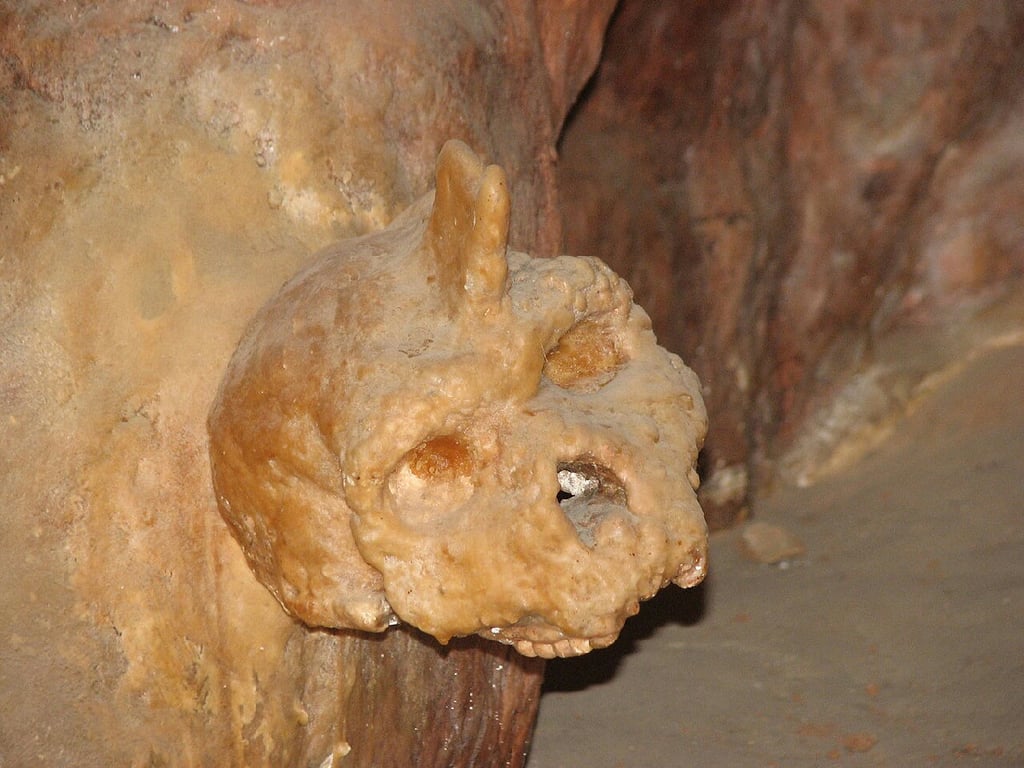
Petralona Cave
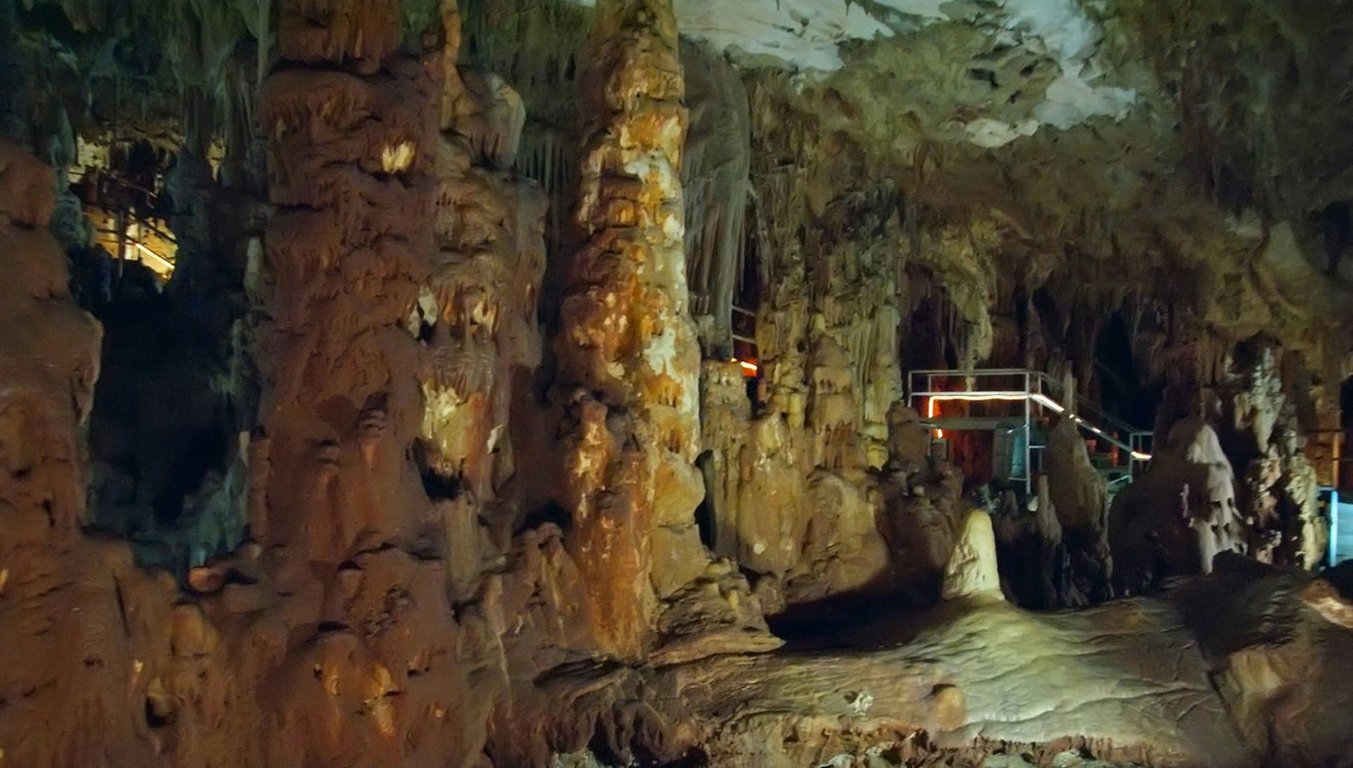
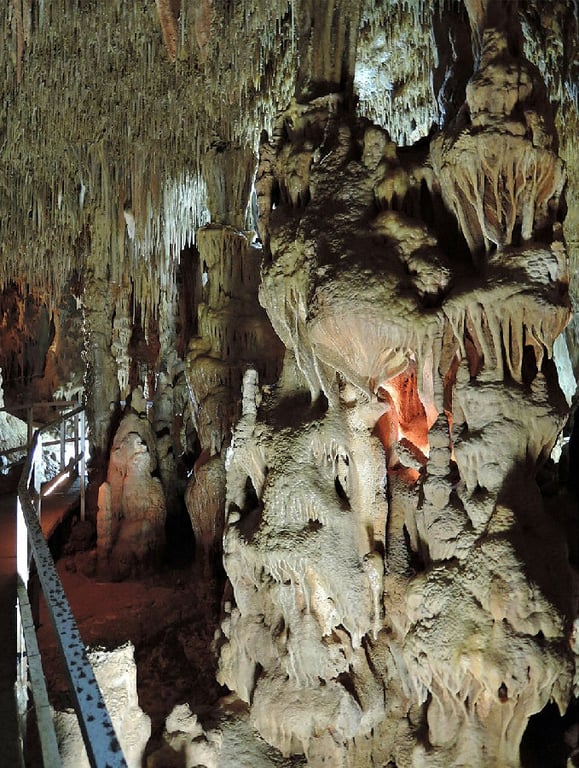
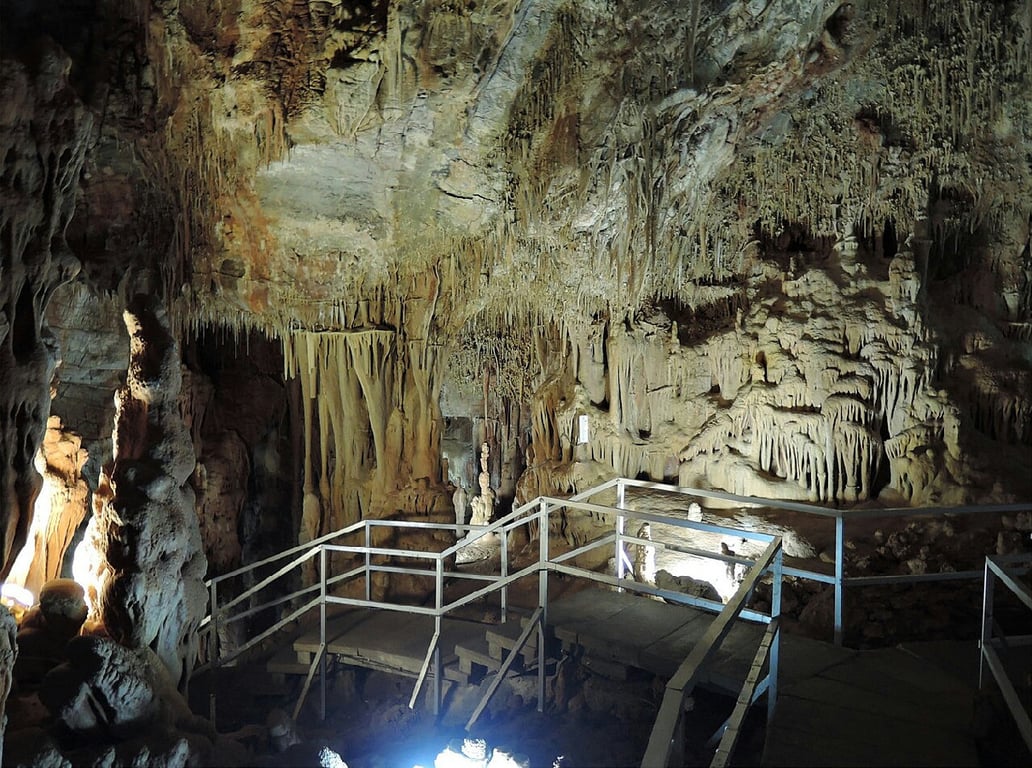
Located in the foothills of Mount Katsika in Halkidiki, northern Greece, the Cave of Petralona is a site of immense paleoanthropological significance. Accidentally discovered in 1959 by a local villager, the cave is a karstic labyrinth of chambers adorned with spectacular stalactite and stalagmite formations. While visually stunning, its true importance lies in the fossilized remains it has yielded. The cave's stable environment provided perfect conditions for preserving the bones of animals and, most importantly, early hominids who used it for shelter. Its most famous discovery has placed it at the center of debates about human evolution in Europe, making it a crucial landmark in the story of our most ancient ancestors.
The Archanthropus of Petralona
In 1960, the most significant find was made: a remarkably well-preserved fossilized hominid skull, which quickly became known as the "Petralona Skull." The skull belonged to an archaic human, displaying a mosaic of features from both Homo erectus and Homo neanderthalensis. Initially dated to be around 700,000 years old, which would have made it the oldest human fossil found in Europe at the time, subsequent and more detailed analyses have produced a range of dates, with most modern studies placing it between 200,000 and 400,000 years old. This individual, often referred to as Archanthropus europaeus petraloniensis, has been critical to understanding the presence and evolution of early humans on the European continent during the Middle Pleistocene, representing a potential ancestor to the Neanderthals or a related lineage.
A Prehistoric Ecosystem Preserved
The skull was not found in isolation. The cave is a rich paleontological treasure trove, containing the fossilized remains of numerous animal species, many of which are now extinct. Thousands of fossils from at least 25 different animal species have been identified, including cave bears, lions, hyenas, panthers, rhinos, and various types of deer. These bones, found in dense layers, have allowed scientists to reconstruct the prehistoric environment of the region. Furthermore, the discovery of traces of fire, believed to be among the earliest ever found, provides evidence of the cognitive and technological capabilities of the hominids who inhabited the cave. The presence of ash and burned bone suggests they were harnessing fire for warmth, protection, and possibly cooking, a major step in human development.
A Window into Deep Time
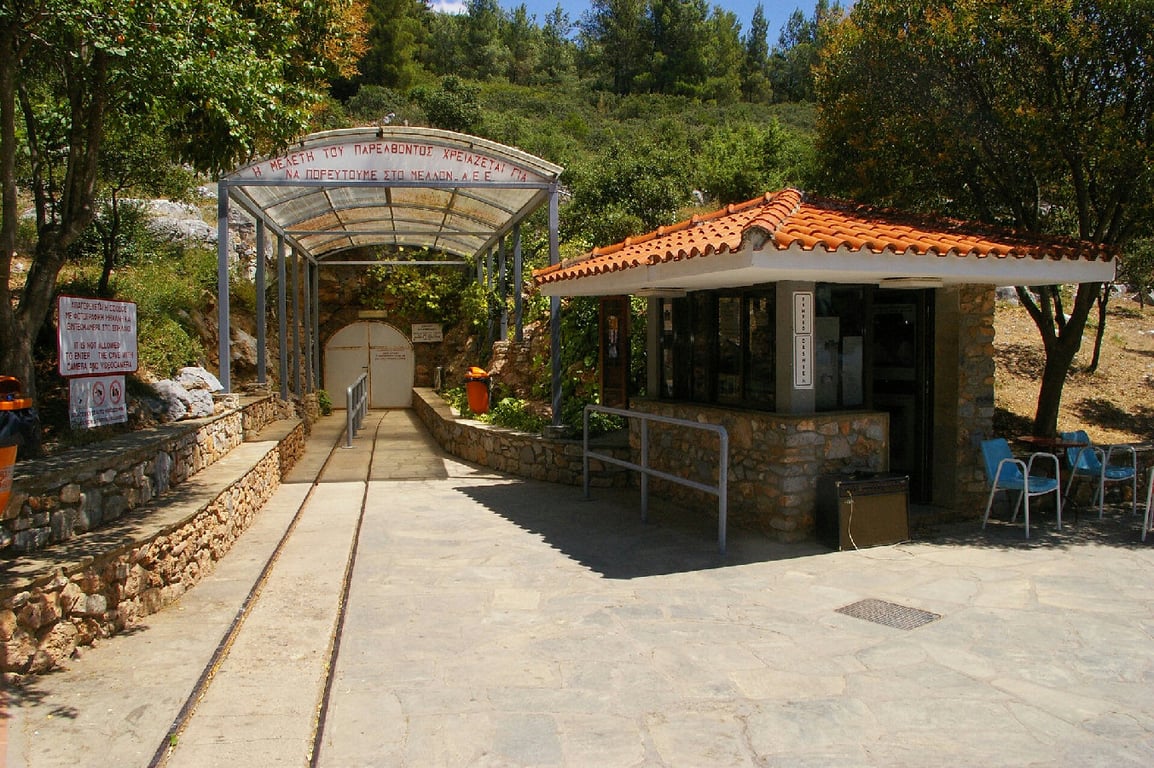
The Petralona Cave offers a unique and tangible connection to a very distant human past. The combination of the hominid fossil, the extensive faunal record, and evidence of early fire use makes it a site of global importance. The cave's intricate network of passages, filled with breathtaking geological formations, creates a dramatic backdrop for this deep-time story. While public access to the cave has been restricted at times for ongoing research and preservation efforts, the adjacent Anthropological Museum of Petralona displays many of the incredible finds. The cave remains a focal point for research, continuing to offer vital clues that help piece together the complex puzzle of human origins and our species' long journey through time.
The Skull That Whispers Through Time
While official narratives celebrate the Petralona Skull as a landmark discovery, they often gloss over the fierce debates and strange anomalies that shroud its true story. Beyond the sterile museum display lies a tale of academic conflict, chronological paradoxes, and whispers of forgotten rituals. The famous cranium, encased in a calcite sarcophagus for millennia, is not just a fossil; it is an enigma that challenges our understanding of human origins and hints at a past far more complex than we imagine.
A Skull Caught Between Epochs
The most profound mystery of Petralona Cave is not who the skull belonged to, but when. The official dating places the "Archanthropus of Petralona" at roughly 200,000 years old. However, the original lead excavator, Dr. Aris Poulianos, vehemently contested this, presenting evidence for a staggering age of 700,000 years. His analysis was based on the stratigraphy of the cave, particularly a layer of ash and extinct animal remains found *above* the skull, suggesting a much older timeline. This chronological chasm—a half-million-year discrepancy—ignited a decades-long controversy that saw Poulianos and his team barred from the site. Was this a simple academic disagreement, or a deliberate suppression of evidence that could rewrite the entire story of human evolution in Europe?
Where the Earth Breathed Fire
Long before paleoanthropologists ventured into its depths, the cave was a place of local legend. Villagers spoke of a "dragon's lair," a place where strange winds emanated from the rock, believed to be the breath of a sleeping beast. These drafts, a common karstic phenomenon, fueled tales of a powerful earth spirit guarding the mountain's secrets. More poignantly, the cave yielded the earliest traces of a man-made fire ever discovered in Greece. The layers of ash, which Poulianos used for his controversial dating, tell a story not of myth, but of survival. These ancient hominids were not just inhabitants; they were fire-bringers, wielding a primal force against the darkness and the cold of a forgotten world.
The Face in the Calcite Tomb
The Petralona Skull presents a confounding mosaic of features, blending traits of *Homo erectus* with those of Neanderthals, yet remaining distinct from both. This has led some researchers to propose it represents a unique, transitional species—a lost branch of the human family tree. But its strangest aspect is how it was found: cemented upright to the cave wall, encased in stalagmitic flowstone as if intentionally preserved. This has given rise to a fascinating, albeit unproven, theory.
A Sarcophagus of Stone
Could the skull's placement have been deliberate? Some speculate that its isolated position, away from any other complete skeleton, suggests a primitive form of funerary ritual. Perhaps this individual was revered, their head placed in a sacred grotto to be slowly embraced by the living stone of the cave. In this view, the cave was not merely a shelter but a tomb, and the calcite a natural sarcophagus, preserving the visage of a forgotten ancestor through the unimaginable depths of time.
Petralona Cave — photo gallery