Mycenae Archaeological Site
The fortified citadel of the mythical King Agamemnon. Its colossal "Cyclopean" walls and magnificent Lion Gate were the heart of the mighty Mycenaean civilization of the Bronze Age.
Archaeological Site of Mycenae
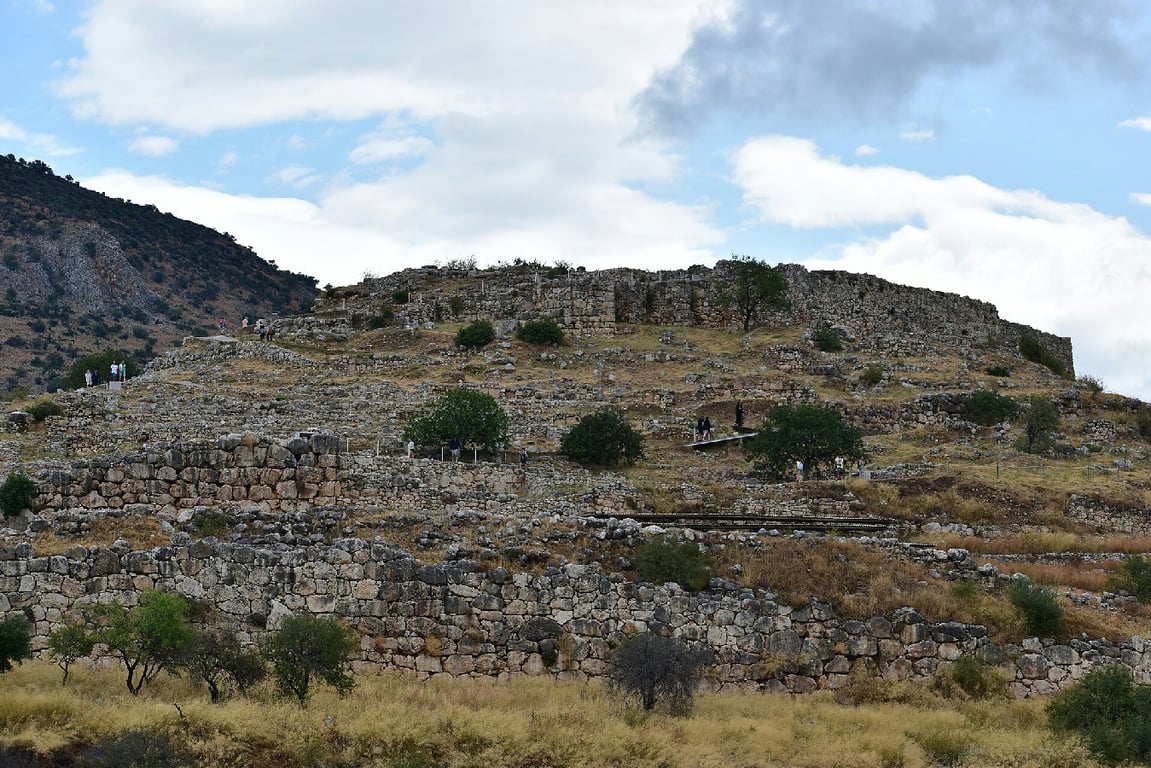
Rising from the plains of Argolis in the Peloponnese, the citadel of Mycenae is a name that echoes through the annals of legend and history. This was the heart of the Mycenaean civilization, a Bronze Age culture that dominated mainland Greece from roughly 1600 to 1100 BCE. According to Greek mythology, this was the capital of the legendary King Agamemnon, who led the Greek armies in the Trojan War. The archaeological site, a UNESCO World Heritage monument, is a fortified palace complex, surrounded by colossal walls that later Greeks believed were built by the mythical Cyclopes. The scale and ambition of the architecture here speak to a highly organized, wealthy, and warlike society that left an indelible mark on the development of ancient Greece.
The Lion Gate and Cyclopean Walls
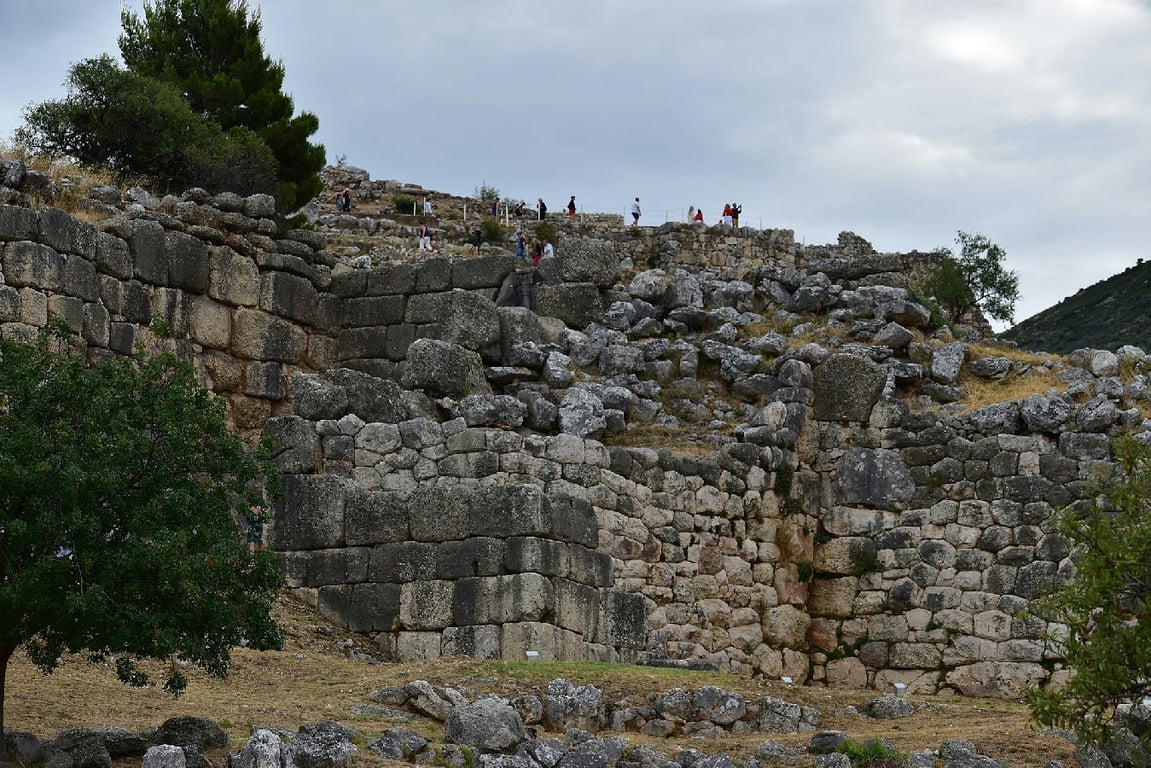
The entrance to the citadel is through the magnificent Lion Gate, erected around 1250 BCE. It is the sole surviving monumental piece of Mycenaean sculpture, featuring two lionesses flanking a central column in a heraldic pose. This powerful symbol of royal authority was designed to inspire awe and intimidate potential enemies. The gate is part of the famous "Cyclopean" walls, constructed from massive, roughly-hewn limestone boulders weighing several tons each. The sheer size of these stones led later Greeks to believe that only the mythical one-eyed giants, the Cyclopes, could have moved them into place. These formidable fortifications protected the palace, administrative buildings, and residences of the elite, creating an almost impregnable stronghold that commanded the surrounding landscape.
Grave Circles of a Warrior Elite
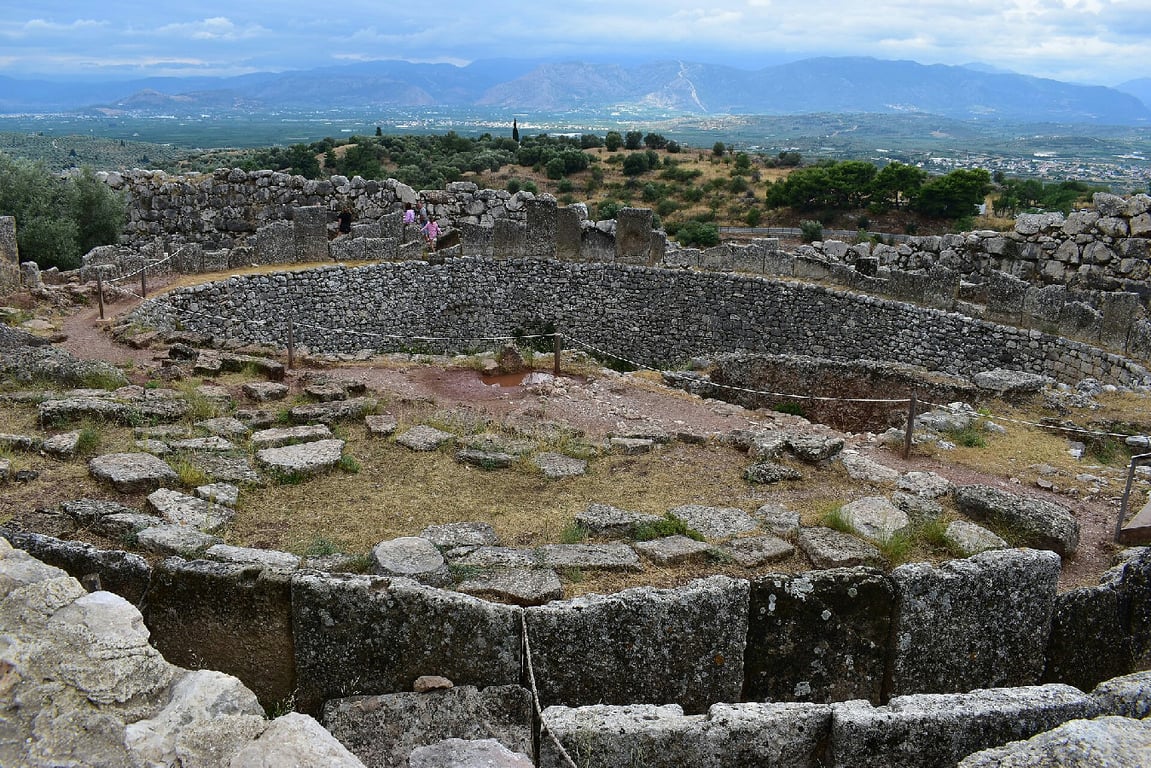
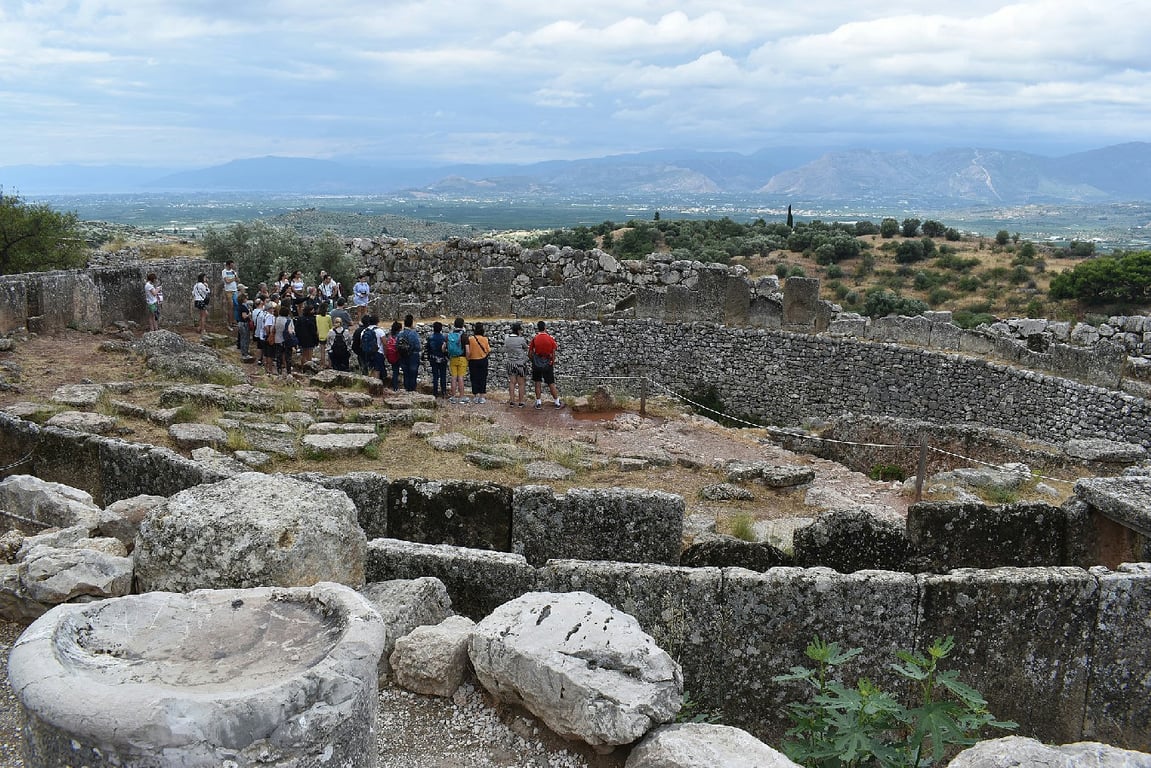
Just inside the Lion Gate lies Grave Circle A, a royal cemetery originally located outside the walls but later encompassed by an expansion of the citadel. Excavated by Heinrich Schliemann in 1876, this circle contained six shaft graves filled with an astonishing collection of grave goods. The treasures unearthed, including gold funeral masks (one of which Schliemann famously misidentified as the "Mask of Agamemnon"), bronze weapons, and intricate jewelry, revealed the immense wealth and martial prowess of the Mycenaean rulers. A second, older cemetery, Grave Circle B, lies outside the main walls. These burial sites provide unparalleled insight into the Mycenaean elite's burial customs, social hierarchy, and artistic skills, painting a picture of a sophisticated warrior aristocracy that traded and fought across the Aegean Sea.
Whispers of a Lost Civilization
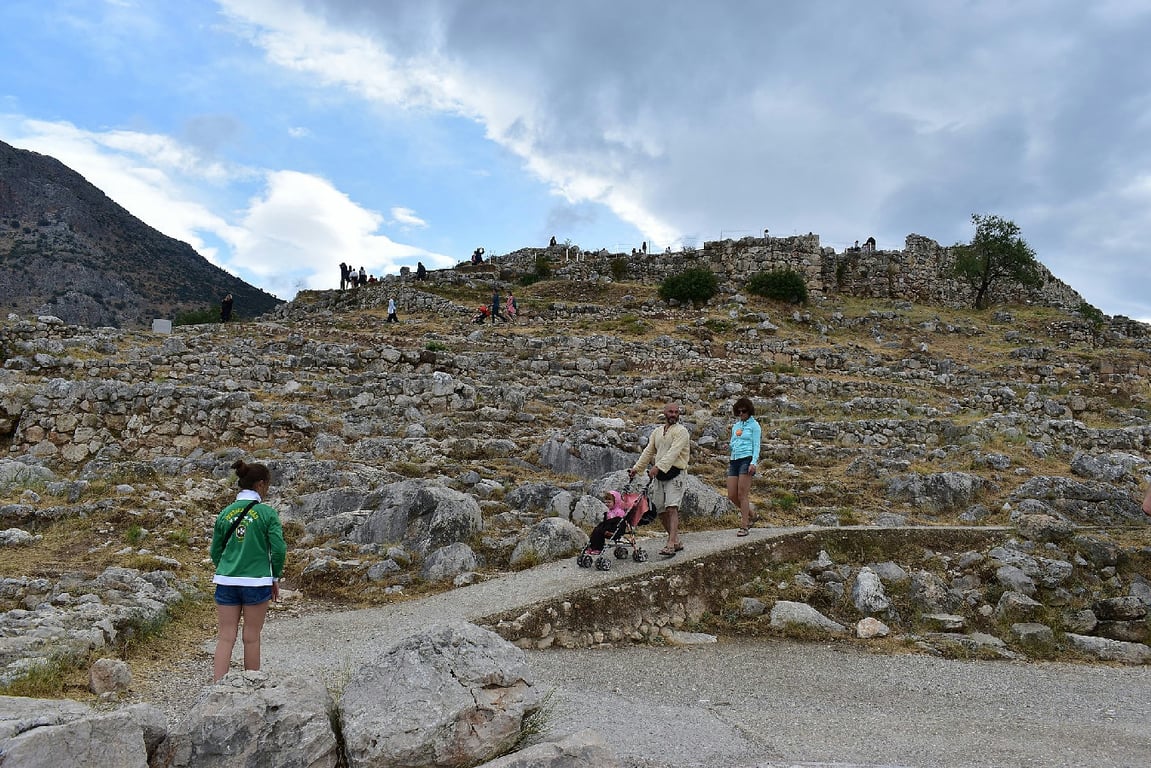
Beyond the graves and gates, the summit of the hill contains the ruins of the palace itself. At its heart was the megaron, a large rectangular hall with a central hearth, which served as the throne room and ceremonial center. While only the foundations remain, they provide a blueprint of the political and administrative hub of the Mycenaean kingdom. The discovery of clay tablets inscribed with Linear B, an early form of Greek, confirmed the language and administrative complexity of this civilization. Mycenae's eventual decline and abandonment around 1100 BCE was part of the wider Late Bronze Age collapse, but its legacy endured in the epic poems of Homer, ensuring that the citadel of Agamemnon would never be forgotten.
The Cyclopean Echo: Unearthing Mycenae's Hidden Frequencies
Beyond the epic tales of Agamemnon and the Trojan War lies a Mycenae of deeper, more resonant mysteries. The colossal stones of its citadel, said to be built by the Cyclopes themselves, hold secrets that challenge our understanding of the Bronze Age. While mainstream history paints a clear picture, a closer look reveals whispers of forgotten technologies, supernatural folklore, and connections that stretch far beyond the Aegean Sea, inviting us to question what we truly know about this legendary stronghold.
Secrets Sealed in Stone
The famed "Cyclopean" walls are more than just a defensive marvel; they are an engineering enigma. Some of the limestone blocks weigh over 100 tons, quarried and moved with a precision that baffles modern analysis. How did a Bronze Age society, without the aid of advanced machinery, transport and fit these megaliths together so tightly that not even a knife's blade can pass between them? The official explanations involving ramps and levers seem inadequate to many, leading to fringe theories of lost acoustic or vibrational technologies used to levitate and position the stones. The walls themselves seem to hum with an ancient, forgotten power.
The Lions That See All
The iconic Lion Gate is Mycenae’s most famous feature, yet its central mystery is often overlooked: the heads of the two lions are missing. Carved from a separate, harder stone, they were attached with dowels. Why were they removed, and by whom? Local legends whisper that the lions were not lions at all, but griffins or sphinxes, whose heads were imbued with a protective magic. One tale suggests the heads were deliberately turned away or removed by a priestess who foresaw the city's final, bloody destruction, unable to bear watching the prophecy unfold.
The Resonance of the Dead
The nine great tholos tombs, or "beehive tombs," are masterpieces of architecture, but their purpose may have transcended mere burial. The Treasury of Atreus, the largest and most impressive, possesses extraordinary acoustic properties. A sound made at its center is amplified into a powerful, almost otherworldly echo. This has led some researchers to theorize these were not just tombs, but ceremonial chambers for sound rituals. Perhaps chanting or specific frequencies were used to induce trance-like states, communicate with the spirit world, or even serve as a form of vibrational healing. They may have been wombs of rebirth as much as tombs for the dead.
A Constellation Carved on Earth
Some archaeo-astronomers have proposed a controversial yet compelling theory: the layout of Mycenae and its surrounding tholos tombs is not random. The theory suggests the citadel and its primary tombs map out celestial constellations, particularly the Pleiades or Orion, mirroring the heavens on earth. The entrance passages of several tombs appear to align with solar and lunar events, such as the winter solstice sunrise. If true, this would reframe Mycenaean culture as one deeply connected to celestial cycles, using their most sacred structures as a grand astronomical calendar and a way to channel cosmic energies.
Mycenae Archaeological Site — photo gallery