Longmen Grottoes
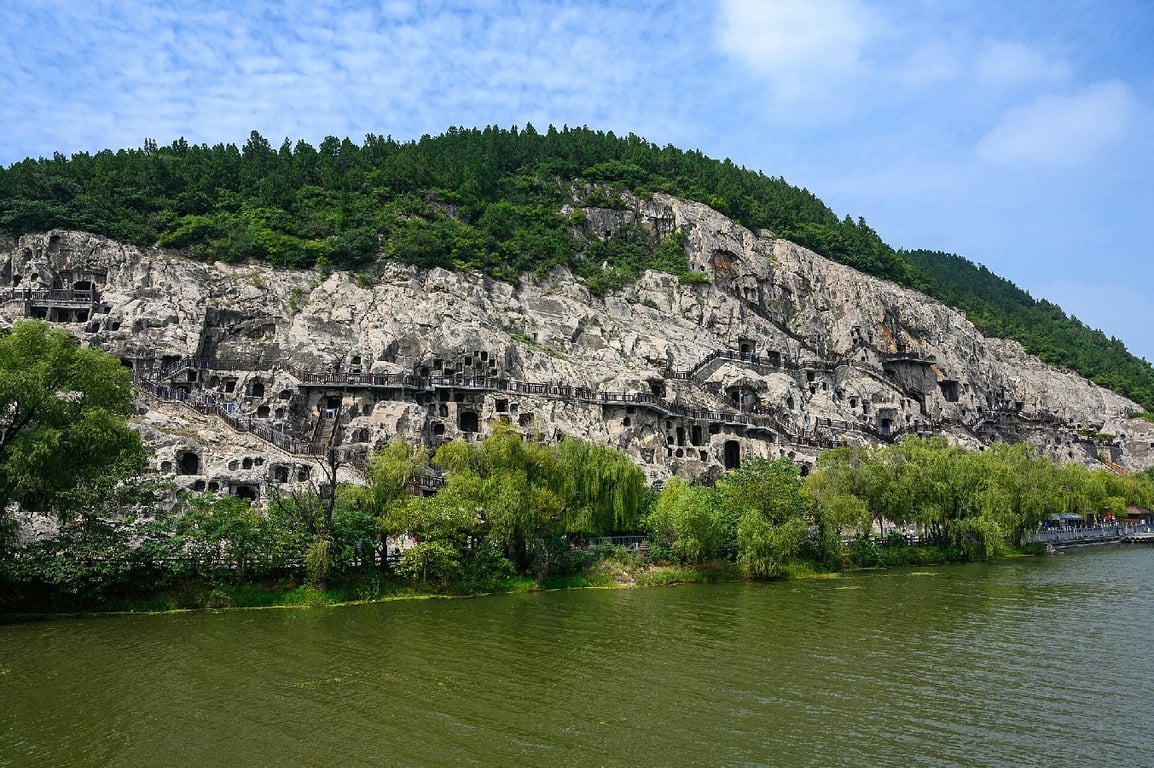
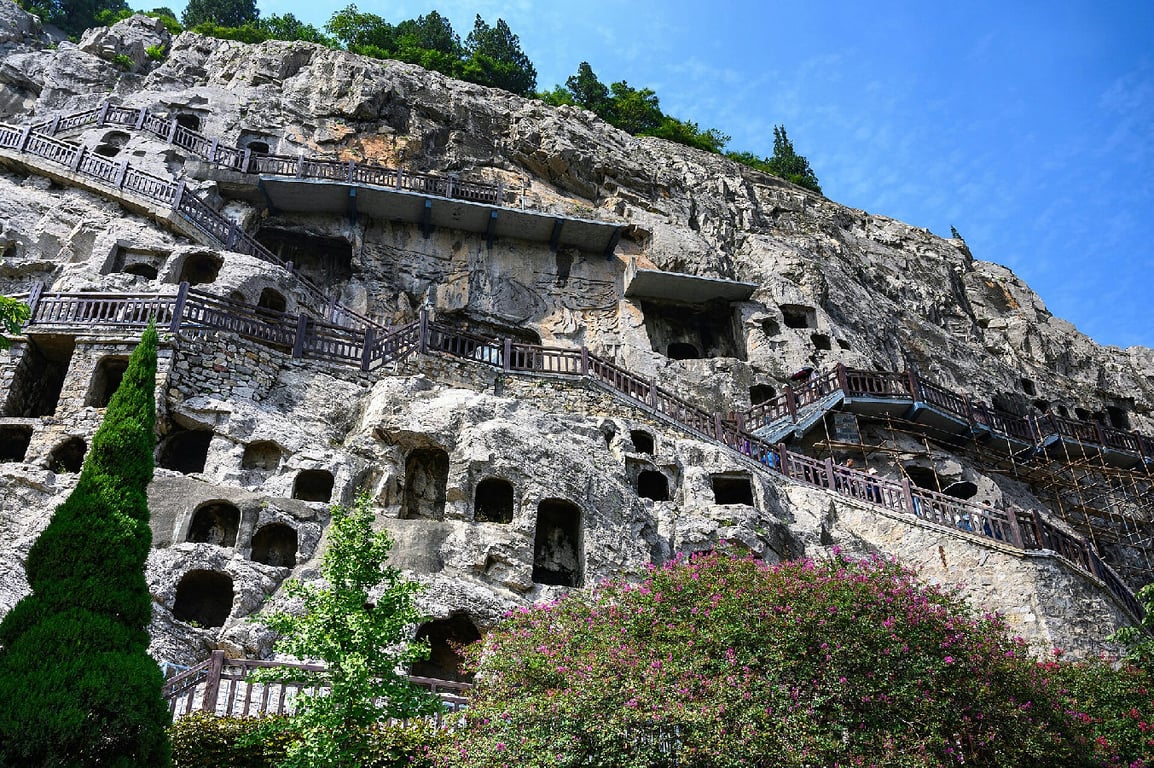
Over 100,000 Buddhist figures are carved into limestone cliffs stretching for more than a kilometer above the Yi River. The scale is staggering, with statues ranging from a few centimeters to over 17 meters tall. A UNESCO World Heritage Site.
Longmen Grottoes: A Symphony in Stone
The Longmen Grottoes, meaning 'Dragon's Gate Grottoes,' are an awe-inspiring collection of Buddhist art carved into the steep limestone cliffs along the Yi River, south of Luoyang in Henan Province, China. Spanning a period from the late 5th century to the 8th century AD, these grottoes represent one of the finest examples of Chinese Buddhist cave art, showcasing the profound influence of Buddhism during the Northern Wei and Tang dynasties.
Millennia of Devotion
Work on the Longmen Grottoes began around 493 AD, during the Northern Wei Dynasty, when Emperor Xiaowen moved his capital to Luoyang. The grottoes continued to flourish through successive dynasties, reaching their zenith during the Tang Dynasty (618–907 AD). Over this period, more than 100,000 statues of various sizes were meticulously carved into the rock face, alongside 2,500 shrines and over 40 pagodas.
The Fengxian Temple Masterpiece
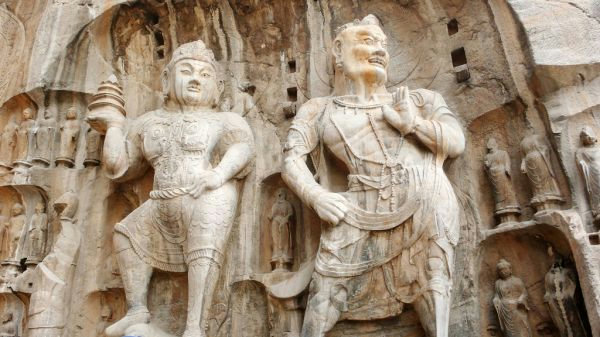
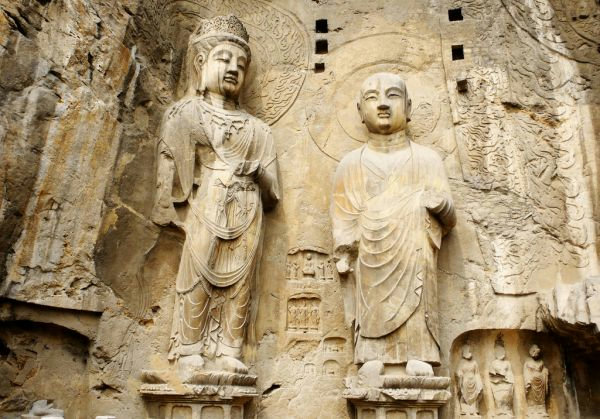
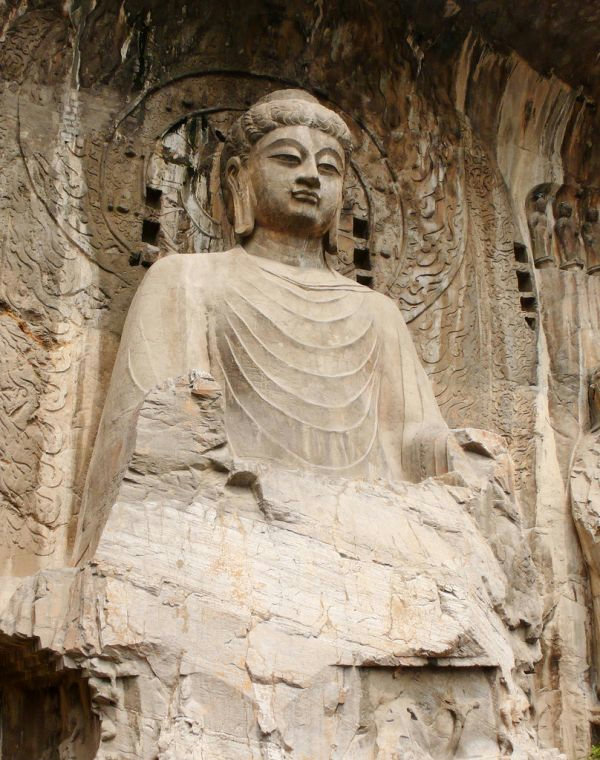
The most magnificent and iconic section of the Longmen Grottoes is the Fengxian Temple, an open-air shrine carved between 672 and 675 AD under the patronage of Empress Wu Zetian. This grand central niche houses a colossal 17.14-meter-tall Vairocana Buddha, flanked by two Bodhisattvas, two heavenly kings, and two Lokapalas (guardians). The serene yet powerful expression of the Vairocana Buddha is said to be modeled after Empress Wu Zetian herself, reflecting the Tang Dynasty's artistic peak and imperial power.
A Kaleidoscope of Buddhist Art
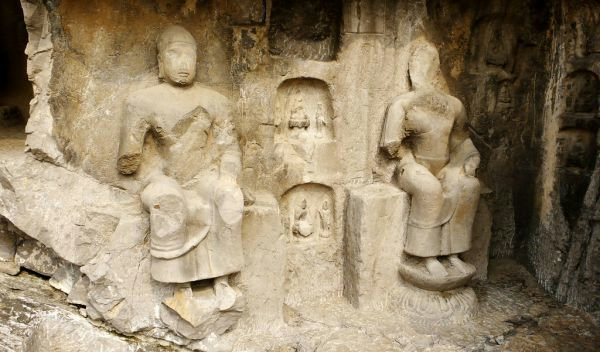
The sheer diversity of the carvings at Longmen is remarkable. Statues range from tiny, intricate figures just a few centimeters high to the monumental Vairocana Buddha. They depict Buddhas, Bodhisattvas, Arhats, and guardian figures, each rendered with stylistic nuances reflecting the artistic trends and religious interpretations of their respective eras. The early Northern Wei sculptures exhibit a more elongated, austere style, while the Tang Dynasty works are characterized by their plumpness, realism, and vibrant expressions.
Historical and Cultural Tapestry
Beyond their artistic merit, the Longmen Grottoes offer invaluable insights into the history, religion, and society of ancient China. The numerous inscriptions found within the caves record the names of patrons, dates of carving, and reasons for their creation, providing a rich archive of social and religious practices. They demonstrate the widespread adoption of Buddhism and its integration into Chinese culture, influencing art, architecture, and daily life. As a UNESCO World Heritage Site, Longmen Grottoes stands as a testament to human creativity, devotion, and the enduring legacy of Buddhist art.
Preservation Challenges and Enduring Legacy
Over centuries, the Longmen Grottoes have faced challenges from natural erosion and human intervention, including vandalism and illicit removal of statues. However, significant efforts have been made towards their preservation and restoration. Today, the site continues to draw visitors from around the globe, offering a profound experience of spiritual artistry and historical grandeur, firmly cementing its place as one of China's most important cultural treasures and an enduring symbol of faith carved in stone.
The Dragon's Gate and the Echoes of Lost Time
While countless visitors stand mesmerized by the sheer scale of the Longmen Grottoes, the cliffs themselves hold secrets far deeper than the carved Buddhas they display. Beyond the official histories and artistic appraisals lies a world of political intrigue, forgotten science, and whispers of distant civilizations carried on Silk Road winds. These are the stories etched between the lines of stone, waiting for those who dare to look closer and question the serene faces staring back from the past.
The Empress's Immortal Gaze: A Face Carved in Controversy
The colossal Vairocana Buddha of the Fengxian Temple is the undisputed centerpiece of Longmen, but its placid expression conceals a fierce debate. Legend and many scholars assert that the face is a portrait of Wu Zetian, China's only reigning female emperor. As the primary patron of the project, she allegedly ordered the sculptors to immortalize her features in the divine visage, a breathtakingly bold statement of her power and quasi-divine status. Yet, no definitive proof exists. Other historians argue it is merely an idealized representation of Buddhist perfection. Is the face we see a masterful act of political propaganda, forever stamping a human ruler's likeness onto a god, or is it a sublime spiritual icon whose resemblance to a powerful empress is purely coincidental?
Where Stone Prescriptions Weep
Among the thousands of devotional carvings, one cave stands apart as a bizarre intersection of faith and science. The Yaofang Dong, or "Prescription Cave," is not merely a place of worship but an ancient stone pharmacy. Etched into its walls are more than 140 medical prescriptions for ailments ranging from heart conditions to madness. These detailed inscriptions, dating back to the Northern Qi and Tang dynasties, provide a stunning glimpse into ancient Chinese medicine. But their presence in a sacred Buddhist site raises profound questions. Was this a charitable act, a public health archive for the masses? Or was it believed the spiritual power of the grottoes would magically potentize these stone-carved remedies for pilgrims seeking a cure for both body and soul?
Whispers from the West: The Gandharan Enigma
The art of Longmen is not a static monolith; it is a story of transformation, and its earliest chapters speak with a foreign accent. The initial carvings from the Northern Wei Dynasty bear an uncanny resemblance to the Greco-Buddhist art of Gandhara, a region in modern-day Pakistan and Afghanistan. These early figures are slender, with elongated faces, aquiline noses, and flowing robes that ripple with the distinct stylistic echo of Hellenistic sculpture. It is as if a ghost of Alexander the Great's artistic legacy traveled over 2,000 miles along the Silk Road, finding a new home in the limestone cliffs of China. This Gandharan enigma serves as a powerful reminder that Longmen was not an isolated wonder, but a crossroads where empires, religions, and artistic ideas collided.
The Riddle of the 'Scissor-Hands' Buddha
One of the most photographed features of the giant Vairocana Buddha is its peculiar hand gesture, which many modern visitors interpret as a "peace" or "victory" sign. This, however, is a complete accident of history. The original hands and forearms were destroyed centuries ago. During a 20th-century restoration, the hands were reconstructed based on incomplete information, resulting in the current, historically inaccurate mudra. The true, original gesture—and its specific religious meaning—is now lost forever, leaving the grottoes' most famous resident locked in a permanent, and entirely unintentional, modern pose.
Longmen Grottoes — photo gallery