
Dvarapala sculpture, a gate guardian from the architecture of Hindu, Buddhist, and Jain temples.
The term dvarapala comes from the Sanskrit words dwara ("door" or "gate") and pala ("protector" or "guardian"). These statues represent semi-divine or divine mythological beings intended to guard the entrances to sacred spaces and ward off evil. They are often depicted as fierce warriors or giants, usually armed with a weapon such as a mace (gada). In Indonesia, these figures are also commonly known as "Raksasa" and can be found in nearly every temple in Java and Bali.
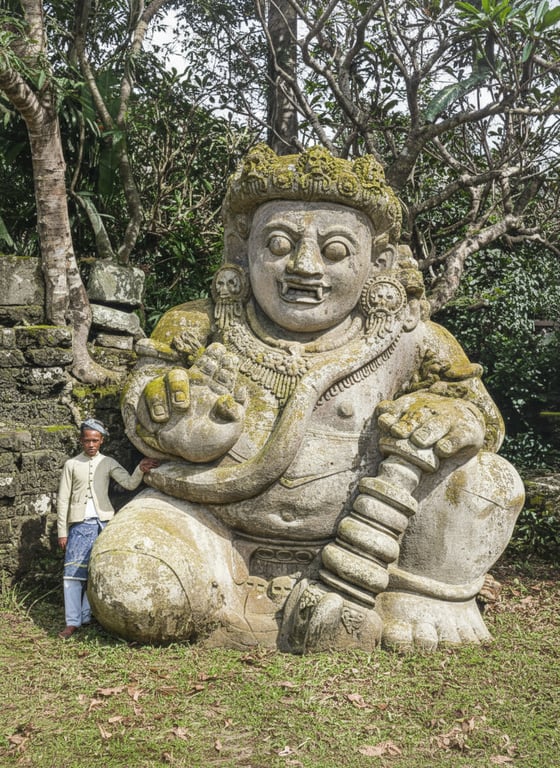
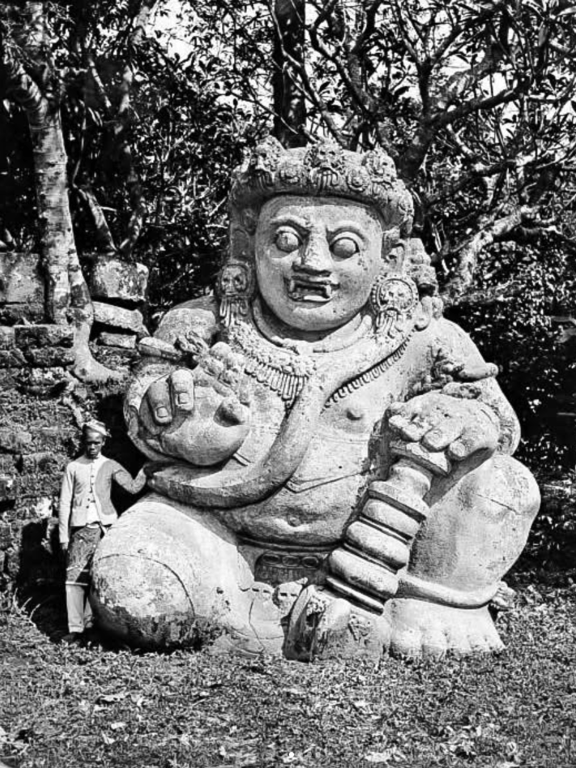
Drag across the image to compare the original photograph with its restored version.