The Hili Grand Tomb
A monumental Bronze Age mortuary complex, it reveals intricate societal structures and burial rituals of early Arabian civilizations. Its colossal cairns challenge perceptions of ancient desert communities.
Delve into the enigmatic past of the Arabian Peninsula at the Hili Grand Tomb, a monumental circular stone structure that stands as a testament to the sophisticated Bronze Age societies that once flourished in what is modern-day Abu Dhabi. This iconic archaeological site offers a captivating glimpse into ancient burial practices, social hierarchies, and the architectural prowess of its early inhabitants, drawing historians, archaeologists, and curious visitors alike to uncover its profound secrets and appreciate its enduring legacy.
Historical Background
The Hili Grand Tomb dates back to the Umm an-Nar period, specifically between 2700 and 2000 BCE, placing it firmly within the Bronze Age. This era was characterized by significant advancements in metallurgy, trade, and the development of organized societies across the region. The tomb served as a communal burial site for the residents of the thriving Hili archaeological park, indicating a settled population with a developed understanding of construction and social organization. Its construction speaks volumes about the collective effort and perhaps the hierarchical structure of the community that built it, requiring substantial resources and skilled labor.
Notable Features
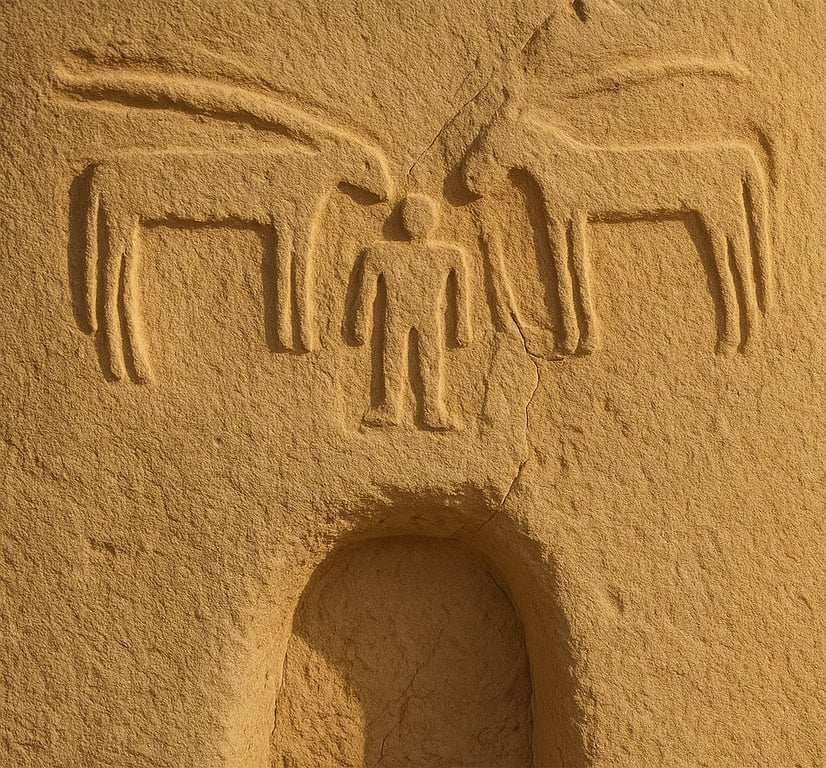
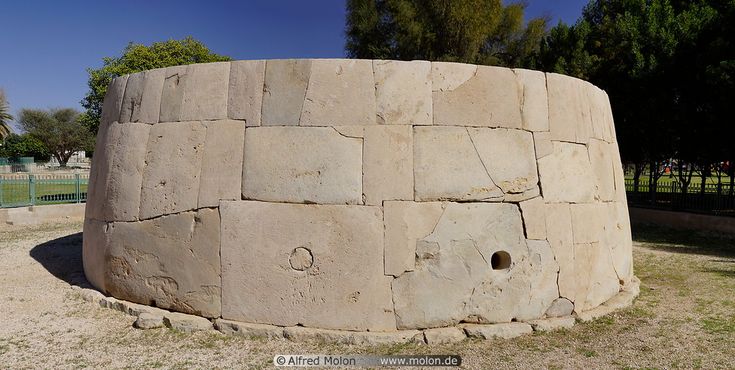
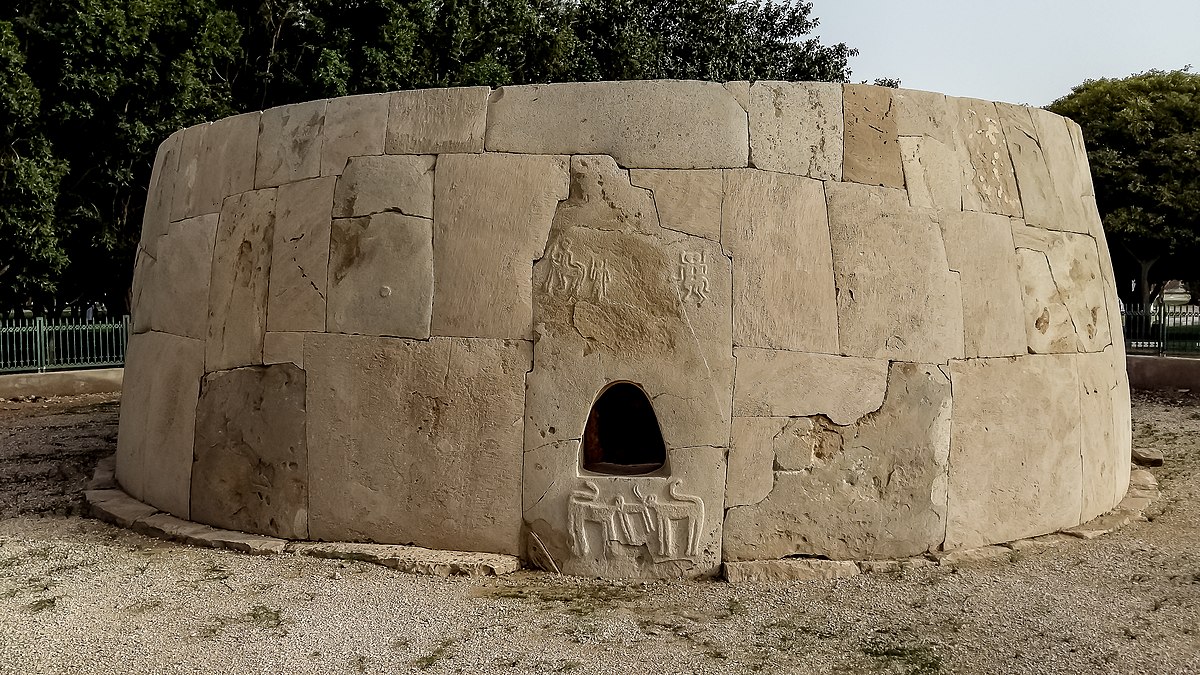
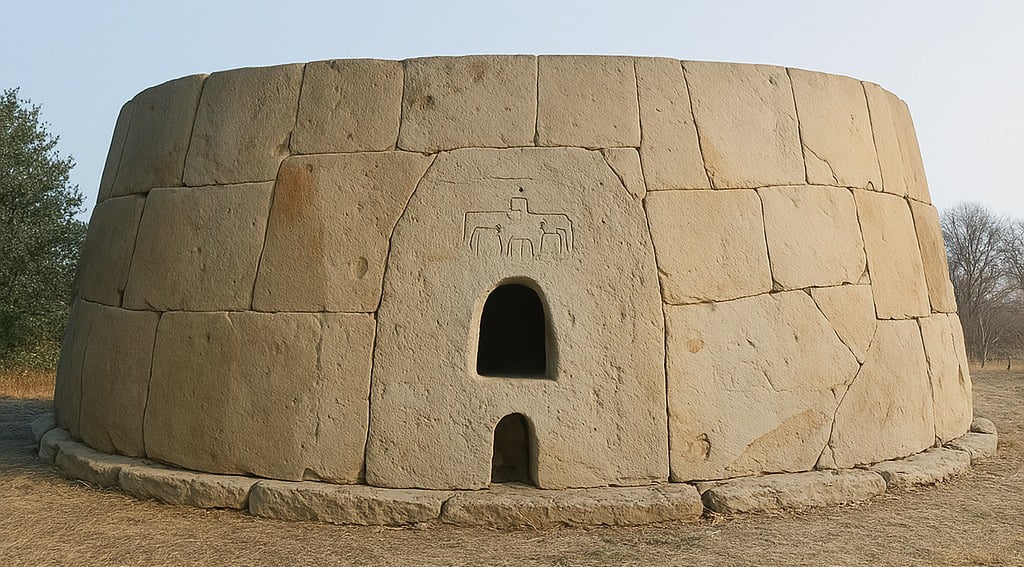
The Hili Grand Tomb is an impressive circular structure, approximately 12 meters in diameter and 4 meters high, constructed from finely cut and fitted stone blocks. What truly sets it apart are the two ornate entrances, each featuring carved reliefs depicting human and animal figures. These intricate carvings, including antelopes, oryx, and possibly human forms, provide invaluable insights into the artistic expression and symbolic beliefs of the Umm an-Nar culture. Inside, the tomb is divided into several chambers or burial cells, designed to accommodate multiple interments over generations, underscoring its role as a collective necropolis for a significant period. The precision of the stonework, without the aid of mortar, highlights the advanced engineering skills of its builders.
Cultural & Archaeological Importance
As one of the most prominent Bronze Age tombs in the entire UAE, the Hili Grand Tomb holds immense cultural and archaeological significance. It is a crucial piece in understanding the mortuary customs, social structures, and religious beliefs of the Umm an-Nar civilization. The human remains and grave goods discovered within, though largely removed by early expeditions, would have provided further data on diet, health, and trade networks.
The tomb also stands as a symbol of early architectural innovation in the region, demonstrating the ability of ancient communities to construct enduring and aesthetically rich monuments. Its preservation is vital for the continuous study of the Bronze Age in the Arabian Gulf.
Preservation & Current State
Recognizing its unparalleled historical value, the Hili Grand Tomb has been meticulously preserved and is a central feature of the Hili Archaeological Park, a UNESCO World Heritage Site since 2011. While some damage occurred due to historical looting and natural erosion, significant efforts have been made to restore and protect the structure.
Today, visitors can walk around the tomb, observe its remarkable carvings, and gain a profound sense of connection to the ancient past. Interpretive signs and guided tours provide context, ensuring that this monumental Bronze Age burial site continues to educate and inspire future generations about the rich heritage of the UAE.
The Hili Grand Tomb, often celebrated for its architectural grandeur, holds secrets far deeper than its well-documented burial practices. Beneath the polished facade of archaeological consensus lie whispers of forgotten rituals, cosmic alignments, and even societal structures more bizarre than history books dare to print. For those willing to look beyond the established narrative, Hili offers a fertile ground for unconventional theories and tantalizing mysteries.
Lesser-known Historical Facts
While often highlighted for its unique entrance carvings, the true significance of these zoomorphic and human figures might extend beyond mere decoration. Some researchers propose they weren't just symbolic guardians of the dead, but perhaps a primitive form of astronomical calendar or a narrative sequence detailing the deceased's journey to the afterlife, decipherable only through forgotten cosmological knowledge. Furthermore, the tomb's construction involved stones sourced from surprisingly distant quarries, raising questions about the organization of labor and the extent of trade networks in a period often depicted as more insular.
Another overlooked aspect is the sheer volume of fragmented pottery and bone found *outside* the tomb. While typically dismissed as refuse or offerings, some argue these represent a continuous, open-air ceremonial space, perhaps for ancestor veneration or rituals involving the larger community, deliberately separated from the private sanctity of the burial chamber. Was the "Grand Tomb" merely the focal point of a much larger, ritualistic landscape?
Legends & Folk Tales
Local Bedouin folklore, passed down through generations, speaks not of Bronze Age chieftains, but of "star-gazing giants" who built the Hili tombs in a single night, using stones that "sang" into place. These tales hint at an indigenous understanding of complex engineering that might have appeared supernatural to later inhabitants. One particularly intriguing legend describes the central burial shaft as a "doorway to the underworld," accessible only when the desert night sky aligned perfectly with certain constellations, suggesting a profound calendrical and astrological awareness among its builders.
The "Weeping Stones"
A persistent local myth suggests that on certain full moon nights, a subtle "weeping" sound can be heard emanating from deep within the tomb, believed to be the lament of ancestral spirits or perhaps the very stones themselves, remembering a lost golden age. While often dismissed as wind or natural phenomena, proponents of the legend whisper of a unique resonance created by the tomb's specific internal architecture, designed to amplify subtle environmental sounds or even human lamentations from within.
Controversies
A radical theory posits that the Hili Grand Tomb, and indeed many other similar structures in the region, functioned not solely as burial sites, but as complex "energy conduits." Proponents suggest the carefully chosen stones and their precise alignment were intended to harness telluric currents or even subtle cosmic energies, perhaps for healing, guiding spirits, or influencing agricultural cycles. This controversial idea challenges conventional archaeological interpretations, suggesting a sophisticated, albeit non-technological, understanding of natural forces.
Another contentious notion concerns the identity of the interred. While often assumed to be tribal leaders or elite families, some researchers speculate about a specialized caste of "knowledge keepers" or astronomers buried within, suggesting the tombs were not just markers of power, but repositories of ancient wisdom, deliberately designed to preserve knowledge beyond the reach of time. Was the tomb's intricate design a coded message for future generations?
Mysterious Connections
The motifs and construction techniques at Hili bear striking resemblances to sites thousands of kilometers away, sparking theories of long-distance cultural exchange that pre-date accepted historical timelines. Could Hili be a crucial missing link in understanding ancient oceanic trade routes, or even the dispersal of megalithic building traditions across continents?
The presence of specific shell species, not indigenous to the immediate region, further fuels speculation about unexpected connections to distant coastal communities or even a completely different, forgotten environmental history for the area.
Ultimately, the Hili Grand Tomb remains an enigma, its silence guarding secrets far more captivating than its visible stones suggest. For the open-minded, it's a profound invitation to question, to speculate, and to marvel at the depths of ancient ingenuity and belief.
The Hili Grand Tomb — photo gallery