Siberia's Jurassic Pearls
Siberia's geometric stone formations challenge natural explanation. Uncover the enigma of these perfectly spherical clusters.
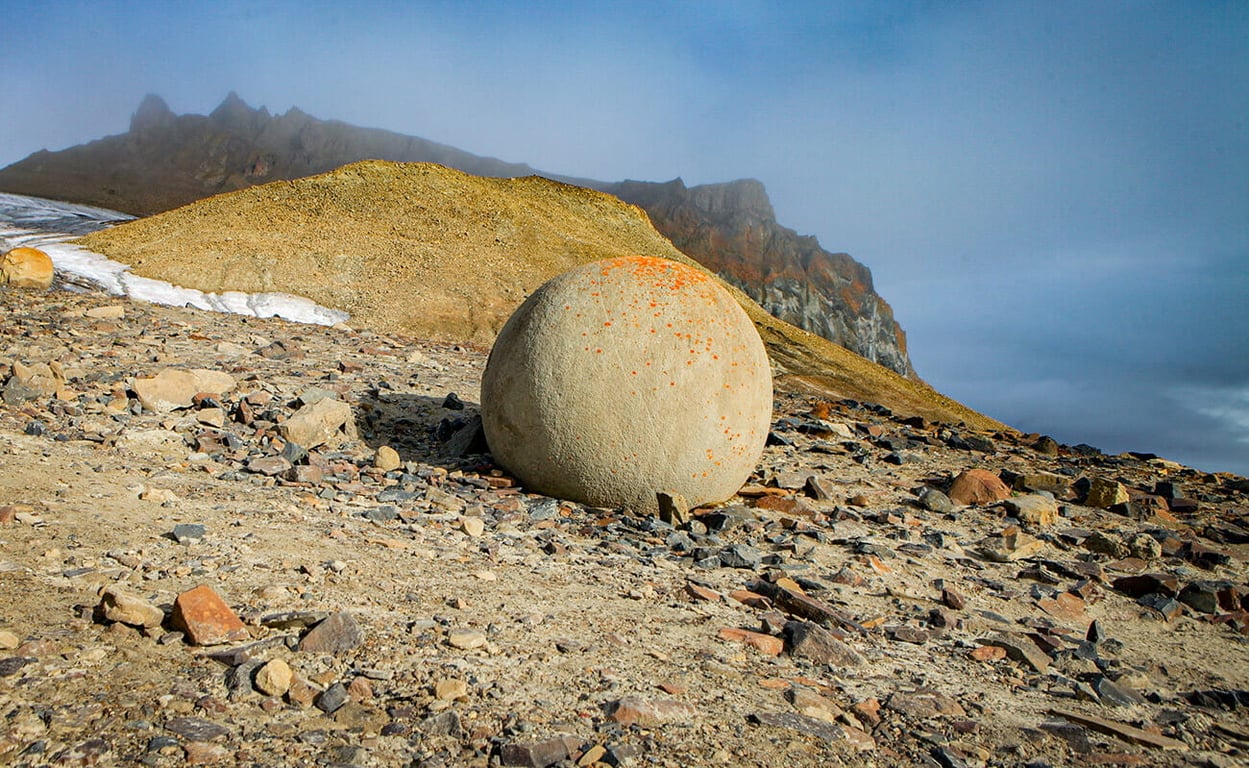
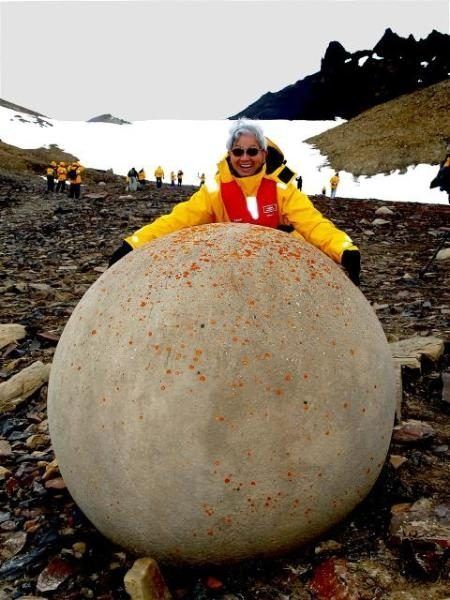
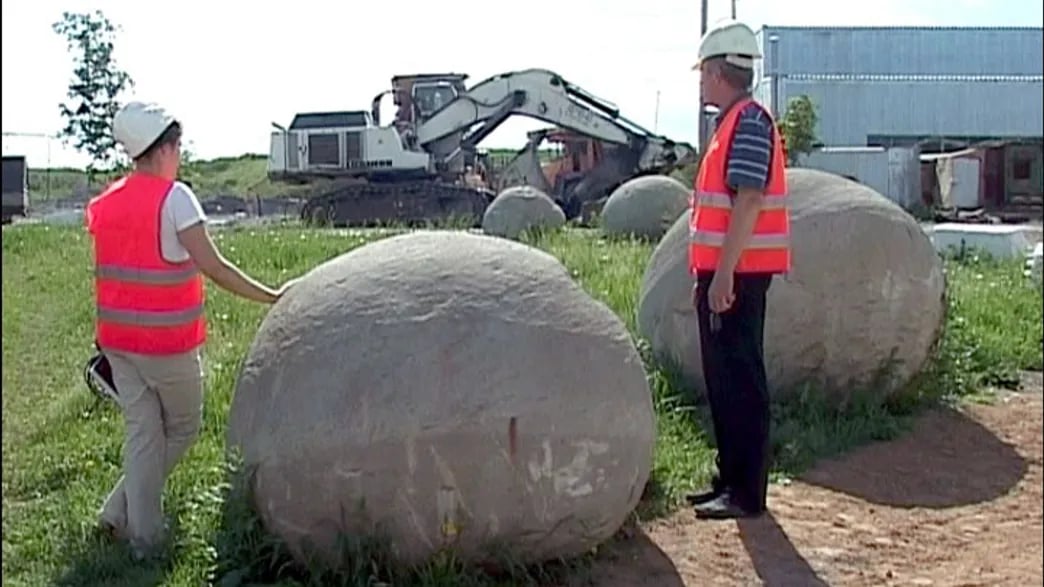
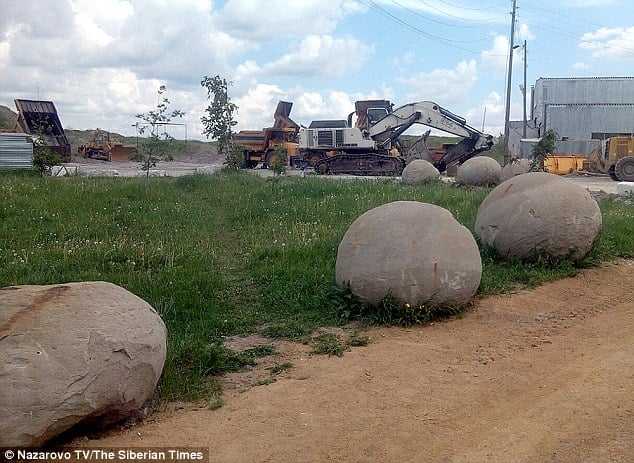
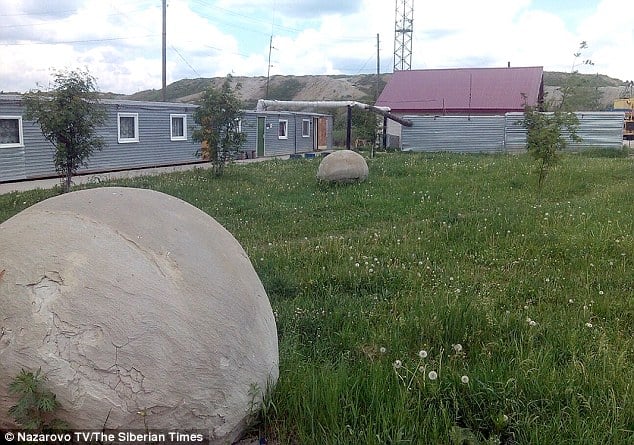
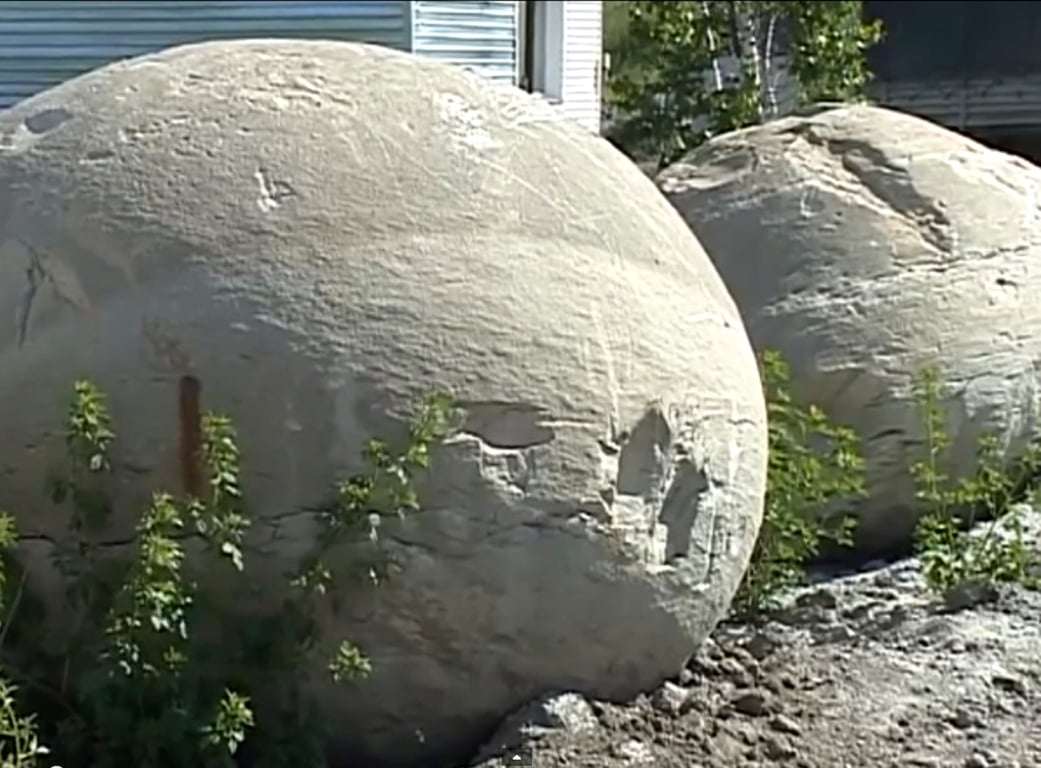
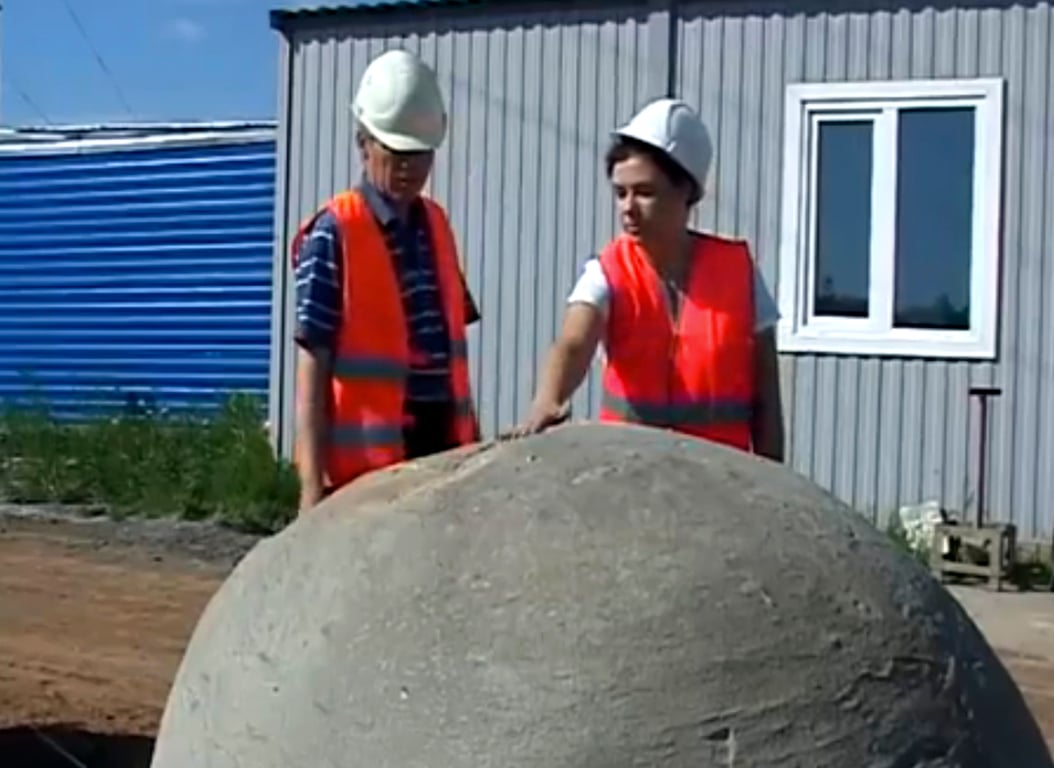
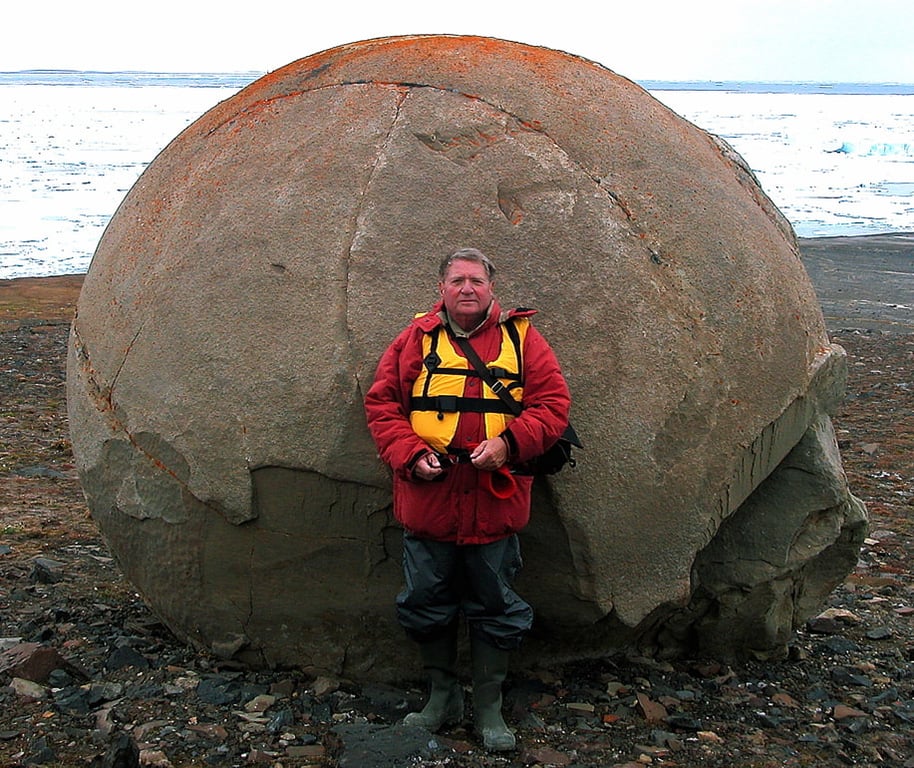
Deep beneath the coal seams of Siberia’s Krasnoyarsk Krai lies one of Russia’s most visually striking geological discoveries: a cluster of almost perfectly spherical stone balls, each roughly 1–1.2 meters (3–4 ft) in diameter.
Discovered in the early 2010s at the Sereulsky Coal Mine near Nazarovo, these massive concretions quickly earned the nickname “Jurassic pearls” and have since become a magnet for geologists, photographers, and ancient-astronaut enthusiasts alike.
Exact Location & Coordinates
- Mine: Sereulsky (Serulginsky) open-pit coal mine in the Nazarovo District, Krasnoyarsk Krai, Russia.
- The spheres were found approximately 30 meters underground in Carboniferous–Jurassic sedimentary layers, surrounded by coal and sandstone. At least ten large specimens were recovered; several smaller ones remain scattered in the spoil heaps.
How Were These Perfect Stone Balls Formed?
Geologists classify them as iron-rich siderite concretions. Over millions of years, mineral-rich groundwater percolated through the sediment and precipitated iron carbonate around a nucleation point (often a fossil fragment or organic nucleus).
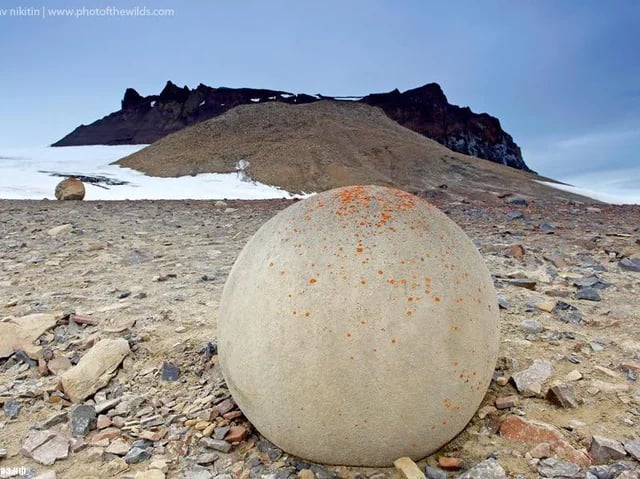
Slow, uniform crystal growth from all directions produced the extraordinary sphericity - some specimens deviate from a perfect sphere by less than 1–2%. When freshly exposed and wetted by rain, the balls glow with a deep rusty-red hue due to oxidation, creating an otherworldly sight against the gray Siberian landscape.
Why Do They Look Artificial?
The combination of near-perfect roundness, impressive size, symmetrical banding visible in cross-sections, and the fact they were buried alongside coal has fueled countless theories:
- - Ancient civilization machining artifacts
- - Remains of extraterrestrial technology
- - Petrified eggs of unknown megafauna
- - Lost pre-flood machinery components
However, thin-section analysis and isotopic dating confirm they are 100 % natural and roughly 150–250 million years old.
Current Status (2025)
The mine is still active and strictly off-limits to the public, but several of the largest spheres were rescued and relocated:
- - Two specimens are displayed in the courtyard of the Nazarovo Local History Museum.
- - One 1.1-meter ball sits outside the Krasnoyarsk Regional Museum.
- - High-resolution 3D scans of the best-preserved sphere are available on Sketchfab for virtual exploration.
Similar Phenomena Worldwide
- Siberia’s spheres belong to the same family as:
- - Moeraki Boulders, New Zealand
- - Bowling Ball Beach, California
- - Rock City, Kansas
- - Torysh “Valley of Balls,” Kazakhstan
- - Costa Rica’s famous pre-Columbian stone spheres (though those are man-made)
Visiting & Photography Tips
While the mine itself is inaccessible, the displayed spheres in Nazarovo can be visited year-round. The best photos are taken after rain when the iron oxides turn vivid red. Winter visits (–30 °C) offer dramatic contrast against snow.
These Siberian stone spheres stand as a stunning reminder that nature can sculpt geometry more precise than human hands—without any help from ancient aliens or lost civilizations.
While the geological formation of Siberia's stone spheres is often attributed to natural processes like concretion, the sheer uniformity and distribution of these enigmatic orbs across vast, often remote, landscapes beg for a deeper, more unconventional exploration.
What if these seemingly inert stones hold secrets far beyond mere mineral accumulation?
Lesser-known Historical Facts
Beyond the well-documented geological surveys, whispers from early 20th-century Russian expeditions speak of peculiar observations. Some remote Siberian communities, when first encountered by ethnographers, held these spheres in unique reverence, often depicting them in shamanic art.
There are even unsubstantiated reports of specific spheres emitting faint, localized magnetic anomalies, a detail largely dismissed by mainstream science but captivating to an open mind. Could these be more than just geological curiosities?
The "Living Stones" of the North
Ancient indigenous narratives from tribes deep within Siberia occasionally refer to certain colossal spheres as "living stones" or "spirit eggs." These tales describe the stones "growing" over generations, or sometimes subtly shifting positions over centuries, a concept that defies conventional geological understanding. While modern science attributes such claims to misinterpretation or natural erosion, the persistence of these narratives within oral traditions offers a tantalizing alternative perspective.
The quest for unconventional explanations has led to some truly provocative theories. One hypothesis posits that these spheres could be the remnants of an incredibly ancient, unknown civilization with advanced terraforming capabilities, employing techniques to stabilize landscapes or harness geothermal energy.
Another, even bolder, theory suggests an extraterrestrial origin. Given their near-perfect sphericity, some theorists speculate they could be fragmented components of ancient, defunct spacecraft or even deliberate markers left by interdimensional visitors, their purpose now lost to time and geological upheaval.
Electromagnetic Vortex Points
Another geophysical hypothesis proposes that the stone spheres are not merely concretionary, but rather formed or accumulated at powerful electromagnetic vortex points within the Earth's crust. Proponents of this theory suggest that these energetic nodes, possibly linked to unseen telluric currents, influenced the perfect spherical accretion of minerals, essentially "growing" the spheres over eons. This would explain their often isolated yet geologically similar occurrences across disparate regions.
Could the Siberian spheres be connected to similar formations found in Costa Rica or even in deserts across North Africa? While widely separated, the uncanny resemblance in their spherical perfection has fueled speculation about a planetary network of ancient markers or, more esoterically, a shared geotropic phenomenon influencing crystal and mineral growth in specific, undisclosed ways across the globe.
The idea of a global, primordial process, possibly guided by forces beyond our current comprehension, unites these disparate puzzles into a single, profound mystery.
Siberia's Jurassic Pearls — photo gallery