Dolmen of Guadalperal
Emerging with receding waters, this grand megalithic circle offers stark evidence of Bronze Age monumental construction. Visit Spain's "Stonehenge" to witness a rare convergence of nature and prehistoric human ingenuity.
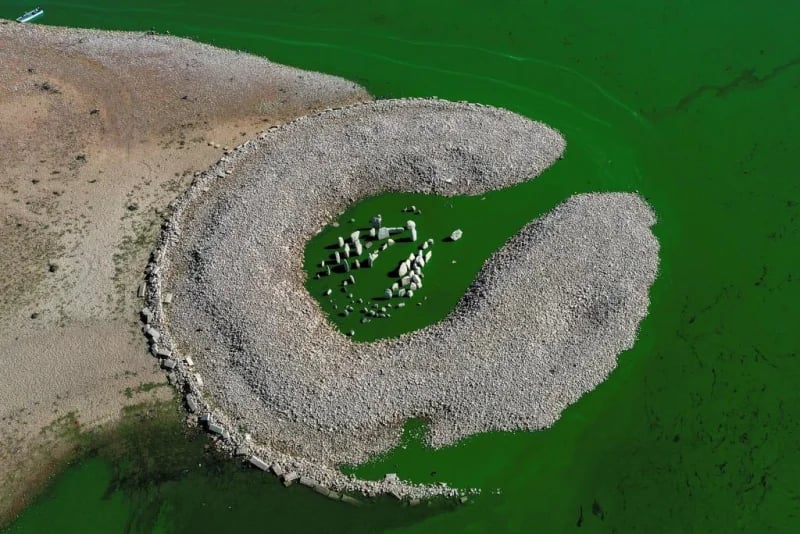
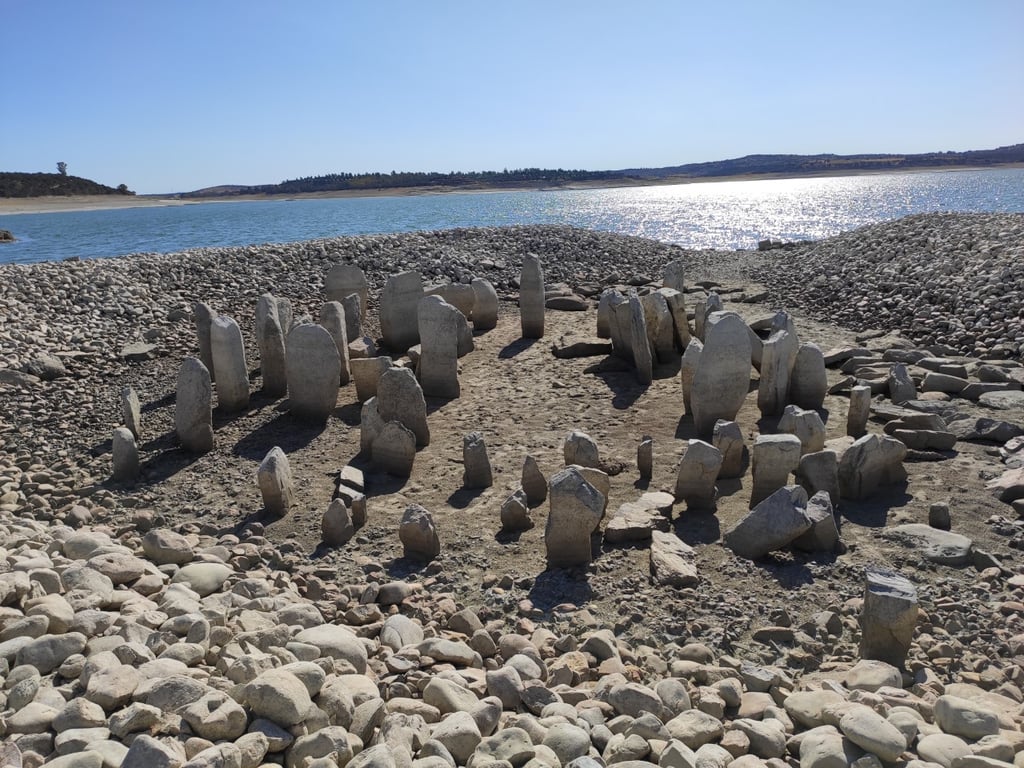
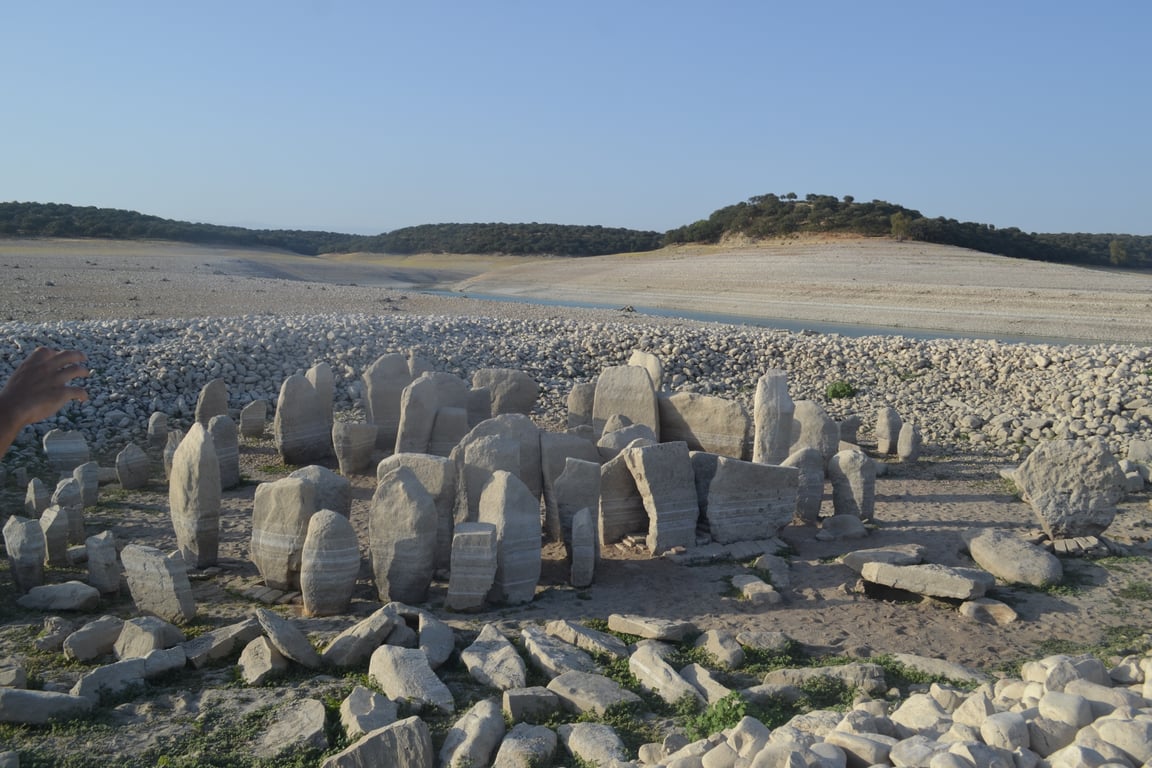
The Dolmen of Guadalperal, often referred to as the "Spanish Stonehenge," is a prehistoric megalithic monument located in Peraleda de la Mata, Spain. This ancient structure, a circular assembly of standing stones, presents a captivating glimpse into the Neolithic and Chalcolithic periods of the Iberian Peninsula. Its intermittent emergence from the waters of the Valdecañas Reservoir has transformed it into a powerful symbol of climate change and a magnet for archaeological curiosity and public attention worldwide.
Historical Background
Constructed sometime between 4,000 and 3,000 BCE, the Dolmen of Guadalperal dates back to the Copper Age and possibly the late Neolithic period. It served as a collective burial site, a common function for megalithic tombs across Europe, indicating a complex society with established funerary rituals. The region itself has a rich prehistoric heritage, with numerous archaeological findings pointing to sustained human activity over millennia.
The dolmen’s sophisticated construction suggests advanced knowledge of engineering and astronomy among its builders, who carefully aligned the stones, possibly for calendrical or ritualistic purposes. Its original purpose as a tomb for community elites or as a sacred gathering place remains a subject of ongoing archaeological debate and research.
Physical Description & Notable Features
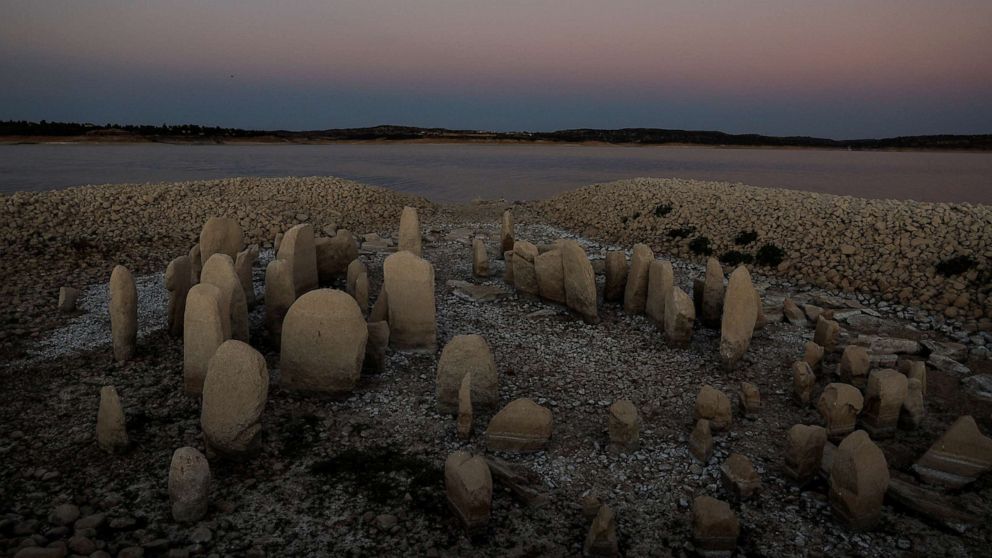
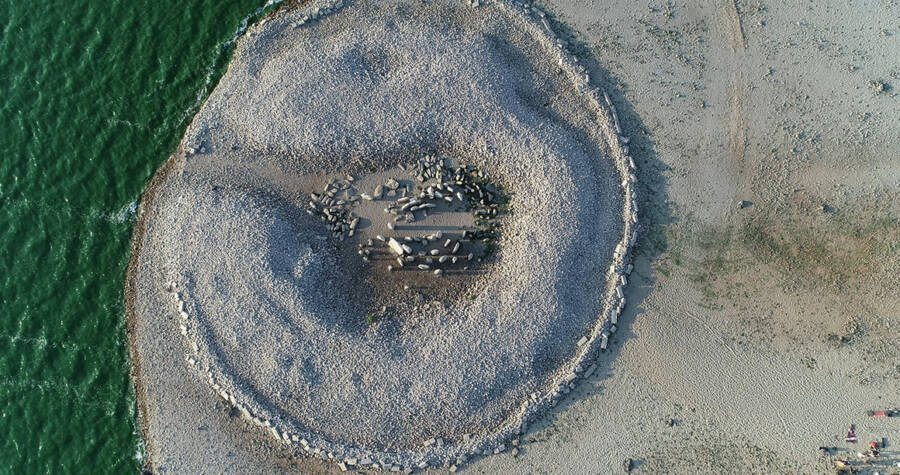
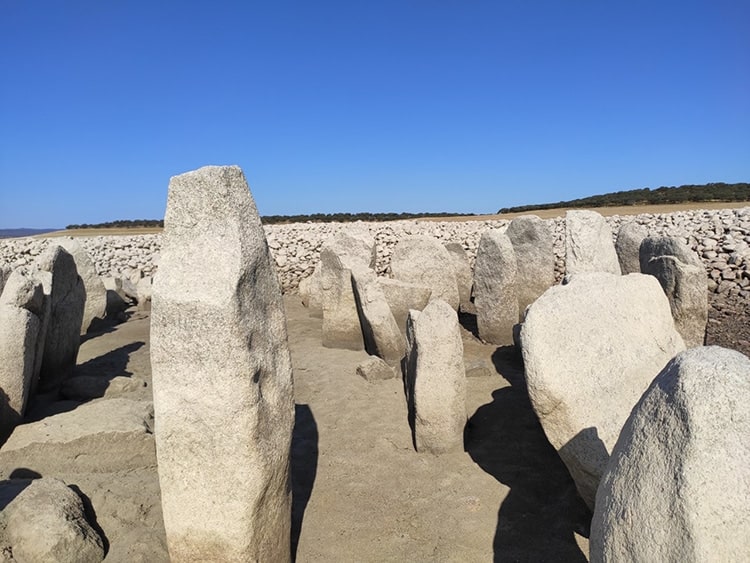
At its core, the Dolmen of Guadalperal consists of approximately 140 granite stones arranged in an oval chamber, preceded by a long, narrow processional corridor. This "passage tomb" design is typical of megalithic architecture found across Western Europe. The central chamber, which would have been roofed over, was the primary burial area. One of the most striking features is a large standing stone, or menhir, at the entrance to the chamber, which is carved with a serpent-like figure and several cup marks. This carving is believed to have significant symbolic or ritualistic meaning, perhaps representing a deity, guardian, or a navigational marker. The sheer scale and impressive craftsmanship of the individual stones, some weighing several tons, highlight the monumental effort and societal organization required for its construction.
Cultural & Archaeological Importance
The Dolmen of Guadalperal holds immense cultural and archaeological significance. As one of the largest and best-preserved megalithic complexes in Spain, it offers invaluable insights into the social structures, beliefs, and technological capabilities of prehistoric communities. The artifacts discovered during various excavation campaigns, though limited, provide clues about their daily lives and economic activities.
Beyond its archaeological value, the dolmen has become a powerful contemporary symbol. Its seasonal reappearance from the Valdecañas Reservoir, due to drought conditions, has brought forth an urgent discussion on global climate change and the preservation of submerged cultural heritage. This unique visibility has dramatically increased public awareness and interest in both prehistoric archaeology and environmental issues.
Preservation & Current State
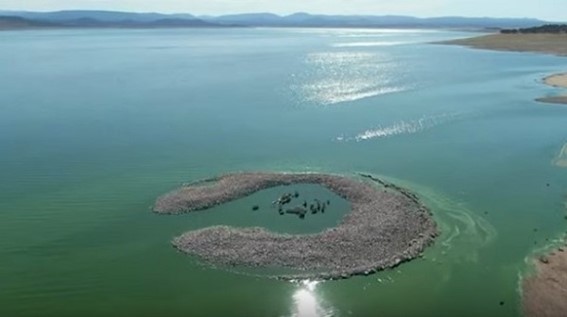
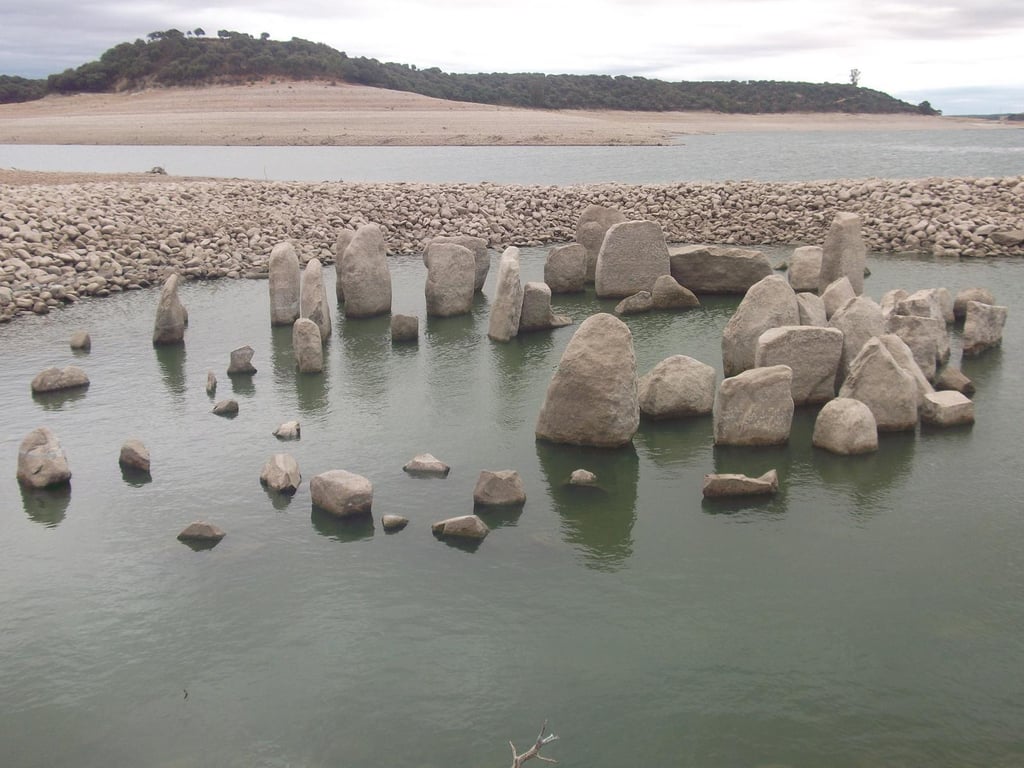
The current state of the Dolmen of Guadalperal is intrinsically linked to the fluctuating water levels of the Valdecañas Reservoir, where it has been submerged since 1963 following the construction of a dam. For decades, it remained largely out of sight, known primarily to archaeologists and local communities.
However, severe droughts in recent years have repeatedly exposed the megalith, revealing the extent of its preservation but also raising concerns about its long-term future. Exposure to air, changes in temperature, and the erosion caused by waves and sediment can accelerate its deterioration. There are ongoing proposals and discussions regarding its potential relocation to a dry, accessible site to ensure its permanent preservation and facilitate scientific study and public access. The debate highlights the complex challenges of protecting ancient monuments in an era of environmental change.
While often celebrated as a barometer of climate change, the Dolmen of Guadalperal, submerged for decades, whispers far more than mere environmental warnings. Known colloquially as the "Spanish Stonehenge," its sporadic re-emergence from the Valdecañas Reservoir offers a fleeting look into a prehistoric world brimming with forgotten rituals, celestial obsessions, and perhaps, a hidden purpose far grander than simple burial or territorial marker. Let us venture beyond the conventional archaeological narrative and explore the esoteric heart of this enigmatic monument.
Lesser-known Historical Facts
Beyond its obvious megalithic structure, the Dolmen of Guadalperal harbors a curious geographical anomaly often overlooked. Its precise positioning on a natural granite outcrop, now an island when the waters are low, suggests a deliberate choice tied to more than just available stone. Was this specific locale chosen for its telluric energies, its geological resonance, or perhaps even an association with subterranean water sources that were once visible? The ancient builders possessed a profound understanding of their landscape, and such a prominent perch, now reclaimed by water, could have held a significance we are only beginning to fathom. Furthermore, evidence of ancient pathways leading to the dolmen's original location, now submerged, points to a pilgrimage site of considerable importance, rather than a mere local burial ground.
Legends & Folk Tales
The Serpent's Breath
Local folklore, fading but still whispered among the elders of nearby villages, speaks of the dolmen as the "Serpent's Breath." This legend suggests the structure was not merely built on the earth, but aligned with an unseen subterranean flow of energy, believed to be the breath of a colossal earth serpent. When the waters of the Valdecañas are low and the dolmen is exposed, some claim a subtle, almost imperceptible vibration emanates from the stones, particularly at dawn or dusk – a lingering echo of this mythical serpent's power. It was said that during rare celestial alignments, the dolmen would "inhale" the energy of the cosmos and "exhale" it into the surrounding land, fertilizing crops and fortifying the spirits of those who approached with reverence.
Unproven Theories & Controversies
A Submerged Calendar or Cosmic Map?
While most archaeologists acknowledge the potential for astronomical alignment in dolmens generally, the sheer scale and circular arrangement of Guadalperal provoke more radical theories. Could the "Spanish Stonehenge" be not just a calendar, but a three-dimensional cosmic map, its stones strategically placed to reflect specific constellations or planetary movements known to its builders?
The hypothesis posits that as waters rose and fell naturally over millennia, the monument was designed to be observed from different vantage points, revealing different celestial "readings" depending on the water level – a complex astronomical instrument designed to interact with its aquatic environment, rather than be ruined by it. This theory challenges the conventional view that the dolmen's exposure is purely a modern phenomenon.
Mysterious Connections
Intriguingly, preliminary comparisons of the Dolmen of Guadalperal's architecture and material composition with other lesser-known megalithic sites across the Iberian Peninsula and even North Africa hint at a shared, perhaps secret, knowledge. There are certain petroglyphs and symbolic markings, now heavily eroded and difficult to decipher, that bear striking resemblances to symbols found hundreds of miles away in isolated locations.
This raises the tantalizing possibility of a widespread, interconnected network of megalithic builders, sharing not just construction techniques but a common cosmological framework. Was there an ancient "secret society" of builders, whose knowledge transcended tribal boundaries and whose legacy is hidden in plain sight, revealed only when the waters recede?
Dolmen of Guadalperal — photo gallery
Dolmen of Guadalperal — collectible cards
Collectible cards for this site — AI-generated illustrations from our memory game, not photographs of the site.