Cairn T
Ancient stones etched with forgotten star maps guard a vanished quartz glow, hiding eclipse secrets amid a witch's crumbling seat on an Irish peak.
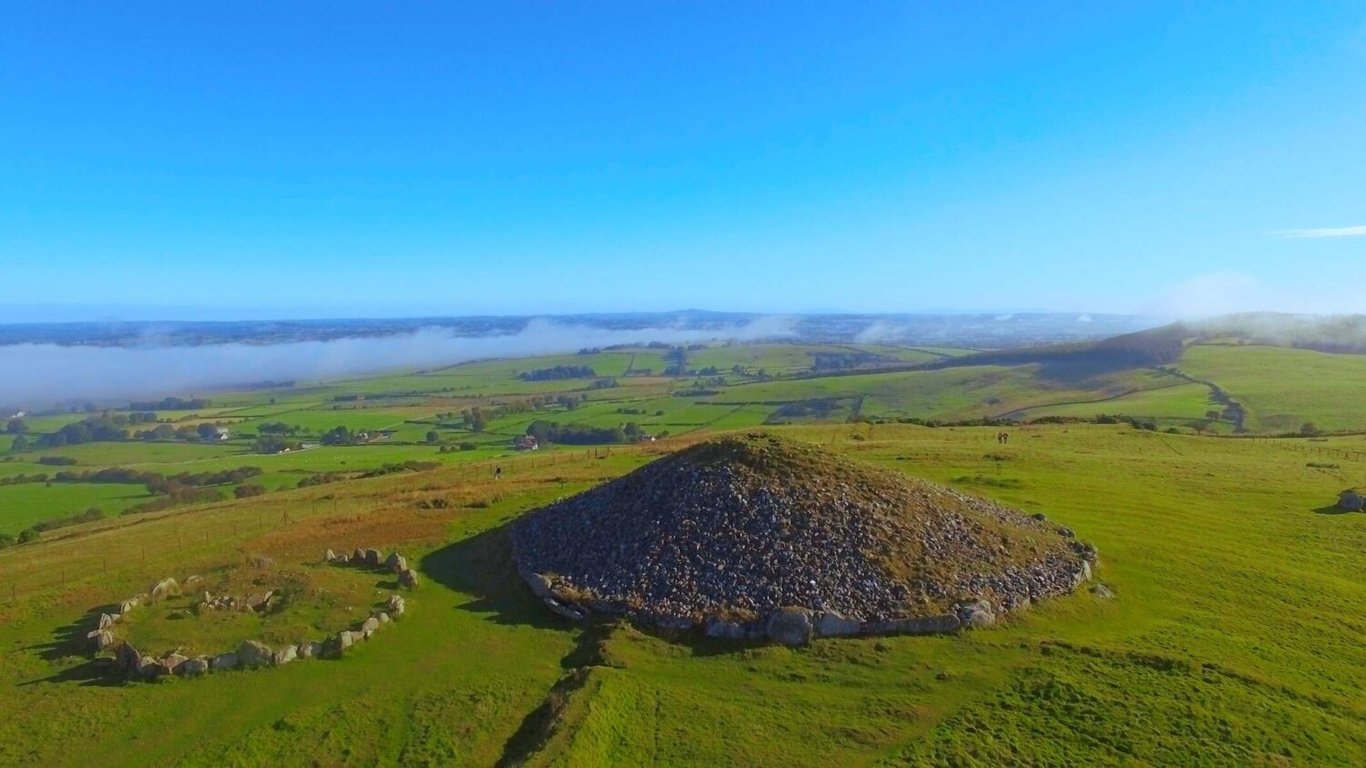
Nestled atop Sliabh na Cailleach in County Meath, Ireland, Cairn T stands as a testament to ancient ingenuity. Known also as Carn Bán or the Hag's Cairn, this passage grave is the crown jewel of the Loughcrew Megalithic Complex, drawing history enthusiasts and archaeologists alike. As one of Ireland's most prominent Neolithic sites, Cairn T offers insights into prehistoric burial practices and astronomical alignments, making it a must-visit for those interested in ancient Irish history.
Cairn T dates back to the Neolithic period, approximately 5,000 to 5,200 years ago, around 3200-3000 BC. This places it in the same era as other major Irish passage tombs like Newgrange and Knowth in the Boyne Valley. Built by early farming communities, the monument reflects a sophisticated society capable of large-scale construction and celestial observations.
The age of Cairn T aligns with the broader Loughcrew cemetery, estimated at over 5,000 years old. Radiocarbon dating from similar sites confirms this timeline, highlighting the transition from hunter-gatherer to settled agricultural life in prehistoric Ireland. Its construction involved massive kerbstones and a once-white quartz facade, symbolizing purity or otherworldly connections in Neolithic beliefs.
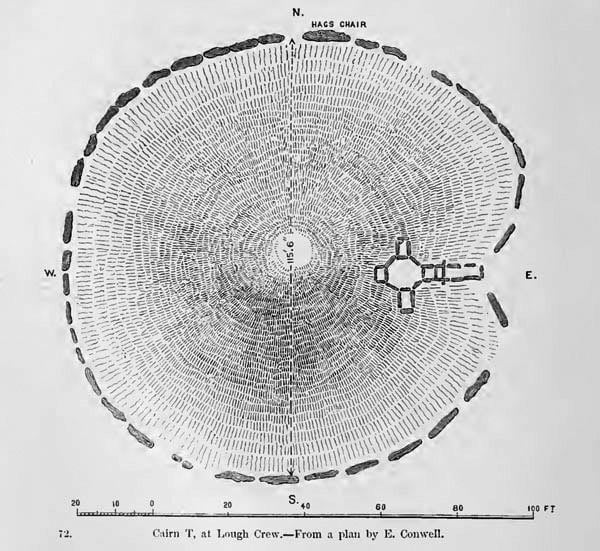
The modern history of Cairn T began in the 19th century. In 1836, John O'Donovan of the Ordnance Survey noted local folklore about the site, including the Hag's Chair — a massive engraved kerbstone linked to the mythical Cailleach, a witch-like figure said to have built the cairns. Eugene Alfred Conwell excavated the site in 1864-1865, uncovering the passage and chamber filled with debris. His 1873 book, The Discovery of the Tomb of Ollamh Fodhla, detailed the findings, including 28 inscribed stones and a corbelled roof.
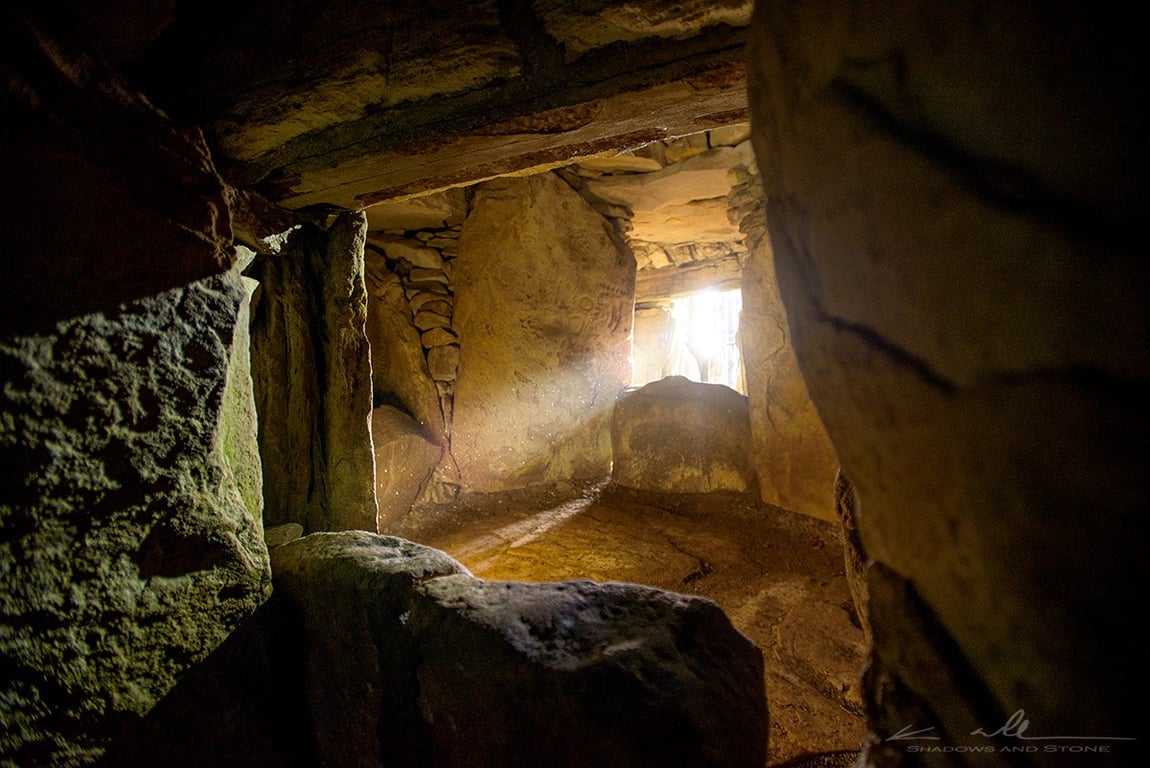
In the late 1800s, a concrete roof was added for preservation, but it led to structural issues. The equinox sunrise alignment, illuminating the inner chamber, was rediscovered in 1980 by Martin Brennan and Jack Roberts, as described in Brennan's The Stars and the Stones. This alignment underscores the site's astronomical purpose, tying it to seasonal cycles over millennia.
Embedded in Irish lore, Cairn T is associated with the Cailleach Garavogue, who allegedly carried stones in her apron to construct monuments across Ireland. The Hag's Chair, with its weathered megalithic art, features in tales from the 1800s, blending pagan roots with later Christian influences, like the carved cross possibly added by surveyors.
Since 2018, Cairn T's interior has been closed due to roof damage, with the Office of Public Works overseeing conservation. Efforts for UNESCO status continue as of 2023. Visitors can still admire the exterior, with views spanning multiple counties.
Cairn T's enduring mystery invites reflection on Ireland's ancient past, bridging 5,000 years of history. Cairn T at Loughcrew in County Meath, Ireland, harbors a trove of enigmatic features that set it apart from typical Neolithic sites, blending celestial symbolism, mystical folklore, and ancient engineering quirks. This passage grave, perched on Sliabh na Cailleach, reveals unconventional elements that hint at a profound understanding of the cosmos and otherworldly narratives, captivating those drawn to prehistoric enigmas.
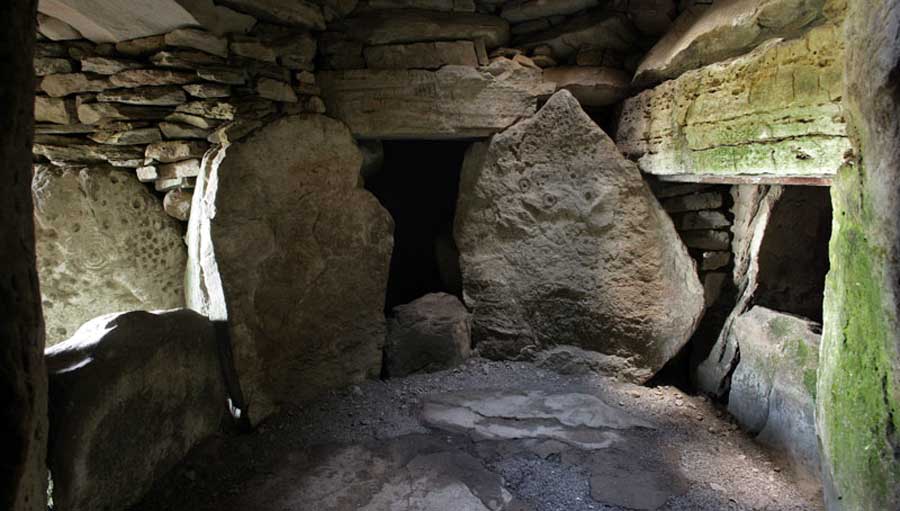
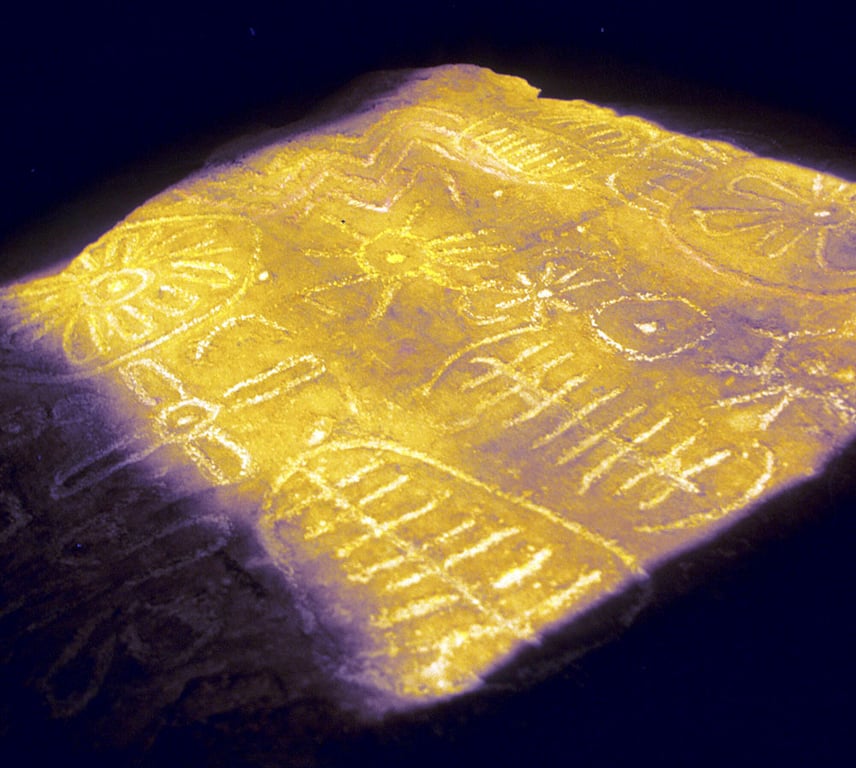
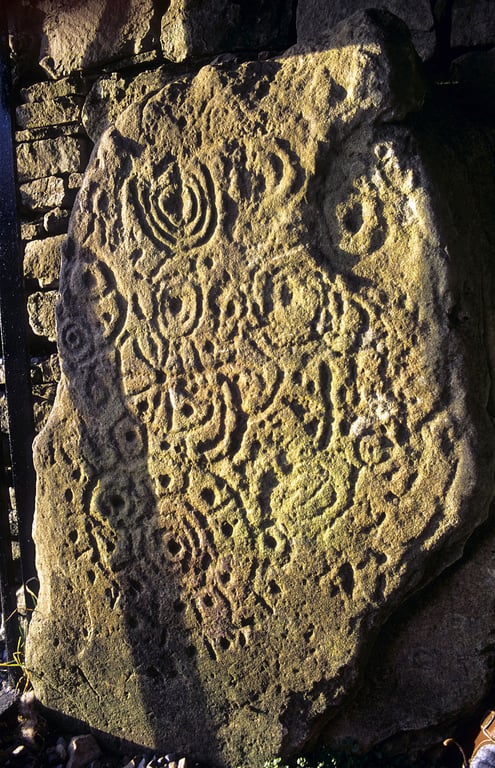
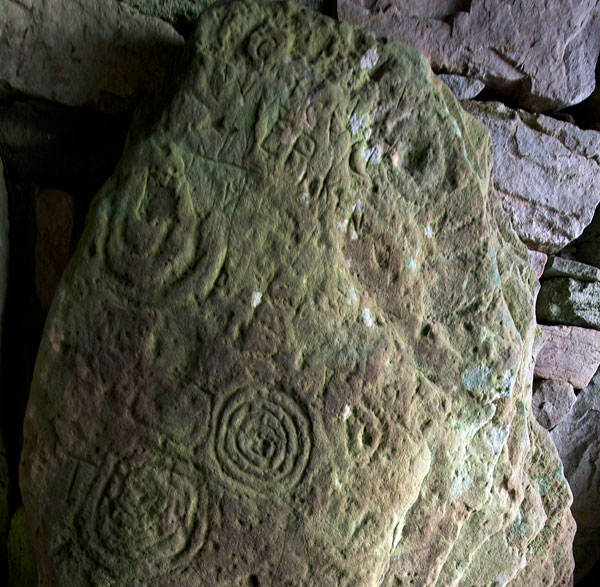
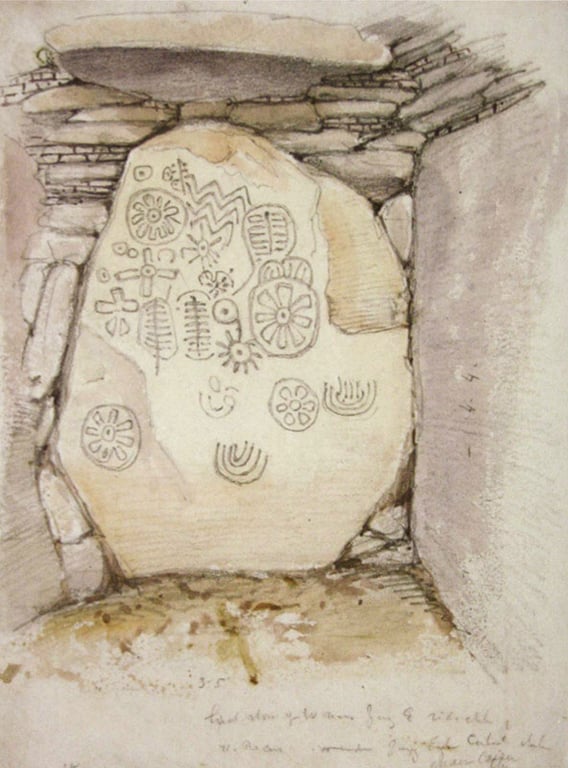
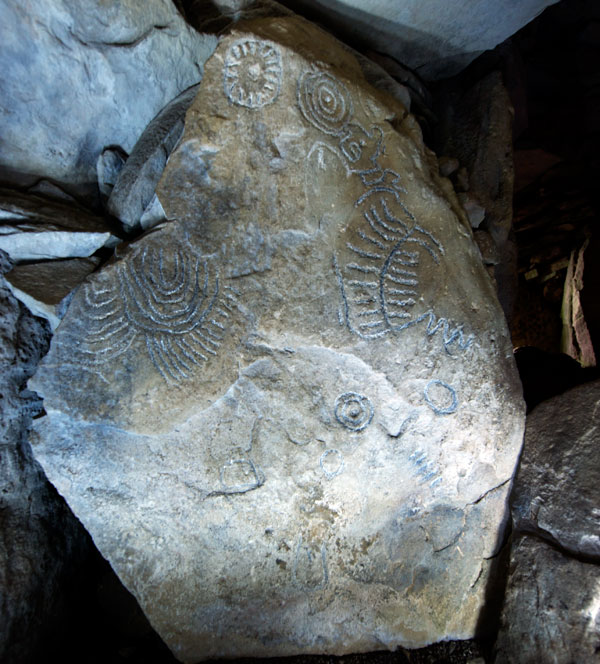
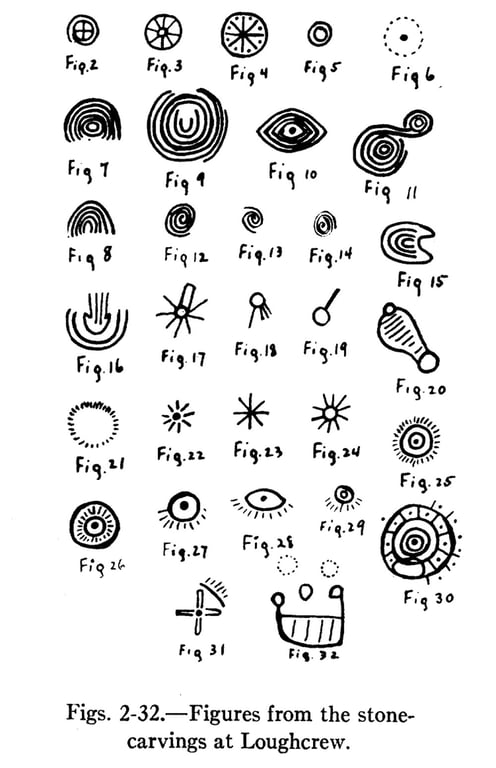
One of the most intriguing aspects is the megalithic art adorning twenty-nine stones inside the passage and chamber. Unlike repetitive motifs elsewhere, Loughcrew's engravings showcase unique independence, with techniques including punched, chiselled, and rare scraped work. Symbols evoke solar and lunar themes: sun wheels, radiating sunsets, comb-like patterns, floral designs, cupmarks, and star-like forms. The Equinox Stone, in the deepest recess, features an eight-petalled flower symbolizing the Mesopotamian goddess Inanna, suggesting cross-cultural influences or shared archetypes. This stone, illuminated during equinox sunrises, interacts with light beams that highlight solar emblems, possibly reenacting Inanna's mythic descent to the underworld—complete with owl totems and themes of death and rebirth. Such abstract carvings are interpreted as both a symbolic language and technical diagrams for tracking celestial cycles, including potential records of solar eclipses around 3315 BCE, predating similar Boyne Valley sites.
The white quartz coating, now vanished but once enveloping the cairn like a luminous mantle, added an ethereal glow. Sourced possibly from glacial deposits or a nearby vein, this sparkling layer transformed Cairn T into Carn Bán, the White Cairn, evoking purity or a beacon for rituals. Early accounts describe it piled three to four feet high around the base, creating a dazzling, otherworldly facade visible from afar, perhaps symbolizing a portal to the afterlife or stellar realms.
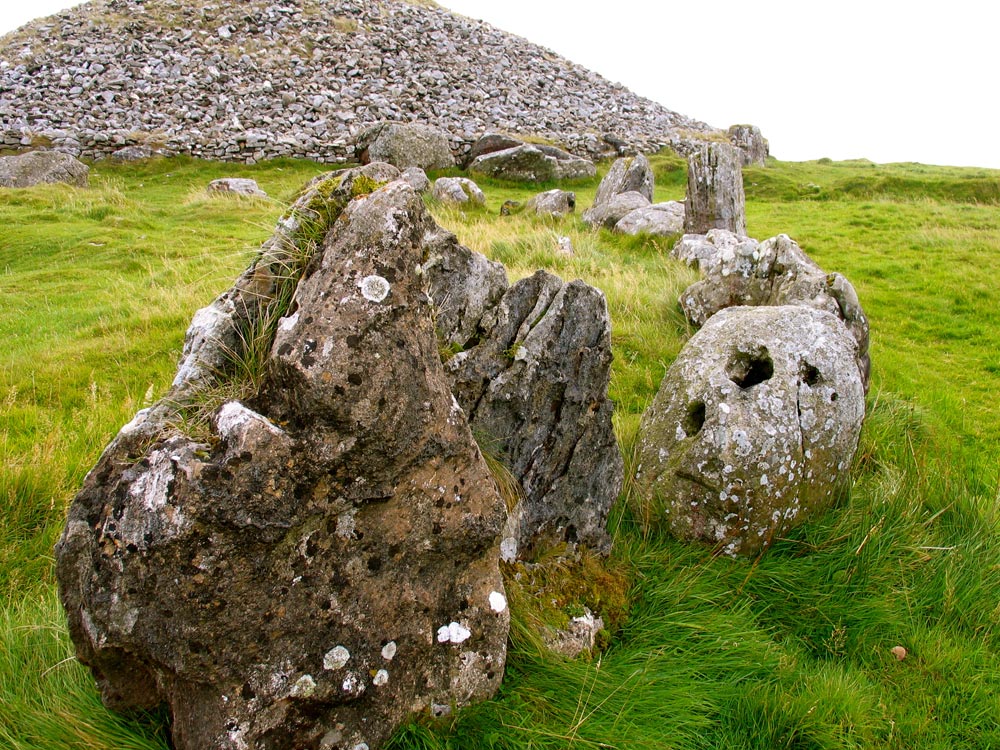
Legends infuse Cairn T with supernatural flair. The Hag's Chair, a massive kerbstone with weathered star-like engravings on its faces, ties to the Cailleach Garavogue, a hag who allegedly constructed the monuments by scattering stones from her apron while leaping across hills. Folklore claims she perched there to gaze at stars, her broken chairback a mark of ancient enmity. This tale traveled far, inspiring the Red Woman in George R.R. Martin's Game of Thrones—a shape-shifting hag concealed by magic. Rumors persist of a quartz basin filled with cremated bones buried nearby, adding a layer of hidden treasures.
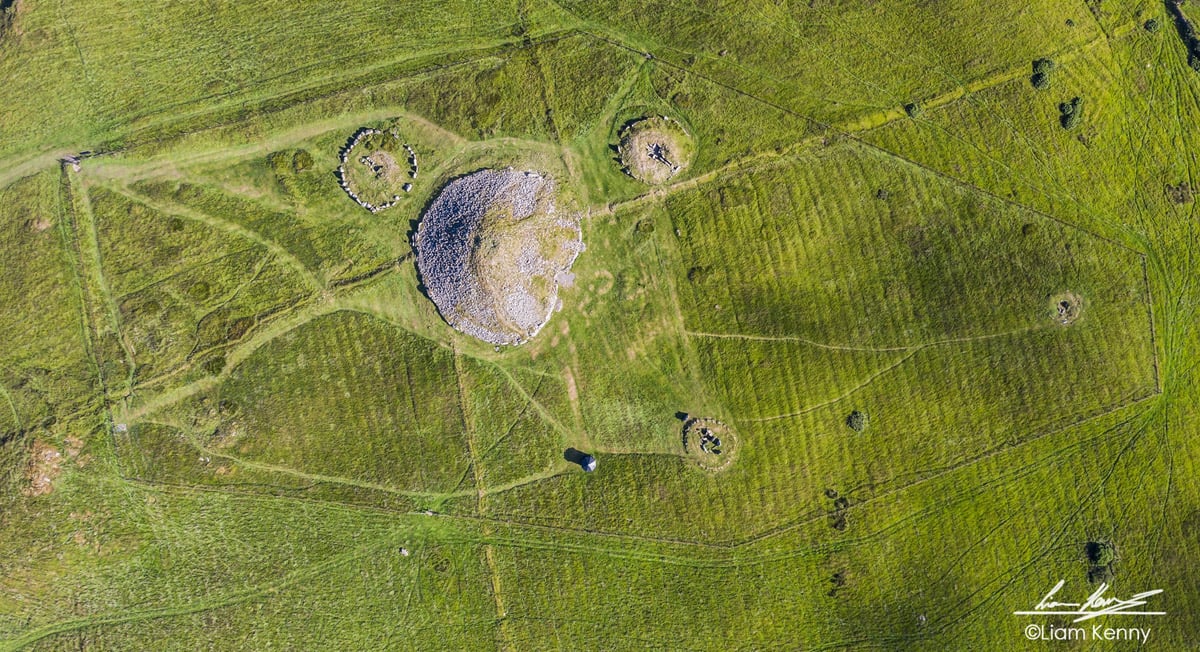
Astronomically, the site's offset alignment—nine degrees south of east—allows precise equinox illuminations, potentially for eclipse predictions. Corbelled engravings extend beyond view, hinting at reused stones from older tombs, while satellite features like circular depressions evoke mysterious stone settings. These elements paint Cairn T as a mystical observatory, where Neolithic builders encoded cosmic secrets in stone, blurring lines between science, myth, and magic.
Cairn T's quirks continue to puzzle, offering a window into an era where the ordinary met the extraordinary.
Cairn T dates back to the Neolithic period, approximately 5,000 to 5,200 years ago, around 3200-3000 BC. This places it in the same era as other major Irish passage tombs like Newgrange and Knowth in the Boyne Valley. Built by early farming communities, the monument reflects a sophisticated society capable of large-scale construction and celestial observations.
The age of Cairn T aligns with the broader Loughcrew cemetery, estimated at over 5,000 years old. Radiocarbon dating from similar sites confirms this timeline, highlighting the transition from hunter-gatherer to settled agricultural life in prehistoric Ireland. Its construction involved massive kerbstones and a once-white quartz facade, symbolizing purity or otherworldly connections in Neolithic beliefs.
The modern history of Cairn T began in the 19th century. In 1836, John O'Donovan of the Ordnance Survey noted local folklore about the site, including the Hag's Chair — a massive engraved kerbstone linked to the mythical Cailleach, a witch-like figure said to have built the cairns. Eugene Alfred Conwell excavated the site in 1864-1865, uncovering the passage and chamber filled with debris. His 1873 book, The Discovery of the Tomb of Ollamh Fodhla, detailed the findings, including 28 inscribed stones and a corbelled roof.
In the late 1800s, a concrete roof was added for preservation, but it led to structural issues. The equinox sunrise alignment, illuminating the inner chamber, was rediscovered in 1980 by Martin Brennan and Jack Roberts, as described in Brennan's The Stars and the Stones. This alignment underscores the site's astronomical purpose, tying it to seasonal cycles over millennia.
Embedded in Irish lore, Cairn T is associated with the Cailleach Garavogue, who allegedly carried stones in her apron to construct monuments across Ireland. The Hag's Chair, with its weathered megalithic art, features in tales from the 1800s, blending pagan roots with later Christian influences, like the carved cross possibly added by surveyors.
Since 2018, Cairn T's interior has been closed due to roof damage, with the Office of Public Works overseeing conservation. Efforts for UNESCO status continue as of 2023. Visitors can still admire the exterior, with views spanning multiple counties.
Cairn T's enduring mystery invites reflection on Ireland's ancient past, bridging 5,000 years of history. Cairn T at Loughcrew in County Meath, Ireland, harbors a trove of enigmatic features that set it apart from typical Neolithic sites, blending celestial symbolism, mystical folklore, and ancient engineering quirks. This passage grave, perched on Sliabh na Cailleach, reveals unconventional elements that hint at a profound understanding of the cosmos and otherworldly narratives, captivating those drawn to prehistoric enigmas.
One of the most intriguing aspects is the megalithic art adorning twenty-nine stones inside the passage and chamber. Unlike repetitive motifs elsewhere, Loughcrew's engravings showcase unique independence, with techniques including punched, chiselled, and rare scraped work. Symbols evoke solar and lunar themes: sun wheels, radiating sunsets, comb-like patterns, floral designs, cupmarks, and star-like forms. The Equinox Stone, in the deepest recess, features an eight-petalled flower symbolizing the Mesopotamian goddess Inanna, suggesting cross-cultural influences or shared archetypes. This stone, illuminated during equinox sunrises, interacts with light beams that highlight solar emblems, possibly reenacting Inanna's mythic descent to the underworld—complete with owl totems and themes of death and rebirth. Such abstract carvings are interpreted as both a symbolic language and technical diagrams for tracking celestial cycles, including potential records of solar eclipses around 3315 BCE, predating similar Boyne Valley sites.
The white quartz coating, now vanished but once enveloping the cairn like a luminous mantle, added an ethereal glow. Sourced possibly from glacial deposits or a nearby vein, this sparkling layer transformed Cairn T into Carn Bán, the White Cairn, evoking purity or a beacon for rituals. Early accounts describe it piled three to four feet high around the base, creating a dazzling, otherworldly facade visible from afar, perhaps symbolizing a portal to the afterlife or stellar realms.
Legends infuse Cairn T with supernatural flair. The Hag's Chair, a massive kerbstone with weathered star-like engravings on its faces, ties to the Cailleach Garavogue, a hag who allegedly constructed the monuments by scattering stones from her apron while leaping across hills. Folklore claims she perched there to gaze at stars, her broken chairback a mark of ancient enmity. This tale traveled far, inspiring the Red Woman in George R.R. Martin's Game of Thrones—a shape-shifting hag concealed by magic. Rumors persist of a quartz basin filled with cremated bones buried nearby, adding a layer of hidden treasures.
Astronomically, the site's offset alignment—nine degrees south of east—allows precise equinox illuminations, potentially for eclipse predictions. Corbelled engravings extend beyond view, hinting at reused stones from older tombs, while satellite features like circular depressions evoke mysterious stone settings. These elements paint Cairn T as a mystical observatory, where Neolithic builders encoded cosmic secrets in stone, blurring lines between science, myth, and magic.
Cairn T's quirks continue to puzzle, offering a window into an era where the ordinary met the extraordinary.
Cairn T — photo gallery
Cairn T — collectible cards
Collectible cards for this site — AI-generated illustrations from our memory game, not photographs of the site.